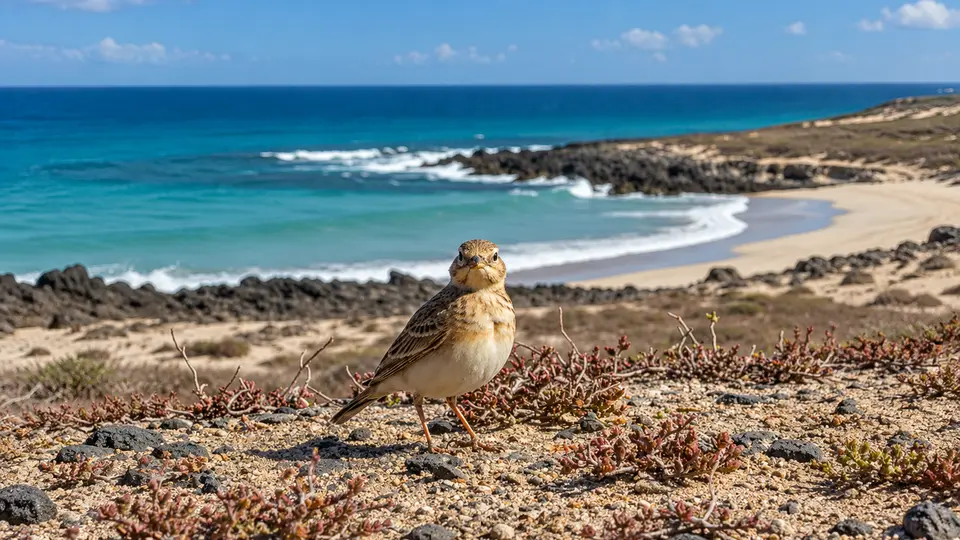
Raso Lark in its natural habitat, AI illustration

Raso Lark: where and when to see them

Alauda razae

Raso Lark at a glance

The Raso lark is a highly threatened Cape Verde endemic whose remnant natural population survived on the small, uninhabited islet of Raso. Conservation translocations have also established birds on Santa Luzia. This sandy-brown ground bird lives in an exceptionally dry environment where rainfall strongly affects food and breeding opportunities. Males are larger and have longer bills than females. Its tiny range makes protection from introduced predators and human disturbance especially important.

Behaviour & reproduction

Size
14–18 cm body length
Weight
Not reliably established
Lifespan
Not reliably established
Status
Critically Endangered

Raso larks walk and run across bare ground while searching for food, often digging with their bills. Males and females use somewhat different feeding techniques because of their bill-size differences. Breeding responds strongly to rainfall rather than following an equally productive annual schedule. Birds nest on the ground, where eggs and chicks are vulnerable. Population numbers can fluctuate considerably as drought limits reproduction and favorable wet periods permit recovery. The Raso lark typically forages alone or in pairs, often exhibiting a distinctive 'start and stop' movement while searching for food. Their ground-nesting habit, with clutches usually consisting of 2-3 eggs, makes nests highly susceptible to predation by gulls and other opportunistic island inhabitants.

Top wildlife locations

Cape Verde wildlife habitat

Cape Verde

Raso's arid coastal plains support the natural population, with a conservation population on Santa Luzia. Access is restricted, not a standard landing, and distant deck observation is unlikely to resolve individual larks.

Adventure cruises in Cape Verde
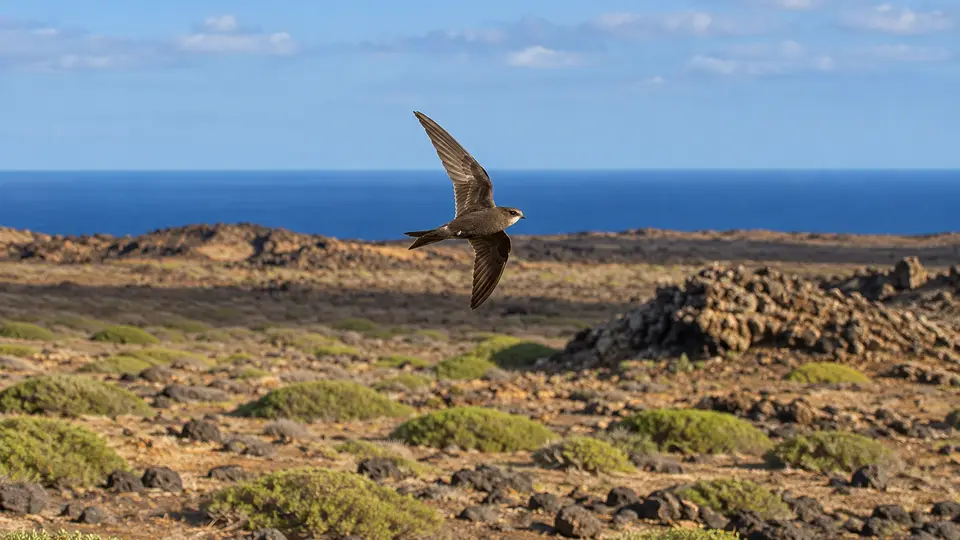
Destinations describe the species' habitat, not guaranteed cruise stops. Some animals require an optional inland excursion or are found in restricted reserves.

Fun facts about the Raso Lark

  • Males have substantially longer bills than females.
  • Its surviving natural population was confined to Raso before conservation translocations.
  • Birds have been translocated to Santa Luzia to reduce extinction risk.
  • Successful breeding is strongly influenced by irregular rainfall.

Best time to see the Raso Lark

No ordinary tourist viewing season should be promised for this restricted endemic. Dry-season sea travel may be more practical at times, but access requires current authorization and conservation guidance. Rain-related breeding pulses are variable and must not be confused with travel conditions. Access to Raso Island is strictly controlled year-round for conservation purposes, and permits are only granted for essential scientific research or monitoring. Consequently, no 'best season' exists for general tourist observation on the island itself, as it is prohibited.

Raso Lark: season matrix by destination

Travel and observation windows vary by region. Highlighted months are an orientation for planning, not confirmed sightings or a guarantee of access.

Cape Verde

No dependable public shore-viewing window is supported; permissions, conservation restrictions and variable sea conditions take precedence over seasonal travel advice.

JanFebMarAprMayJunJulAugSepOctNovDec
Cruise ships in Cape Verde

Where the Raso Lark lives

The species occupies dry, open island terrain with sparse grasses, low plants and extensive bare ground. Small patches of productive vegetation become important after rainfall. Its habitat is protected and remote, not an ordinary beachside birdwatching setting with unrestricted public access. This critically endangered species is endemic to Raso Island, a small uninhabited islet in the Cape Verde archipelago, providing a natural refuge from human disturbance. Its restricted range makes it particularly vulnerable to environmental changes and the introduction of invasive species.

What the Raso Lark eats

Food includes seeds, green plant material and invertebrates, with underground plant parts also important. Longer-billed males can excavate food unavailable to shorter-billed females. Rainfall changes both vegetation growth and insect abundance, linking feeding opportunities closely to the islands' variable climate. The Raso lark is an opportunistic feeder, adapting its diet to the sparse resources available on its arid island home. They often consume insects and seeds found on the surface or just beneath, particularly after rains stimulate growth and insect activity.

Species at a glance

Common name
Raso Lark
Scientific name
Alauda razae
Animal group
Birds
Size
14–18 cm body length
Weight
Not reliably established
Lifespan
Not reliably established
Status
Critically Endangered
Identification
Compared with Cape Verde's bar-tailed lark, the Raso lark is more robust, with a heavier bill and a distinctive white trailing edge visible on the wings in flight. Beyond its robust build, the Raso lark possesses an overall pale, sandy plumage that provides excellent camouflage against the island's barren ground. The specific wing pattern, including the white trailing edge, is a key distinguishing feature from other lark species found in the region.

Raso Lark: frequently asked questions

Where can I see the Raso Lark?
Cape Verde. Do not seek unauthorized landings on Raso or approach nesting ground. Follow conservation access rules; distant deck views rarely allow confident identification of such a small terrestrial bird. Any authorized visits to Raso Island must strictly adhere to biosecurity protocols to prevent the introduction of foreign seeds or pathogens that could harm the delicate ecosystem. Observing these birds from a distance, perhaps from a research vessel, requires high-powered optics and often yields only fleeting glimpses.
When is the best time to see the Raso Lark?
No ordinary tourist viewing season should be promised for this restricted endemic. Dry-season sea travel may be more practical at times, but access requires current authorization and conservation guidance. Rain-related breeding pulses are variable and must not be confused with travel conditions. Access to Raso Island is strictly controlled year-round for conservation purposes, and permits are only granted for essential scientific research or monitoring. Consequently, no 'best season' exists for general tourist observation on the island itself, as it is prohibited.
How big does the Raso Lark get?
14–18 cm body length. Adult weight: Not reliably established. Size varies with age, sex and population.
How should I behave around the Raso Lark?
Do not seek unauthorized landings on Raso or approach nesting ground. Follow conservation access rules; distant deck views rarely allow confident identification of such a small terrestrial bird. Any authorized visits to Raso Island must strictly adhere to biosecurity protocols to prevent the introduction of foreign seeds or pathogens that could harm the delicate ecosystem. Observing these birds from a distance, perhaps from a research vessel, requires high-powered optics and often yields only fleeting glimpses.
What does the Raso Lark eat?
Food includes seeds, green plant material and invertebrates, with underground plant parts also important. Longer-billed males can excavate food unavailable to shorter-billed females. Rainfall changes both vegetation growth and insect abundance, linking feeding opportunities closely to the islands' variable climate. The Raso lark is an opportunistic feeder, adapting its diet to the sparse resources available on its arid island home. They often consume insects and seeds found on the surface or just beneath, particularly after rains stimulate growth and insect activity.
Are wildlife sightings guaranteed on an adventure cruise?
No. Animals move freely and routes, weather, access restrictions and local conditions influence every outing. Confirm the actual itinerary and shore programme before booking.

Compare wildlife in the same destinations

Explore other birds recorded in these destinations. Similar surroundings do not mean the animals share the same habits or viewing season.

Species comparison by animal group and destination
Raso LarkRaso LarkAlexander's SwiftAlexander's SwiftBar-tailed LarkBar-tailed Lark
Animal groupBirdsAnimal groupBirdsAnimal groupBirds
DestinationsCape VerdeDestinationsCape VerdeDestinationsCape Verde
All wildlife destinations
Plan your trip

Find your next wildlife adventure

Compare destinations, shore programmes and dates with the animals and habitats you would love to see.

  • Naturalist-led shore excursions
  • Responsible wildlife watching
  • Small expedition ships

Newsletter

Take Blue Rides with you

Adventure cruise offers, last-minute deals and trip inspiration.

Free, unsubscribe anytime. Details: Privacy Policy

Partner with Blue Rides

Affiliate Program

Recommend adventure cruises and earn commission on every confirmed booking.

Share. Track. Earn.