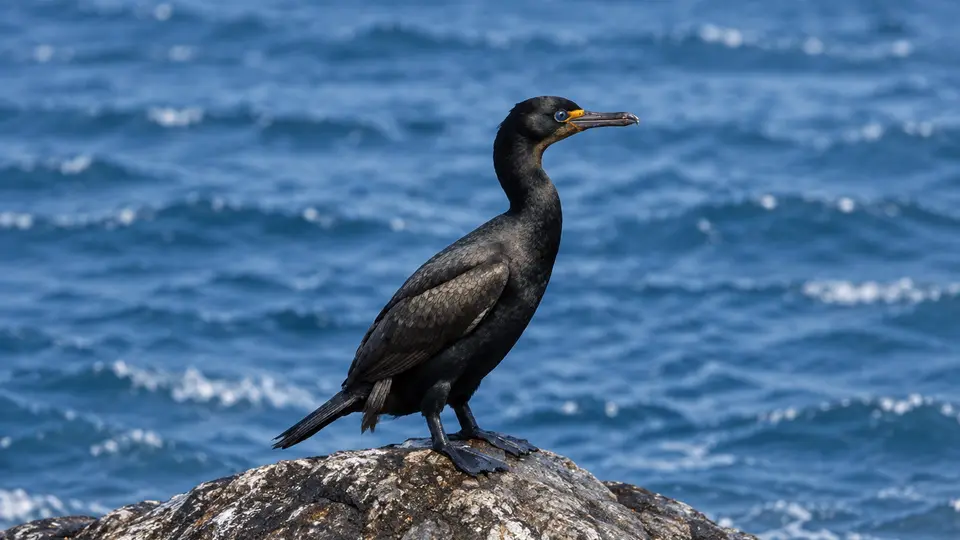
Pelagic Cormorant in its natural habitat, AI illustration

Pelagic Cormorant: where and when to see them

Urile pelagicus

Pelagic Cormorant at a glance

The pelagic cormorant is a slender North Pacific seabird with glossy dark plumage, a fine bill and a long neck. Breeding adults acquire conspicuous white flank patches and red facial skin. Despite its name, it is strongly associated with coastal waters rather than the open ocean. It nests on narrow cliff ledges, often in places inaccessible to terrestrial predators, and feeds around rocky seabeds where small fishes and invertebrates shelter.

Behaviour & reproduction

Size
64-76 cm long
Weight
1.5-2.4 kg
Lifespan
Not reliably established
Status
Least Concern

Birds forage alone or in loose groups, using their feet for propulsion while searching below the surface. Between feeding bouts they rest on rocks, ledges or coastal structures. Breeding pairs construct nests of seaweed, grass and other material on remarkably small cliff shelves. Adults repeatedly carry food to their chicks and defend their immediate nest space. Outside breeding, they may gather at communal roosts while remaining closely tied to coastal feeding grounds. These cormorants are highly adapted to marine life, with dense bones for easier diving and partially webbed feet. Courtship displays involve mutual preening, head weaving, and presenting nesting material. Chicks are altricial, meaning they are born helpless and require extensive parental care.

Top wildlife locations

Alaska wildlife habitat

Alaska

Rocky coastal overlooks, harbour edges and decks passing sea cliffs offer plausible views. Many nesting ledges are inaccessible, and observation should remain distant rather than involve approaching cliff bases or roost rocks.

Adventure cruises in Alaska
Destinations describe the species' habitat, not guaranteed cruise stops. Some animals require an optional inland excursion or are found in restricted reserves.

Fun facts about the Pelagic Cormorant

  • Its name is misleading because it usually feeds close to shore.
  • Breeding adults develop two small crests as well as white flank patches.
  • Nests can occupy very narrow shelves on near-vertical cliffs.
  • Its iridescent plumage can show green and purple tones in good light.

Best time to see the Pelagic Cormorant

Late spring and summer make Alaskan nesting cliffs more accessible and breeding plumage easier to recognize. Many southern Alaskan birds remain through winter where water stays open. Northern distribution and practical observation opportunities shift with sea ice, storms and daylight. In Alaska, large breeding colonies are often at their most active and visible from May through July. Autumn brings a partial migration south for some populations, though many remain in ice-free areas. Longer daylight hours in summer also facilitate more prolonged observation opportunities.

Pelagic Cormorant: season matrix by destination

Travel and observation windows vary by region. Highlighted months are an orientation for planning, not confirmed sightings or a guarantee of access.

Alaska

A practical daylight and coastal-access window; birds can occur year-round in ice-free southern areas.

JanFebMarAprMayJunJulAugSepOctNovDec
Cruise ships in Alaska

Where the Pelagic Cormorant lives

Rocky shorelines, sea cliffs, sheltered bays and nearshore reefs are typical habitat. Nesting requires suitable ledges, while feeding depends on accessible coastal marine prey. It is generally less associated with inland freshwater than several other cormorants sharing parts of its range. They are particularly common on offshore islands and exposed capes. This species shows strong site fidelity, often returning to the same nesting and roosting locations year after year.

What the Pelagic Cormorant eats

Small bottom-associated fishes form much of the diet, including sculpins, gunnels and related coastal species. Crustaceans and other marine invertebrates are also eaten. Prey composition changes among coastlines, reflecting the animals available around rocky reefs and nearby seabed habitats. Foraging dives typically last less than a minute and reach depths of up to 40 meters. They are opportunistic feeders, adjusting their prey selection based on local abundance and availability.

Species at a glance

Common name
Pelagic Cormorant
Scientific name
Urile pelagicus
Animal group
Birds
Size
64-76 cm long
Weight
1.5-2.4 kg
Lifespan
Not reliably established
Status
Least Concern
Identification
A slender bill and neck, small red facial patch and breeding white flanks distinguish it from the heavier double-crested cormorant, while red-faced cormorants have a larger bare facial area. During breeding, adults display iridescent green and purple sheens on their black plumage. The small crest on the head is often visible in breeding birds, further aiding identification. Their flight is direct and strong, typically low over the water with rapid wingbeats.

Pelagic Cormorant: frequently asked questions

Where can I see the Pelagic Cormorant?
Alaska. Scan cliffs from public coastal overlooks or stable vessel decks, keeping clear of ledge edges and nesting faces. Do not approach roost rocks closely enough to flush birds, especially in cold weather or during chick rearing. Binoculars are essential for detailed observation of nesting birds on high cliffs. Look for individuals perched prominently on rocks or swimming low in the water. Remember to maintain a respectful distance to avoid disturbing their natural activities.
When is the best time to see the Pelagic Cormorant?
Late spring and summer make Alaskan nesting cliffs more accessible and breeding plumage easier to recognize. Many southern Alaskan birds remain through winter where water stays open. Northern distribution and practical observation opportunities shift with sea ice, storms and daylight. In Alaska, large breeding colonies are often at their most active and visible from May through July. Autumn brings a partial migration south for some populations, though many remain in ice-free areas. Longer daylight hours in summer also facilitate more prolonged observation opportunities.
How big does the Pelagic Cormorant get?
64-76 cm long. Adult weight: 1.5-2.4 kg. Size varies with age, sex and population.
How should I behave around the Pelagic Cormorant?
Scan cliffs from public coastal overlooks or stable vessel decks, keeping clear of ledge edges and nesting faces. Do not approach roost rocks closely enough to flush birds, especially in cold weather or during chick rearing. Binoculars are essential for detailed observation of nesting birds on high cliffs. Look for individuals perched prominently on rocks or swimming low in the water. Remember to maintain a respectful distance to avoid disturbing their natural activities.
What does the Pelagic Cormorant eat?
Small bottom-associated fishes form much of the diet, including sculpins, gunnels and related coastal species. Crustaceans and other marine invertebrates are also eaten. Prey composition changes among coastlines, reflecting the animals available around rocky reefs and nearby seabed habitats. Foraging dives typically last less than a minute and reach depths of up to 40 meters. They are opportunistic feeders, adjusting their prey selection based on local abundance and availability.
Are wildlife sightings guaranteed on an adventure cruise?
No. Animals move freely and routes, weather, access restrictions and local conditions influence every outing. Confirm the actual itinerary and shore program before booking.

Compare wildlife in the same destinations

Explore other birds recorded in these destinations. Similar surroundings do not mean the animals share the same habits or viewing season.

Species comparison by animal group and destination
Pelagic CormorantPelagic CormorantArctic TernArctic TernBald EagleBald Eagle
Animal groupBirdsAnimal groupBirdsAnimal groupBirds
DestinationsAlaskaDestinationsAlaska, Norway, ArcticDestinationsAlaska, Florida, New England
All wildlife destinations
Plan your trip

Find your next wildlife adventure

Compare destinations, shore programs and dates with the animals and habitats you would love to see.

  • Naturalist-led shore excursions
  • Responsible wildlife watching
  • Small expedition ships

Newsletter

Take Blue Rides with you

Adventure cruise offers, last-minute deals and trip inspiration.

Free, unsubscribe anytime. Details: Privacy Policy

Partner with Blue Rides

Affiliate Program

Recommend adventure cruises and earn commission on every confirmed booking.

Share. Track. Earn.

Your footage, our stage

Send us your videos or pictures.

Captured beautiful landscapes or wildlife? Share your videos and pictures with us, we may feature them on Blue Rides.