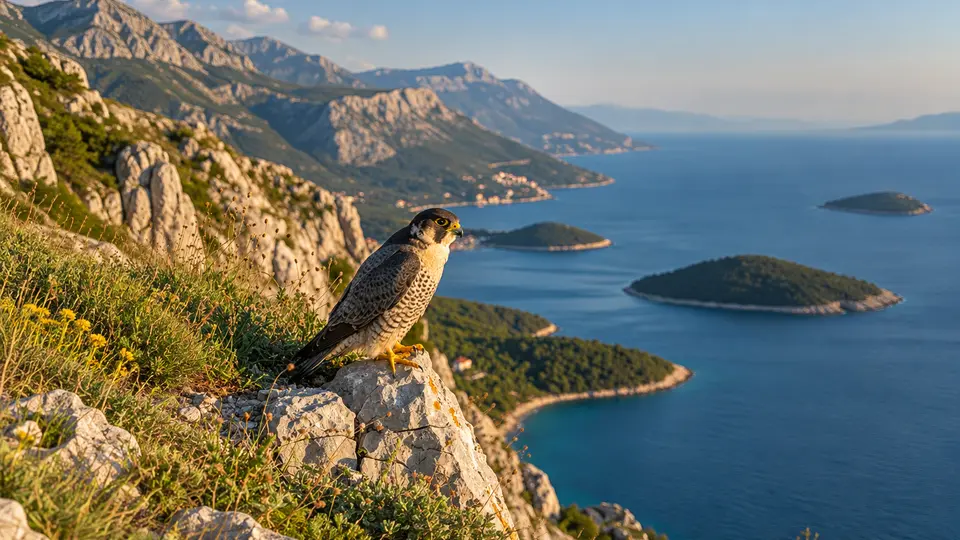
Peregrine Falcon in its natural habitat, AI illustration
Size36-49 cm long; 95-115 cm wingspanLifespan8-15 yearsStatusLeast Concern

Peregrine Falcon: where and when to see them

Falco peregrinus

Peregrine Falcon at a glance

The peregrine falcon is a powerful bird-hunting raptor found on every continent except Antarctica. Long pointed wings, a dark facial moustache and rapid flight make it distinctive when seen well. Coastal cliffs remain classic habitat, but tall buildings and bridges can imitate natural nesting ledges. Following severe twentieth-century pesticide declines, many populations recovered through protection and reduced chemical exposure, although disturbance, persecution and other regional threats have not disappeared.

Behaviour & reproduction

Size
36-49 cm long; 95-115 cm wingspan
Weight
0.6-1.3 kg
Lifespan
8-15 years
Status
Least Concern

Peregrines hunt from elevated perches or while flying, sometimes climbing before a steep, controlled attack. They also pursue birds horizontally rather than relying exclusively on spectacular high-speed stoops. Pairs occupy territories and use simple nesting scrapes on ledges, with both adults contributing to parental care. Females are larger than males and often take larger prey. Northern populations may migrate long distances, while many temperate coastal pairs remain near their territories. Peregrines are renowned for their 'stoop,' a high-speed dive that can exceed 200 mph, used to strike prey mid-air. Pair bonds are generally strong and mates often return to the same nest site year after year.

Top wildlife locations

New England wildlife habitat

New England

Coastal headlands, estuary overlooks and distant views of urban nesting structures offer opportunities. Some breeding cliffs require inland excursions or seasonal closures, while autumn migrants can pass accessible shore watchpoints.

Adventure cruises in New England
Croatia wildlife habitat

Croatia

Adriatic sea cliffs and rocky coastal viewpoints provide suitable habitat, with additional territories in inland mountains. Nest ledges are often inaccessible, and protected areas may restrict approach during breeding.

Adventure cruises in Croatia
Greece wildlife habitat

Greece

Mainland and island sea cliffs offer potential distant views from established coastal paths. Birds also occupy inland gorges, requiring separate excursions, and many nesting faces are inaccessible or unsuitable for close approach.

Adventure cruises in Greece

Destinations describe the species' habitat, not guaranteed cruise stops. Some animals require an optional inland excursion or are found in restricted reserves.

Fun facts about the Peregrine Falcon

  • Females are substantially larger than males.
  • The nest is usually a shallow scrape rather than a stick structure.
  • Its scientific name refers to wandering or travelling.
  • A small projection inside each nostril is associated with managing airflow during fast flight.

Best time to see the Peregrine Falcon

Resident pairs can be observed throughout the year in parts of all three destinations. New England's autumn coastal migration is particularly useful for distant flight observation. Mediterranean spring weather favours coastal watching, but breeding cliffs require extra restraint and compliance with seasonal closures. In Croatia and Greece, wintering birds can be seen along the coast, often supplementing resident populations. Early morning or late afternoon often provide the best light for distant observations and reveal hunting activity.

Peregrine Falcon: season matrix by destination

Travel and observation windows vary by region. Highlighted months are an orientation for planning, not confirmed sightings or a guarantee of access.

New England

A useful coastal migration window; resident breeding birds may be present year-round, with nesting-area access restrictions.

JanFebMarAprMayJunJulAugSepOctNovDec
Cruise ships in New England

Croatia

Milder shoulder-season conditions favour coastal watching; resident presence is not confined to these months, and spring nesting sites need distance.

JanFebMarAprMayJunJulAugSepOctNovDec
Cruise ships in Croatia

Greece

A comfortable coastal travel window rather than a strict occurrence season; residents and migrants create local variation.

JanFebMarAprMayJunJulAugSepOctNovDec
Cruise ships in Greece

Where the Peregrine Falcon lives

Sea cliffs, mountain crags, river gorges and tall urban structures provide nesting and lookout sites. Productive hunting areas include coasts, estuaries, wetlands and open country with abundant birds. Migrants can appear far from established breeding territories, especially along coastlines. In coastal areas, nesting sites can include remote islands or steep sea stacks. Their adaptability to urban environments highlights their ability to coexist with human infrastructure when prey is abundant.

What the Peregrine Falcon eats

Birds dominate the diet, ranging from small songbirds to pigeons, shorebirds and ducks according to local opportunities. Most prey is captured in flight, though other hunting methods occur. Urban pairs often exploit pigeons, while coastal birds may rely heavily on seabirds or waders. Remarkably, over 450 bird species have been recorded as peregrine prey worldwide, showcasing their opportunistic hunting. During migration, they may also occasionally take insects or small mammals if birds are scarce.

Species at a glance

Common name
Peregrine Falcon
Scientific name
Falco peregrinus
Animal group
Birds
Size
36-49 cm long; 95-115 cm wingspan
Weight
0.6-1.3 kg
Lifespan
8-15 years
Status
Least Concern
Identification
A robust body, pointed wings and broad dark moustache distinguish it from the smaller, slimmer hobby and the longer-tailed, more frequently hovering kestrels. Juveniles display brownish upperparts with streaked underparts, contrasting with the adult's slate-blue back. Their powerful, deep wing beats are distinctive in flight, especially when covering long distances.

Peregrine Falcon: frequently asked questions

Where can I see the Peregrine Falcon?
New England, Croatia, Greece. Use binoculars from designated cliff viewpoints and remain well back from edges. Repeated alarm calls indicate excessive proximity to a nest. Never use playback, drones or food to provoke flight, and respect seasonal climbing restrictions. From the ship's deck, scan cliff faces and watch for birds perched on prominent ledges or soaring high above. Shore excursions to coastal preserves or islands may offer opportunities to view them from a greater distance.
When is the best time to see the Peregrine Falcon?
Resident pairs can be observed throughout the year in parts of all three destinations. New England's autumn coastal migration is particularly useful for distant flight observation. Mediterranean spring weather favours coastal watching, but breeding cliffs require extra restraint and compliance with seasonal closures. In Croatia and Greece, wintering birds can be seen along the coast, often supplementing resident populations. Early morning or late afternoon often provide the best light for distant observations and reveal hunting activity.
How big does the Peregrine Falcon get?
36-49 cm long; 95-115 cm wingspan. Adult weight: 0.6-1.3 kg. Size varies with age, sex and population.
How should I behave around the Peregrine Falcon?
Use binoculars from designated cliff viewpoints and remain well back from edges. Repeated alarm calls indicate excessive proximity to a nest. Never use playback, drones or food to provoke flight, and respect seasonal climbing restrictions. From the ship's deck, scan cliff faces and watch for birds perched on prominent ledges or soaring high above. Shore excursions to coastal preserves or islands may offer opportunities to view them from a greater distance.
What does the Peregrine Falcon eat?
Birds dominate the diet, ranging from small songbirds to pigeons, shorebirds and ducks according to local opportunities. Most prey is captured in flight, though other hunting methods occur. Urban pairs often exploit pigeons, while coastal birds may rely heavily on seabirds or waders. Remarkably, over 450 bird species have been recorded as peregrine prey worldwide, showcasing their opportunistic hunting. During migration, they may also occasionally take insects or small mammals if birds are scarce.
Are wildlife sightings guaranteed on an adventure cruise?
No. Animals move freely and routes, weather, access restrictions and local conditions influence every outing. Confirm the actual itinerary and shore programme before booking.

Compare wildlife in the same destinations

Explore other birds recorded in these destinations. Similar surroundings do not mean the animals share the same habits or viewing season.

Species comparison by animal group and destination
Peregrine FalconPeregrine FalconAtlantic PuffinAtlantic PuffinAudouin's GullAudouin's Gull
Animal groupBirdsAnimal groupBirdsAnimal groupBirds
DestinationsNew England, Croatia, GreeceDestinationsNew England, Norway, Scotland, ArcticDestinationsCroatia, Greece, Portugal, Turkey
All wildlife destinations
Plan your trip

Find your next wildlife adventure

Compare destinations, shore programmes and dates with the animals and habitats you would love to see.

  • Naturalist-led shore excursions
  • Responsible wildlife watching
  • Small expedition ships

Newsletter

Take Blue Rides with you

Adventure cruise offers, last-minute deals and trip inspiration.

Free, unsubscribe anytime. Details: Privacy Policy

Partner with Blue Rides

Affiliate Program

Recommend adventure cruises and earn commission on every confirmed booking.

Share. Track. Earn.