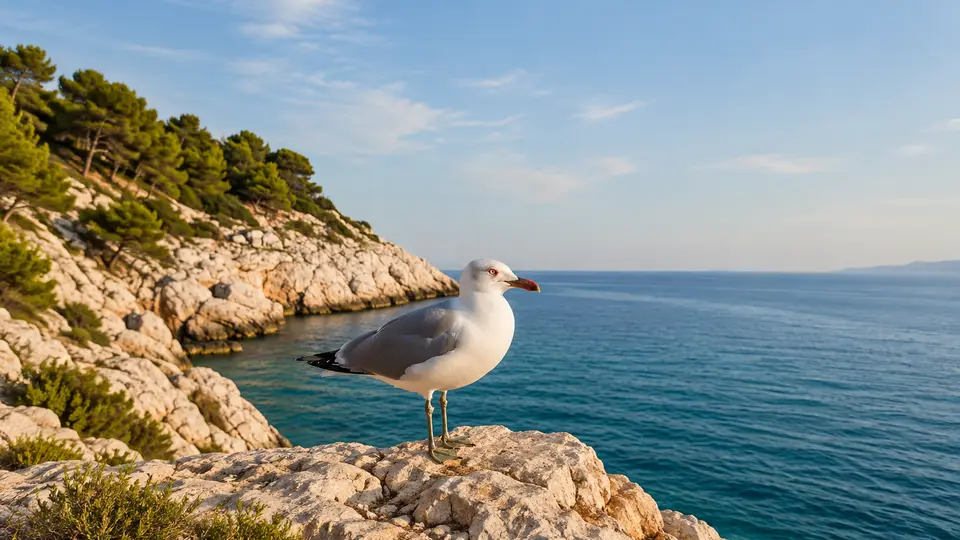
Audouin's Gull in its natural habitatAI-modified

Audouin's GullIchthyaetus audouiniiWhere and when to see them

Audouin's Gull at a glance

Audouin's gull is an elegant, predominantly Mediterranean seabird with pale grey upperparts, dark legs and a red bill marked near its tip. It is more closely tied to marine feeding than many familiar urban gulls, although fisheries have strongly influenced some populations. Breeding is concentrated in scattered colonies, making local changes important to its conservation. A bird on a quiet beach may be resting far from its nesting site rather than indicating a nearby colony.

Behaviour & reproduction

Size
48–52 cm (18.9–20.5 in) long
Weight
500–800 g (17.6–28.2 oz)
Lifespan
Up to 25 years in the wild (record)
Status
Vulnerable

These gulls breed colonially on islands, coastal flats and other relatively undisturbed ground. Adults forage over coastal water, sometimes feeding at night, and may exploit fishing activity when discards are available. They also gather on beaches and sheltered shores to rest. Colony locations and numbers can shift between years in response to predators, disturbance and food supply. Outside breeding, birds disperse along Mediterranean and eastern Atlantic coasts, with some travelling to northwest Africa. Courtship displays involve bowing and head-tossing, solidifying pair bonds before nesting. Unlike many gull species, Audouin's gulls typically avoid scavenging at refuse tips.

Top wildlife locations

Croatia wildlife habitatAI-modified

Croatia

Southern Adriatic rocky islets and nearby quiet shores provide plausible habitat, but the species is local and uncommon. Breeding islets may be inaccessible or protected; scan from lawful coastal viewpoints rather than seeking landings.

Greece wildlife habitatAI-modified

Greece

Aegean island shores, sheltered bays and coastal resting beaches can offer distant views near occupied areas. The species is scattered and often uncommon; nesting islets should be treated as inaccessible unless explicitly opened.

Portugal wildlife habitatAI-modified

Portugal

Southern estuaries, saltpan margins and quiet Algarve beaches provide plausible shore-viewing habitat. Public wetland paths may require a separate coastal excursion; breeding compounds and restricted saltworks are not general-access viewing areas.

Turkey wildlife habitatAI-modified

Turkey

Aegean and Mediterranean coastal bays and offshore islets provide potential habitat, but this gull is local and often rare. Use public shoreline viewpoints; nesting islands may be restricted and are not routine landing sites.

Destinations describe the species' habitat, not guaranteed cruise stops. Some animals require an optional inland excursion or are found in restricted reserves.

Fun facts about the Audouin's Gull

  • It was named in honour of French naturalist Jean Victoire Audouin.
  • It can forage after dark, unlike the mainly daytime pattern of many coastal observers.
  • Some breeding colonies have shifted location dramatically between years.
  • Its red bill is an especially useful adult identification feature.

Best time to see the Audouin's Gull

Spring and summer can suit observation near established Mediterranean breeding areas, provided colonies remain undisturbed. Portugal also receives birds using southern coastal wetlands and beaches. Local status differs greatly, so regional bird reports are more useful than a single Mediterranean-wide seasonal rule. Late summer and autumn are excellent for observing post-breeding dispersal along the Mediterranean and Atlantic coasts, including in Portugal. Migratory movements can bring them to a wider range of coastal areas within the specified destinations.

Audouin's Gull: season matrix by destination

Travel and observation windows vary by region. Highlighted months are an orientation for planning, not confirmed sightings or a guarantee of access.

Croatia

Spring and early summer overlap regional breeding activity, but presence is highly local and public viewing opportunities are limited.

JanFebMarAprMayJunJulAugSepOctNovDec
Cruise ships in Croatia

Greece

These months suit regional breeding-season coastal observation, without implying colonies or reliable sightings on every island.

JanFebMarAprMayJunJulAugSepOctNovDec
Cruise ships in Greece

Portugal

Spring through early autumn is a useful southern coastal planning window; local numbers and nesting activity vary by site.

JanFebMarAprMayJunJulAugSepOctNovDec
Cruise ships in Portugal

Turkey

This window overlaps regional breeding activity and practical coastal travel, not confirmed occurrence at any particular stop.

JanFebMarAprMayJunJulAugSepOctNovDec
Cruise ships in Turkey

Where the Audouin's Gull lives

Suitable habitat combines productive coastal waters with safe nesting or resting ground. Breeding sites include rocky islets, sandy coastal areas and saltworks. Away from colonies, beaches, estuary mouths and harbour margins may be used, but distribution remains patchy rather than continuous along every Mediterranean shore. Coastal lagoons and deltas offer important feeding grounds, especially during migration. Its preference for remote, undisturbed sites makes it particularly sensitive to human development.

What the Audouin's Gull eats

Small fish are central to the diet, captured near the surface or obtained around fishing vessels. Marine invertebrates and other opportunistic foods also contribute. Dependence on fisheries discards differs among colonies, and changes in fishing practices can alter food availability substantially. Prey taken includes sardines, anchovies, and other small pelagic fish, often caught by shallow diving or surface dipping. During breeding season, adult gulls may also consume significant amounts of crustaceans.

Species at a glance

Common name
Audouin's Gull
Scientific name
Ichthyaetus audouinii
Animal group
Birds
Size
48–52 cm (18.9–20.5 in) long
Weight
500–800 g (17.6–28.2 oz)
Lifespan
Up to 25 years in the wild (record)
Status
Vulnerable
Identification
The dark legs and red bill with a black subterminal band distinguish adults from the larger, yellow-legged and yellow-billed yellow-legged gull. Juveniles are distinguished by their mottled brown plumage, dark bill, and dark legs, gradually acquiring adult characteristics over several years. Their distinct, often nasal call is another key identifier, differing from other gull species.

Audouin's Gull: frequently asked questions

Where can I see the Audouin's Gull?
Croatia, Greece, Portugal, Turkey. Study resting gulls with a telescope from public paths, checking the bill and legs. Avoid colony islands and nesting flats, and never flush a flock for photographs; eggs and chicks can be vulnerable to heat and predators. From cruise ships, scan coastal waters and small islets, particularly at dawn or dusk, for foraging individuals or resting groups. Binoculars are essential for checking details like bill colouration and leg length when viewing from a distance.
When is the best time to see the Audouin's Gull?
Spring and summer can suit observation near established Mediterranean breeding areas, provided colonies remain undisturbed. Portugal also receives birds using southern coastal wetlands and beaches. Local status differs greatly, so regional bird reports are more useful than a single Mediterranean-wide seasonal rule. Late summer and autumn are excellent for observing post-breeding dispersal along the Mediterranean and Atlantic coasts, including in Portugal. Migratory movements can bring them to a wider range of coastal areas within the specified destinations.
How big does the Audouin's Gull get?
48–52 cm (18.9–20.5 in) long. Adult weight: 500–800 g (17.6–28.2 oz). Size varies with age, sex and population.
How should I behave around the Audouin's Gull?
Study resting gulls with a telescope from public paths, checking the bill and legs. Avoid colony islands and nesting flats, and never flush a flock for photographs; eggs and chicks can be vulnerable to heat and predators. From cruise ships, scan coastal waters and small islets, particularly at dawn or dusk, for foraging individuals or resting groups. Binoculars are essential for checking details like bill colouration and leg length when viewing from a distance.
What does the Audouin's Gull eat?
Small fish are central to the diet, captured near the surface or obtained around fishing vessels. Marine invertebrates and other opportunistic foods also contribute. Dependence on fisheries discards differs among colonies, and changes in fishing practices can alter food availability substantially. Prey taken includes sardines, anchovies, and other small pelagic fish, often caught by shallow diving or surface dipping. During breeding season, adult gulls may also consume significant amounts of crustaceans.
Are wildlife sightings guaranteed on an adventure cruise?
No. Animals move freely and routes, weather, access restrictions and local conditions influence every outing. Confirm the actual itinerary and shore program before booking.

Compare wildlife in the same destinations

Explore other birds recorded in these destinations. Similar surroundings do not mean the animals share the same habits or viewing season.

Species comparison by animal group and destination
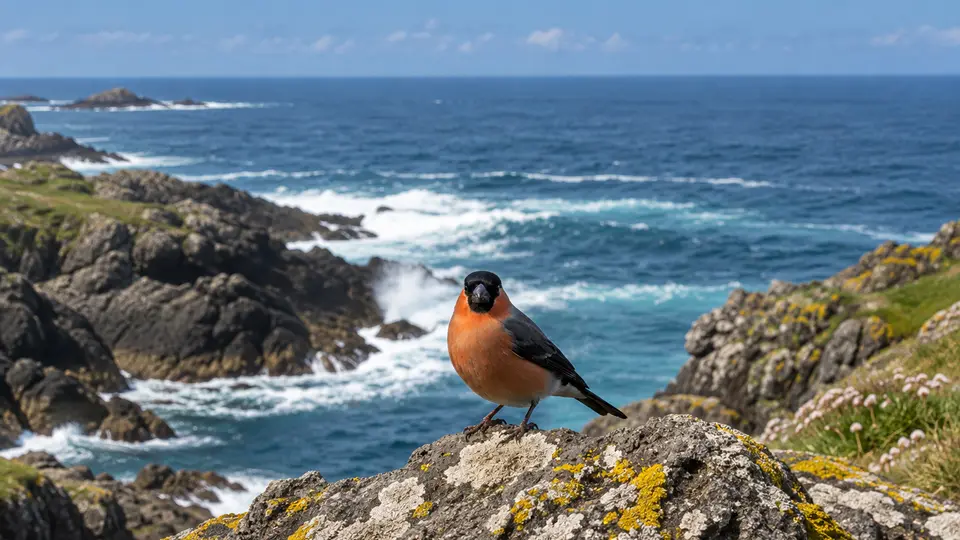
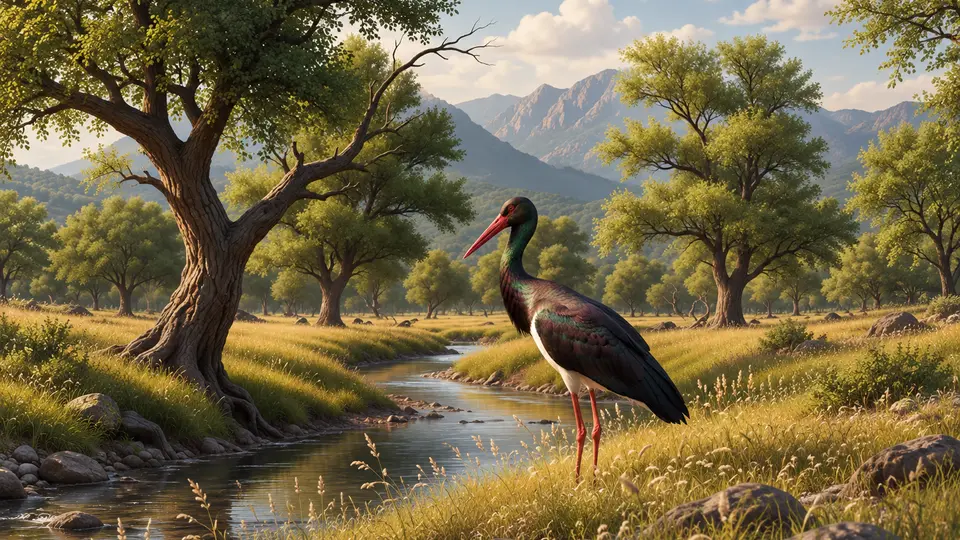
Audouin's GullAI-modifiedAudouin's GullAzores BullfinchAI-modifiedAzores BullfinchBlack StorkAI-modifiedBlack Stork
Animal groupBirdsAnimal groupBirdsAnimal groupBirds
DestinationsCroatia, Greece, Portugal, TurkeyDestinationsPortugalDestinationsPortugal, Turkey
Scientific nameIchthyaetus audouiniiScientific nameScientific name
All wildlife destinations
AI-modified
Plan your trip

Find your next wildlife adventure

Compare destinations, shore programs and dates with the animals and habitats you would love to see.

  • Naturalist-led shore excursions
  • Responsible wildlife watching
  • Small expedition ships