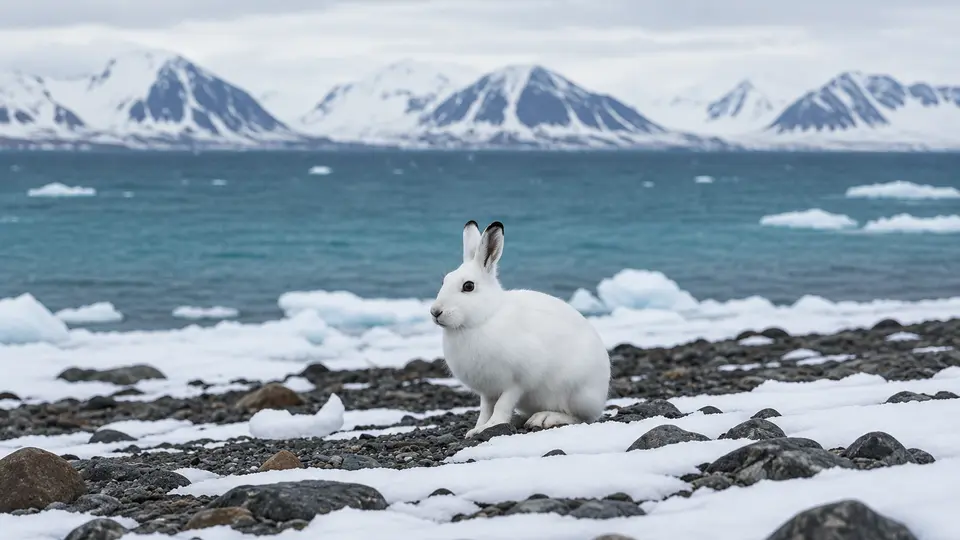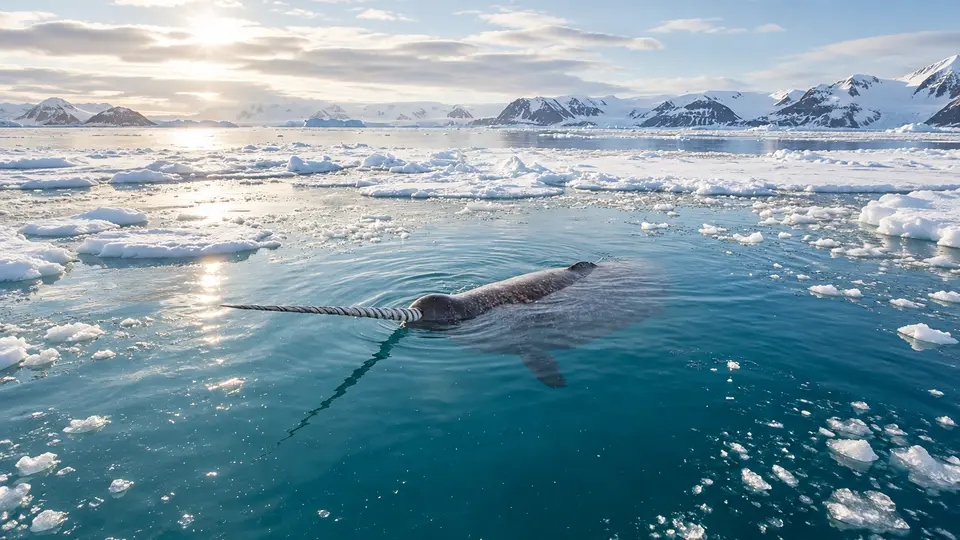
Narwhal in its natural habitat, AI illustration

Narwhal: where and when to see them

Monodon monoceros

Narwhal at a glance

The narwhal is an Arctic toothed whale whose best-known feature is an elongated tooth, usually carried by males. Its mottled grey body has no dorsal fin, an adaptation suited to life around sea ice. Most animals belong to populations associated with Canadian, Greenlandic and Russian Arctic waters. These are marine mammals, not shore-dwelling wildlife, and even in occupied fjords their brief surfacings can make distant observation difficult.

Behaviour & reproduction

Size
3.8-5.5 m body length, excluding tusk
Weight
800-1,600 kg
Lifespan
Not reliably established
Status
Least Concern

Narwhals travel in social groups and make seasonal movements between coastal summer areas and offshore winter habitat associated with pack ice. They use echolocation to locate prey and navigate a dim environment. At the surface, groups may breathe quietly with little obvious splash, making them easy to miss from land or a deck. Their movements follow regional traditions, and changing ice, vessel disturbance and hunting pressure can influence where animals appear. Narwhals travel in social groups and make seasonal movements between coastal summer areas and offshore winter habitat associated with pack ice. They use echolocation to locate prey and navigate a dim environment. At the surface, groups may breathe quietly with little obvious splash, making them easy to miss from land or a deck. Their movements follow regional traditions, and changing ice, vessel disturbance and hunting pressure can influence where animals appear. They are known to undertake deep dives, often exceeding 1,000 meters, to feed. Social groups, sometimes numbering in the hundreds, communicate through a variety of clicks, whistles, and pulsed calls.

Top wildlife locations

Arctic wildlife habitat

Arctic

Selected Canadian and Greenlandic fjords offer possible distant shore or deck views of summering groups. Most coastline does not provide dependable opportunities, and many occupied areas are remote, restricted or inaccessible.

Adventure cruises in Arctic
Destinations describe the species' habitat, not guaranteed cruise stops. Some animals require an optional inland excursion or are found in restricted reserves.

Fun facts about the Narwhal

  • The familiar tusk is usually the left upper canine tooth.
  • Some females grow a tusk, and rare individuals develop two.
  • Narwhals lack a dorsal fin but have a low ridge along the back.
  • Age estimates from eye-lens chemistry suggest some individuals can exceed a century.

Best time to see the Narwhal

July and August can provide access to certain Arctic summering areas as coastal ice retreats. This is a travel and visibility window rather than a universal peak in narwhal numbers. Local knowledge is essential because different populations use different fjords and migration routes. July and August can provide access to certain Arctic summering areas as coastal ice retreats. This is a travel and visibility window rather than a universal peak in narwhal numbers. Local knowledge is essential because different populations use different fjords and migration routes. Winter months see them in offshore pack ice, making them largely inaccessible to human observation. Spring and autumn are transitional periods, with animals moving between habitats.

Narwhal: season matrix by destination

Travel and observation windows vary by region. Highlighted months are an orientation for planning, not confirmed sightings or a guarantee of access.

Arctic

These months can permit coastal access in some summering regions; ice conditions and population-specific movements prevent a universal viewing season.

JanFebMarAprMayJunJulAugSepOctNovDec
Cruise ships in Arctic

Where the Narwhal lives

Deep Arctic waters, ice-covered offshore areas and selected coastal fjords form the narwhal's habitat. Some populations enter bays and inlets during summer, while others remain difficult to access. Suitable-looking coastline alone is not evidence that narwhals regularly occur there. Deep Arctic waters, ice-covered offshore areas and selected coastal fjords form the narwhal's habitat. Some populations enter bays and inlets during summer, while others remain difficult to access. Suitable-looking coastline alone is not evidence that narwhals regularly occur there. Their range extends across the Arctic waters of Canada, Greenland, Norway, and Russia. Key populations are found in Baffin Bay and around Greenland.

What the Narwhal eats

Narwhals eat fish and cephalopods, including Greenland halibut, Arctic cod, polar cod and squid. Diet differs between regions and seasons. Much feeding takes place at considerable depth, and important winter feeding grounds may lie far from any practical shore viewpoint. Narwhals eat fish and cephalopods, including Greenland halibut, Arctic cod, polar cod and squid. Diet differs between regions and seasons. Much feeding takes place at considerable depth, and important winter feeding grounds may lie far from any practical shore viewpoint. They are apex predators in their ecosystem, playing a crucial role in the food web. Their specialized diet and deep feeding habits reflect adaptations to a challenging environment.

Species at a glance

Common name
Narwhal
Scientific name
Monodon monoceros
Animal group
Mammals
Size
3.8-5.5 m body length, excluding tusk
Weight
800-1,600 kg
Lifespan
Not reliably established
Status
Least Concern
Identification
Unlike the uniformly pale adult beluga, an adult narwhal has grey mottling and may show a long straight tusk, but both lack a dorsal fin. Unlike the uniformly pale adult beluga, an adult narwhal has grey mottling and may show a long straight tusk, but both lack a dorsal fin. Juveniles and subadults often appear darker and more mottled than older individuals. The tusk, present in males and some females, is a highly elongated canine tooth and can reach up to ten feet in length.

Narwhal: frequently asked questions

Where can I see the Narwhal?
Arctic. Watch only from distant shore viewpoints or an appropriately operated vessel's deck. Use binoculars, avoid loud disturbance and never encourage pursuit or interception. A tusk is often invisible, and sightings cannot be assumed. Watch only from distant shore viewpoints or an appropriately operated vessel's deck. Use binoculars, avoid loud disturbance and never encourage pursuit or interception. A tusk is often invisible, and sightings cannot be assumed. Look for groups of individuals at the surface, especially near ice edges or fjord entrances. Their breath, though quiet, can sometimes be seen as a small puff of mist in cold air.
When is the best time to see the Narwhal?
July and August can provide access to certain Arctic summering areas as coastal ice retreats. This is a travel and visibility window rather than a universal peak in narwhal numbers. Local knowledge is essential because different populations use different fjords and migration routes. July and August can provide access to certain Arctic summering areas as coastal ice retreats. This is a travel and visibility window rather than a universal peak in narwhal numbers. Local knowledge is essential because different populations use different fjords and migration routes. Winter months see them in offshore pack ice, making them largely inaccessible to human observation. Spring and autumn are transitional periods, with animals moving between habitats.
How big does the Narwhal get?
3.8-5.5 m body length, excluding tusk. Adult weight: 800-1,600 kg. Size varies with age, sex and population.
How should I behave around the Narwhal?
Watch only from distant shore viewpoints or an appropriately operated vessel's deck. Use binoculars, avoid loud disturbance and never encourage pursuit or interception. A tusk is often invisible, and sightings cannot be assumed. Watch only from distant shore viewpoints or an appropriately operated vessel's deck. Use binoculars, avoid loud disturbance and never encourage pursuit or interception. A tusk is often invisible, and sightings cannot be assumed. Look for groups of individuals at the surface, especially near ice edges or fjord entrances. Their breath, though quiet, can sometimes be seen as a small puff of mist in cold air.
What does the Narwhal eat?
Narwhals eat fish and cephalopods, including Greenland halibut, Arctic cod, polar cod and squid. Diet differs between regions and seasons. Much feeding takes place at considerable depth, and important winter feeding grounds may lie far from any practical shore viewpoint. Narwhals eat fish and cephalopods, including Greenland halibut, Arctic cod, polar cod and squid. Diet differs between regions and seasons. Much feeding takes place at considerable depth, and important winter feeding grounds may lie far from any practical shore viewpoint. They are apex predators in their ecosystem, playing a crucial role in the food web. Their specialized diet and deep feeding habits reflect adaptations to a challenging environment.
Are wildlife sightings guaranteed on an adventure cruise?
No. Animals move freely and routes, weather, access restrictions and local conditions influence every outing. Confirm the actual itinerary and shore program before booking.

Compare wildlife in the same destinations

Explore other mammals recorded in these destinations. Similar surroundings do not mean the animals share the same habits or viewing season.

Species comparison by animal group and destination
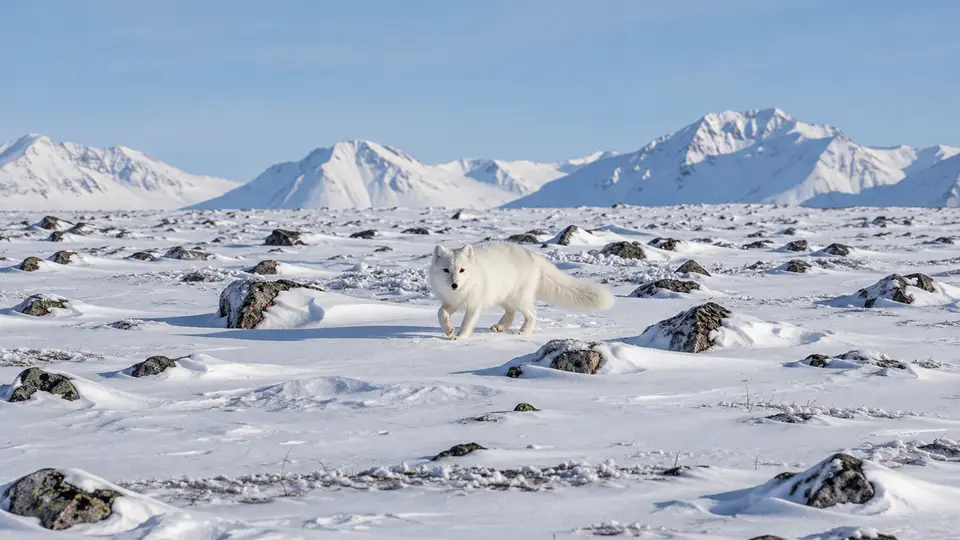
NarwhalNarwhalArctic FoxArctic FoxArctic HareArctic Hare
Animal groupMammalsAnimal groupMammalsAnimal groupMammals
DestinationsArcticDestinationsNorway, ArcticDestinationsArctic
All wildlife destinations
Plan your trip

Find your next wildlife adventure

Compare destinations, shore programs and dates with the animals and habitats you would love to see.

  • Naturalist-led shore excursions
  • Responsible wildlife watching
  • Small expedition ships

Newsletter

Take Blue Rides with you

Adventure cruise offers, last-minute deals and trip inspiration.

Free, unsubscribe anytime. Details: Privacy Policy

Partner with Blue Rides

Affiliate Program

Recommend adventure cruises and earn commission on every confirmed booking.

Share. Track. Earn.