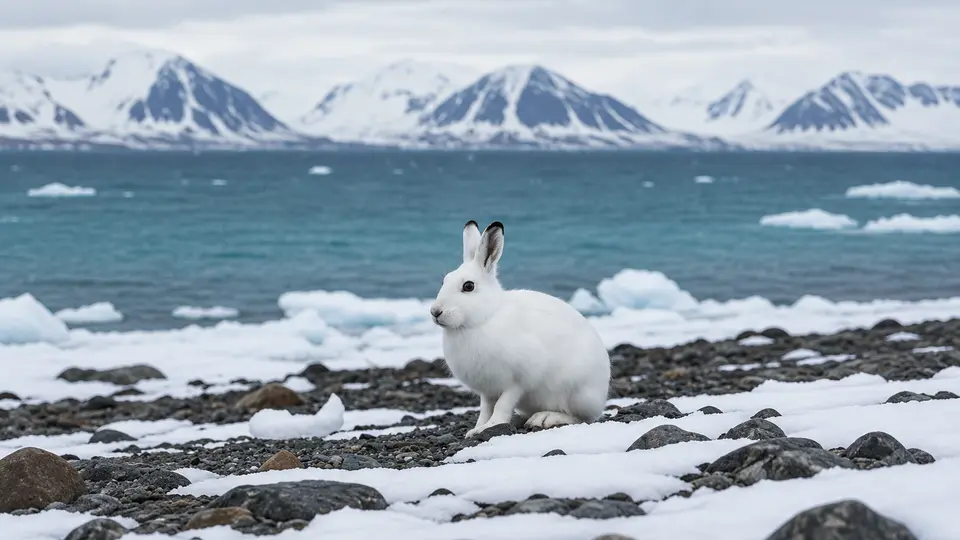
Arctic Hare in its natural habitat

Arctic HareLepus arcticusWhere and when to see them

Arctic Hare at a glance

The Arctic hare inhabits Greenland and the Canadian Arctic, where its compact shape and dense coat help conserve heat. It is not the hare found throughout every Arctic country. Northern populations may remain white year-round, while farther south the summer coat becomes brownish or gray. Long hind limbs provide rapid escape across open ground, and black ear tips remain a useful feature against both snow and pale summer fur.

Behaviour & reproduction

Size
43-70 cm body length
Weight
2.5-5.5 kg
Lifespan
Not reliably established
Status
Least Concern

Arctic hares spend much of their time feeding or resting in sheltered depressions among rocks and snow. They may gather in large groups, particularly outside the breeding season, although individuals also forage alone. When alarmed, a hare can rise upright to inspect its surroundings before bounding away. Young are born furred and with open eyes, allowing them to remain concealed separately while the mother returns for brief nursing visits. They possess an exceptional ability to conserve heat, aided by their compact body shape and thick fur. When threatened, they can reach speeds up to 60 kilometers per hour to escape predators like Arctic foxes and wolves. Arctic hares communicate through thumping their hind feet on the ground, a signal of alarm to other hares.

Top wildlife locations

Arctic wildlife habitat

Arctic

Rocky coastal tundra in Greenland and Arctic Canada offers plausible viewing habitat. The species is absent from many other Arctic destinations, and suitable shores may be inaccessible without authorized local arrangements.
Destinations describe the species' habitat, not guaranteed cruise stops. Some animals require an optional inland excursion or are found in restricted reserves.

Fun facts about the Arctic Hare

  • Its natural range is centered on Greenland and Arctic Canada.
  • Far-northern populations can retain white fur throughout summer.
  • Newborn young, called leverets, already have fur and open eyes.
  • Adults sometimes assemble in groups numbering dozens or more.

Best time to see the Arctic Hare

June through August generally provides the most practical coastal tundra access within its range. White animals can stand out against snow-free ground in northern areas, but seasonal coat changes vary geographically. Winter observation requires specialized local arrangements rather than ordinary summer coastal travel. Prime viewing opportunities often coincide with late spring and early autumn when animals may still exhibit transitional or partial white coats. Local guides can advise on specific timing for viewing areas where hares are reliably present. Remember that weather conditions can change rapidly in the Arctic, impacting excursion plans.

Arctic Hare: season matrix by destination

Travel and observation windows vary by region. Highlighted months are an orientation for planning, not confirmed sightings or a guarantee of access.

Arctic

This is a general summer access window within the actual range, not a pan-Arctic occurrence claim or a reliable encounter forecast.

JanFebMarAprMayJunJulAugSepOctNovDec
Cruise ships in Arctic

Where the Arctic Hare lives

The species occupies treeless tundra, rocky slopes, polar desert and coastal plains in Greenland and northern Canada. It favors landscapes with accessible vegetation and shelter from wind. Snow conditions influence winter feeding access, while exposed ridges can offer both forage and resting places. They are particularly adapted to extremely cold, windswept environments, often found in areas with permanent snow cover. Their high tolerance for cold allows them to inhabit some of the most barren arctic landscapes. This species is an important part of the food web in these harsh northern ecosystems.

What the Arctic Hare eats

Woody plants, especially willow stems, buds and bark, are important winter foods. Summer feeding includes grasses, sedges, flowers and other tundra plants. Like other hares, Arctic hares reingest soft fecal pellets to extract additional nutrients from fibrous vegetation through a second digestive passage. In spring, they excavate snow to access mosses and lichens, crucial when other forage is scarce. Their strong claws are well-suited for digging through packed snow and ice to reach buried vegetation. This dietary flexibility is key to their survival in a resource-limited environment.

Species at a glance

Common name
Arctic Hare
Scientific name
Lepus arcticus
Animal group
Mammals
Size
43-70 cm body length
Weight
2.5-5.5 kg
Lifespan
Not reliably established
Status
Least Concern
Identification
Compared with snowshoe hares, Arctic hares are generally larger with proportionally shorter ears, but separation from other northern hares also requires accurate geographic context. Arctic hares are distinguished from Arctic foxes by their larger size, upright posture, and absence of a bushy tail. Their winter coat is almost entirely white, except for small black tips on their ears. Unlike rabbits, they do not dig burrows but create shallow scrapes for shelter.

Arctic Hare: frequently asked questions

Where can I see the Arctic Hare?
Arctic. Scan rocky tundra from established paths, keeping enough distance that resting hares do not stand alert or flee. Never pursue them for photographs, and watch your footing around concealed young and fragile vegetation. Look for their distinctive dark-tipped ears, which can be visible even when much of their body blends with snow. Consider using binoculars to scan distant slopes and rocky outcrops where they often rest. Pay close attention to subtle movements on the tundra, as their camouflage can make them difficult to spot.
When is the best time to see the Arctic Hare?
June through August generally provides the most practical coastal tundra access within its range. White animals can stand out against snow-free ground in northern areas, but seasonal coat changes vary geographically. Winter observation requires specialized local arrangements rather than ordinary summer coastal travel. Prime viewing opportunities often coincide with late spring and early autumn when animals may still exhibit transitional or partial white coats. Local guides can advise on specific timing for viewing areas where hares are reliably present. Remember that weather conditions can change rapidly in the Arctic, impacting excursion plans.
How big does the Arctic Hare get?
43-70 cm body length. Adult weight: 2.5-5.5 kg. Size varies with age, sex and population.
How should I behave around the Arctic Hare?
Scan rocky tundra from established paths, keeping enough distance that resting hares do not stand alert or flee. Never pursue them for photographs, and watch your footing around concealed young and fragile vegetation. Look for their distinctive dark-tipped ears, which can be visible even when much of their body blends with snow. Consider using binoculars to scan distant slopes and rocky outcrops where they often rest. Pay close attention to subtle movements on the tundra, as their camouflage can make them difficult to spot.
What does the Arctic Hare eat?
Woody plants, especially willow stems, buds and bark, are important winter foods. Summer feeding includes grasses, sedges, flowers and other tundra plants. Like other hares, Arctic hares reingest soft fecal pellets to extract additional nutrients from fibrous vegetation through a second digestive passage. In spring, they excavate snow to access mosses and lichens, crucial when other forage is scarce. Their strong claws are well-suited for digging through packed snow and ice to reach buried vegetation. This dietary flexibility is key to their survival in a resource-limited environment.
Are wildlife sightings guaranteed on an adventure cruise?
No. Animals move freely and routes, weather, access restrictions and local conditions influence every outing. Confirm the actual itinerary and shore program before booking.

Compare wildlife in the same destinations

Explore other mammals recorded in these destinations. Similar surroundings do not mean the animals share the same habits or viewing season.

Species comparison by animal group and destination
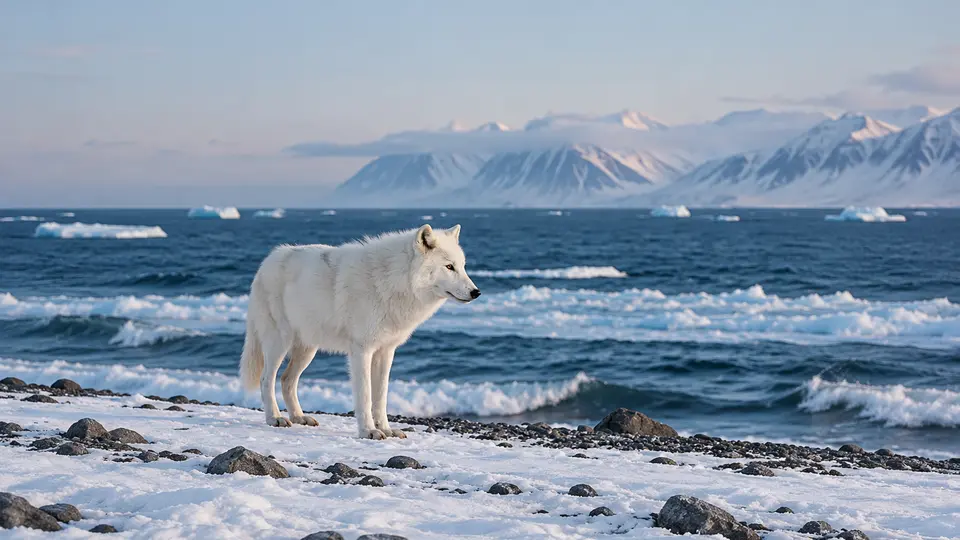
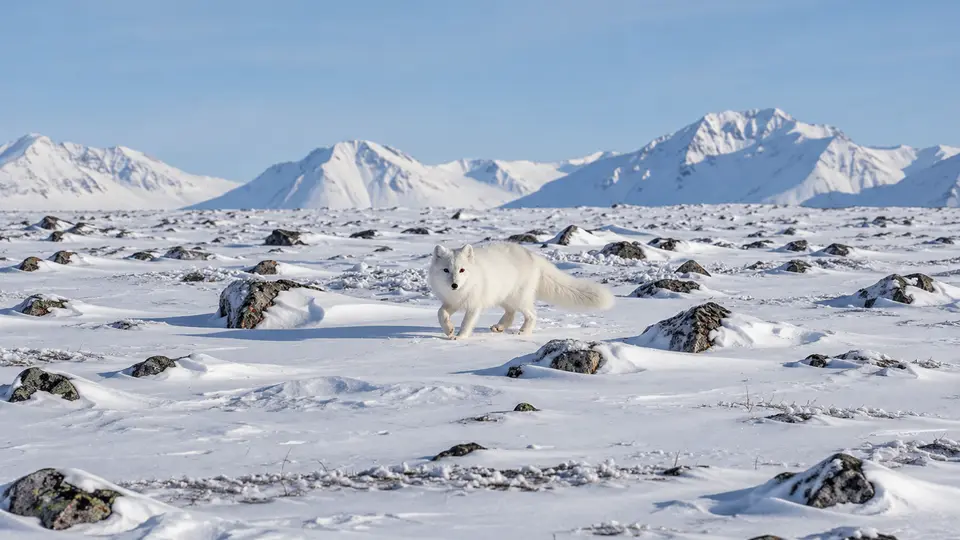
Arctic HareArctic HareArctic FoxArctic FoxArctic WolfArctic Wolf
Animal groupMammalsAnimal groupMammalsAnimal groupMammals
DestinationsArcticDestinationsNorway, ArcticDestinationsArctic
All wildlife destinations
Plan your trip

Find your next wildlife adventure

Compare destinations, shore programs and dates with the animals and habitats you would love to see.

  • Naturalist-led shore excursions
  • Responsible wildlife watching
  • Small expedition ships