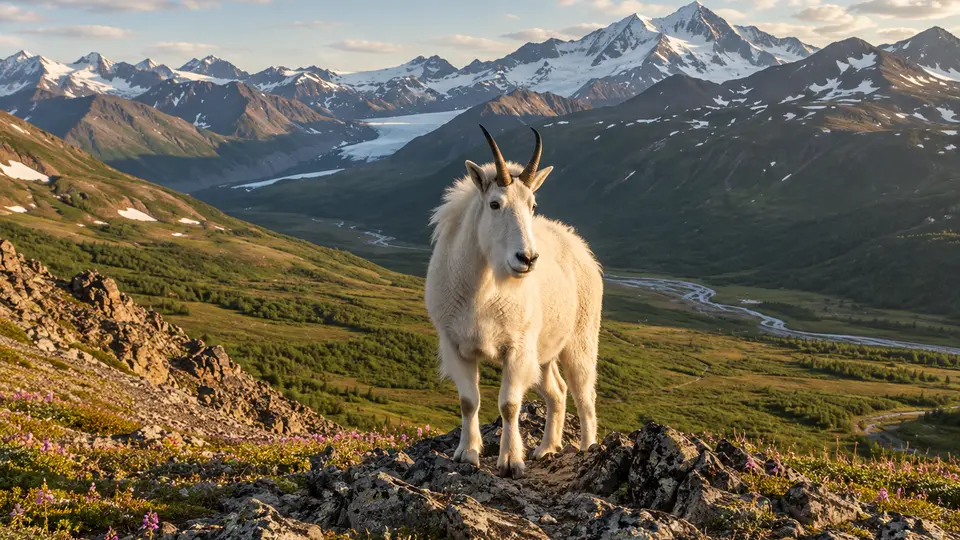
Mountain Goat in its natural habitat, AI illustration

Mountain Goat: where and when to see them

Oreamnos americanus

Mountain Goat at a glance

The mountain goat is a white-coated mountain ungulate native to northwestern North America. Despite its name, it is not a true goat of the genus Capra. A thick coat, muscular shoulders and specialized hooves allow it to occupy cold, steep terrain where many predators struggle to follow. In coastal Alaska, mountains rise directly above fjords, sometimes allowing distant shore or deck views of animals on grassy ledges and broken cliffs.

Behaviour & reproduction

Size
90-120 cm at shoulder
Weight
45-120 kg
Lifespan
10-15 years
Status
Least Concern

Females and young often form small groups, while adult males are more solitary outside the breeding season. Mountain goats move deliberately across narrow ledges, using steep escape terrain when threatened. Both sexes carry sharp horns and can behave aggressively at close range, particularly around kids or scarce resources. They may become attracted to salt from human sources, making strict distance and careful management of food and waste important. Mountain goats are known for their strong maternal bonds; nannies are fiercely protective of their offspring. They are highly agile climbers, capable of leaping across wide chasms and ascending seemingly impassable cliffs with ease.

Top wildlife locations

Alaska wildlife habitat

Alaska

Steep fjord walls and coastal mountain slopes can support distant shore or deck observation. Animals often occupy inaccessible ledges, and an inland mountain excursion is unnecessary when suitable cliffs are visible from established viewpoints.

Adventure cruises in Alaska
Destinations describe the species' habitat, not guaranteed cruise stops. Some animals require an optional inland excursion or are found in restricted reserves.

Fun facts about the Mountain Goat

  • Both males and females have permanent black horns.
  • Their hooves combine hard outer edges with grippy inner pads.
  • Kids begin following their mothers across steep terrain shortly after birth.
  • Mountain goats belong to a different genus from domestic goats.

Best time to see the Mountain Goat

Late spring through early autumn provides long daylight and generally better coastal visibility in Alaska. Summer animals may be high above shore, while snow can push some lower at other times. Weather, cloud ceilings and terrain strongly influence viewing opportunities. In late spring and early summer, nannies with kids may be seen at lower elevations as they seek out fresh, nutritious forage. Early autumn often presents opportunities to see them in their full winter coats before heavy snows arrive.

Mountain Goat: season matrix by destination

Travel and observation windows vary by region. Highlighted months are an orientation for planning, not confirmed sightings or a guarantee of access.

Alaska

These months favor coastal travel and daylight; cloud, distance and seasonal elevation changes can prevent useful views.

JanFebMarAprMayJunJulAugSepOctNovDec
Cruise ships in Alaska

Where the Mountain Goat lives

They occupy alpine and subalpine cliffs, rocky ridges, meadows and steep forested slopes. Coastal populations may descend to relatively low elevations in winter. Suitable viewing terrain is often distant or inaccessible, and safe observation does not require reaching the animals' ledges. They are particularly adept at navigating extremely rugged and steep terrain, often found at or above the tree line. In Alaska, this often means preferring high, remote areas of the Coast Range, Chugach Mountains, and other mountainous regions.

What the Mountain Goat eats

Mountain goats eat grasses, sedges, herbs and woody browse, with mosses and lichens contributing in some seasons. Winter feeding depends on exposed vegetation and accessible shrubs. Mineral licks provide salts and can influence movements between otherwise separated habitat patches. Their diet varies seasonally and geographically, adapting to available forage; they are generalist herbivores. They will consume a wide array of plant parts including leaves, stems, flowers, and buds.

Species at a glance

Common name
Mountain Goat
Scientific name
Oreamnos americanus
Animal group
Mammals
Size
90-120 cm at shoulder
Weight
45-120 kg
Lifespan
10-15 years
Status
Least Concern
Identification
Its shaggy white coat, shoulder hump and short black horns distinguish it from Dall sheep, whose males develop large curling horns. Their hooves have soft, rubbery pads surrounded by a sharp, hard rim, providing exceptional grip on rock and ice. Both sexes possess a distinct beard, adding to their unique appearance.

Mountain Goat: frequently asked questions

Where can I see the Mountain Goat?
Alaska. Scan cliff ledges with binoculars from a safe shore position or deck. Never climb toward goats or stand below unstable slopes. On trails, give horned adults ample space and never offer salty food. When viewing from a distance, look for their characteristic slow, deliberate movement along rocky contours. Remember that mountain goats can move surprisingly quickly over their preferred steep terrain when alarmed.
When is the best time to see the Mountain Goat?
Late spring through early autumn provides long daylight and generally better coastal visibility in Alaska. Summer animals may be high above shore, while snow can push some lower at other times. Weather, cloud ceilings and terrain strongly influence viewing opportunities. In late spring and early summer, nannies with kids may be seen at lower elevations as they seek out fresh, nutritious forage. Early autumn often presents opportunities to see them in their full winter coats before heavy snows arrive.
How big does the Mountain Goat get?
90-120 cm at shoulder. Adult weight: 45-120 kg. Size varies with age, sex and population.
How should I behave around the Mountain Goat?
Scan cliff ledges with binoculars from a safe shore position or deck. Never climb toward goats or stand below unstable slopes. On trails, give horned adults ample space and never offer salty food. When viewing from a distance, look for their characteristic slow, deliberate movement along rocky contours. Remember that mountain goats can move surprisingly quickly over their preferred steep terrain when alarmed.
What does the Mountain Goat eat?
Mountain goats eat grasses, sedges, herbs and woody browse, with mosses and lichens contributing in some seasons. Winter feeding depends on exposed vegetation and accessible shrubs. Mineral licks provide salts and can influence movements between otherwise separated habitat patches. Their diet varies seasonally and geographically, adapting to available forage; they are generalist herbivores. They will consume a wide array of plant parts including leaves, stems, flowers, and buds.
Are wildlife sightings guaranteed on an adventure cruise?
No. Animals move freely and routes, weather, access restrictions and local conditions influence every outing. Confirm the actual itinerary and shore programme before booking.

Compare wildlife in the same destinations

Explore other mammals recorded in these destinations. Similar surroundings do not mean the animals share the same habits or viewing season.

Species comparison by animal group and destination
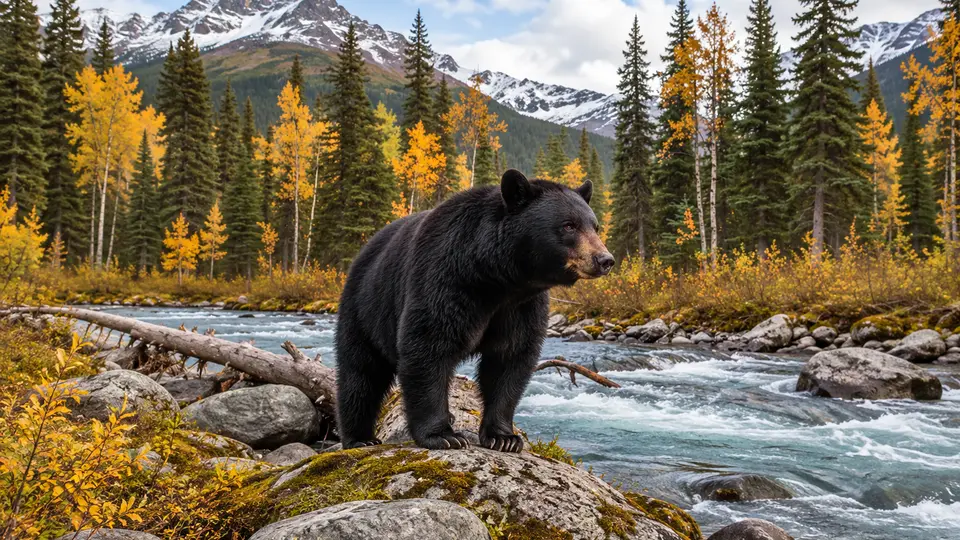
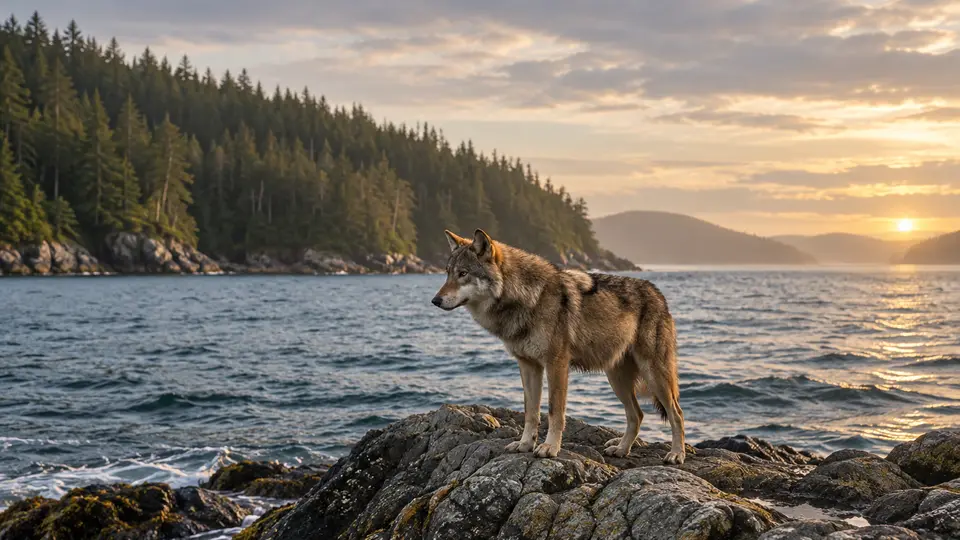
Mountain GoatMountain GoatAlexander Archipelago WolfAlexander Archipelago WolfAmerican Black BearAmerican Black Bear
Animal groupMammalsAnimal groupMammalsAnimal groupMammals
DestinationsAlaskaDestinationsAlaskaDestinationsAlaska, New England
All wildlife destinations
Plan your trip

Find your next wildlife adventure

Compare destinations, shore programmes and dates with the animals and habitats you would love to see.

  • Naturalist-led shore excursions
  • Responsible wildlife watching
  • Small expedition ships

Newsletter

Take Blue Rides with you

Adventure cruise offers, last-minute deals and trip inspiration.

Free, unsubscribe anytime. Details: Privacy Policy

Partner with Blue Rides

Affiliate Program

Recommend adventure cruises and earn commission on every confirmed booking.

Share. Track. Earn.