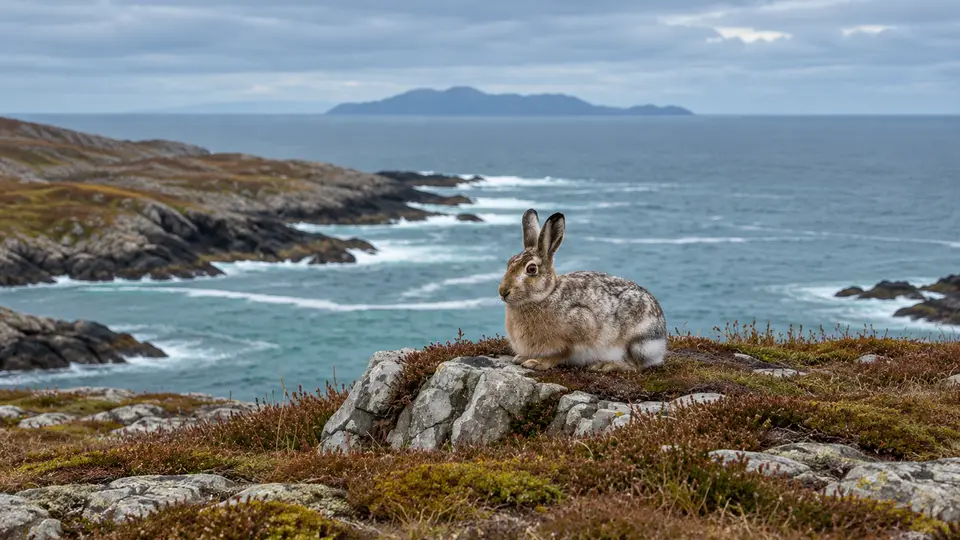
Mountain Hare in its natural habitat, AI illustration

Mountain HareLepus timidusWhere and when to see them

Mountain Hare at a glance

The mountain hare is a cold-adapted hare native across northern Eurasia, with Scotland supporting a distinctive native population in Britain. Scottish animals usually change from a brownish or gray summer coat to a much paler winter coat. This seasonal camouflage works best when snow cover matches the molt. Upland land management, climate change and local population fluctuations all influence its prospects, even though the species remains widespread globally.

Behaviour & reproduction

Size
45-65 cm body length
Weight
2-4 kg
Lifespan
Not reliably established
Status
Least Concern

Mountain hares rest in shallow sheltered depressions rather than underground burrows, relying on concealment and rapid escape. Feeding is often concentrated around dusk, dawn and nighttime, although daytime activity occurs. Several animals may gather where feeding conditions are favorable, especially in winter. Breeding can involve energetic chasing and boxing, while mothers visit well-concealed young briefly rather than staying beside them and attracting attention. Hares often create 'forms' by pressing down vegetation, which provides a slight depression for resting and concealment. During periods of high activity, particularly breeding, they exhibit a characteristic 'mad March hare' behaviour, involving vigorous leaps and chases. They communicate through thumping their hind legs on the ground as an alarm signal and emit high-pitched screams when distressed.

Top wildlife locations

Scotland wildlife habitat

Scotland

Heather moorland and upland slopes offer the best habitat, generally requiring an inland excursion from the coast. Some coastal uplands also hold hares, but local distribution and access need checking before travel.
Destinations describe the species' habitat, not guaranteed cruise stops. Some animals require an optional inland excursion or are found in restricted reserves.

Fun facts about the Mountain Hare

  • Scottish mountain hares are commonly assigned to the subspecies Lepus timidus scoticus.
  • Their coat molt is influenced strongly by changing day length.
  • Young hares are born furred and with their eyes open.
  • They rest in surface depressions called forms rather than digging rabbit-like burrows.

Best time to see the Mountain Hare

Observation is possible year-round, but spring and summer offer longer daylight and easier upland access. Winter coats can aid detection on snow-free ground, yet winter conditions increase disturbance costs and walking hazards. Choose calm weather and avoid pursuing resting animals. Late winter and early spring are excellent for observing their gradual coat change, with patches of white and brown visible. During the breeding season in early spring, male hares may be more conspicuous due to increased activity. Calm, overcast days can sometimes lead to more prolonged daytime activity, especially outside the core feeding hours.

Mountain Hare: season matrix by destination

Travel and observation windows vary by region. Highlighted months are an orientation for planning, not confirmed sightings or a guarantee of access.

Scotland

This window prioritizes daylight and manageable upland access; hares are resident year-round, and winter observation requires additional weather and welfare precautions.

JanFebMarAprMayJunJulAugSepOctNovDec
Cruise ships in Scotland

Where the Mountain Hare lives

In Scotland, mountain hares are associated chiefly with upland heath, heather moorland and mountain slopes. Patches of cover and accessible forage are important. Most coastal itineraries require an inland excursion, although some island and coastal uplands also support populations. While primarily found in uplands, some populations persist in fragmented lowland agricultural areas or coniferous plantations, particularly in northern Scotland. Their range has contracted in parts of Scotland due to habitat loss and changes in land use. They demonstrate adaptability by using forestry tracks and firebreaks for movement and foraging.

What the Mountain Hare eats

Grasses, sedges, herbs and heather feature prominently, with the balance changing seasonally and locally. Woody shoots become more important when snow limits other foods. Like other lagomorphs, they reingest soft droppings to recover nutrients produced during hindgut fermentation. In spring, they frequently graze on young shoots of cotton grass and blaeberry. During severe weather, they may gnaw on bark from saplings or fallen branches for sustenance. Their diet provides essential hydration as they rarely drink standing water, obtaining moisture from vegetation.

Species at a glance

Common name
Mountain Hare
Scientific name
Lepus timidus
Animal group
Mammals
Size
45-65 cm body length
Weight
2-4 kg
Lifespan
Not reliably established
Status
Least Concern
Identification
Compared with the brown hare, it has shorter ears, a more compact build and a tail that remains white rather than showing a prominent black upper surface. The black tips of their ears, visible year-round, are a key distinguishing feature from the snowshoe hare found elsewhere. Their fur is noticeably thicker than a brown hare's, adapting them to colder climates. In winter, their white coat often retains a slightly bluish or greyish tinge.

Mountain Hare: frequently asked questions

Where can I see the Mountain Hare?
Scotland. Scan heather slopes from established paths and allow hares to remain concealed. Keep dogs controlled and never chase animals for photographs. In winter, repeated flushing wastes energy needed for survival in cold upland conditions. Use binoculars or a spotting scope for detailed observation to minimize disturbance. Look for 'runs' or well-worn paths through the heather that indicate frequent hare movement. Be patient and scan hillsides carefully, as their camouflage makes them incredibly difficult to spot when motionless.
When is the best time to see the Mountain Hare?
Observation is possible year-round, but spring and summer offer longer daylight and easier upland access. Winter coats can aid detection on snow-free ground, yet winter conditions increase disturbance costs and walking hazards. Choose calm weather and avoid pursuing resting animals. Late winter and early spring are excellent for observing their gradual coat change, with patches of white and brown visible. During the breeding season in early spring, male hares may be more conspicuous due to increased activity. Calm, overcast days can sometimes lead to more prolonged daytime activity, especially outside the core feeding hours.
How big does the Mountain Hare get?
45-65 cm body length. Adult weight: 2-4 kg. Size varies with age, sex and population.
How should I behave around the Mountain Hare?
Scan heather slopes from established paths and allow hares to remain concealed. Keep dogs controlled and never chase animals for photographs. In winter, repeated flushing wastes energy needed for survival in cold upland conditions. Use binoculars or a spotting scope for detailed observation to minimize disturbance. Look for 'runs' or well-worn paths through the heather that indicate frequent hare movement. Be patient and scan hillsides carefully, as their camouflage makes them incredibly difficult to spot when motionless.
What does the Mountain Hare eat?
Grasses, sedges, herbs and heather feature prominently, with the balance changing seasonally and locally. Woody shoots become more important when snow limits other foods. Like other lagomorphs, they reingest soft droppings to recover nutrients produced during hindgut fermentation. In spring, they frequently graze on young shoots of cotton grass and blaeberry. During severe weather, they may gnaw on bark from saplings or fallen branches for sustenance. Their diet provides essential hydration as they rarely drink standing water, obtaining moisture from vegetation.
Are wildlife sightings guaranteed on an adventure cruise?
No. Animals move freely and routes, weather, access restrictions and local conditions influence every outing. Confirm the actual itinerary and shore program before booking.

Compare wildlife in the same destinations

Explore other mammals recorded in these destinations. Similar surroundings do not mean the animals share the same habits or viewing season.

Species comparison by animal group and destination
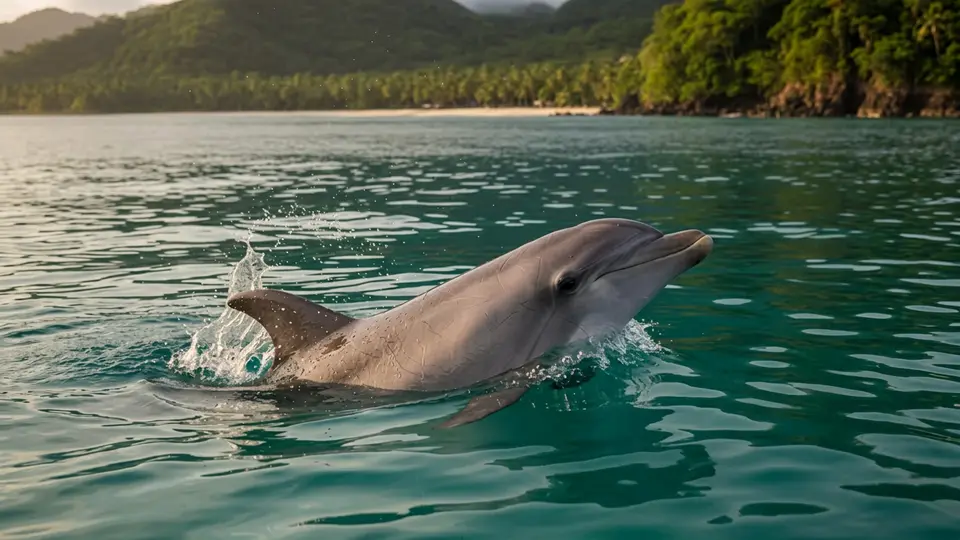
Mountain HareMountain HareCommon Bottlenose DolphinCommon Bottlenose DolphinEurasian OtterEurasian Otter
Animal groupMammalsAnimal groupMammalsAnimal groupMammals
DestinationsScotlandDestinationsCosta Rica, Florida, Galapagos, Mexico, Cape Verde, Croatia, Greece, Portugal, Scotland, Seychelles, Turkey, Maldives, Australia, New ZealandDestinationsScotland, Turkey
All wildlife destinations
Plan your trip

Find your next wildlife adventure

Compare destinations, shore programs and dates with the animals and habitats you would love to see.

  • Naturalist-led shore excursions
  • Responsible wildlife watching
  • Small expedition ships

Newsletter

Take Blue Rides with you

Adventure cruise offers, last-minute deals and trip inspiration.

Free, unsubscribe anytime. Details: Privacy Policy

Partner with Blue Rides

Affiliate Program

Recommend adventure cruises and earn commission on every confirmed booking.

Share. Track. Earn.

Your footage, our stage

Send us your videos or pictures.

Captured remarkable nature or wildlife on your journey? Share it with us, we may feature it on Blue Rides.