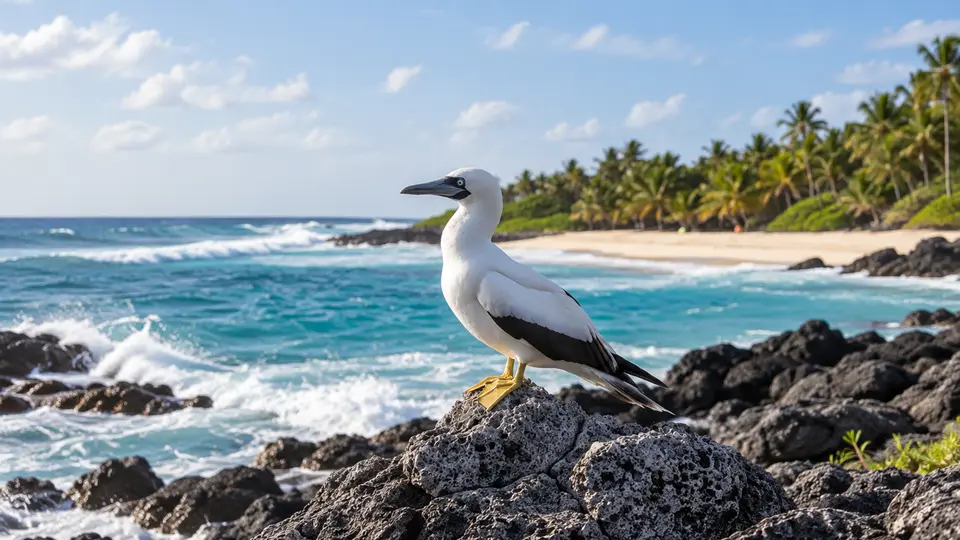
Masked Booby in its natural habitat, AI illustration

Masked BoobySula dactylatraWhere and when to see them

Masked Booby at a glance

The masked booby is a large tropical seabird with a mostly white body, black flight feathers and a dark facial mask surrounding a strong pale bill. It breeds on remote oceanic islands and spends much of its life over open water. Its wide global range does not make it common at every tropical destination. In Seychelles and Polynesia, relevant colonies are localized and often far from routine visitor routes.

Behaviour & reproduction

Size
74–86 cm long; 152–170 cm wingspan
Weight
1.2–2.4 kg
Lifespan
Not reliably established
Status
Least Concern

Masked boobies use long wings to commute between nesting islands and offshore feeding areas. At colonies, pairs perform head movements, bill gestures and calls around simple ground nests. Both parents incubate and feed their offspring. Although two eggs are often laid, the older chick usually eliminates its younger sibling, leaving one surviving chick. Birds can be approachable at colonies, but apparent tolerance should never be mistaken for absence of disturbance. Masked boobies are monogamous, forming strong pair bonds that can last for multiple breeding seasons. During courtship, pairs engage in elaborate displays involving head bowing, sky-pointing, and mutual preening to reinforce their bond. The surviving chick is fiercely defended by parents, who provide consistent care until it fledges, typically after about 100 days.

Top wildlife locations

Seychelles wildlife habitat

Seychelles

Remote outer-island shores and adjacent waters provide plausible distant viewing, but colonies are localized and many sites are inaccessible or permit-controlled. Main-island beaches are not dependable places to expect this offshore seabird.

Polynesia wildlife habitat

Polynesia

Remote atoll shores and rocky oceanic islands offer potential distant observation habitat. Colonies are scattered, often inaccessible or restricted, and ordinary resort beaches are unreliable; any shore access must be locally authorized.

Destinations describe the species' habitat, not guaranteed cruise stops. Some animals require an optional inland excursion or are found in restricted reserves.

Fun facts about the Masked Booby

  • It is the largest of the living booby species.
  • Its usual two-egg clutch most often produces only one surviving chick.
  • Adults warm eggs with their webbed feet during incubation.
  • Males typically whistle, whereas females give harsher calls.

Best time to see the Masked Booby

There is no single viewing season across Seychelles and Polynesia. Breeding schedules differ among colonies, and access can be restricted year-round. Choose travel windows for the specific island and authorized shore or deck route, rather than assuming a regional dry season predicts booby presence. Within specific island groups, breeding activity is often synchronized with local prey availability, which can vary with oceanographic conditions. Some colonies exhibit year-round breeding, but with peak periods that may align with calmer seas or specific fish migrations. Consult local guides or park authorities for the most current information on nesting cycles and viewing opportunities at particular sites.

Masked Booby: season matrix by destination

Travel and observation windows vary by region. Highlighted months are an orientation for planning, not confirmed sightings or a guarantee of access.

Seychelles

Without a specified accessible outer island or route, no defensible shore-viewing window can be assigned; colony schedules and transport conditions vary.

JanFebMarAprMayJunJulAugSepOctNovDec
Cruise ships in Seychelles

Polynesia

Polynesia spans widely differing climates and colony calendars; an island-specific itinerary is needed before assigning credible observation months.

JanFebMarAprMayJunJulAugSepOctNovDec
Cruise ships in Polynesia

Where the Masked Booby lives

Breeding sites are generally open, sparsely vegetated ground on remote tropical islands, including low coral islands and rocky outcrops. Feeding habitat lies offshore over warm seas. Accessible mainland-style beaches and busy resort waterfronts are not reliable substitutes for suitable nesting islands. Breeding populations occur across the tropical Indian and Pacific Oceans, with scattered colonies also found in the tropical Atlantic. Preferred nesting sites offer protection from terrestrial predators and are often on flat terrain, providing ample space for take-off and landing. They avoid densely vegetated areas which can obstruct their long wings during ground maneuvers.

What the Masked Booby eats

Flying fish and other surface-associated schooling fish dominate the diet, with squid also taken. Birds locate prey visually from the air, sometimes joining feeding aggregations with other seabirds. Food availability and the distance from colonies affect parental travel and chick provisioning. Prey is typically captured in shallow plunges or surface dips rather than deep dives, with birds snatching fish close to the water's surface. They are opportunistic feeders, often keying in on surface disturbances created by larger predators or current upwellings. Regurgitated boluses found near nests offer clues to local prey availability and species composition.

Species at a glance

Common name
Masked Booby
Scientific name
Sula dactylatra
Animal group
Birds
Size
74–86 cm long; 152–170 cm wingspan
Weight
1.2–2.4 kg
Lifespan
Not reliably established
Status
Least Concern
Identification
The adult’s white head, black tail and dark facial mask distinguish it from red-footed booby, while its yellowish bill differs from the orange bill of Nazca booby. The large size, robust body, and overall clean white plumage with striking black primary and secondary flight feathers are key field marks. In flight, the strong, direct wingbeats and extended neck contribute to a characteristic silhouette. Juveniles display a mottled brown and white plumage, gradually acquiring adult coloration over several years.

Masked Booby: frequently asked questions

Where can I see the Masked Booby?
Seychelles, Polynesia. Observe offshore birds from a stable deck or coastal viewpoint, and colonies only where access is authorized. Stay well outside nesting space, never stand between adults and chicks, and avoid exposed shore edges in strong wind or heavy surf. When viewing from the deck, look for birds flying with powerful, deliberate wingbeats, often high above the water. Binoculars or a spotting scope are essential for observing details of offshore birds or distant colony activity. Pay attention to changes in flight patterns, which can indicate a bird is honing in on potential prey or returning to a colony.
When is the best time to see the Masked Booby?
There is no single viewing season across Seychelles and Polynesia. Breeding schedules differ among colonies, and access can be restricted year-round. Choose travel windows for the specific island and authorized shore or deck route, rather than assuming a regional dry season predicts booby presence. Within specific island groups, breeding activity is often synchronized with local prey availability, which can vary with oceanographic conditions. Some colonies exhibit year-round breeding, but with peak periods that may align with calmer seas or specific fish migrations. Consult local guides or park authorities for the most current information on nesting cycles and viewing opportunities at particular sites.
How big does the Masked Booby get?
74–86 cm long; 152–170 cm wingspan. Adult weight: 1.2–2.4 kg. Size varies with age, sex and population.
How should I behave around the Masked Booby?
Observe offshore birds from a stable deck or coastal viewpoint, and colonies only where access is authorized. Stay well outside nesting space, never stand between adults and chicks, and avoid exposed shore edges in strong wind or heavy surf. When viewing from the deck, look for birds flying with powerful, deliberate wingbeats, often high above the water. Binoculars or a spotting scope are essential for observing details of offshore birds or distant colony activity. Pay attention to changes in flight patterns, which can indicate a bird is honing in on potential prey or returning to a colony.
What does the Masked Booby eat?
Flying fish and other surface-associated schooling fish dominate the diet, with squid also taken. Birds locate prey visually from the air, sometimes joining feeding aggregations with other seabirds. Food availability and the distance from colonies affect parental travel and chick provisioning. Prey is typically captured in shallow plunges or surface dips rather than deep dives, with birds snatching fish close to the water's surface. They are opportunistic feeders, often keying in on surface disturbances created by larger predators or current upwellings. Regurgitated boluses found near nests offer clues to local prey availability and species composition.
Are wildlife sightings guaranteed on an adventure cruise?
No. Animals move freely and routes, weather, access restrictions and local conditions influence every outing. Confirm the actual itinerary and shore program before booking.

Compare wildlife in the same destinations

Explore other birds recorded in these destinations. Similar surroundings do not mean the animals share the same habits or viewing season.

Species comparison by animal group and destination
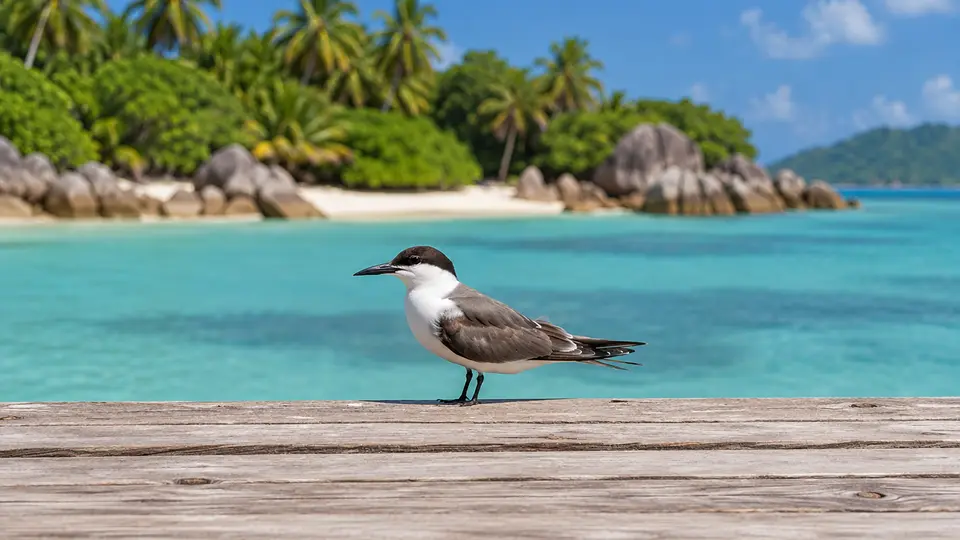
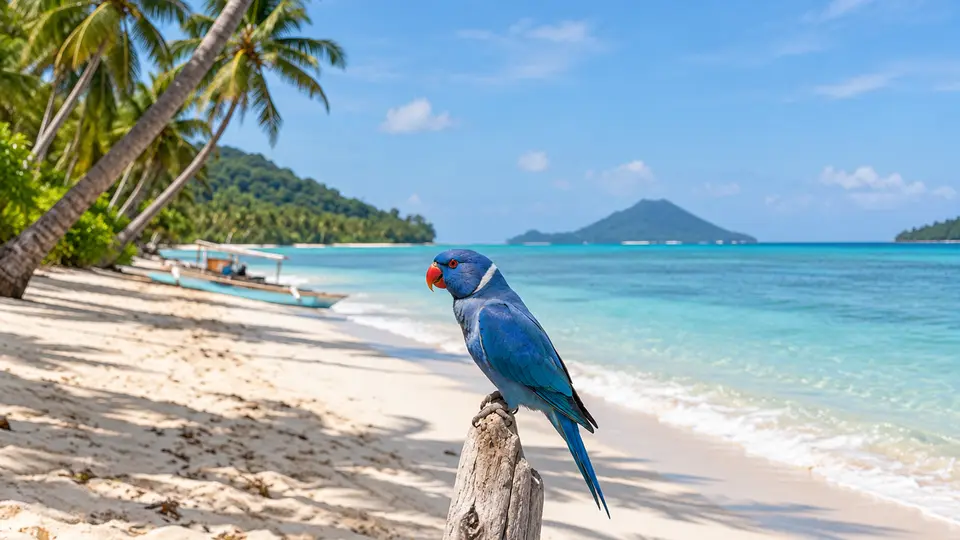
Masked BoobyMasked BoobyBlue lorikeetBlue lorikeetBridled TernBridled Tern
Animal groupBirdsAnimal groupBirdsAnimal groupBirds
DestinationsSeychelles, PolynesiaDestinationsPolynesiaDestinationsSeychelles
All wildlife destinations
Plan your trip

Find your next wildlife adventure

Compare destinations, shore programs and dates with the animals and habitats you would love to see.

  • Naturalist-led shore excursions
  • Responsible wildlife watching
  • Small expedition ships

Newsletter

Take Blue Rides with you

Adventure cruise offers, last-minute deals and trip inspiration.

Free, unsubscribe anytime. Details: Privacy Policy

Partner with Blue Rides

Affiliate Program

Recommend adventure cruises and earn commission on every confirmed booking.

Share. Track. Earn.

Your footage, our stage

Send us your videos or pictures.

Captured remarkable nature or wildlife on your journey? Share it with us, we may feature it on Blue Rides.