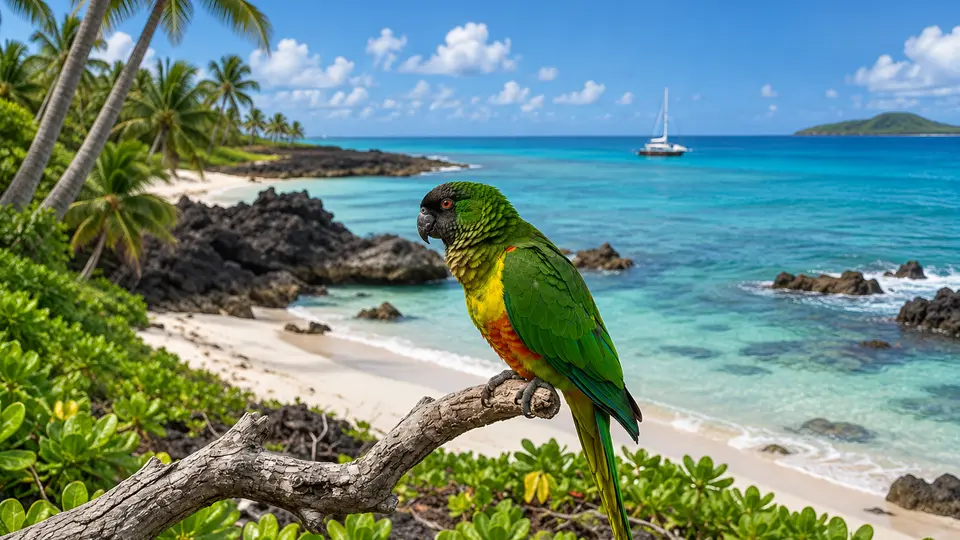
Masked shining parrot in its natural habitatAI-modified

Masked shining parrotProsopeia personataWhere and when to see them

Masked shining parrot at a glance

The masked shining parrot is a large parrot endemic to Viti Levu, Fiji’s largest island. A dark face contrasts with a mainly green body, yellowish breast and orange tones on the lower underparts. Forest loss and degradation affect this geographically restricted bird. Although it can use some modified woodland, mature trees remain important for both feeding and nesting, and its presence should not be assumed across Fiji.

Behaviour & reproduction

Size
45–47 cm (17.7–18.5 in) long
Weight
Not reliably established
Lifespan
Not reliably established
Status
Vulnerable

Pairs and small groups travel through forest canopies, calling loudly and pausing to feed in productive trees. The strong bill and grasping feet allow deliberate manipulation of plant foods. Birds may cross openings conspicuously but become difficult to locate once inside foliage. Nesting takes place in tree cavities, creating dependence on mature trees that provide suitable hollows as well as the surrounding landscape’s changing food resources. Pairs maintain strong bonds, often foraging and flying together, reinforcing their territory with vocalizations. Their flight is strong and direct, often accompanied by loud calls, particularly when moving between feeding sites or when disturbed.

Top wildlife locations

Fiji wildlife habitatAI-modified

Fiji

Viti Levu’s wooded coastal foothills offer possible habitat, but an inland forest excursion is usually more appropriate. Access may require community permission, and visits to other Fijian islands do not provide equivalent opportunities.
Destinations describe the species' habitat, not guaranteed cruise stops. Some animals require an optional inland excursion or are found in restricted reserves.

Fun facts about the Masked shining parrot

  • Its entire natural range is confined to Viti Levu.
  • The species name personata refers to its masked appearance.
  • It belongs to Prosopeia, a genus of large Fijian shining parrots.
  • Mature hollow-bearing trees provide essential nesting opportunities.

Best time to see the Masked shining parrot

May through October usually provides relatively drier travel conditions for Viti Levu forest walks. The species is resident, not a seasonal migrant. Rainfall on windward slopes can remain substantial, and local food availability matters more than a simple countrywide seasonal calendar. Even during the drier season, localized rain showers can occur, particularly in mountainous regions, so waterproof gear is advisable year-round. Dawn and dusk are often the most active feeding periods, regardless of the seasonal calendar, offering better viewing opportunities.

Masked shining parrot: season matrix by destination

Travel and observation windows vary by region. Highlighted months are an orientation for planning, not confirmed sightings or a guarantee of access.

Fiji

Relatively drier travel months on Viti Levu, not a verified peak in sightings or breeding; windward forest can remain wet.

JanFebMarAprMayJunJulAugSepOctNovDec
Cruise ships in Fiji

Where the Masked shining parrot lives

Lowland and hill forest on Viti Levu are the main habitat, with some use of secondary woodland, forest edges and tree-rich agricultural areas. Suitable coastal forest may hold birds, but inland wooded slopes generally provide a more credible search setting than open shorelines. While predominantly a forest species, it shows some adaptability to human-modified landscapes, often utilizing scattered trees in pasturelands or gardens adjacent to forested areas. Its presence is strongly linked to areas with mature trees offering suitable nesting cavities, a critical resource often found in older growth forests.

What the Masked shining parrot eats

The diet includes fruits, seeds, buds and other plant material gathered in trees. Both native vegetation and some cultivated plants can supply food. Local movements reflect changing resources, so a productive fruiting tree may attract birds temporarily without being a permanent observation site. Fig fruits, particularly from various Ficus species, are a significant component of their diet when available, alongside seeds from trees like Dacrydium. They use their powerful beak to crack open hard-shelled nuts and seeds, extracting the edible contents.

Species at a glance

Common name
Masked shining parrot
Scientific name
Prosopeia personata
Animal group
Birds
Size
45–47 cm (17.7–18.5 in) long
Weight
Not reliably established
Lifespan
Not reliably established
Status
Vulnerable
Identification
Its blackish facial mask and predominantly green plumage distinguish it from Fiji’s maroon and Kadavu shining parrots, which have extensive maroon or red heads and underparts. The Masked Shining Parrot is the only parrot species in Fiji with a prominent black face mask extending from the forehead to behind the eye. Its predominantly bright green body plumage, especially on the back and wings, contrasts with the mask and a reddish wash on the undertail coverts.

Masked shining parrot: frequently asked questions

Where can I see the Masked shining parrot?
Fiji. Use authorized forest trails and scan canopy gaps without approaching nest trees. Avoid repeated playback and feeding, obtain permission on community land, and watch steep or slippery footing while following calls. A local guide can help distinguish distant parrots. Listen for their distinctive, often screeching calls which can help pinpoint their location high in the canopy before a visual sighting. Binoculars are essential for observing these typically high-flying and canopy-dwelling birds, as they are often seen at a distance.
When is the best time to see the Masked shining parrot?
May through October usually provides relatively drier travel conditions for Viti Levu forest walks. The species is resident, not a seasonal migrant. Rainfall on windward slopes can remain substantial, and local food availability matters more than a simple countrywide seasonal calendar. Even during the drier season, localized rain showers can occur, particularly in mountainous regions, so waterproof gear is advisable year-round. Dawn and dusk are often the most active feeding periods, regardless of the seasonal calendar, offering better viewing opportunities.
How big does the Masked shining parrot get?
45–47 cm (17.7–18.5 in) long. Adult weight: Not reliably established. Size varies with age, sex and population.
How should I behave around the Masked shining parrot?
Use authorized forest trails and scan canopy gaps without approaching nest trees. Avoid repeated playback and feeding, obtain permission on community land, and watch steep or slippery footing while following calls. A local guide can help distinguish distant parrots. Listen for their distinctive, often screeching calls which can help pinpoint their location high in the canopy before a visual sighting. Binoculars are essential for observing these typically high-flying and canopy-dwelling birds, as they are often seen at a distance.
What does the Masked shining parrot eat?
The diet includes fruits, seeds, buds and other plant material gathered in trees. Both native vegetation and some cultivated plants can supply food. Local movements reflect changing resources, so a productive fruiting tree may attract birds temporarily without being a permanent observation site. Fig fruits, particularly from various Ficus species, are a significant component of their diet when available, alongside seeds from trees like Dacrydium. They use their powerful beak to crack open hard-shelled nuts and seeds, extracting the edible contents.
Are wildlife sightings guaranteed on an adventure cruise?
No. Animals move freely and routes, weather, access restrictions and local conditions influence every outing. Confirm the actual itinerary and shore program before booking.

Compare wildlife in the same destinations

Explore other birds recorded in these destinations. Similar surroundings do not mean the animals share the same habits or viewing season.

Species comparison by animal group and destination
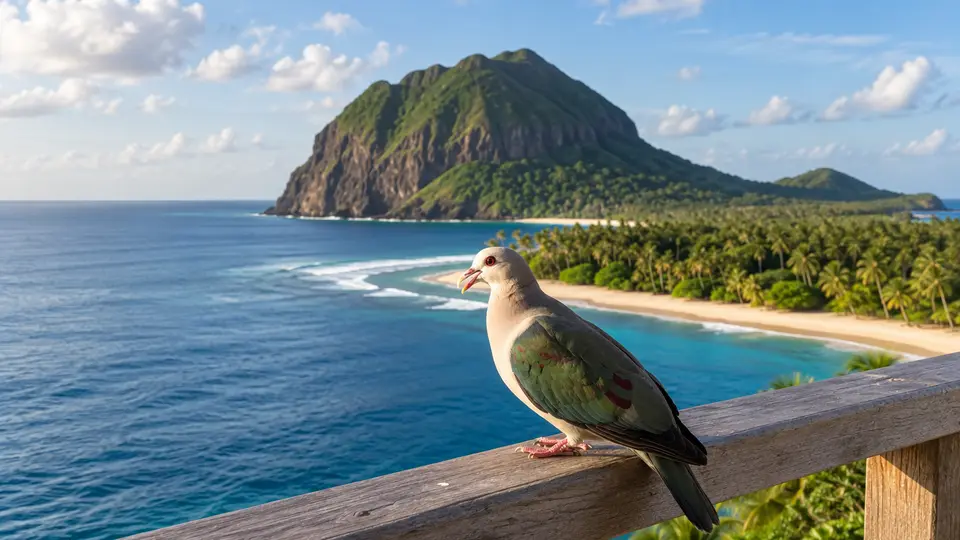
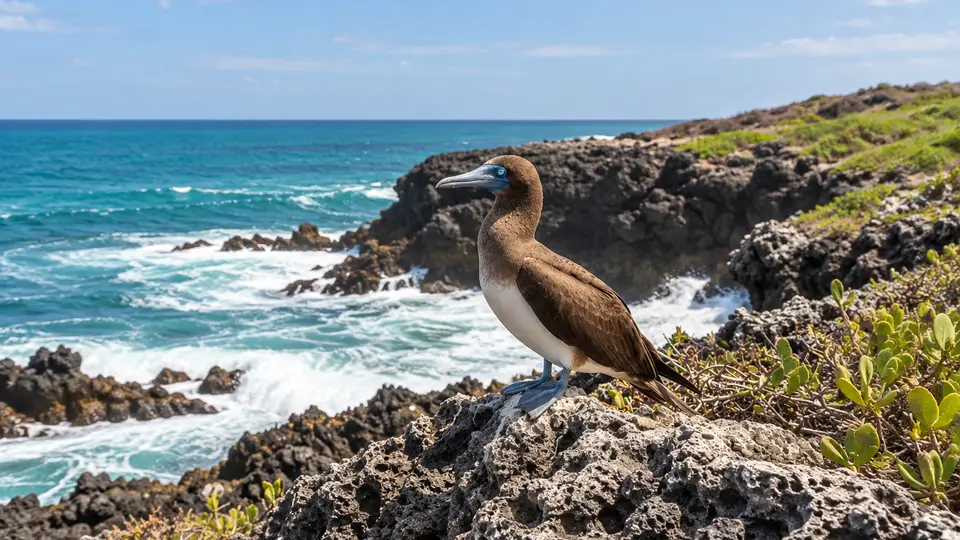
Masked shining parrotAI-modifiedMasked shining parrotBarking imperial pigeonAI-modifiedBarking imperial pigeonBrown BoobyAI-modifiedBrown Booby
Animal groupBirdsAnimal groupBirdsAnimal groupBirds
DestinationsFijiDestinationsFijiDestinationsCosta Rica, Cape Verde, Egypt, Fiji, Polynesia
Scientific nameProsopeia personataScientific nameScientific name
All wildlife destinations
AI-modified
Plan your trip

Find your next wildlife adventure

Compare destinations, shore programs and dates with the animals and habitats you would love to see.

  • Naturalist-led shore excursions
  • Responsible wildlife watching
  • Small expedition ships