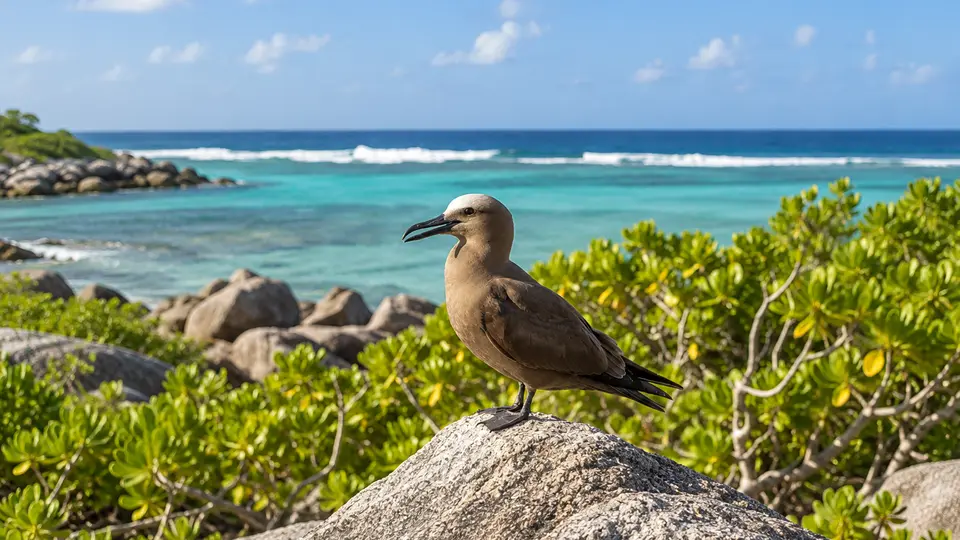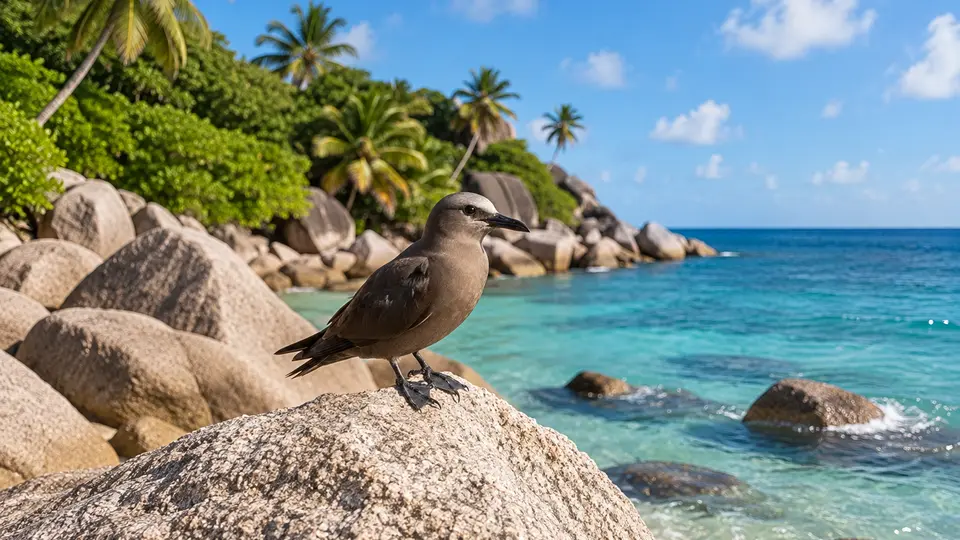
Lesser Noddy in its natural habitat, AI illustration

Lesser NoddyAnous tenuirostrisWhere and when to see them

Lesser Noddy at a glance

The lesser noddy is a small, dark tropical seabird with a pale grey crown and a particularly fine black bill. It is strongly associated with the Indian Ocean, including substantial breeding populations in Seychelles. Unlike many terns that nest on bare sand, it commonly places a platform nest in woody vegetation. Large colonies connect island woodland with surrounding feeding waters through a constant flow of commuting adults.

Behaviour & reproduction

Size
30-34 cm long
Weight
90-130 g
Lifespan
Not reliably established
Status
Least Concern

Lesser noddies feed socially, often joining mixed seabird flocks where predatory fish make small prey accessible near the surface. They return to communal roosts and breeding trees, where pairs maintain close contact through calls and displays. Both parents attend the single egg and feed the chick. Around colonies, adults make repeated trips between feeding areas and nests, sometimes carrying nesting material collected from nearby vegetation. Pairs engage in elaborate courtship displays including mutual preening and ritualized head-bowing at the nest site. They construct a simple nest platform from twigs and leaves, often glued with guano, in tree branches.

Top wildlife locations

Seychelles wildlife habitat

Seychelles

Authorized island-reserve paths through coastal woodland can provide views of nesting trees and nearby shore roosts. Access is regulated, some colonies are inaccessible, and nesting birds must be watched without leaving designated routes.
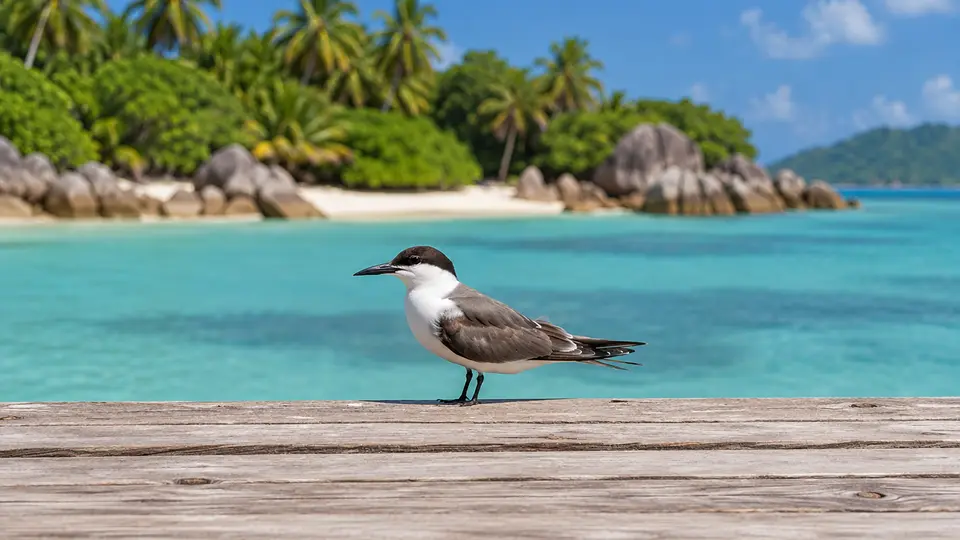
Destinations describe the species' habitat, not guaranteed cruise stops. Some animals require an optional inland excursion or are found in restricted reserves.

Fun facts about the Lesser Noddy

  • Its scientific species name means slender-billed.
  • Pairs usually lay just one egg.
  • Nests are often built on branches rather than directly on the ground.
  • Colonies can place numerous nests within a single coastal tree.

Best time to see the Lesser Noddy

In Seychelles, roughly May to September can overlap active breeding at important colonies, although timing and access vary among islands. Visits should follow reserve schedules rather than a fixed calendar, and birds may also be present outside the principal nesting period. Peak breeding activity in the Seychelles generally occurs between May and September, with hatching usually concentrated from June to August. However, some birds may lay eggs year-round, particularly on islands with stable food sources.

Lesser Noddy: season matrix by destination

Travel and observation windows vary by region. Highlighted months are an orientation for planning, not confirmed sightings or a guarantee of access.

Seychelles

These months often overlap breeding activity at Seychelles colonies, but individual islands differ and reserve opening arrangements must be checked.

JanFebMarAprMayJunJulAugSepOctNovDec
Cruise ships in Seychelles

Where the Lesser Noddy lives

Tropical Indian Ocean islands with suitable coastal trees and shrubs support breeding colonies. Birds feed in surrounding marine waters and rest on branches, shore rocks and other island perches. Protected colony woodland may have tightly controlled paths or seasonal access restrictions. Nests are typically constructed in dense canopies of Pisonia grandis or other broad-leaved trees, providing shelter from sun and predators. Colonies are often found on predator-free offshore islets, which offer increased safety for breeding success.

What the Lesser Noddy eats

Small fish make up much of the diet, supplemented by squid and other small marine prey. Birds pick food from near the surface or make shallow plunges. Feeding often occurs in flocks associated with tuna and other predators pursuing shoaling fish. Their agility allows them to catch fast-moving prey, and they often forage in areas with upwellings that concentrate food. These foraging flights can take them many kilometers from their breeding colonies.

Species at a glance

Common name
Lesser Noddy
Scientific name
Anous tenuirostris
Animal group
Birds
Size
30-34 cm long
Weight
90-130 g
Lifespan
Not reliably established
Status
Least Concern
Identification
Compared with the brown noddy, it is smaller and slimmer with a finer bill, while separation from black noddy requires careful assessment of bill shape and head pattern. The overall plumage is dark sooty-grey with a distinct white cap that extends to just above the eye. Its long, slender, slightly down-curved black bill and relatively short tail are key features.

Lesser Noddy: frequently asked questions

Where can I see the Lesser Noddy?
Seychelles. Use designated island paths and coastal viewpoints, keeping beneath nesting trees only where reserve staff permit. Avoid touching fallen chicks or blocking commuting birds, and leave handling decisions to trained conservation personnel. When viewing from a boat, maintain a respectful distance from active colonies to avoid disturbance, particularly during nesting. Observe their distinct flight patterns as they commute between feeding grounds and nesting sites.
When is the best time to see the Lesser Noddy?
In Seychelles, roughly May to September can overlap active breeding at important colonies, although timing and access vary among islands. Visits should follow reserve schedules rather than a fixed calendar, and birds may also be present outside the principal nesting period. Peak breeding activity in the Seychelles generally occurs between May and September, with hatching usually concentrated from June to August. However, some birds may lay eggs year-round, particularly on islands with stable food sources.
How big does the Lesser Noddy get?
30-34 cm long. Adult weight: 90-130 g. Size varies with age, sex and population.
How should I behave around the Lesser Noddy?
Use designated island paths and coastal viewpoints, keeping beneath nesting trees only where reserve staff permit. Avoid touching fallen chicks or blocking commuting birds, and leave handling decisions to trained conservation personnel. When viewing from a boat, maintain a respectful distance from active colonies to avoid disturbance, particularly during nesting. Observe their distinct flight patterns as they commute between feeding grounds and nesting sites.
What does the Lesser Noddy eat?
Small fish make up much of the diet, supplemented by squid and other small marine prey. Birds pick food from near the surface or make shallow plunges. Feeding often occurs in flocks associated with tuna and other predators pursuing shoaling fish. Their agility allows them to catch fast-moving prey, and they often forage in areas with upwellings that concentrate food. These foraging flights can take them many kilometers from their breeding colonies.
Are wildlife sightings guaranteed on an adventure cruise?
No. Animals move freely and routes, weather, access restrictions and local conditions influence every outing. Confirm the actual itinerary and shore program before booking.

Compare wildlife in the same destinations

Explore other birds recorded in these destinations. Similar surroundings do not mean the animals share the same habits or viewing season.

Species comparison by animal group and destination
Lesser NoddyLesser NoddyBridled TernBridled TernBrown NoddyBrown Noddy
Animal groupBirdsAnimal groupBirdsAnimal groupBirds
DestinationsSeychellesDestinationsSeychellesDestinationsSeychelles, Maldives, Fiji
All wildlife destinations
Plan your trip

Find your next wildlife adventure

Compare destinations, shore programs and dates with the animals and habitats you would love to see.

  • Naturalist-led shore excursions
  • Responsible wildlife watching
  • Small expedition ships

Newsletter

Take Blue Rides with you

Adventure cruise offers, last-minute deals and trip inspiration.

Free, unsubscribe anytime. Details: Privacy Policy

Partner with Blue Rides

Affiliate Program

Recommend adventure cruises and earn commission on every confirmed booking.

Share. Track. Earn.

Your footage, our stage

Send us your videos or pictures.

Captured remarkable nature or wildlife on your journey? Share it with us, we may feature it on Blue Rides.