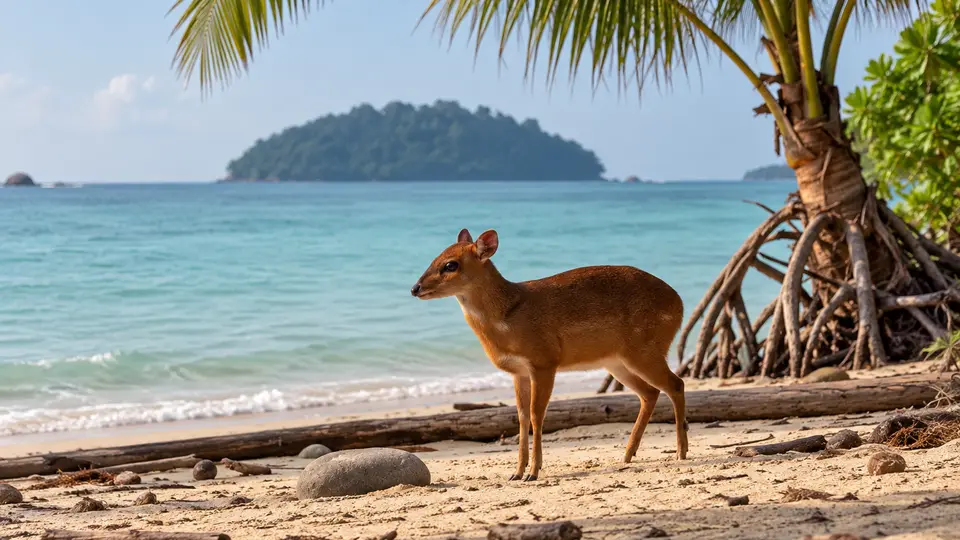
Lesser mouse-deer in its natural habitat, AI illustration

Lesser mouse-deerTragulus kanchilWhere and when to see them

Lesser mouse-deer at a glance

The lesser mouse-deer is a tiny forest ungulate, not a rodent and not a true deer. Slender legs support a compact body, while a narrow muzzle helps it select fallen fruit and tender vegetation among leaf litter. It belongs to the chevrotain family, an ancient surviving branch of ruminants. In Thailand it occurs principally in the peninsula, where dense lowland forest provides food, shelter and concealment.

Behaviour & reproduction

Size
40-55 cm head-body length
Weight
1.5-2.5 kg
Lifespan
Not reliably established
Status
Least Concern

A lesser mouse-deer usually moves quietly through dense cover, pausing frequently to assess sounds and scents. Individuals are commonly solitary, although pairs may be encountered, and activity can occur by day or night depending on disturbance and local conditions. Males use their elongated upper canine teeth in conflicts. When alarmed, an animal may freeze before slipping away, making patient observation more effective than actively searching through undergrowth. Communication among mouse-deer includes foot-tapping when alarmed and scent marking territories with secretions from intermandibular glands. Their nocturnal activity is often more pronounced in areas with higher human disturbance, allowing them to avoid daytime encounters.

Top wildlife locations

Thailand wildlife habitat

Thailand

Peninsular lowland forest trails and streamside vegetation provide plausible viewing habitat. An inland forest excursion is normally required, and this shy mammal is rarely a dependable sight even in suitable protected habitat.
Destinations describe the species' habitat, not guaranteed cruise stops. Some animals require an optional inland excursion or are found in restricted reserves.

Fun facts about the Lesser mouse-deer

  • Despite its name, it is neither a mouse nor a true deer.
  • Males have elongated upper canine teeth rather than antlers.
  • Chevrotains have a three-chambered stomach rather than the typical four-chambered ruminant arrangement.
  • The name kanchil is associated with the clever mouse-deer of Malay folklore.

Best time to see the Lesser mouse-deer

There is no well-established viewing season for this elusive forest mammal. Relatively dry periods can make peninsular forest trails easier to use, but rainfall patterns differ between Thailand's coasts. Local reserve advice is more useful than assuming a nationwide seasonal peak. Engaging a local guide familiar with the specific forest trails and recent sightings significantly increases the chances of an encounter, regardless of the season. Early morning or late afternoon hours might offer slightly better viewing opportunities due to their crepuscular tendencies, but this isn't a strict rule for these adaptable animals.

Lesser mouse-deer: season matrix by destination

Travel and observation windows vary by region. Highlighted months are an orientation for planning, not confirmed sightings or a guarantee of access.

Thailand

No reliable species-specific observation peak is established, and opposite peninsular coasts have different rainfall and trail-access patterns.

JanFebMarAprMayJunJulAugSepOctNovDec
Cruise ships in Thailand

Where the Lesser mouse-deer lives

Lowland tropical forest, dense secondary growth and sheltered vegetation near streams provide suitable habitat. Thick ground cover is especially important for concealment. In Thailand, appropriate habitat is mainly peninsular and generally requires a forest excursion rather than ordinary coastal sightseeing. They are particularly fond of areas with a rich understory and access to water sources, as these provide both food and concealment. Fragmentation of their forest habitat due to human development is a significant threat to their populations.

What the Lesser mouse-deer eats

Fallen fruits, soft leaves, shoots and other tender plant material form the diet. It selects nutritious items close to the forest floor rather than grazing extensively on coarse grass. Seasonal fruit availability influences where individuals spend time feeding within their forest ranges. In captivity, they are known to consume a variety of fruits, vegetables, and commercial feed, highlighting their adaptability to different food sources. Their diet makes them important seed dispersers for many forest plants.

Species at a glance

Common name
Lesser mouse-deer
Scientific name
Tragulus kanchil
Animal group
Mammals
Size
40-55 cm head-body length
Weight
1.5-2.5 kg
Lifespan
Not reliably established
Status
Least Concern
Identification
Its very small size, delicate legs and white throat markings help separate it from the larger greater mouse-deer, though brief forest glimpses may be inconclusive. Beyond size, the Lesser mouse-deer generally has a more slender build and often a slightly paler coat than its larger relative, though coloration can vary. The distinctive white throat and chest markings often form two prominent stripes that converge towards the chest.

Lesser mouse-deer: frequently asked questions

Where can I see the Lesser mouse-deer?
Thailand. Walk quietly on authorized forest trails and wait near natural clearings without baiting. Do not chase an animal into cover or use prolonged bright lighting; dense vegetation and rapid retreat make sightings uncertain. Scanning the edges of trails and clearings with binoculars can sometimes reveal their presence without disturbing them. Look for subtle movements or the gleam of an eye among the leaf litter, as they blend remarkably well with their surroundings.
When is the best time to see the Lesser mouse-deer?
There is no well-established viewing season for this elusive forest mammal. Relatively dry periods can make peninsular forest trails easier to use, but rainfall patterns differ between Thailand's coasts. Local reserve advice is more useful than assuming a nationwide seasonal peak. Engaging a local guide familiar with the specific forest trails and recent sightings significantly increases the chances of an encounter, regardless of the season. Early morning or late afternoon hours might offer slightly better viewing opportunities due to their crepuscular tendencies, but this isn't a strict rule for these adaptable animals.
How big does the Lesser mouse-deer get?
40-55 cm head-body length. Adult weight: 1.5-2.5 kg. Size varies with age, sex and population.
How should I behave around the Lesser mouse-deer?
Walk quietly on authorized forest trails and wait near natural clearings without baiting. Do not chase an animal into cover or use prolonged bright lighting; dense vegetation and rapid retreat make sightings uncertain. Scanning the edges of trails and clearings with binoculars can sometimes reveal their presence without disturbing them. Look for subtle movements or the gleam of an eye among the leaf litter, as they blend remarkably well with their surroundings.
What does the Lesser mouse-deer eat?
Fallen fruits, soft leaves, shoots and other tender plant material form the diet. It selects nutritious items close to the forest floor rather than grazing extensively on coarse grass. Seasonal fruit availability influences where individuals spend time feeding within their forest ranges. In captivity, they are known to consume a variety of fruits, vegetables, and commercial feed, highlighting their adaptability to different food sources. Their diet makes them important seed dispersers for many forest plants.
Are wildlife sightings guaranteed on an adventure cruise?
No. Animals move freely and routes, weather, access restrictions and local conditions influence every outing. Confirm the actual itinerary and shore program before booking.

Compare wildlife in the same destinations

Explore other mammals recorded in these destinations. Similar surroundings do not mean the animals share the same habits or viewing season.

Species comparison by animal group and destination
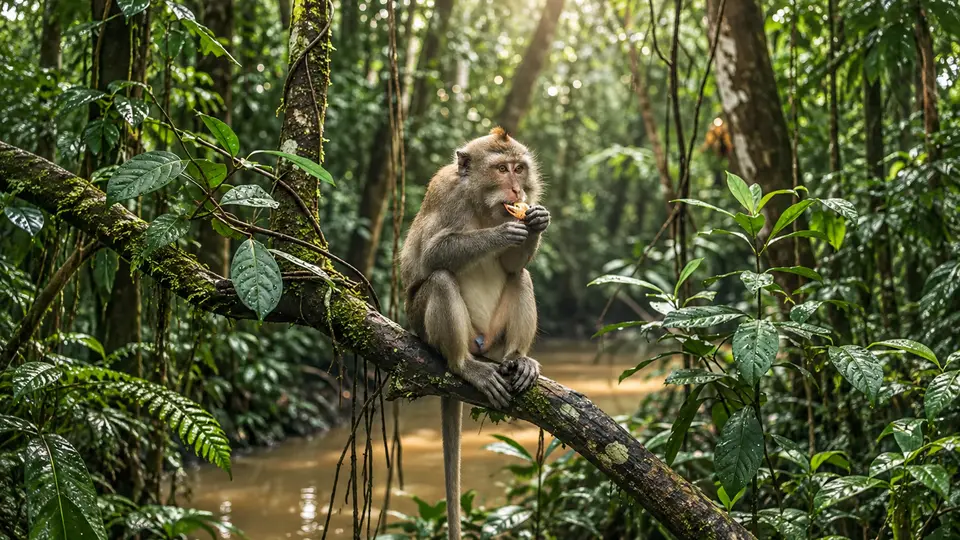
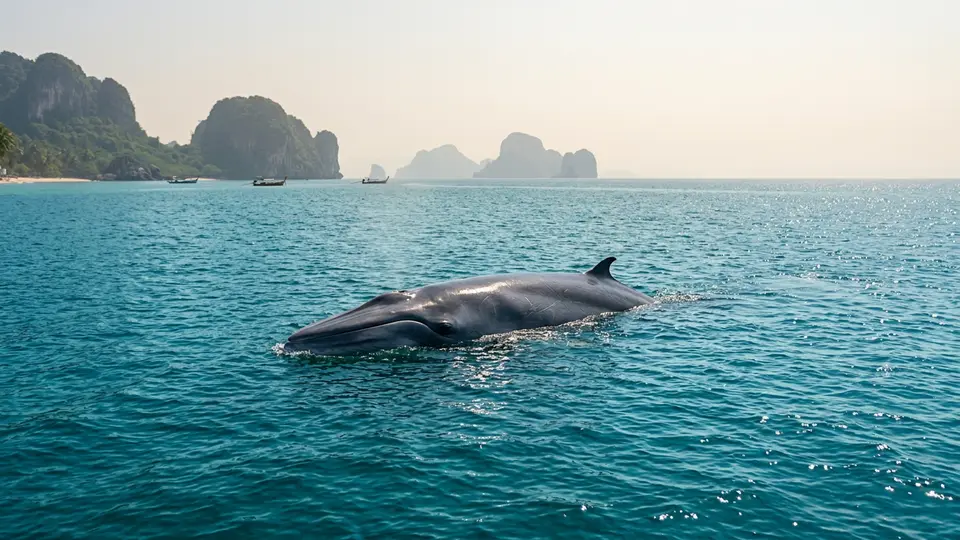
Lesser mouse-deerLesser mouse-deerBryde's WhaleBryde's WhaleCrab-eating macaqueCrab-eating macaque
Animal groupMammalsAnimal groupMammalsAnimal groupMammals
DestinationsThailandDestinationsGalapagos, Mexico, Egypt, Thailand, VietnamDestinationsIndonesia, Thailand, Vietnam
All wildlife destinations
Plan your trip

Find your next wildlife adventure

Compare destinations, shore programs and dates with the animals and habitats you would love to see.

  • Naturalist-led shore excursions
  • Responsible wildlife watching
  • Small expedition ships

Newsletter

Take Blue Rides with you

Adventure cruise offers, last-minute deals and trip inspiration.

Free, unsubscribe anytime. Details: Privacy Policy

Partner with Blue Rides

Affiliate Program

Recommend adventure cruises and earn commission on every confirmed booking.

Share. Track. Earn.

Your footage, our stage

Send us your videos or pictures.

Captured remarkable nature or wildlife on your journey? Share it with us, we may feature it on Blue Rides.