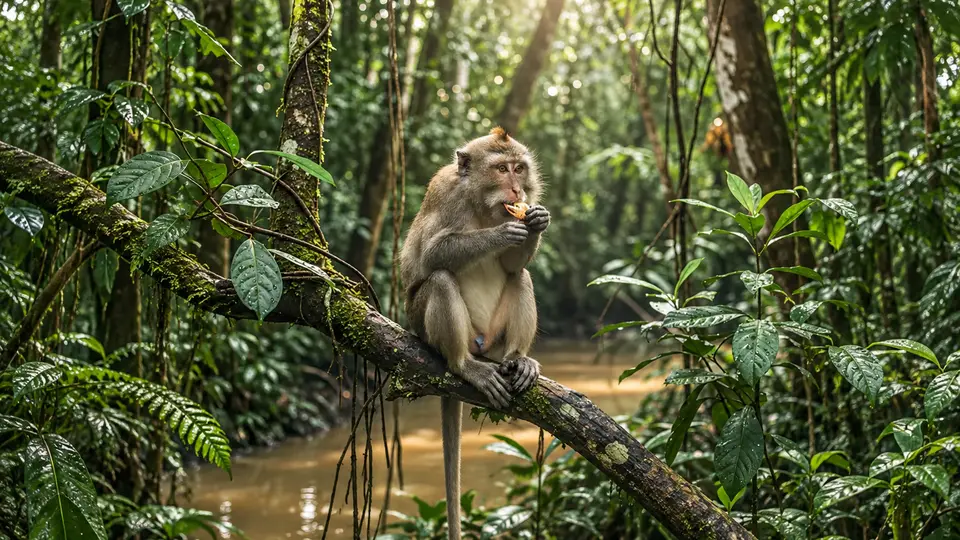
Crab-eating macaque in its natural habitat, AI illustration

Crab-eating macaque: where and when to see them

Macaca fascicularis

Crab-eating macaque at a glance

The crab-eating macaque, also called the long-tailed macaque, is a highly adaptable Southeast Asian monkey. Its name highlights one coastal feeding habit rather than its whole diet, which often centres on fruit. Troops inhabit forests, mangroves and human-modified landscapes, sometimes becoming very conspicuous around visitor areas. Local familiarity should not obscure its global Endangered assessment, reflecting substantial pressure from exploitation, trade and habitat loss across its range.

Behaviour & reproduction

Size
38–65 cm body length, excluding tail
Weight
3–8 kg
Lifespan
15–25 years
Status
Endangered

Troops contain multiple males and females arranged within complex social relationships. Females usually remain in their birth group, while males commonly disperse. Grooming reinforces bonds and helps manage tension, and cheek pouches allow food to be gathered quickly and processed later. Some coastal populations search exposed shores for shellfish. Animals accustomed to handouts may seize bags or approach people closely, behaviour that reflects learned access to food rather than harmless tameness. Communication involves a complex repertoire of facial expressions, body postures, and vocalizations that convey intent and social status. Subordinate individuals often exhibit appeasement behaviors such as lip-smacking or presenting to dominant animals. These intelligent primates exhibit problem-solving skills, particularly when interacting with human structures or food sources.

Top wildlife locations

Indonesia wildlife habitat

Indonesia

Mangrove boardwalks and coastal forest paths can offer viewing where local troops occur. Presence varies between islands, and some populations require inland forest visits; never assume monkeys at visitor sites are safe.

Adventure cruises in Indonesia
Thailand wildlife habitat

Thailand

Accessible mangrove edges and coastal woodland in parts of Thailand provide plausible habitat. Troops are localized, with some sites inland; observe from designated paths and avoid areas where feeding encourages aggressive approaches.

Adventure cruises in Thailand
Vietnam wildlife habitat

Vietnam

Southern mangroves and lowland coastal forest offer plausible habitat where protected populations remain. Distribution is patchy, some visits require inland excursions, and any accessible troop should be watched without feeding or close approach.

Adventure cruises in Vietnam

Destinations describe the species' habitat, not guaranteed cruise stops. Some animals require an optional inland excursion or are found in restricted reserves.

Fun facts about the Crab-eating macaque

  • Some coastal populations use stones to open shellfish.
  • Cheek pouches temporarily store collected food.
  • Females commonly inherit social positions within maternal family lines.
  • The tail aids balance but is not prehensile.

Best time to see the Crab-eating macaque

These macaques are resident and potentially observable throughout the year where accessible populations occur. Local rainfall, tides and site rules influence practical visits more than a species-wide season. Mangrove feeding opportunities vary with exposure of the shore, not with national tourism calendars. Breeding occurs year-round, so infants and juveniles of various ages can be seen at any time, adding to observation interest. Visits during low tide can be particularly rewarding for observing foraging behavior in coastal groups. Local festival schedules might also influence macaque behavior near human settlements due to food offerings.

Crab-eating macaque: season matrix by destination

Travel and observation windows vary by region. Highlighted months are an orientation for planning, not confirmed sightings or a guarantee of access.

Indonesia

The species is resident, but Indonesia's regional rainfall patterns and uneven distribution do not support one national shore-viewing window.

JanFebMarAprMayJunJulAugSepOctNovDec
Cruise ships in Indonesia

Thailand

Resident macaques have no single viewing season, and contrasting Gulf and Andaman weather patterns require locality-specific planning.

JanFebMarAprMayJunJulAugSepOctNovDec
Cruise ships in Thailand

Vietnam

No country-wide shore-observation window is supported; local population access and regional rainfall matter more than a national travel season.

JanFebMarAprMayJunJulAugSepOctNovDec
Cruise ships in Vietnam

Where the Crab-eating macaque lives

Natural habitats include lowland forest, river margins, mangroves and coastal woodland. The species also occupies plantations, settlement edges and some temple grounds. Distribution and abundance vary locally, so a country listing does not mean every accessible mangrove or island supports a troop. They are highly adaptable and often found in areas modified by humans, including urban environments. Their presence often indicates access to water sources, whether fresh or brackish, which is crucial for survival. While often associated with coastal areas, they can also thrive far inland along rivers.

What the Crab-eating macaque eats

Fruit is often a major dietary component, alongside seeds, leaves, flowers, insects and other animal foods. Coastal groups may eat crabs and molluscs, but many populations rarely do so. Human food can distort natural foraging and increase aggression and health risks. Aquatic foods like crabs, molluscs, and small fish are a significant part of the diet for many coastal populations, especially where intertidal zones are rich. They are opportunistic omnivores, and their diet shifts seasonally and geographically based on resource availability. Fermentation in their complex stomachs allows them to digest fibrous plant material.

Species at a glance

Common name
Crab-eating macaque
Scientific name
Macaca fascicularis
Animal group
Mammals
Size
38–65 cm body length, excluding tail
Weight
3–8 kg
Lifespan
15–25 years
Status
Endangered
Identification
Its very long tail and usually grey-brown coat distinguish it from the shorter-tailed pig-tailed macaques and the generally shorter-tailed rhesus macaque. Infants are typically born with dark fur that lightens to the adult coloration as they mature, which can aid in distinguishing age classes. Males tend to be larger than females and develop more prominent canines, especially older individuals. The tail is often longer than the body, a key distinguishing feature.

Crab-eating macaque: frequently asked questions

Where can I see the Crab-eating macaque?
Indonesia, Thailand, Vietnam. Keep food, bottles and loose belongings concealed, and never feed or touch macaques. Avoid staring, showing teeth or crowding mothers with infants; give approaching animals space and seek urgent medical care after any bite or scratch. Be aware that eye contact can be perceived as a challenge by macaques; maintain a neutral gaze or look slightly away. Listen for their vocalizations, which include alarm calls, aggressive screams, and contact calls among troop members. Ensure all windows and doors on vehicles or bungalows are secured, as they are adept at opening them.
When is the best time to see the Crab-eating macaque?
These macaques are resident and potentially observable throughout the year where accessible populations occur. Local rainfall, tides and site rules influence practical visits more than a species-wide season. Mangrove feeding opportunities vary with exposure of the shore, not with national tourism calendars. Breeding occurs year-round, so infants and juveniles of various ages can be seen at any time, adding to observation interest. Visits during low tide can be particularly rewarding for observing foraging behavior in coastal groups. Local festival schedules might also influence macaque behavior near human settlements due to food offerings.
How big does the Crab-eating macaque get?
38–65 cm body length, excluding tail. Adult weight: 3–8 kg. Size varies with age, sex and population.
How should I behave around the Crab-eating macaque?
Keep food, bottles and loose belongings concealed, and never feed or touch macaques. Avoid staring, showing teeth or crowding mothers with infants; give approaching animals space and seek urgent medical care after any bite or scratch. Be aware that eye contact can be perceived as a challenge by macaques; maintain a neutral gaze or look slightly away. Listen for their vocalizations, which include alarm calls, aggressive screams, and contact calls among troop members. Ensure all windows and doors on vehicles or bungalows are secured, as they are adept at opening them.
What does the Crab-eating macaque eat?
Fruit is often a major dietary component, alongside seeds, leaves, flowers, insects and other animal foods. Coastal groups may eat crabs and molluscs, but many populations rarely do so. Human food can distort natural foraging and increase aggression and health risks. Aquatic foods like crabs, molluscs, and small fish are a significant part of the diet for many coastal populations, especially where intertidal zones are rich. They are opportunistic omnivores, and their diet shifts seasonally and geographically based on resource availability. Fermentation in their complex stomachs allows them to digest fibrous plant material.
Are wildlife sightings guaranteed on an adventure cruise?
No. Animals move freely and routes, weather, access restrictions and local conditions influence every outing. Confirm the actual itinerary and shore program before booking.

Compare wildlife in the same destinations

Explore other mammals recorded in these destinations. Similar surroundings do not mean the animals share the same habits or viewing season.

Species comparison by animal group and destination
Crab-eating macaqueCrab-eating macaqueAnoaAnoaBabirusaBabirusa
Animal groupMammalsAnimal groupMammalsAnimal groupMammals
DestinationsIndonesia, Thailand, VietnamDestinationsIndonesiaDestinationsIndonesia
All wildlife destinations
Plan your trip

Find your next wildlife adventure

Compare destinations, shore programs and dates with the animals and habitats you would love to see.

  • Naturalist-led shore excursions
  • Responsible wildlife watching
  • Small expedition ships

Newsletter

Take Blue Rides with you

Adventure cruise offers, last-minute deals and trip inspiration.

Free, unsubscribe anytime. Details: Privacy Policy

Partner with Blue Rides

Affiliate Program

Recommend adventure cruises and earn commission on every confirmed booking.

Share. Track. Earn.