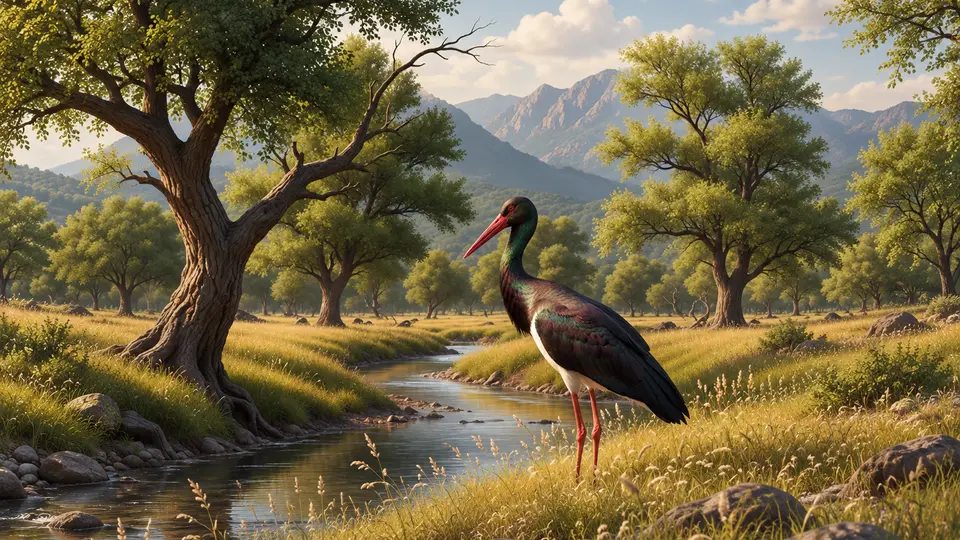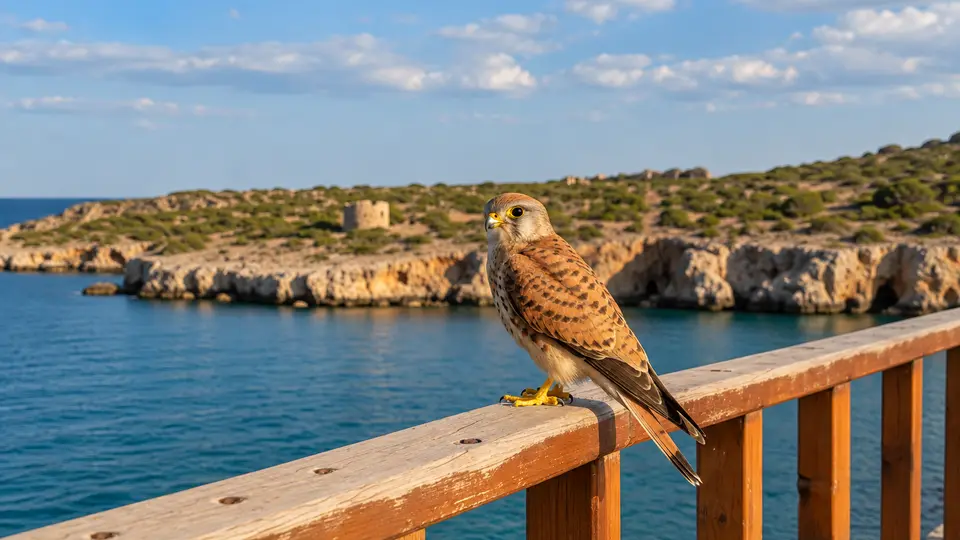
Lesser Kestrel in its natural habitat, AI illustration

Lesser Kestrel: where and when to see them

Falco naumanni

Lesser Kestrel at a glance

The lesser kestrel is a small, sociable falcon associated with open farmland, dry grasslands and settlements offering nest cavities. Many European and western Asian birds migrate to sub-Saharan Africa after breeding. Adult males combine a grey head with a warm, largely unspotted back, whereas females are heavily patterned. Although globally assessed as Least Concern, it has suffered serious regional declines where traditional farming landscapes and nesting opportunities have disappeared.

Behaviour & reproduction

Size
27-33 cm long
Weight
90-200 g
Lifespan
Not reliably established
Status
Least Concern

Unlike many falcons, lesser kestrels often nest colonially and forage in loose groups. They hover, circle low over fields or hunt from perches, frequently dropping to the ground for insects. Pairs occupy holes in buildings, cliffs or other structures without constructing a substantial nest. Outside breeding, birds can gather at large communal roosts, and migration may bring concentrated flocks through suitable feeding landscapes. Pairs often reuse the same nest site year after year if successful. Roosting flocks can number in the hundreds or even thousands, particularly during migration, offering impressive spectacles at dawn and dusk.

Top wildlife locations

Croatia wildlife habitat

Croatia

Search open coastal hinterland, dry grassland and suitable old settlements from public roads or paths. Breeding distribution is localized, and reaching productive habitat may require a short inland excursion from the coast.

Adventure cruises in Croatia
Turkey wildlife habitat

Turkey

Traditional settlements, steppe margins and extensive farmland offer suitable viewing from public viewpoints. Many productive areas are inland, requiring an excursion, and colony buildings should never be entered or approached without permission.

Adventure cruises in Turkey

Destinations describe the species' habitat, not guaranteed cruise stops. Some animals require an optional inland excursion or are found in restricted reserves.

Fun facts about the Lesser Kestrel

  • Its pale claws contrast with the common kestrel's dark claws.
  • Pairs normally use an existing cavity rather than building a nest.
  • Large insects can supply most of its food.
  • Nonbreeding birds may assemble in communal roosts numbering thousands.

Best time to see the Lesser Kestrel

April to July is a useful period for searching breeding landscapes in Croatia and Turkey, with spring arrival and late-summer departure varying by locality. Warm days encourage insect activity, but early morning often provides more comfortable viewing and clearer distant views. The spring migration across the Mediterranean can offer spectacular views of large flocks as they funnel through suitable stopover sites. During the breeding season, active nests with adults bringing food to young are a reliable sign of their presence.

Lesser Kestrel: season matrix by destination

Travel and observation windows vary by region. Highlighted months are an orientation for planning, not confirmed sightings or a guarantee of access.

Croatia

This window covers much of the breeding presence, but colonies are localized and should be checked through current local bird information.

JanFebMarAprMayJunJulAugSepOctNovDec
Cruise ships in Croatia

Turkey

Spring and early summer overlap breeding presence across much of the range; arrival dates vary with elevation and region.

JanFebMarAprMayJunJulAugSepOctNovDec
Cruise ships in Turkey

Where the Lesser Kestrel lives

Open, relatively dry country with short vegetation is favoured, especially grassland, grazed pasture and low-intensity farmland. Nesting requires cavities in cliffs, old buildings or suitable artificial structures. Dense forest and heavily intensified agricultural areas generally offer poorer feeding conditions. They are typically found in low-lying or hilly areas, generally avoiding dense forests and high mountain ranges. Their preference for arid or semi-arid environments reflects their prey base and foraging strategy.

What the Lesser Kestrel eats

Large insects dominate, including grasshoppers, crickets and beetles. Small mammals, lizards and other small vertebrates are taken when available, particularly during breeding. The balance of prey shifts with local abundance, vegetation structure and the seasonal emergence of large insects. Prey is usually consumed on the ground, but larger items may be carried to a perch. During periods of abundant prey, Lesser Kestrels may cache food items for later consumption.

Species at a glance

Common name
Lesser Kestrel
Scientific name
Falco naumanni
Animal group
Birds
Size
27-33 cm long
Weight
90-200 g
Lifespan
Not reliably established
Status
Least Concern
Identification
Adult males have an unspotted chestnut back and grey wing panel, while pale claws help distinguish both sexes from the similar common kestrel. Juveniles resemble females but generally appear duller, with more streaking on the breast and less distinct barring on the tail. In flight, their relatively long wings and buoyant, agile movements are characteristic.

Lesser Kestrel: frequently asked questions

Where can I see the Lesser Kestrel?
Croatia, Turkey. Watch colonies from public paths without standing beneath occupied nest holes. Avoid drones and playback, and remain outside working farm plots; repeated alarm calls or interrupted food deliveries indicate that you are too close. Scanning open landscapes with binoculars or a scope from an elevated position can be effective for spotting foraging individuals. Pay attention to areas with old, unmaintained buildings or natural rock faces, as these are prime nesting locations.
When is the best time to see the Lesser Kestrel?
April to July is a useful period for searching breeding landscapes in Croatia and Turkey, with spring arrival and late-summer departure varying by locality. Warm days encourage insect activity, but early morning often provides more comfortable viewing and clearer distant views. The spring migration across the Mediterranean can offer spectacular views of large flocks as they funnel through suitable stopover sites. During the breeding season, active nests with adults bringing food to young are a reliable sign of their presence.
How big does the Lesser Kestrel get?
27-33 cm long. Adult weight: 90-200 g. Size varies with age, sex and population.
How should I behave around the Lesser Kestrel?
Watch colonies from public paths without standing beneath occupied nest holes. Avoid drones and playback, and remain outside working farm plots; repeated alarm calls or interrupted food deliveries indicate that you are too close. Scanning open landscapes with binoculars or a scope from an elevated position can be effective for spotting foraging individuals. Pay attention to areas with old, unmaintained buildings or natural rock faces, as these are prime nesting locations.
What does the Lesser Kestrel eat?
Large insects dominate, including grasshoppers, crickets and beetles. Small mammals, lizards and other small vertebrates are taken when available, particularly during breeding. The balance of prey shifts with local abundance, vegetation structure and the seasonal emergence of large insects. Prey is usually consumed on the ground, but larger items may be carried to a perch. During periods of abundant prey, Lesser Kestrels may cache food items for later consumption.
Are wildlife sightings guaranteed on an adventure cruise?
No. Animals move freely and routes, weather, access restrictions and local conditions influence every outing. Confirm the actual itinerary and shore programme before booking.

Compare wildlife in the same destinations

Explore other birds recorded in these destinations. Similar surroundings do not mean the animals share the same habits or viewing season.

Species comparison by animal group and destination
Lesser KestrelLesser KestrelAudouin's GullAudouin's GullBlack StorkBlack Stork
Animal groupBirdsAnimal groupBirdsAnimal groupBirds
DestinationsCroatia, TurkeyDestinationsCroatia, Greece, Portugal, TurkeyDestinationsPortugal, Turkey
All wildlife destinations
Plan your trip

Find your next wildlife adventure

Compare destinations, shore programmes and dates with the animals and habitats you would love to see.

  • Naturalist-led shore excursions
  • Responsible wildlife watching
  • Small expedition ships

Newsletter

Take Blue Rides with you

Adventure cruise offers, last-minute deals and trip inspiration.

Free, unsubscribe anytime. Details: Privacy Policy

Partner with Blue Rides

Affiliate Program

Recommend adventure cruises and earn commission on every confirmed booking.

Share. Track. Earn.