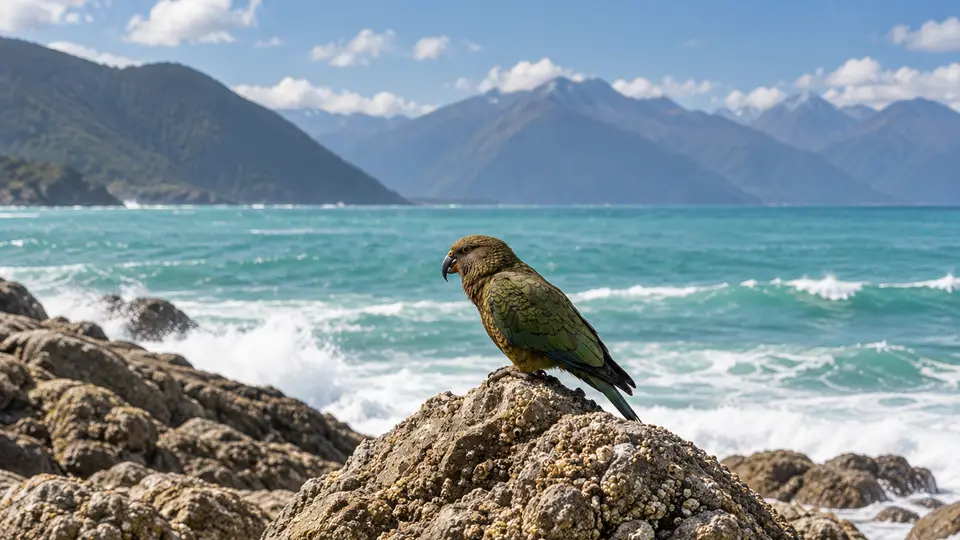
Kea in its natural habitat, AI illustration

Kea: where and when to see them

Nestor notabilis

Kea at a glance

The kea is a large mountain parrot native to New Zealand's South Island. Olive plumage blends surprisingly well with rock and vegetation, while flight exposes brilliant orange beneath the wings. Famous for curiosity, it is also a threatened wild animal facing introduced predators, lead poisoning and conflict around human infrastructure. Its intelligence supports flexible foraging in a challenging environment, but frequent appearances around visitor facilities can disguise its overall scarcity.

Behaviour & reproduction

Size
46-50 cm long
Weight
0.7-1.1 kg
Lifespan
Not reliably established
Status
Endangered

Kea explore objects with their bill and feet, learning through manipulation, play and interactions with other birds. Juveniles are especially inquisitive and may gather around unfamiliar items. Wild birds range between forest and open mountain country as food availability changes. They nest in sheltered ground cavities, where introduced mammals pose serious risks. Social calls help groups maintain contact, and playful aerial or ground activity can draw several birds together. Kea are New Zealand's only alpine parrots, displaying complex social structures within their flocks. They are highly intelligent, demonstrating problem-solving abilities and tool use in captivity. Their long lifespans, often exceeding 20 years in the wild, allow for extensive learning and cultural transmission within kea populations.

Top wildlife locations

New Zealand wildlife habitat

New Zealand

South Island mountain forest margins and alpine viewpoints offer suitable habitat. An inland excursion is normally required; coastal sightings are unusual, and birds should never be expected around every mountain stop.

Adventure cruises in New Zealand
Destinations describe the species' habitat, not guaranteed cruise stops. Some animals require an optional inland excursion or are found in restricted reserves.

Fun facts about the Kea

  • Its orange underwings are largely hidden when it is perched.
  • Kea have demonstrated sophisticated problem-solving in controlled studies.
  • They nest in cavities at ground level despite being strong flyers.
  • Their play calls can encourage playful behaviour in other kea.

Best time to see the Kea

Kea can be encountered year-round within their range. November to April usually offers easier access to mountain walking areas, although rapid weather changes remain possible. Winter observations depend on safe road conditions, and no season guarantees birds at a particular viewpoint or visitor facility. During spring and summer, kea often frequent higher elevations, including ski fields and mountain passes. Winter months can concentrate them at lower altitudes where food is more accessible, but heavy snow may restrict their movements. Peak breeding season occurs from July to January, with chicks fledging during the warmer months.

Kea: season matrix by destination

Travel and observation windows vary by region. Highlighted months are an orientation for planning, not confirmed sightings or a guarantee of access.

New Zealand

These months generally ease mountain access; kea are resident, and this is not a breeding-season forecast.

JanFebMarAprMayJunJulAugSepOctNovDec
Cruise ships in New Zealand

Where the Kea lives

Kea occupy South Island mountain landscapes, from native forest and scrub to alpine grassland, scree and rocky basins. They sometimes descend to lower elevations, especially in western districts. Reliable habitat access usually requires an inland mountain excursion rather than observation from a coastal deck. Their core range spans beech forests and subalpine zones across the Southern Alps. While found throughout the South Island's high country, kea are particularly abundant in national parks like Fiordland and Aoraki/Mount Cook. These regions offer a mosaic of habitats crucial for their diverse foraging needs.

What the Kea eats

Their varied diet includes roots, leaves, berries, seeds, nectar and invertebrates, with carrion and occasional vertebrate prey also taken. Seasonal flexibility helps them survive harsh conditions. Human food is unsuitable and encourages dangerous associations with roads, vehicles and heavily used visitor facilities. Kea are omnivorous and opportunistic, consuming over 40 native plant species. Their strong, curved bills are perfectly adapted for digging out roots, grubs, and for prying bark off trees to access sap or insects. The kea's remarkable adaptability to find food sources in a harsh alpine environment contributes to its survival.

Species at a glance

Common name
Kea
Scientific name
Nestor notabilis
Animal group
Birds
Size
46-50 cm long
Weight
0.7-1.1 kg
Lifespan
Not reliably established
Status
Endangered
Identification
The kea differs from the forest-dwelling kākā in its predominantly olive plumage, long curved bill and vivid orange underwings. Adult kea typically measure around 48 cm (19 inches) in length with a wingspan of approximately 90 cm (35 inches). Juveniles possess a yellow cere and eye-ring which darkens to gray in adults. Their powerful, dark-brown bill is distinctive, particularly the elongated upper mandible.

Kea: frequently asked questions

Where can I see the Kea?
New Zealand. Watch from established mountain paths without feeding or enticing birds. Secure bags and loose equipment, close vehicle doors, and keep kea away from traffic through your own careful positioning rather than chasing or handling them. Be prepared to observe kea from a distance, respecting their wild nature. If kea approach, remain still and avoid sudden movements, allowing them to investigate without intervention. Their intelligence means they quickly learn to associate people with food if encouraged, creating dependency and health risks.
When is the best time to see the Kea?
Kea can be encountered year-round within their range. November to April usually offers easier access to mountain walking areas, although rapid weather changes remain possible. Winter observations depend on safe road conditions, and no season guarantees birds at a particular viewpoint or visitor facility. During spring and summer, kea often frequent higher elevations, including ski fields and mountain passes. Winter months can concentrate them at lower altitudes where food is more accessible, but heavy snow may restrict their movements. Peak breeding season occurs from July to January, with chicks fledging during the warmer months.
How big does the Kea get?
46-50 cm long. Adult weight: 0.7-1.1 kg. Size varies with age, sex and population.
How should I behave around the Kea?
Watch from established mountain paths without feeding or enticing birds. Secure bags and loose equipment, close vehicle doors, and keep kea away from traffic through your own careful positioning rather than chasing or handling them. Be prepared to observe kea from a distance, respecting their wild nature. If kea approach, remain still and avoid sudden movements, allowing them to investigate without intervention. Their intelligence means they quickly learn to associate people with food if encouraged, creating dependency and health risks.
What does the Kea eat?
Their varied diet includes roots, leaves, berries, seeds, nectar and invertebrates, with carrion and occasional vertebrate prey also taken. Seasonal flexibility helps them survive harsh conditions. Human food is unsuitable and encourages dangerous associations with roads, vehicles and heavily used visitor facilities. Kea are omnivorous and opportunistic, consuming over 40 native plant species. Their strong, curved bills are perfectly adapted for digging out roots, grubs, and for prying bark off trees to access sap or insects. The kea's remarkable adaptability to find food sources in a harsh alpine environment contributes to its survival.
Are wildlife sightings guaranteed on an adventure cruise?
No. Animals move freely and routes, weather, access restrictions and local conditions influence every outing. Confirm the actual itinerary and shore program before booking.

Compare wildlife in the same destinations

Explore other birds recorded in these destinations. Similar surroundings do not mean the animals share the same habits or viewing season.

Species comparison by animal group and destination
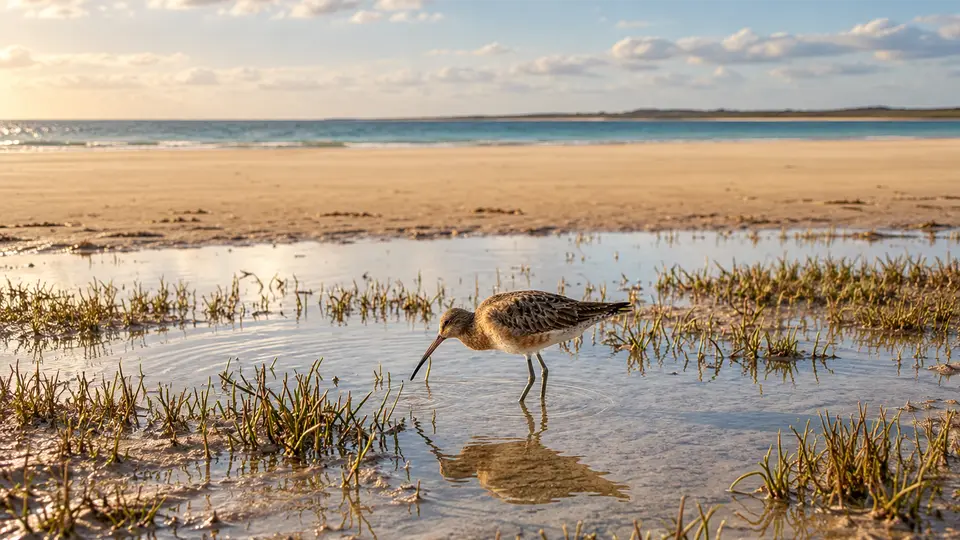
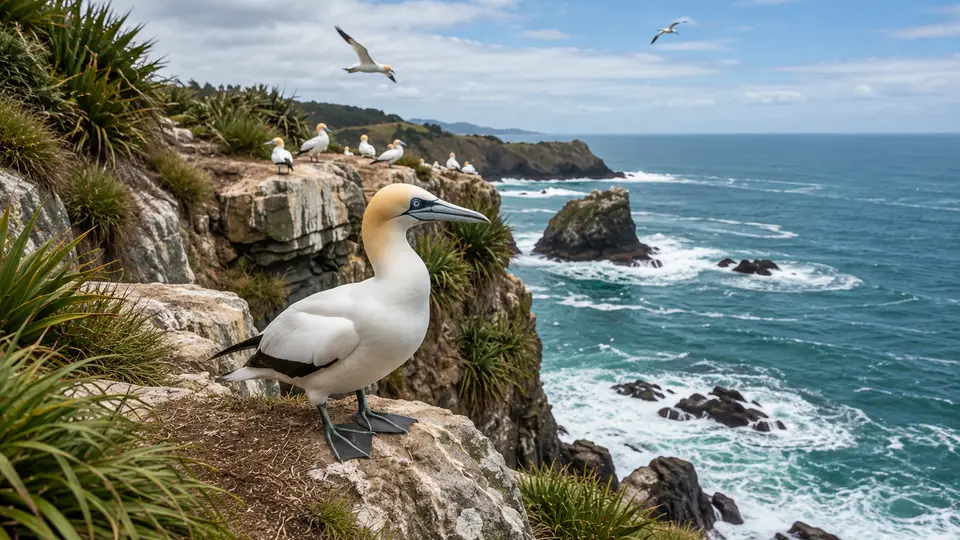
KeaKeaAustralasian gannetAustralasian gannetBar-tailed godwitBar-tailed godwit
Animal groupBirdsAnimal groupBirdsAnimal groupBirds
DestinationsNew ZealandDestinationsNew ZealandDestinationsAustralia, New Zealand
All wildlife destinations
Plan your trip

Find your next wildlife adventure

Compare destinations, shore programs and dates with the animals and habitats you would love to see.

  • Naturalist-led shore excursions
  • Responsible wildlife watching
  • Small expedition ships

Newsletter

Take Blue Rides with you

Adventure cruise offers, last-minute deals and trip inspiration.

Free, unsubscribe anytime. Details: Privacy Policy

Partner with Blue Rides

Affiliate Program

Recommend adventure cruises and earn commission on every confirmed booking.

Share. Track. Earn.

Your footage, our stage

Send us your videos or pictures.

Captured beautiful landscapes or wildlife? Share your videos and pictures with us, we may feature them on Blue Rides.