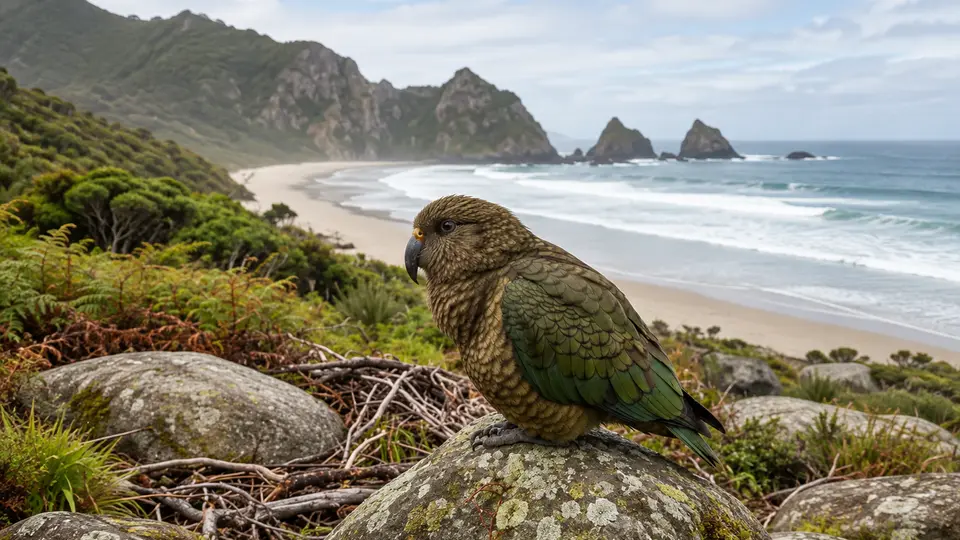
Kāpōpō in its natural habitat, AI illustration
Size58-64 cm longLifespanNot reliably establishedStatusCritically Endangered

Kāpōpō: where and when to see them

Strigops habroptilus

Kāpōpō at a glance

The kākāpō is a flightless, nocturnal parrot native to New Zealand, recognizable by moss-green plumage and a broad, owl-like face. Once widespread, it declined catastrophically after introduced mammals added predation pressure to habitat loss and hunting. The surviving population is intensively managed in predator-free or closely protected settings. Its recovery depends on individual monitoring, genetic management and careful breeding support, making ordinary wildlife tourism inappropriate at most occupied sites.

Behaviour & reproduction

Size
58-64 cm long
Weight
1.2-4 kg
Lifespan
Not reliably established
Status
Critically Endangered

By day, kākāpō usually rest under dense cover or in sheltered cavities, emerging after dark to walk, climb and feed. During breeding periods, males establish display areas and produce deep booming calls that carry through the landscape. Females choose mates, nest on the ground and raise chicks without male assistance. Breeding is irregular and closely associated with abundant food, especially major fruiting events in particular native trees. Males attract females from specific 'bowls' or depressions they excavate, creating a track-and-bowl system for their nocturnal booming. The female alone incubates the eggs and cares for the chicks, which can take over a year to become fully independent.

Top wildlife locations

New Zealand wildlife habitat

New Zealand

Protected island forests, including coastal vegetation, support managed birds, but occupied sites are generally inaccessible to visitors. Kākāpō are not available on standard landings; any viewing requires a specifically authorized conservation opportunity.

Adventure cruises in New Zealand
Destinations describe the species' habitat, not guaranteed cruise stops. Some animals require an optional inland excursion or are found in restricted reserves.

Fun facts about the Kāpōpō

  • It is the world's only flightless parrot.
  • Males use bowl-shaped display depressions linked by maintained tracks.
  • Its low-frequency booming display is unusual among parrots.
  • Females alone incubate eggs and care for chicks.

Best time to see the Kāpōpō

There is no dependable public wildlife-viewing season. Access depends on conservation permissions or specifically announced official opportunities, not ordinary travel dates. Summer and autumn can include breeding activity in productive years, but this does not make nesting areas accessible or justify seeking birds independently. Conservation efforts often involve a highly seasonal focus, with specific events like supplementary feeding or health checks occurring at planned times. Visitors should research any potential official opportunities well in advance, understanding these are rare and highly competitive.

Kāpōpō: season matrix by destination

Travel and observation windows vary by region. Highlighted months are an orientation for planning, not confirmed sightings or a guarantee of access.

New Zealand

No regular public shore-observation window exists; access and any viewing dates are determined by conservation managers.

JanFebMarAprMayJunJulAugSepOctNovDec
Cruise ships in New Zealand

Where the Kāpōpō lives

Historically, kākāpō occupied varied native vegetation, including forest, scrub and upland habitats. Today their distribution reflects conservation management rather than their former ecological range. Occupied islands and fenced sanctuaries have strict access controls, and suitable coastal forest does not imply public viewing access. These islands are predator-free havens, crucial for the survival of the species, and support the diverse native flora essential for kākāpō. Their current range is entirely within the New Zealand archipelago, specifically on a few carefully managed offshore islands.

What the Kāpōpō eats

Kākāpō eat plant material, including leaves, shoots, roots, seeds and fruit. They often chew fibrous vegetation to extract nutritious juices, leaving compressed remnants. Fruit from trees such as rimu can be crucial for breeding, while managed birds may also receive carefully controlled supplementary food. Their powerful beak and feet are adapted for processing tough plant material and climbing. Kākāpō also exhibit a unique smell, often described as musty or like 'flowers and honey', which is a result of their diet and metabolism.

Species at a glance

Common name
Kāpōpō
Scientific name
Strigops habroptilus
Animal group
Birds
Size
58-64 cm long
Weight
1.2-4 kg
Lifespan
Not reliably established
Status
Critically Endangered
Identification
Unlike the flying, alpine kea, the kākāpō is flightless, moss-green, nocturnal and has a conspicuous facial disc. Its large grey beak, short legs, and prominent whiskers around its face are distinctive features. The kākāpō is the world's only flightless, nocturnal parrot, and also the heaviest parrot species.

Kāpōpō: frequently asked questions

Where can I see the Kāpōpō?
New Zealand. Only pursue officially authorized viewing opportunities, which may be unavailable. Never enter restricted islands or seek nest locations. Follow strict biosecurity instructions, avoid flash, and let conservation staff determine all distances and lighting. Participate only in carefully structured and supervised tours if available, where dedicated guides ensure minimal disturbance and adherence to strict protocols. Any encounter is entirely at the discretion of conservation staff, and no specific viewing guarantee can be made.
When is the best time to see the Kāpōpō?
There is no dependable public wildlife-viewing season. Access depends on conservation permissions or specifically announced official opportunities, not ordinary travel dates. Summer and autumn can include breeding activity in productive years, but this does not make nesting areas accessible or justify seeking birds independently. Conservation efforts often involve a highly seasonal focus, with specific events like supplementary feeding or health checks occurring at planned times. Visitors should research any potential official opportunities well in advance, understanding these are rare and highly competitive.
How big does the Kāpōpō get?
58-64 cm long. Adult weight: 1.2-4 kg. Size varies with age, sex and population.
How should I behave around the Kāpōpō?
Only pursue officially authorized viewing opportunities, which may be unavailable. Never enter restricted islands or seek nest locations. Follow strict biosecurity instructions, avoid flash, and let conservation staff determine all distances and lighting. Participate only in carefully structured and supervised tours if available, where dedicated guides ensure minimal disturbance and adherence to strict protocols. Any encounter is entirely at the discretion of conservation staff, and no specific viewing guarantee can be made.
What does the Kāpōpō eat?
Kākāpō eat plant material, including leaves, shoots, roots, seeds and fruit. They often chew fibrous vegetation to extract nutritious juices, leaving compressed remnants. Fruit from trees such as rimu can be crucial for breeding, while managed birds may also receive carefully controlled supplementary food. Their powerful beak and feet are adapted for processing tough plant material and climbing. Kākāpō also exhibit a unique smell, often described as musty or like 'flowers and honey', which is a result of their diet and metabolism.
Are wildlife sightings guaranteed on an adventure cruise?
No. Animals move freely and routes, weather, access restrictions and local conditions influence every outing. Confirm the actual itinerary and shore programme before booking.

Compare wildlife in the same destinations

Explore other birds recorded in these destinations. Similar surroundings do not mean the animals share the same habits or viewing season.

Species comparison by animal group and destination
KāpōpōKāpōpōAustralasian gannetAustralasian gannetBar-tailed godwitBar-tailed godwit
Animal groupBirdsAnimal groupBirdsAnimal groupBirds
DestinationsNew ZealandDestinationsNew ZealandDestinationsAustralia, New Zealand
All wildlife destinations
Plan your trip

Find your next wildlife adventure

Compare destinations, shore programmes and dates with the animals and habitats you would love to see.

  • Naturalist-led shore excursions
  • Responsible wildlife watching
  • Small expedition ships

Newsletter

Take Blue Rides with you

Adventure cruise offers, last-minute deals and trip inspiration.

Free, unsubscribe anytime. Details: Privacy Policy

Partner with Blue Rides

Affiliate Program

Recommend adventure cruises and earn commission on every confirmed booking.

Share. Track. Earn.