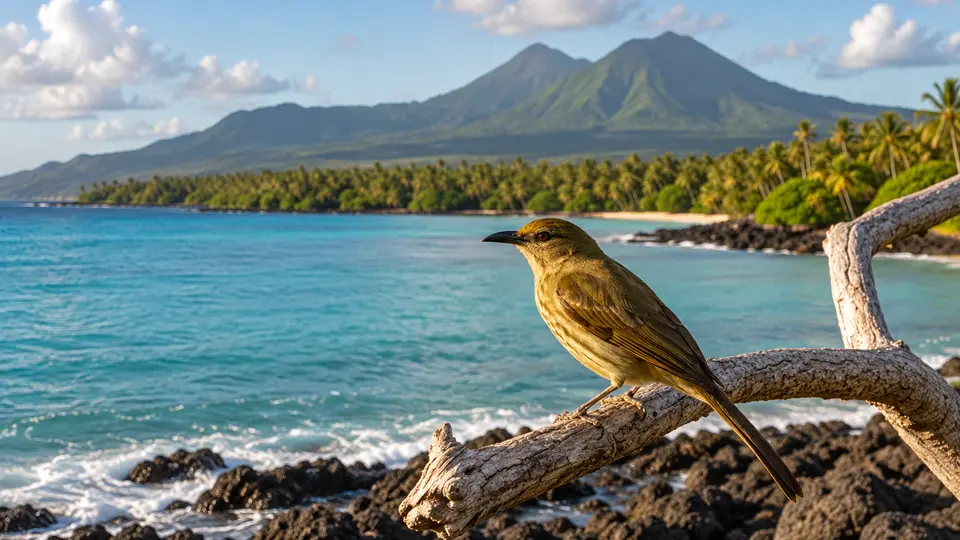
Kadavu honeyeater in its natural habitatAI-modified

Kadavu honeyeaterMeliphacator provocatorWhere and when to see them

Kadavu honeyeater at a glance

The Kadavu honeyeater is a large, vocal bird found naturally only on Kadavu and nearby Ono in Fiji. Its restricted island distribution makes it a distinctive member of Fiji's endemic birdlife, even where it remains locally common. An olive upper body, pale underparts and conspicuous bare facial skin give it a rather rugged appearance. It visits flowering trees but also searches foliage and branches for animal food.

Behaviour & reproduction

Size
25-28 cm (9.8-11.0 in) long
Weight
Not reliably established
Lifespan
Not reliably established
Status
Least Concern

Pairs and small groups move through trees with purposeful hops and short flights, frequently announcing themselves with loud, varied calls. Flowering trees can concentrate activity, and birds may defend productive feeding patches against competitors. They investigate bark, leaves and flower clusters rather than relying exclusively on nectar. Nesting involves an open cup supported in vegetation, with local conditions influencing timing. Their voices often reveal their presence before a clear view is possible. Pairs maintain permanent territories, with both sexes participating in nest building and chick rearing. Their aggressive territorial defense against other honeyeaters and smaller birds highlights their importance in the local ecosystem. They can often be seen perched conspicuously at the top of trees, surveying their surroundings before flying to new foraging areas.

Top wildlife locations

Fiji wildlife habitatAI-modified

Fiji

Look in wooded coastal settlements and forest margins on Kadavu or Ono, with local permission. It is absent from most Fijian islands, so a dedicated island visit rather than a general Fiji itinerary is required.
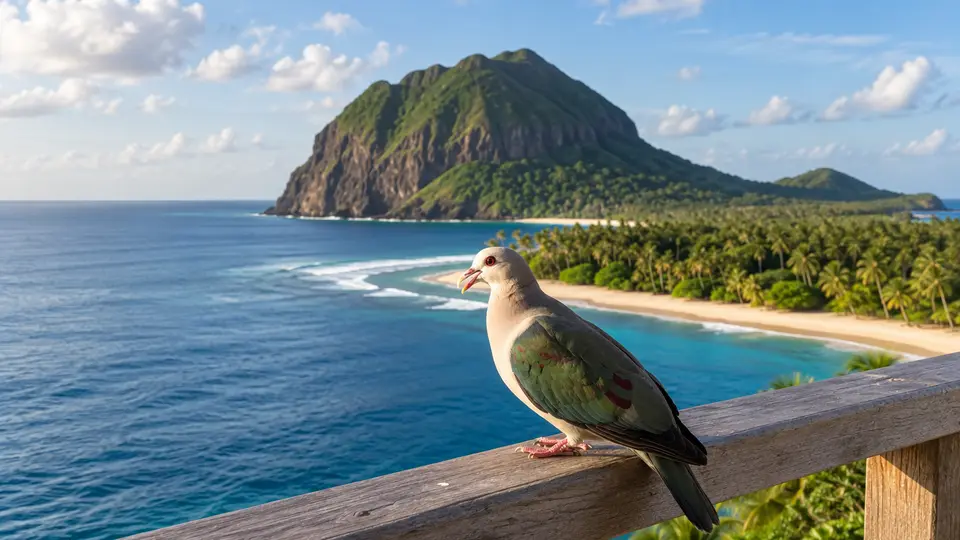
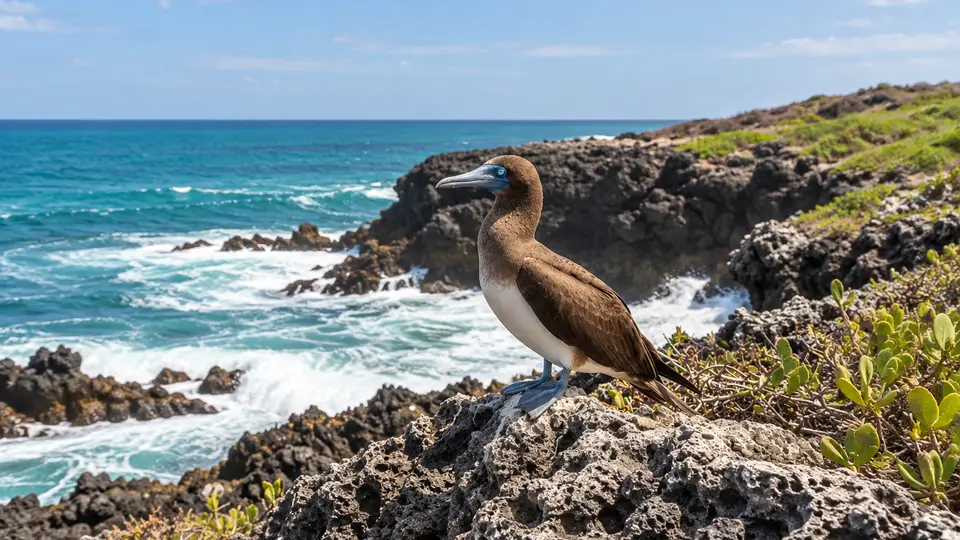
Destinations describe the species' habitat, not guaranteed cruise stops. Some animals require an optional inland excursion or are found in restricted reserves.

Fun facts about the Kadavu honeyeater

  • Its natural range is confined to Kadavu and nearby Ono.
  • It is the sole species currently placed in the genus Meliphacator.
  • Its brush-tipped tongue helps collect nectar from flowers.
  • It combines nectar feeding with active hunting for invertebrates.

Best time to see the Kadavu honeyeater

Observation is possible throughout the year because this is a resident island endemic. May to October generally offers less humid, relatively drier walking conditions. Flowering patterns and daily weather affect activity more directly than a fixed visitor season, and breeding should not be inferred from travel dates. Breeding typically occurs between September and January, though clutches can be found outside this period depending on local rainfall and food availability. While drier months are more comfortable for visitors, the honeyeater remains active and vocal during the wetter season. Its year-round presence makes it a reliable sighting on the islands.

Kadavu honeyeater: season matrix by destination

Travel and observation windows vary by region. Highlighted months are an orientation for planning, not confirmed sightings or a guarantee of access.

Fiji

These months generally provide drier travel conditions; the bird is resident, and local flowering and weather influence viewing opportunities.

JanFebMarAprMayJunJulAugSepOctNovDec
Cruise ships in Fiji

Where the Kadavu honeyeater lives

It occupies native forest, forest edges, secondary growth and wooded village surroundings on its two main islands. Trees that provide blossoms and invertebrates are important. Coastal woodland can offer accessible habitat, although better forest areas may require travel inland from the shore. The species is endemic to Kadavu and Ono islands in Fiji, with the largest population concentrated on Kadavu. While adaptable to disturbed areas, its long term survival depends on the conservation of mature native forest. Habitat degradation from agriculture and logging presents a significant threat to its preferred forest environments.

What the Kadavu honeyeater eats

Nectar is an important energy source, supplemented by insects, spiders and some fruit. The bird uses its specialized tongue to collect floral nectar and actively gleans animal prey from vegetation. Its mixed diet allows it to exploit both flowering events and other forest foods. In addition to nectar and insects, they have been observed taking fruit from native fig species and other fruiting plants. Their foraging strategy involves actively probing flowers and bark crevices for a variety of food sources. This dietary flexibility allows them to exploit a diverse range of resources throughout the year.

Species at a glance

Common name
Kadavu honeyeater
Scientific name
Meliphacator provocator
Animal group
Birds
Size
25-28 cm (9.8-11.0 in) long
Weight
Not reliably established
Lifespan
Not reliably established
Status
Least Concern
Identification
Compared with Fiji's smaller myzomelas, the Kadavu honeyeater is much larger, olive and pale rather than vividly red, with prominent bare facial skin. The bare facial skin is a distinctive orange yellow in adults, providing a clear field mark. Its overall olive brown plumage with a paler belly and a slightly decurved bill further distinguish it from other Fijian passerines. Size is a key differentiator, being substantially larger than the similarly colored Wattled Honeyeater on Viti Levu.

Kadavu honeyeater: frequently asked questions

Where can I see the Kadavu honeyeater?
Fiji. Listen from established paths near flowering trees, then wait quietly for canopy movement. Avoid playback and approaching nests. Keep clear of unstable coastal edges, and obtain permission before entering village land or gardens. Scanning the mid to upper canopy layers of flowering trees with binoculars will often reveal these birds. Their calls, which include whistles, chattering, and harsh scolds, are a key indicator of their presence even when obscured by dense foliage. Early mornings and late afternoons are generally the most active feeding times.
When is the best time to see the Kadavu honeyeater?
Observation is possible throughout the year because this is a resident island endemic. May to October generally offers less humid, relatively drier walking conditions. Flowering patterns and daily weather affect activity more directly than a fixed visitor season, and breeding should not be inferred from travel dates. Breeding typically occurs between September and January, though clutches can be found outside this period depending on local rainfall and food availability. While drier months are more comfortable for visitors, the honeyeater remains active and vocal during the wetter season. Its year-round presence makes it a reliable sighting on the islands.
How big does the Kadavu honeyeater get?
25-28 cm (9.8-11.0 in) long. Adult weight: Not reliably established. Size varies with age, sex and population.
How should I behave around the Kadavu honeyeater?
Listen from established paths near flowering trees, then wait quietly for canopy movement. Avoid playback and approaching nests. Keep clear of unstable coastal edges, and obtain permission before entering village land or gardens. Scanning the mid to upper canopy layers of flowering trees with binoculars will often reveal these birds. Their calls, which include whistles, chattering, and harsh scolds, are a key indicator of their presence even when obscured by dense foliage. Early mornings and late afternoons are generally the most active feeding times.
What does the Kadavu honeyeater eat?
Nectar is an important energy source, supplemented by insects, spiders and some fruit. The bird uses its specialized tongue to collect floral nectar and actively gleans animal prey from vegetation. Its mixed diet allows it to exploit both flowering events and other forest foods. In addition to nectar and insects, they have been observed taking fruit from native fig species and other fruiting plants. Their foraging strategy involves actively probing flowers and bark crevices for a variety of food sources. This dietary flexibility allows them to exploit a diverse range of resources throughout the year.
Are wildlife sightings guaranteed on an adventure cruise?
No. Animals move freely and routes, weather, access restrictions and local conditions influence every outing. Confirm the actual itinerary and shore program before booking.

Compare wildlife in the same destinations

Explore other birds recorded in these destinations. Similar surroundings do not mean the animals share the same habits or viewing season.

Species comparison by animal group and destination
Kadavu honeyeaterAI-modifiedKadavu honeyeaterBarking imperial pigeonAI-modifiedBarking imperial pigeonBrown BoobyAI-modifiedBrown Booby
Animal groupBirdsAnimal groupBirdsAnimal groupBirds
DestinationsFijiDestinationsFijiDestinationsCosta Rica, Cape Verde, Egypt, Fiji, Polynesia
Scientific nameMeliphacator provocatorScientific nameScientific name
All wildlife destinations
AI-modified
Plan your trip

Find your next wildlife adventure

Compare destinations, shore programs and dates with the animals and habitats you would love to see.

  • Naturalist-led shore excursions
  • Responsible wildlife watching
  • Small expedition ships