
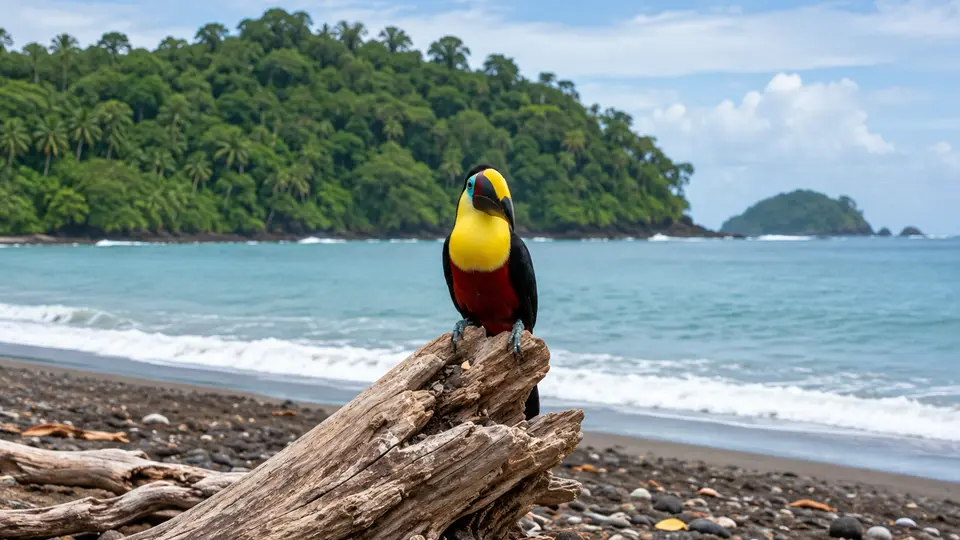
Keel-billed Toucan in its natural habitatAI-modified

Keel-billed ToucanRamphastos sulfuratusWhere and when to see them

Keel-billed Toucan at a glance

The keel-billed toucan is a conspicuous tropical forest bird with a rainbow-coloured bill, yellow throat and mostly black body. Its enormous-looking bill is relatively lightweight, supported by an internal structure rather than solid bone throughout. In Costa Rica, it is associated especially with Caribbean lowlands and parts of the north. As a fruit eater that moves between trees, it contributes to the dispersal of seeds across wooded landscapes.

Behaviour & reproduction

Size
42-55 cm (16.5-21.7 in) long
Weight
0.3-0.5 kg (0.7-1.1 lb)
Lifespan
Not reliably established
Status
Least Concern

Small groups travel between feeding and resting trees, often keeping to the canopy. Birds reach for fruit with the bill tip, then toss it back to swallow. Their croaking calls can sound more like frogs than songbirds. They nest in existing tree cavities rather than excavating a complete chamber themselves. Social interactions include bill movements and food-related exchanges, while flight typically alternates short bursts of wingbeats with gliding. Courtship displays often involve mutual bill tapping and food offerings between mates. When roosting, they frequently tuck their large bills under their wings and over their backs to conserve heat and minimize their profile.

Top wildlife locations

Costa Rica wildlife habitatAI-modified

Costa Rica

Caribbean coastal forest edges and wooded gardens can provide shore-based opportunities. Suitable habitat may require a short inland excursion, and the species is not equally widespread along all Costa Rican coasts.
Destinations describe the species' habitat, not guaranteed cruise stops. Some animals require an optional inland excursion or are found in restricted reserves.

Fun facts about the Keel-billed Toucan

  • The bill contains a lightweight internal supporting framework.
  • Its zygodactyl feet have two toes facing forward and two backward.
  • Its croaking calls are often mistaken for frog sounds.
  • It depends on tree cavities for nesting.

Best time to see the Keel-billed Toucan

The species is resident, so observation is possible in any month where suitable forest remains. February to April often provides useful travel conditions on Costa Rica's Caribbean side, although rainfall is variable. Local fruiting trees and morning activity are better guides than a universal national dry season. During the nesting season from March to June, adult toucans are particularly active around their cavity nests as they forage for chicks. Their bright plumage makes them easier to spot against the green foliage during sunnier periods, even from a distance.

Keel-billed Toucan: season matrix by destination

Travel and observation windows vary by region. Highlighted months are an orientation for planning, not confirmed sightings or a guarantee of access.

Costa Rica

A practical Caribbean-side travel window, not a migration or guaranteed sighting period; rain and fruit availability vary locally.

JanFebMarAprMayJunJulAugSepOctNovDec
Cruise ships in Costa Rica

Where the Keel-billed Toucan lives

It uses lowland and foothill tropical forest, forest edges and secondary woodland with mature trees. Fruit-rich gardens and wooded agricultural mosaics may also be visited. Coastal Caribbean forest can be suitable, but open beaches and treeless resort grounds provide little useful habitat. They are often found in the mid-canopy to subcanopy layers of the forest, occasionally descending to lower strata for feeding. While adaptable, they prefer areas with mature trees providing large nesting cavities and ample food sources.

What the Keel-billed Toucan eats

Fruit forms the bulk of its diet, including figs and other fleshy forest fruits. It also takes insects, small vertebrates and the eggs or nestlings of other birds. This opportunistic animal feeding supplies nutrients that a fruit-heavy diet alone may not provide. Prey items are typically swallowed whole due to the toucan's wide gape, with larger items sometimes manipulated and broken apart. These omnivorous tendencies contribute to seed dispersal, playing a role in forest regeneration.

Species at a glance

Common name
Keel-billed Toucan
Scientific name
Ramphastos sulfuratus
Animal group
Birds
Size
42-55 cm (16.5-21.7 in) long
Weight
0.3-0.5 kg (0.7-1.1 lb)
Lifespan
Not reliably established
Status
Least Concern
Identification
Unlike the yellow-throated toucan, the keel-billed toucan has a largely green, multicoloured bill with orange areas and a reddish tip. The prominent, oversized bill is lightweight and hollow, reinforced by bony struts, not solid. Look for the distinct yellow throat patch contrasting with the black plumage and the bright green, blue, and orange hues on the bill itself.

Keel-billed Toucan: frequently asked questions

Where can I see the Keel-billed Toucan?
Costa Rica. Scan fruiting canopy trees from public trails or permitted garden paths, especially early in the morning. Do not bait birds or approach cavity nests; keep equipment and hands away from any bird that comes close. Their distinct, often frog-like calls frequently reveal their presence before they are seen, so listen carefully to the forest sounds. Binoculars are essential for observing details of their bill coloration and foraging behaviors high in the canopy.
When is the best time to see the Keel-billed Toucan?
The species is resident, so observation is possible in any month where suitable forest remains. February to April often provides useful travel conditions on Costa Rica's Caribbean side, although rainfall is variable. Local fruiting trees and morning activity are better guides than a universal national dry season. During the nesting season from March to June, adult toucans are particularly active around their cavity nests as they forage for chicks. Their bright plumage makes them easier to spot against the green foliage during sunnier periods, even from a distance.
How big does the Keel-billed Toucan get?
42-55 cm (16.5-21.7 in) long. Adult weight: 0.3-0.5 kg (0.7-1.1 lb). Size varies with age, sex and population.
How should I behave around the Keel-billed Toucan?
Scan fruiting canopy trees from public trails or permitted garden paths, especially early in the morning. Do not bait birds or approach cavity nests; keep equipment and hands away from any bird that comes close. Their distinct, often frog-like calls frequently reveal their presence before they are seen, so listen carefully to the forest sounds. Binoculars are essential for observing details of their bill coloration and foraging behaviors high in the canopy.
What does the Keel-billed Toucan eat?
Fruit forms the bulk of its diet, including figs and other fleshy forest fruits. It also takes insects, small vertebrates and the eggs or nestlings of other birds. This opportunistic animal feeding supplies nutrients that a fruit-heavy diet alone may not provide. Prey items are typically swallowed whole due to the toucan's wide gape, with larger items sometimes manipulated and broken apart. These omnivorous tendencies contribute to seed dispersal, playing a role in forest regeneration.
Are wildlife sightings guaranteed on an adventure cruise?
No. Animals move freely and routes, weather, access restrictions and local conditions influence every outing. Confirm the actual itinerary and shore program before booking.

Compare wildlife in the same destinations

Explore other birds recorded in these destinations. Similar surroundings do not mean the animals share the same habits or viewing season.

Species comparison by animal group and destination
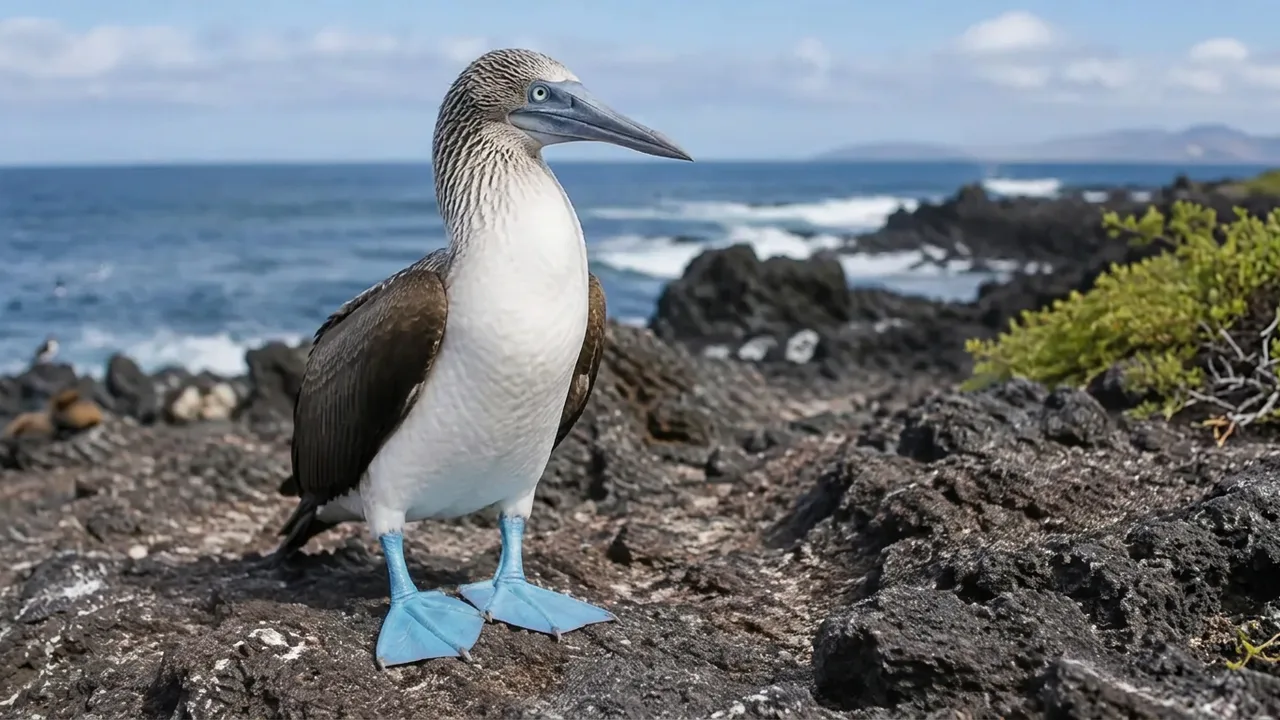
Keel-billed ToucanAI-modifiedKeel-billed ToucanBlack-mandibled ToucanAI-modifiedBlack-mandibled ToucanBlue-footed BoobyAI-modifiedBlue-footed Booby
Animal groupBirdsAnimal groupBirdsAnimal groupBirds
DestinationsCosta RicaDestinationsCosta RicaDestinationsCosta Rica, Galapagos, Mexico
Scientific nameRamphastos sulfuratusScientific nameScientific name
All wildlife destinations
AI-modified
Plan your trip

Find your next wildlife adventure

Compare destinations, shore programs and dates with the animals and habitats you would love to see.

  • Naturalist-led shore excursions
  • Responsible wildlife watching
  • Small expedition ships