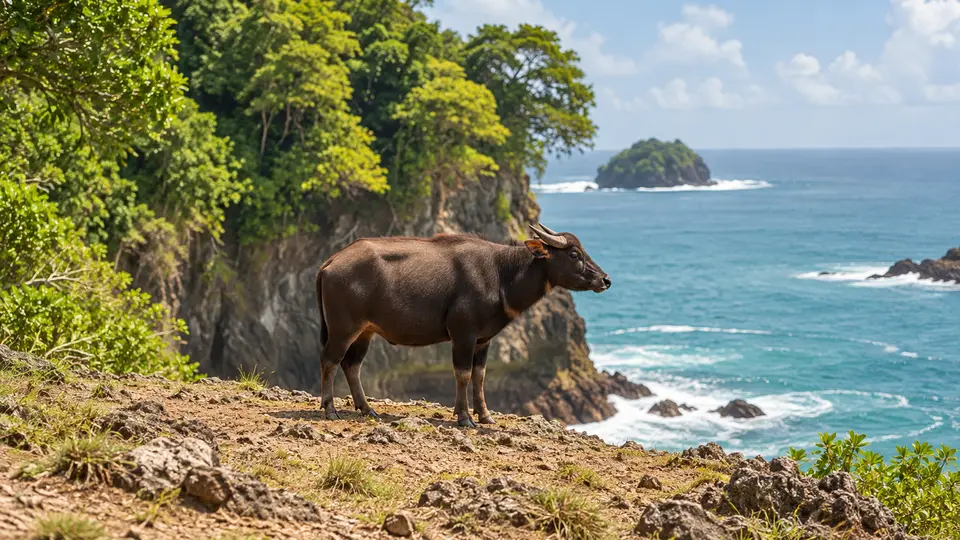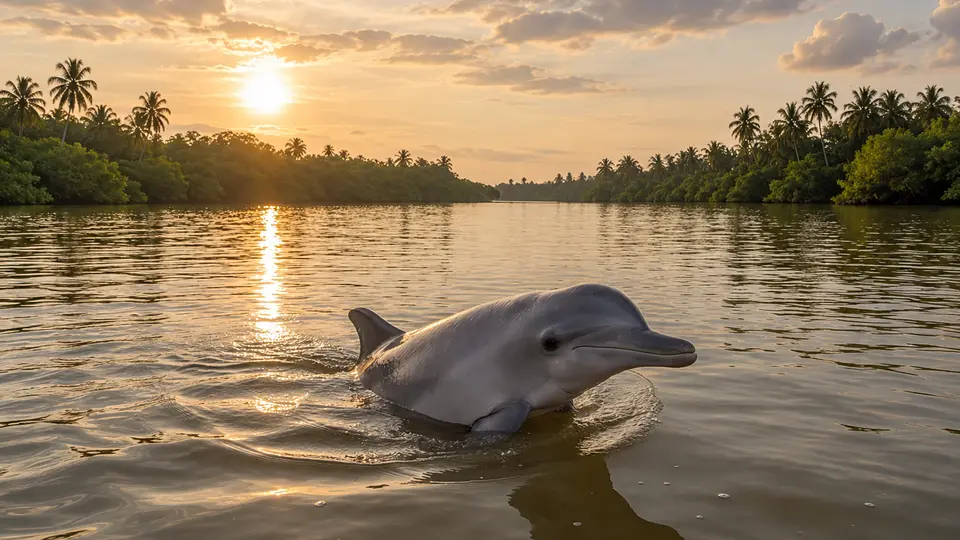
Irrawaddy dolphin in its natural habitat, AI illustration

Irrawaddy dolphin: where and when to see them

Orcaella brevirostris

Irrawaddy dolphin at a glance

The Irrawaddy dolphin is a blunt-headed cetacean inhabiting scattered coastal, estuarine and freshwater environments in South and Southeast Asia. It is not exclusively a river dolphin, despite its name and several well-known river populations. Small, isolated groups face severe risks from entanglement, altered waterways and habitat degradation. Indonesia and Thailand retain important populations, while Vietnamese occurrence is much less dependable as a basis for visitor observation planning.

Behaviour & reproduction

Size
2–2.7 m long
Weight
90–200 kg
Lifespan
Not reliably established
Status
Endangered

Irrawaddy dolphins generally form small groups and surface quietly, often showing the rounded head before the back and low dorsal fin. They use echolocation in murky water and may spit streams of water during feeding or social activity. Some populations show distinctive relationships with local fishing practices, but these cannot be assumed everywhere. Mothers keep calves close, and repeated boat approaches can interrupt feeding, movement and opportunities to rest. Irrawaddy dolphins are known for their unique 'spitting' behavior, expelling a stream of water from their mouth, which is thought to be related to feeding or play. They exhibit a 'tail-slap' behavior, often seen when they are feeding or perhaps communicating. Social structures typically involve small, cohesive groups, but individuals may also be seen alone or in pairs.

Top wildlife locations

Indonesia wildlife habitat

Indonesia

The Mahakam population requires an inland river excursion in East Kalimantan, with possible distant riverbank views. Coastal populations elsewhere are localised and should not be assumed present along standard island shore itineraries.

Adventure cruises in Indonesia
Thailand wildlife habitat

Thailand

Some Gulf estuaries and coastal bays provide plausible distant viewing habitat. Remaining groups are localised and sightings rare; the severely depleted Songkhla Lake population should not be promoted as a routine excursion.

Adventure cruises in Thailand
Vietnam wildlife habitat

Vietnam

Sheltered southern coastal waters and estuarine margins are plausible habitat, but confirmed visitor opportunities are poorly established. Shore sightings should be treated as exceptional, not an expected feature of a coastal itinerary.

Adventure cruises in Vietnam

Destinations describe the species' habitat, not guaranteed cruise stops. Some animals require an optional inland excursion or are found in restricted reserves.

Fun facts about the Irrawaddy dolphin

  • Some populations live entirely in freshwater, while others inhabit marine coasts.
  • Its neck is more flexible than that of many oceanic dolphins.
  • Water-spitting behaviour has been documented in several populations.
  • The Australian snubfin dolphin was recognised as a separate species in 2005.

Best time to see the Irrawaddy dolphin

Timing must be population-specific rather than assigned across the species' range. Lower river levels may simplify viewing in some inland settings, while coastal observation depends strongly on sea state. Obtain current local advice because access, population condition and responsible viewing arrangements can change. Water levels in rivers can fluctuate significantly with monsoons, affecting both prey availability and dolphin distribution. Observing dolphins during lower water periods in rivers might increase visibility as they concentrate in deeper channels. Coastal viewing is best in calm seas when dolphins are more likely to be seen at the surface and less impacted by rough conditions.

Irrawaddy dolphin: season matrix by destination

Travel and observation windows vary by region. Highlighted months are an orientation for planning, not confirmed sightings or a guarantee of access.

Indonesia

Relatively drier months can suit Mahakam travel, but river levels vary annually and these months do not guarantee dolphin concentrations.

JanFebMarAprMayJunJulAugSepOctNovDec
Cruise ships in Indonesia

Thailand

A single national window is unsupported because Gulf localities differ in weather, access and current population status; seek recent conservation guidance.

JanFebMarAprMayJunJulAugSepOctNovDec
Cruise ships in Thailand

Vietnam

Insufficient reliable local information supports a species-specific viewing window; general Vietnamese travel seasons cannot substitute for confirmed occurrence.

JanFebMarAprMayJunJulAugSepOctNovDec
Cruise ships in Vietnam

Where the Irrawaddy dolphin lives

Habitats include muddy estuaries, sheltered coastal waters, lagoons and a few major rivers. Different populations occupy very different settings, so marine and freshwater records must not be conflated. Indonesia's Mahakam population is inland, whereas other populations use coastal and brackish environments. They are found in scattered, disjunct populations, generally preferring depths less than 20 meters. These dolphins thrive in areas with extensive mangrove forests and estuaries, which offer abundant food sources and shelter. Some populations are known to reside year-round in specific river systems far from the sea.

What the Irrawaddy dolphin eats

Fish dominate the diet, supplemented by crustaceans and cephalopods in marine habitats. Available prey differs between river and coastal populations. Echolocation helps locate animals in sediment-rich water, and feeding grounds frequently overlap fishing areas where entanglement presents a serious threat. In addition to active hunting, they are opportunistic feeders and may scavenge discards from fishing boats. Their varied diet reflects their adaptability to different aquatic environments, from freshwater rivers to coastal marine areas. They often forage in turbid waters, relying heavily on their echolocation to detect prey.

Species at a glance

Common name
Irrawaddy dolphin
Scientific name
Orcaella brevirostris
Animal group
Mammals
Size
2–2.7 m long
Weight
90–200 kg
Lifespan
Not reliably established
Status
Endangered
Identification
Its rounded forehead, absent obvious beak and small rounded dorsal fin distinguish it from bottlenose and humpback dolphins, while the similar Australian snubfin dolphin has a separate range. Their distinctive blunt, rounded head and lack of a prominent beak are key features for identification, making them appear somewhat whale-like. The coloration is generally dark grey to bluish-grey on the back, fading to a lighter belly, with no complex patterns. Look for their characteristic slow, rolling surfacing pattern, often revealing only the head and a small, triangular dorsal fin.

Irrawaddy dolphin: frequently asked questions

Where can I see the Irrawaddy dolphin?
Indonesia, Thailand, Vietnam. Observe only at a distance from riverbanks, coastal viewpoints or vessel decks. Do not request interception in narrow channels, feed dolphins or approach calves; avoid obstructing fishing operations or encouraging repeated passes. Be mindful that vessel noise can interfere with their echolocation and communication, especially in shallow or confined waters. Always maintain a slow, steady course when viewing and avoid rapid changes in speed or direction. Consider using binoculars from a stable platform to minimize disturbance and enhance your viewing experience.
When is the best time to see the Irrawaddy dolphin?
Timing must be population-specific rather than assigned across the species' range. Lower river levels may simplify viewing in some inland settings, while coastal observation depends strongly on sea state. Obtain current local advice because access, population condition and responsible viewing arrangements can change. Water levels in rivers can fluctuate significantly with monsoons, affecting both prey availability and dolphin distribution. Observing dolphins during lower water periods in rivers might increase visibility as they concentrate in deeper channels. Coastal viewing is best in calm seas when dolphins are more likely to be seen at the surface and less impacted by rough conditions.
How big does the Irrawaddy dolphin get?
2–2.7 m long. Adult weight: 90–200 kg. Size varies with age, sex and population.
How should I behave around the Irrawaddy dolphin?
Observe only at a distance from riverbanks, coastal viewpoints or vessel decks. Do not request interception in narrow channels, feed dolphins or approach calves; avoid obstructing fishing operations or encouraging repeated passes. Be mindful that vessel noise can interfere with their echolocation and communication, especially in shallow or confined waters. Always maintain a slow, steady course when viewing and avoid rapid changes in speed or direction. Consider using binoculars from a stable platform to minimize disturbance and enhance your viewing experience.
What does the Irrawaddy dolphin eat?
Fish dominate the diet, supplemented by crustaceans and cephalopods in marine habitats. Available prey differs between river and coastal populations. Echolocation helps locate animals in sediment-rich water, and feeding grounds frequently overlap fishing areas where entanglement presents a serious threat. In addition to active hunting, they are opportunistic feeders and may scavenge discards from fishing boats. Their varied diet reflects their adaptability to different aquatic environments, from freshwater rivers to coastal marine areas. They often forage in turbid waters, relying heavily on their echolocation to detect prey.
Are wildlife sightings guaranteed on an adventure cruise?
No. Animals move freely and routes, weather, access restrictions and local conditions influence every outing. Confirm the actual itinerary and shore programme before booking.

Compare wildlife in the same destinations

Explore other mammals recorded in these destinations. Similar surroundings do not mean the animals share the same habits or viewing season.

Species comparison by animal group and destination
Irrawaddy dolphinIrrawaddy dolphinAnoaAnoaBabirusaBabirusa
Animal groupMammalsAnimal groupMammalsAnimal groupMammals
DestinationsIndonesia, Thailand, VietnamDestinationsIndonesiaDestinationsIndonesia
All wildlife destinations
Plan your trip

Find your next wildlife adventure

Compare destinations, shore programmes and dates with the animals and habitats you would love to see.

  • Naturalist-led shore excursions
  • Responsible wildlife watching
  • Small expedition ships

Newsletter

Take Blue Rides with you

Adventure cruise offers, last-minute deals and trip inspiration.

Free, unsubscribe anytime. Details: Privacy Policy

Partner with Blue Rides

Affiliate Program

Recommend adventure cruises and earn commission on every confirmed booking.

Share. Track. Earn.