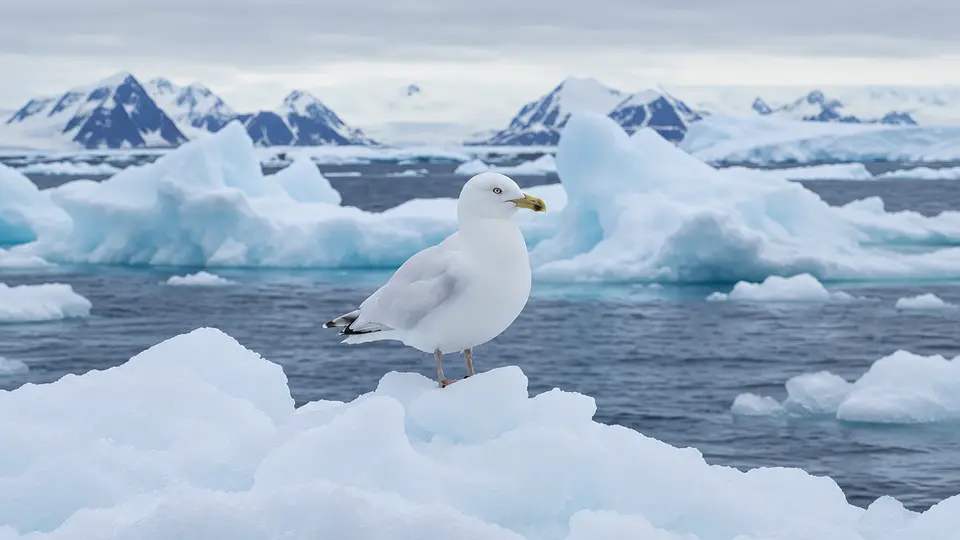
Ivory Gull in its natural habitat, AI illustration

Ivory GullPagophila eburneaWhere and when to see them

Ivory Gull at a glance

The ivory gull is a high-Arctic seabird closely associated with sea ice. Adults are almost entirely white, an unusual appearance among gulls, while young birds carry scattered dark markings. It breeds in remote Arctic terrain and spends much of its life near ice-covered seas. Its reliance on these environments makes changing sea-ice conditions especially consequential, alongside contaminant exposure and the vulnerability of small, widely separated breeding colonies.

Behaviour & reproduction

Size
40–43 cm long; 108–120 cm wingspan
Weight
450–700 g
Lifespan
Not reliably established
Status
Near Threatened

Ivory gulls search ice edges and leads for food, sometimes hovering briefly before taking prey from the surface. They also scavenge at marine mammal carcasses and may follow polar bears to exploit remains. Breeding occurs in colonies on isolated cliffs, rocky outcrops or gravel areas. Outside nesting, birds can gather around concentrated food, but their movements are strongly influenced by ice and access to open water rather than fixed tourist routes. They are largely solitary or found in small groups outside the breeding season, not forming large feeding flocks like many other gull species. During breeding, colonies can range from a few pairs to several hundred, often nesting on steep, inaccessible cliffs. Their movements track the shifting ice, often appearing in areas rich with marine mammal activity.

Top wildlife locations

Arctic wildlife habitat

Arctic

Ice-edge waters and remote polar coasts offer possible deck or authorised shore views. Breeding colonies are often inaccessible or protected, and birds are rare along many otherwise popular Arctic travel routes.
Destinations describe the species' habitat, not guaranteed cruise stops. Some animals require an optional inland excursion or are found in restricted reserves.

Fun facts about the Ivory Gull

  • It is the only living species in the genus Pagophila.
  • Juveniles have scattered dark spots that adults lose.
  • Some colonies occupy isolated mountain outcrops surrounded by glaciers.
  • Scavenging behind polar bears links its feeding ecology to the sea-ice food web.

Best time to see the Ivory Gull

The Arctic summer provides daylight and the most practical coastal or deck observation conditions. Actual opportunities depend on regional ice conditions and lawful access, not simply month. Winter movements occur around pack ice, but accessible shore sightings are generally exceptional. While generally elusive, summer cruises focusing on high Arctic regions like Svalbard or Franz Josef Land offer the best chances. Early summer is often key for observing breeding colonies before the ice recedes too much. However, their presence is always contingent on local ice conditions which can vary annually.

Ivory Gull: season matrix by destination

Travel and observation windows vary by region. Highlighted months are an orientation for planning, not confirmed sightings or a guarantee of access.

Arctic

Summer and early autumn offer practical expedition access; ice distribution and region determine opportunities, with no expectation of sightings across the entire Arctic.

JanFebMarAprMayJunJulAugSepOctNovDec
Cruise ships in Arctic

Where the Ivory Gull lives

Pack ice, ice margins, leads and nearby polar seas form its principal habitat. Nesting sites include remote nunataks, cliffs and barren islands, sometimes far inland but linked to marine feeding areas. Most suitable terrain is inaccessible without specialised Arctic travel. They are circumpolar, found throughout the high Arctic regions of North America, Greenland, Svalbard, and Russia. Their breeding range is restricted to the high Arctic, typically above 70° N latitude. During the non-breeding season, they may wander further south with the pack ice.

What the Ivory Gull eats

Small fish and marine invertebrates are taken near the water surface or ice edge. Carrion and scraps from seal or whale carcasses are also important opportunities. This combination of predation and scavenging allows feeding where open water is limited and unpredictable. They have an unusual diet among gulls, relying heavily on scavenging and often being the first bird species to arrive at fresh carcasses. This opportunistic feeding strategy allows them to thrive in nutrient-poor polar environments. They are also known to take eggs and young from other seabird colonies, demonstrating their adaptability.

Species at a glance

Common name
Ivory Gull
Scientific name
Pagophila eburnea
Animal group
Birds
Size
40–43 cm long; 108–120 cm wingspan
Weight
450–700 g
Lifespan
Not reliably established
Status
Near Threatened
Identification
Adults are entirely white with black legs and a bluish bill tipped yellow, unlike glaucous gulls, which are larger and retain pale grey upperwings. Juveniles are largely white but show fine black flecks on the wingtips, tail, and sometimes a dusky mask, gradually becoming pure white over two to three years. Their relatively small size compared to other Arctic gulls, like Glaucous or Iceland Gulls, is another key identification feature. The distinctive black legs are visible even at a distance.

Ivory Gull: frequently asked questions

Where can I see the Ivory Gull?
Arctic. Scan ice edges from a secure deck or authorised shore position. Never approach carcasses or follow gulls toward polar bears; obey expedition safety instructions and remain well away from nesting colonies. Be prepared for potentially distant sightings, as they often forage far from land or ships. A good pair of binoculars or a spotting scope is essential for detailed observation. Listen for their distinctive calls, which are higher-pitched and less raucous than other gulls.
When is the best time to see the Ivory Gull?
The Arctic summer provides daylight and the most practical coastal or deck observation conditions. Actual opportunities depend on regional ice conditions and lawful access, not simply month. Winter movements occur around pack ice, but accessible shore sightings are generally exceptional. While generally elusive, summer cruises focusing on high Arctic regions like Svalbard or Franz Josef Land offer the best chances. Early summer is often key for observing breeding colonies before the ice recedes too much. However, their presence is always contingent on local ice conditions which can vary annually.
How big does the Ivory Gull get?
40–43 cm long; 108–120 cm wingspan. Adult weight: 450–700 g. Size varies with age, sex and population.
How should I behave around the Ivory Gull?
Scan ice edges from a secure deck or authorised shore position. Never approach carcasses or follow gulls toward polar bears; obey expedition safety instructions and remain well away from nesting colonies. Be prepared for potentially distant sightings, as they often forage far from land or ships. A good pair of binoculars or a spotting scope is essential for detailed observation. Listen for their distinctive calls, which are higher-pitched and less raucous than other gulls.
What does the Ivory Gull eat?
Small fish and marine invertebrates are taken near the water surface or ice edge. Carrion and scraps from seal or whale carcasses are also important opportunities. This combination of predation and scavenging allows feeding where open water is limited and unpredictable. They have an unusual diet among gulls, relying heavily on scavenging and often being the first bird species to arrive at fresh carcasses. This opportunistic feeding strategy allows them to thrive in nutrient-poor polar environments. They are also known to take eggs and young from other seabird colonies, demonstrating their adaptability.
Are wildlife sightings guaranteed on an adventure cruise?
No. Animals move freely and routes, weather, access restrictions and local conditions influence every outing. Confirm the actual itinerary and shore program before booking.

Compare wildlife in the same destinations

Explore other birds recorded in these destinations. Similar surroundings do not mean the animals share the same habits or viewing season.

Species comparison by animal group and destination
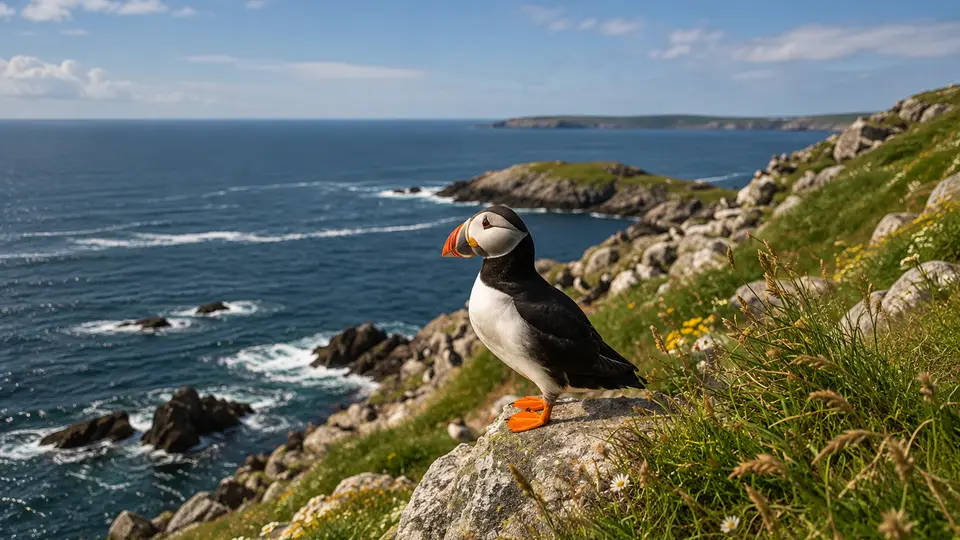
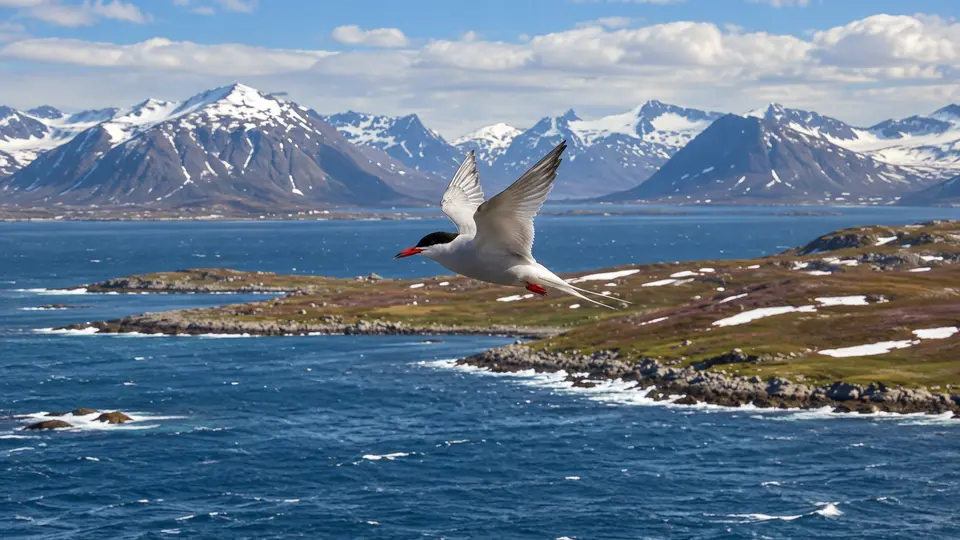
Ivory GullIvory GullArctic TernArctic TernAtlantic PuffinAtlantic Puffin
Animal groupBirdsAnimal groupBirdsAnimal groupBirds
DestinationsArcticDestinationsAlaska, Norway, ArcticDestinationsNew England, Norway, Scotland, Arctic
All wildlife destinations
Plan your trip

Find your next wildlife adventure

Compare destinations, shore programs and dates with the animals and habitats you would love to see.

  • Naturalist-led shore excursions
  • Responsible wildlife watching
  • Small expedition ships

Newsletter

Take Blue Rides with you

Adventure cruise offers, last-minute deals and trip inspiration.

Free, unsubscribe anytime. Details: Privacy Policy

Partner with Blue Rides

Affiliate Program

Recommend adventure cruises and earn commission on every confirmed booking.

Share. Track. Earn.

Your footage, our stage

Send us your videos or pictures.

Captured remarkable nature or wildlife on your journey? Share it with us, we may feature it on Blue Rides.