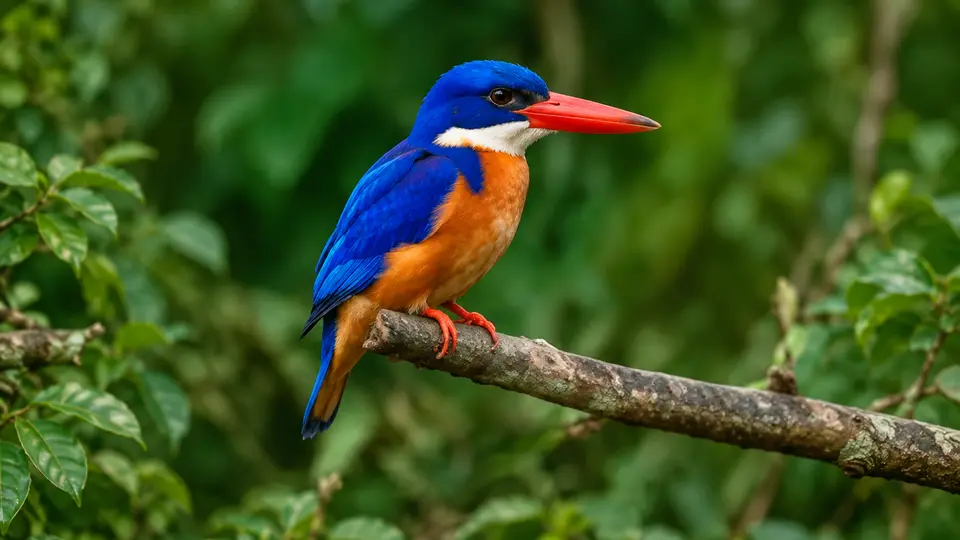
Javan kingfisher in its natural habitat, AI illustration

Javan kingfisher: where and when to see them

Halcyon cyanoventris

Javan kingfisher at a glance

The Javan kingfisher is a vividly coloured bird endemic to Java and Bali. Despite its name, it is not confined to streams and often hunts terrestrial prey in agricultural country. A large red bill, dark head and brilliant blue plumage make adults memorable when seen well. Its limited natural range means that suitable habitat on these two islands matters far more than Indonesia's enormous overall extent might suggest.

Behaviour & reproduction

Size
25–27 cm long
Weight
Not reliably established
Lifespan
Not reliably established
Status
Least Concern

Javan kingfishers commonly hunt from an exposed branch, wire or other elevated perch, watching for movement before dropping onto prey. They may beat larger captures against a perch before swallowing them. Birds are often encountered singly or in pairs and advertise their presence with loud calls. Like many kingfishers, they excavate nesting tunnels in earthen banks, making undisturbed soil faces an important resource in otherwise intensively managed landscapes. Their territorial calls, a series of harsh, descending notes, are often the first sign of their presence, even before they are seen. When perched, they often bob their head and flick their tail, indicating alertness and readiness to hunt.

Top wildlife locations

Indonesia wildlife habitat

Indonesia

On Java and Bali, coastal rice fields and village-edge wetlands offer plausible accessible habitat. Other Indonesian islands are outside its natural range, and urban waterfront visits may require a short agricultural-area excursion.

Adventure cruises in Indonesia
Destinations describe the species' habitat, not guaranteed cruise stops. Some animals require an optional inland excursion or are found in restricted reserves.

Fun facts about the Javan kingfisher

  • Its natural range is restricted to Java and Bali.
  • The species name cyanoventris refers to its blue belly.
  • It often hunts land animals rather than fish.
  • Its nesting chamber lies at the end of a tunnel excavated into an earthen bank.

Best time to see the Javan kingfisher

Resident birds can be sought throughout the year on Java and Bali. The generally drier months often make field-edge walks easier, but irrigation and cultivation influence habitat conditions. A convenient travel season should not be assumed to represent a universal breeding peak. Breeding activity peaks during the wet season, typically from October to March, when invertebrate prey is most abundant. However, their year-round presence makes them a reliable sighting regardless of the specific travel month.

Javan kingfisher: season matrix by destination

Travel and observation windows vary by region. Highlighted months are an orientation for planning, not confirmed sightings or a guarantee of access.

Indonesia

These generally drier months suit walking on Java and Bali; birds are resident, and local rainfall and farming cycles affect conditions.

JanFebMarAprMayJunJulAugSepOctNovDec
Cruise ships in Indonesia

Where the Javan kingfisher lives

Rice fields, open woodland, gardens, marsh edges and farmland with scattered perches are typical settings. Streams and irrigation channels can be useful but are not essential everywhere. Coastal agricultural mosaics may be suitable, while heavily built-up waterfronts generally offer little habitat. They are well-adapted to human modified landscapes and are frequently found near villages and towns. Optimal habitats often include a mosaic of open fields, scattered trees, and access to water for foraging.

What the Javan kingfisher eats

Large insects and other terrestrial invertebrates are important prey, alongside small vertebrates such as lizards and frogs. Fish may also be taken, but this is not a strictly fish-eating kingfisher. Hunting usually begins from a stationary perch overlooking open ground or water. In urban or agricultural settings, Javan kingfishers also opportunistically feed on insects disturbed by farming activities or found near human habitation. Their diet flexibility allows them to thrive in diverse environments where other kingfisher species might struggle.

Species at a glance

Common name
Javan kingfisher
Scientific name
Halcyon cyanoventris
Animal group
Birds
Size
25–27 cm long
Weight
Not reliably established
Lifespan
Not reliably established
Status
Least Concern
Identification
Unlike the white-throated kingfisher, the Javan kingfisher lacks a large white throat-and-breast patch and has a dark head with blue-violet underparts. Note the distinctive combination of a dark, almost blackish head, rufous-orange breast, and brilliant blue back and rump. The stout red bill is also a prominent feature that aids in quick identification.

Javan kingfisher: frequently asked questions

Where can I see the Javan kingfisher?
Indonesia. Watch rice-field edges from public paths without entering crops or blocking farmers. Keep away from earthen nest banks, avoid playback, and take care near irrigation channels and traffic when birds perch beside roads. On shore excursions, focus your search on the edges of cultivated fields or areas with scattered trees and overhead wires along rural roads. Early mornings and late afternoons are often the most productive times for observing active foraging.
When is the best time to see the Javan kingfisher?
Resident birds can be sought throughout the year on Java and Bali. The generally drier months often make field-edge walks easier, but irrigation and cultivation influence habitat conditions. A convenient travel season should not be assumed to represent a universal breeding peak. Breeding activity peaks during the wet season, typically from October to March, when invertebrate prey is most abundant. However, their year-round presence makes them a reliable sighting regardless of the specific travel month.
How big does the Javan kingfisher get?
25–27 cm long. Adult weight: Not reliably established. Size varies with age, sex and population.
How should I behave around the Javan kingfisher?
Watch rice-field edges from public paths without entering crops or blocking farmers. Keep away from earthen nest banks, avoid playback, and take care near irrigation channels and traffic when birds perch beside roads. On shore excursions, focus your search on the edges of cultivated fields or areas with scattered trees and overhead wires along rural roads. Early mornings and late afternoons are often the most productive times for observing active foraging.
What does the Javan kingfisher eat?
Large insects and other terrestrial invertebrates are important prey, alongside small vertebrates such as lizards and frogs. Fish may also be taken, but this is not a strictly fish-eating kingfisher. Hunting usually begins from a stationary perch overlooking open ground or water. In urban or agricultural settings, Javan kingfishers also opportunistically feed on insects disturbed by farming activities or found near human habitation. Their diet flexibility allows them to thrive in diverse environments where other kingfisher species might struggle.
Are wildlife sightings guaranteed on an adventure cruise?
No. Animals move freely and routes, weather, access restrictions and local conditions influence every outing. Confirm the actual itinerary and shore programme before booking.

Compare wildlife in the same destinations

Explore other birds recorded in these destinations. Similar surroundings do not mean the animals share the same habits or viewing season.

Species comparison by animal group and destination
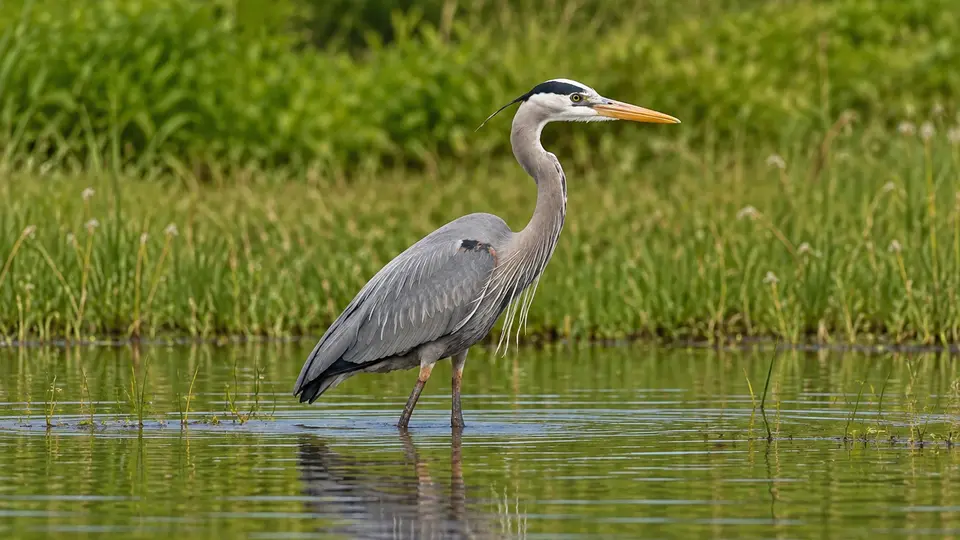
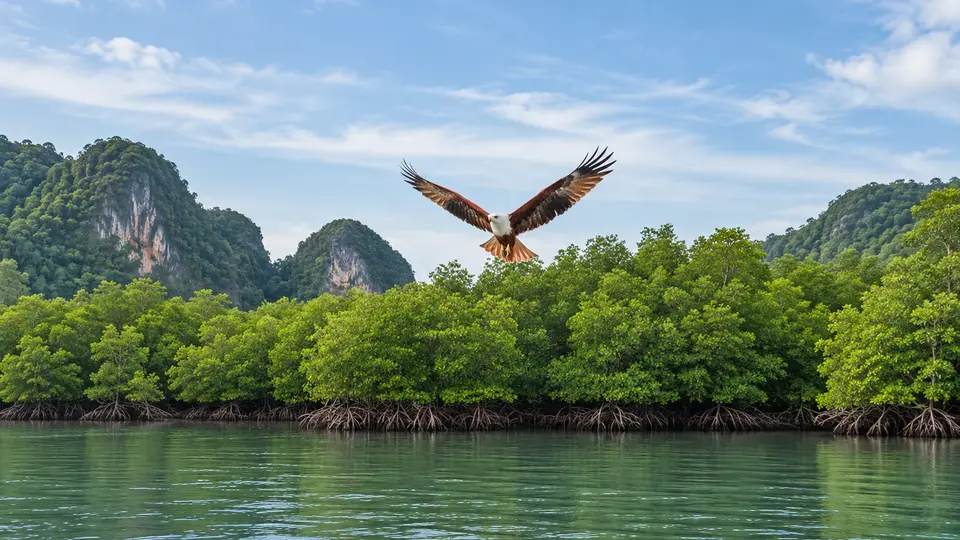
Javan kingfisherJavan kingfisherBrahminy kiteBrahminy kiteGreat-billed heronGreat-billed heron
Animal groupBirdsAnimal groupBirdsAnimal groupBirds
DestinationsIndonesiaDestinationsIndonesia, Thailand, VietnamDestinationsIndonesia, Thailand
All wildlife destinations
Plan your trip

Find your next wildlife adventure

Compare destinations, shore programmes and dates with the animals and habitats you would love to see.

  • Naturalist-led shore excursions
  • Responsible wildlife watching
  • Small expedition ships

Newsletter

Take Blue Rides with you

Adventure cruise offers, last-minute deals and trip inspiration.

Free, unsubscribe anytime. Details: Privacy Policy

Partner with Blue Rides

Affiliate Program

Recommend adventure cruises and earn commission on every confirmed booking.

Share. Track. Earn.