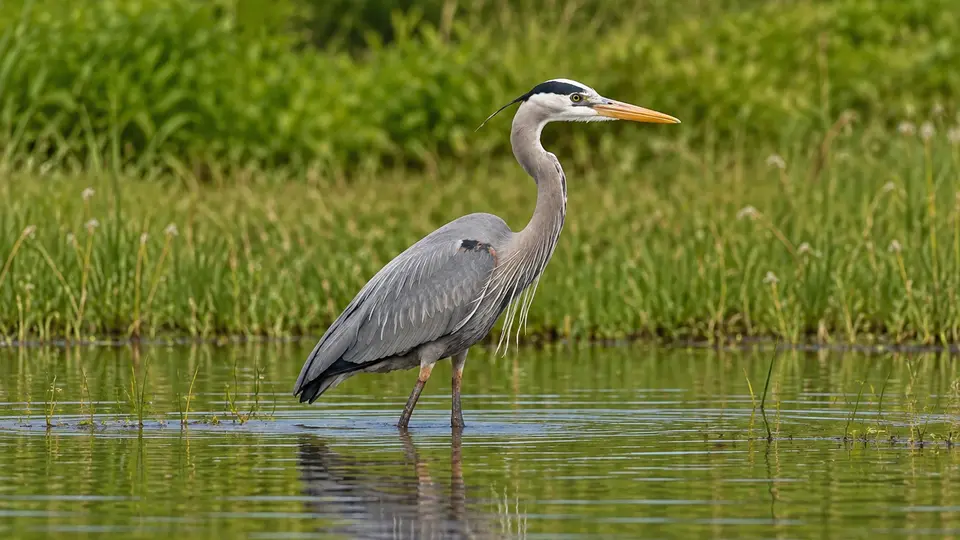
Great-billed heron in its natural habitat, AI illustration

Great-billed heron: where and when to see them

Ardea sumatrana

Great-billed heron at a glance

The great-billed heron is a very large, dark gray heron of tropical coastal Asia and Australasia. Its massive bill and sturdy proportions suit a life along mangrove channels, rocky shores and quiet islands. Despite its size, it is often inconspicuous, standing alone in shade or against dark coastal vegetation. Across much of Southeast Asia it is sparsely distributed, so suitable-looking mangrove habitat does not necessarily support an accessible resident bird.

Behaviour & reproduction

Size
110-115 cm long
Weight
Not reliably established
Lifespan
Not reliably established
Status
Least Concern

Great-billed herons usually hunt alone, waiting patiently at the water's edge or advancing with slow, careful steps. A sudden forward strike replaces long periods of stillness when prey comes close. Birds may shift position as the tide changes access to feeding shallows. Breeding is less conspicuous and less thoroughly documented than in many familiar herons, with pairs using substantial stick nests in trees in quiet coastal settings. Courtship displays, though rarely seen, involve bowing and stretching movements, sometimes with vocalizations. They are largely sedentary within their territories, often using the same roosting and nesting sites over many seasons.

Top wildlife locations

Indonesia wildlife habitat

Indonesia

Quiet mangrove-channel viewpoints and rocky island shores provide plausible habitat, but birds are localized and often difficult to find. Some suitable coastlines are inaccessible, requiring specialist local planning rather than ordinary beach visits.

Adventure cruises in Indonesia
Thailand wildlife habitat

Thailand

Undisturbed Andaman mangrove estuaries and island shorelines offer the most plausible coastal habitat. The species is rare and localized, and productive sites may be inaccessible from public shores or require a targeted excursion.

Adventure cruises in Thailand

Destinations describe the species' habitat, not guaranteed cruise stops. Some animals require an optional inland excursion or are found in restricted reserves.

Fun facts about the Great-billed heron

  • Its scientific name refers to Sumatra.
  • The bill is proportionally deeper and heavier than in many other large herons.
  • It can remain difficult to detect despite standing more than a meter tall.
  • Its range extends from Southeast Asia to northern Australia.

Best time to see the Great-billed heron

Tide and local knowledge are often more useful than a fixed month for this localized resident. Thailand's Andaman dry season generally improves coastal access. Indonesia spans contrasting rainfall regimes, making an island-specific plan more defensible than a nationwide observation season. Breeding activity in parts of its range often coincides with the local dry season, offering opportunities to observe nesting pairs. Consult local tide charts and guides to optimize viewing during periods of low tide when more foraging areas are exposed.

Great-billed heron: season matrix by destination

Travel and observation windows vary by region. Highlighted months are an orientation for planning, not confirmed sightings or a guarantee of access.

Indonesia

Indonesia's varied island climates and the lack of a specified locality prevent a defensible shared travel window; tidal conditions and current local knowledge matter most.

JanFebMarAprMayJunJulAugSepOctNovDec
Cruise ships in Indonesia

Thailand

These months generally favor Andaman coastal access, not a known seasonal concentration or breeding peak; local occurrence remains uncertain.

JanFebMarAprMayJunJulAugSepOctNovDec
Cruise ships in Thailand

Where the Great-billed heron lives

Mangroves, tidal creeks, estuaries, rocky island shores and sheltered coastal shallows are characteristic habitats. Some birds also use rivers or other inland waters. Undisturbed shoreline cover appears important, and many suitable sites lie beyond ordinary public beach access. They are often found in relatively undisturbed habitats, preferring areas with dense vegetation for cover. While primarily coastal, they have been recorded up to several kilometers inland along major rivers.

What the Great-billed heron eats

Fish form the main documented food, with crustaceans and other aquatic animals also taken. The heavy pointed bill is used to seize prey in shallow water. Detailed dietary proportions are poorly documented across its range and should not be assumed uniform. Prey items are typically swallowed whole, headfirst. They are opportunistic feeders, occasionally taking snakes, lizards, or even small birds if encountered near water.

Species at a glance

Common name
Great-billed heron
Scientific name
Ardea sumatrana
Animal group
Birds
Size
110-115 cm long
Weight
Not reliably established
Lifespan
Not reliably established
Status
Least Concern
Identification
It is larger, darker and much heavier-billed than the gray heron, lacking that species' conspicuous pale head and strong black eye stripe. The overall dark, slate-gray plumage, massive bill, and shaggy crest are key field marks. In flight, the slow, powerful wingbeats and deep, guttural call can aid identification.

Great-billed heron: frequently asked questions

Where can I see the Great-billed heron?
Indonesia, Thailand. Scan quiet mangrove edges from established shore viewpoints, keeping far enough away that the bird continues feeding. Never pursue it through tidal mud or mangrove roots; retreating tides and unstable footing create serious hazards. From a small boat, approach slowly and maintain a respectful distance to avoid flushing the bird, which is often solitary and easily disturbed. Look for them standing motionless on exposed roots or mudflats, particularly at dawn or dusk.
When is the best time to see the Great-billed heron?
Tide and local knowledge are often more useful than a fixed month for this localized resident. Thailand's Andaman dry season generally improves coastal access. Indonesia spans contrasting rainfall regimes, making an island-specific plan more defensible than a nationwide observation season. Breeding activity in parts of its range often coincides with the local dry season, offering opportunities to observe nesting pairs. Consult local tide charts and guides to optimize viewing during periods of low tide when more foraging areas are exposed.
How big does the Great-billed heron get?
110-115 cm long. Adult weight: Not reliably established. Size varies with age, sex and population.
How should I behave around the Great-billed heron?
Scan quiet mangrove edges from established shore viewpoints, keeping far enough away that the bird continues feeding. Never pursue it through tidal mud or mangrove roots; retreating tides and unstable footing create serious hazards. From a small boat, approach slowly and maintain a respectful distance to avoid flushing the bird, which is often solitary and easily disturbed. Look for them standing motionless on exposed roots or mudflats, particularly at dawn or dusk.
What does the Great-billed heron eat?
Fish form the main documented food, with crustaceans and other aquatic animals also taken. The heavy pointed bill is used to seize prey in shallow water. Detailed dietary proportions are poorly documented across its range and should not be assumed uniform. Prey items are typically swallowed whole, headfirst. They are opportunistic feeders, occasionally taking snakes, lizards, or even small birds if encountered near water.
Are wildlife sightings guaranteed on an adventure cruise?
No. Animals move freely and routes, weather, access restrictions and local conditions influence every outing. Confirm the actual itinerary and shore programme before booking.

Compare wildlife in the same destinations

Explore other birds recorded in these destinations. Similar surroundings do not mean the animals share the same habits or viewing season.

Species comparison by animal group and destination
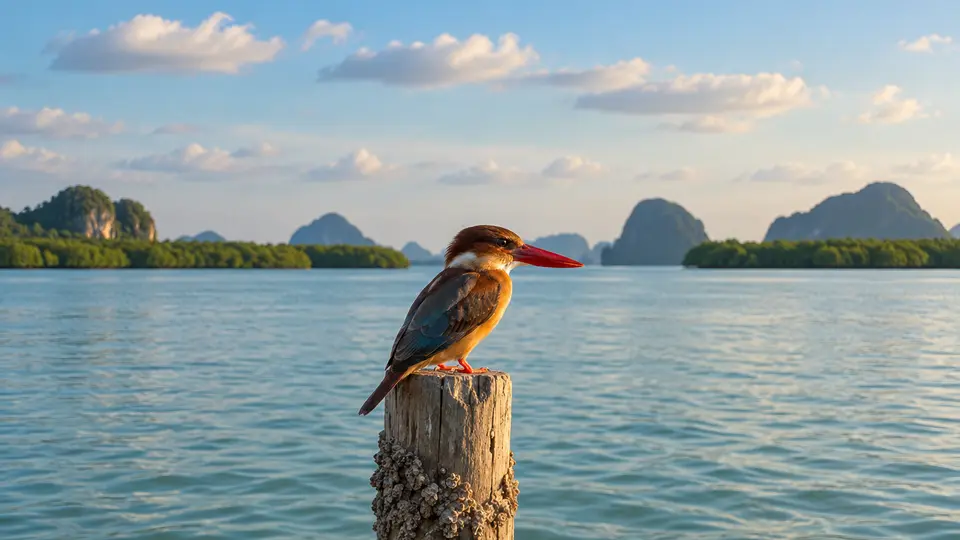
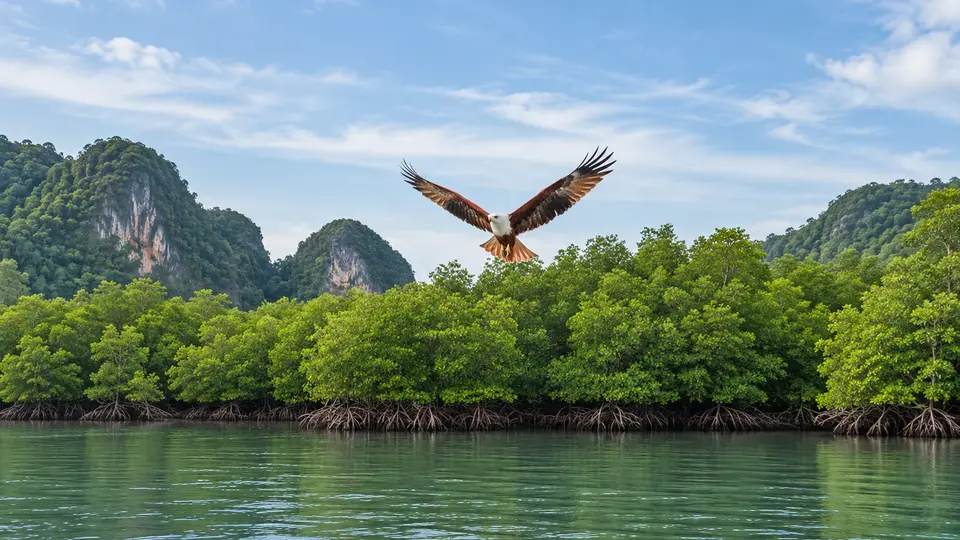
Great-billed heronGreat-billed heronBrahminy kiteBrahminy kiteBrown-winged kingfisherBrown-winged kingfisher
Animal groupBirdsAnimal groupBirdsAnimal groupBirds
DestinationsIndonesia, ThailandDestinationsIndonesia, Thailand, VietnamDestinationsThailand
All wildlife destinations
Plan your trip

Find your next wildlife adventure

Compare destinations, shore programmes and dates with the animals and habitats you would love to see.

  • Naturalist-led shore excursions
  • Responsible wildlife watching
  • Small expedition ships

Newsletter

Take Blue Rides with you

Adventure cruise offers, last-minute deals and trip inspiration.

Free, unsubscribe anytime. Details: Privacy Policy

Partner with Blue Rides

Affiliate Program

Recommend adventure cruises and earn commission on every confirmed booking.

Share. Track. Earn.