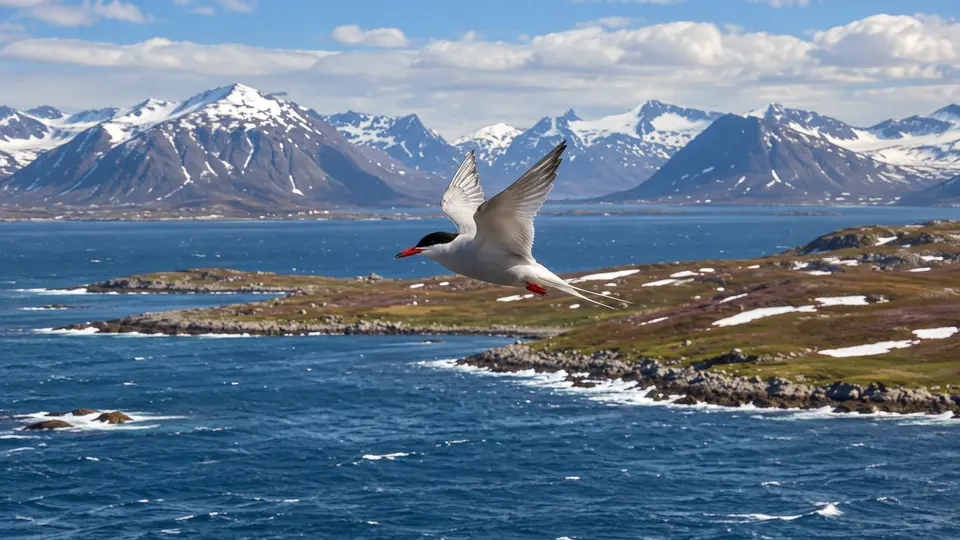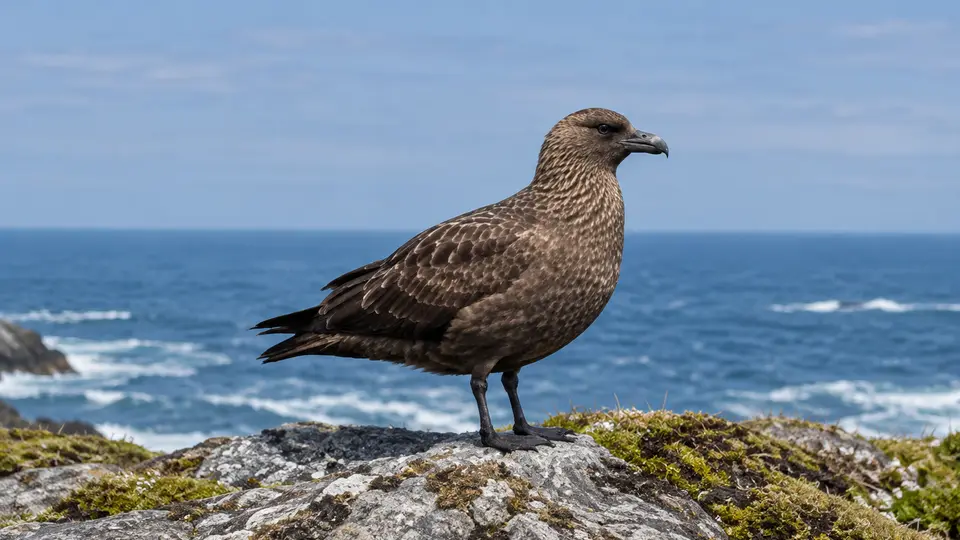
Great Skua in its natural habitat, AI illustration

Great Skua: where and when to see them

Stercorarius skua

Great Skua at a glance

The great skua is a powerful North Atlantic seabird with brown plumage, broad wings and striking white flashes at the bases of the flight feathers. Known as the bonxie in Scotland, it breeds chiefly on northern islands and coasts. It is an adaptable predator and scavenger, capable of forcing other seabirds to surrender food. Recent avian influenza outbreaks have caused serious losses at some colonies despite its global assessment.

Behaviour & reproduction

Size
50-58 cm long
Weight
1.2-1.8 kg
Lifespan
Not reliably established
Status
Least Concern

Great skuas defend breeding territories vigorously, calling and making close aerial passes at intruders. Pairs nest on the ground, usually among open moorland vegetation, and share parental duties. At sea they patrol feeding concentrations, chase other birds and exploit carrion or discarded fish. Individual hunting strategies differ: some birds specialize in stealing meals, while others repeatedly prey on seabirds. Outside breeding, many disperse widely into the Atlantic. Pairs maintain a strong bond during the breeding season, often returning to the same territory year after year. Their territorial defense can involve mock charges, loud calls, and even direct physical contact with perceived threats. Outside the breeding season, they become largely pelagic, spending most of their time at sea and only coming to land rarely.

Top wildlife locations

Norway wildlife habitat

Norway

Northern coastal islands and open maritime moorland offer suitable breeding habitat, but colonies are localized. Watch from authorized coastal paths or distant decks; sensitive sites may be inaccessible or seasonally closed.

Adventure cruises in Norway
Scotland wildlife habitat

Scotland

Northern island moorlands and coastal paths near seabird colonies provide plausible viewing. Some sites require separate island travel, and marked routes or temporary closures protect ground nests and reduce disturbance.

Adventure cruises in Scotland
Arctic wildlife habitat

Arctic

Suitable habitat occurs in parts of the North Atlantic Arctic, including open coastal tundra near seabird colonies. It is absent from many Arctic itineraries, and breeding areas may be remote or restricted.

Adventure cruises in Arctic

Destinations describe the species' habitat, not guaranteed cruise stops. Some animals require an optional inland excursion or are found in restricted reserves.

Fun facts about the Great Skua

  • Bonxie is a traditional Shetland name for the species.
  • A typical clutch contains two eggs.
  • Adults can steal fish from birds as large as gannets.
  • Scotland supports a major share of the global breeding population.

Best time to see the Great Skua

May through August broadly covers breeding-season access in Scotland and parts of Norway, when birds are tied to colonies. Arctic travel is concentrated in summer but does not ensure this species is present. Colony closures may change following disease outbreaks or conservation concerns. Prime viewing opportunities from a ship in the Arctic are limited by their regional distribution, making dedicated searches often necessary. In their North Atlantic breeding range, late summer offers chances to see juveniles learning to hunt. Always check local conservation guidelines as specific colony access might be restricted for various reasons, including protecting nesting birds.

Great Skua: season matrix by destination

Travel and observation windows vary by region. Highlighted months are an orientation for planning, not confirmed sightings or a guarantee of access.

Norway

These months cover much of the breeding and coastal travel season; locality, colony protection and disease restrictions govern actual access.

JanFebMarAprMayJunJulAugSepOctNovDec
Cruise ships in Norway

Scotland

Breeding birds are most associated with land in these months; check current reserve access and avian influenza advice before visiting.

JanFebMarAprMayJunJulAugSepOctNovDec
Cruise ships in Scotland

Arctic

A broad summer access window for relevant North Atlantic sectors only; the generic Arctic label cannot support a more precise occurrence claim.

JanFebMarAprMayJunJulAugSepOctNovDec
Cruise ships in Arctic

Where the Great Skua lives

Breeding habitat includes treeless maritime moorland, coastal grassland and tundra-like island terrain near productive seas. Outside breeding, great skuas occupy offshore shelf waters and the open Atlantic. Their Arctic presence is regional, not a uniform feature of high-latitude coastlines. Breeding colonies are typically found on remote islands or headlands, often sharing space with other seabird species. They favor areas with good visibility to spot predators or intruders. During migration and winter, they range widely across the open Atlantic, reaching waters off the Iberian Peninsula and Africa.

What the Great Skua eats

They eat fish, seabirds, eggs, chicks and carrion, obtaining food through hunting, scavenging and piracy. The balance varies among colonies and individuals. Fishery discards have historically supported some populations, while changes in fisheries can alter available food and predation pressure. They are opportunistic feeders, often targeting young gulls, puffins, or gannets from their colonies. Their kleptoparasitic behavior involves relentlessly chasing other seabirds, like gulls or gannets, until they drop their catch, which the skua then seizes. Scavenging is also a significant food source, particularly on dead whales or seals.

Species at a glance

Common name
Great Skua
Scientific name
Stercorarius skua
Animal group
Birds
Size
50-58 cm long
Weight
1.2-1.8 kg
Lifespan
Not reliably established
Status
Least Concern
Identification
Its bulky brown body and broad white wing flashes distinguish it from slimmer jaegers, which often have more pointed wings and elongated central tail feathers. Adults typically show a dark brown plumage with paler streaking on the head and neck, though overall coloration can vary geographically. The white wing flashes, formed by white primary feather shafts, are a key field mark visible in flight. Juveniles are generally darker and more uniformly brown, often with less defined streaking.

Great Skua: frequently asked questions

Where can I see the Great Skua?
Norway, Scotland, Arctic. Follow marked routes and retreat calmly if territorial birds alarm or swoop. Do not approach nests, touch sick or dead seabirds, or cross colony closures; report suspected disease through local wildlife channels. When viewing from a distance, binoculars are essential to observe their feeding strategies and interactions with other birds. From the deck of a ship, watch for them following fishing vessels or congregating where other seabirds are feeding. Respect local regulations regarding drone use near colonies, as this can disturb nesting birds.
When is the best time to see the Great Skua?
May through August broadly covers breeding-season access in Scotland and parts of Norway, when birds are tied to colonies. Arctic travel is concentrated in summer but does not ensure this species is present. Colony closures may change following disease outbreaks or conservation concerns. Prime viewing opportunities from a ship in the Arctic are limited by their regional distribution, making dedicated searches often necessary. In their North Atlantic breeding range, late summer offers chances to see juveniles learning to hunt. Always check local conservation guidelines as specific colony access might be restricted for various reasons, including protecting nesting birds.
How big does the Great Skua get?
50-58 cm long. Adult weight: 1.2-1.8 kg. Size varies with age, sex and population.
How should I behave around the Great Skua?
Follow marked routes and retreat calmly if territorial birds alarm or swoop. Do not approach nests, touch sick or dead seabirds, or cross colony closures; report suspected disease through local wildlife channels. When viewing from a distance, binoculars are essential to observe their feeding strategies and interactions with other birds. From the deck of a ship, watch for them following fishing vessels or congregating where other seabirds are feeding. Respect local regulations regarding drone use near colonies, as this can disturb nesting birds.
What does the Great Skua eat?
They eat fish, seabirds, eggs, chicks and carrion, obtaining food through hunting, scavenging and piracy. The balance varies among colonies and individuals. Fishery discards have historically supported some populations, while changes in fisheries can alter available food and predation pressure. They are opportunistic feeders, often targeting young gulls, puffins, or gannets from their colonies. Their kleptoparasitic behavior involves relentlessly chasing other seabirds, like gulls or gannets, until they drop their catch, which the skua then seizes. Scavenging is also a significant food source, particularly on dead whales or seals.
Are wildlife sightings guaranteed on an adventure cruise?
No. Animals move freely and routes, weather, access restrictions and local conditions influence every outing. Confirm the actual itinerary and shore programme before booking.

Compare wildlife in the same destinations

Explore other birds recorded in these destinations. Similar surroundings do not mean the animals share the same habits or viewing season.

Species comparison by animal group and destination
Great SkuaGreat SkuaArctic TernArctic TernAtlantic PuffinAtlantic Puffin
Animal groupBirdsAnimal groupBirdsAnimal groupBirds
DestinationsNorway, Scotland, ArcticDestinationsAlaska, Norway, ArcticDestinationsNew England, Norway, Scotland, Arctic
All wildlife destinations
Plan your trip

Find your next wildlife adventure

Compare destinations, shore programmes and dates with the animals and habitats you would love to see.

  • Naturalist-led shore excursions
  • Responsible wildlife watching
  • Small expedition ships

Newsletter

Take Blue Rides with you

Adventure cruise offers, last-minute deals and trip inspiration.

Free, unsubscribe anytime. Details: Privacy Policy

Partner with Blue Rides

Affiliate Program

Recommend adventure cruises and earn commission on every confirmed booking.

Share. Track. Earn.