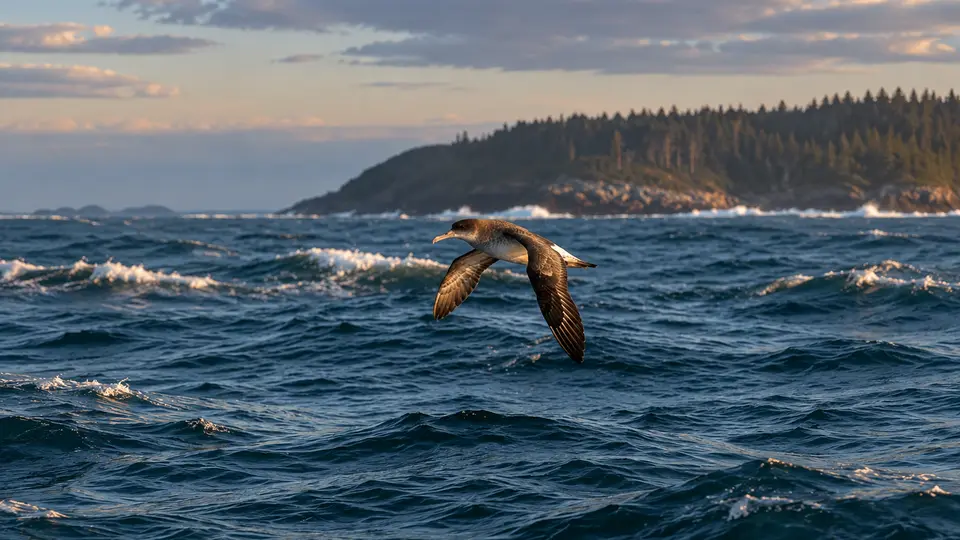
Great Shearwater in its natural habitatAI-modified

Great ShearwaterArdenna gravisWhere and when to see them

Great Shearwater at a glance

The great shearwater is a long-distance Atlantic seabird with brown upperparts, white underparts and a contrasting dark cap. It breeds mainly on remote South Atlantic islands, then travels north to exploit productive waters during the northern summer. Off New England it is a seasonal marine visitor, not a coastal nesting bird. Most observations are offshore, although suitable headlands sometimes offer distant views when birds and winds align favorably.

Behaviour & reproduction

Size
43-51 cm (17-20 in) long
Weight
0.7-1.0 kg (1.5-2.2 lb)
Lifespan
Not reliably established
Status
Least Concern

Great shearwaters alternate stiff-winged glides with quick wingbeats, using wind above waves to travel efficiently. They may gather around feeding whales, fish schools or fishing vessels, but also range singly across enormous ocean areas. On breeding islands they return to burrows, often under cover of darkness. Their annual movements form a broad Atlantic circuit, connecting southern nesting grounds with northern feeding waters before the next breeding season begins. These highly social birds often form large rafts on the water before and after feeding bouts, particularly in areas of abundant prey. They are known to engage in 'shearing' flight, a technique where they glide on stiff wings close to the wave tops, conserving energy.

Top wildlife locations

New England wildlife habitatAI-modified

New England

Outer-coast headlands can provide distant views across productive shelf waters, but birds often remain far offshore. Deck observation may improve visibility; ordinary sheltered beaches are generally poor places to search.
Destinations describe the species' habitat, not guaranteed cruise stops. Some animals require an optional inland excursion or are found in restricted reserves.

Fun facts about the Great Shearwater

  • Most of the world population breeds in the Tristan da Cunha island group.
  • Pairs normally produce one egg per breeding attempt.
  • Tubular nostrils are characteristic of its seabird order.
  • Its northern summer visit follows a breeding season in the Southern Hemisphere.

Best time to see the Great Shearwater

June through September is the broad New England window for this Southern Hemisphere breeder's northern visit. Some birds occur outside those months. Shore visibility depends strongly on wind direction, prey distribution and viewing distance rather than simply choosing the middle of summer. Peak numbers often occur from late July through early September, corresponding to periods of increased ocean productivity. Early fall can also be excellent for observation as juvenile birds join the adults on their southward migration.

Great Shearwater: season matrix by destination

Travel and observation windows vary by region. Highlighted months are an orientation for planning, not confirmed sightings or a guarantee of access.

New England

This overlaps the main northern feeding visit, but shore detectability is highly weather-dependent and does not imply breeding in New England.

JanFebMarAprMayJunJulAugSepOctNovDec
Cruise ships in New England

Where the Great Shearwater lives

This is primarily a pelagic species of open ocean and continental-shelf waters. Productive fronts, banks and current boundaries can concentrate feeding birds. Breeding habitat consists of burrow-suitable ground on remote South Atlantic islands, far from its seasonal New England range. During their non-breeding season, they are frequently found over the continental shelf edge, benefiting from upwellings that bring nutrients to the surface. They often follow ocean currents rich in food resources, making long-distance migrations across the Atlantic.

What the Great Shearwater eats

Great shearwaters eat fish, squid and crustaceans, taking prey near the surface or pursuing it below. They also consume fishery discards where available. Natural feeding concentrations often develop where larger marine predators or oceanographic processes bring small prey within reach. Their diet can vary geographically and seasonally, reflecting the availability of different prey species. These opportunistic feeders exploit dense aggregations of baitfish such as mackerel, herring, and sand eels when present.

Species at a glance

Common name
Great Shearwater
Scientific name
Ardenna gravis
Animal group
Birds
Size
43-51 cm (17-20 in) long
Weight
0.7-1.0 kg (1.5-2.2 lb)
Lifespan
Not reliably established
Status
Least Concern
Identification
A dark cap, white neck sides, pale rump band and dark belly patch distinguish it from the more uniformly dark sooty shearwater and larger-billed Cory's shearwater. The distinct white flash on the primary feathers, often called a 'headlight', is a key field mark when seen in flight. Their flight profile is typically more slender and agile than other large shearwaters.

Great Shearwater: frequently asked questions

Where can I see the Great Shearwater?
New England. Use a telescope from a safe headland or watch from a distant deck without attracting birds with food. Avoid storm-exposed rocks, and keep clear of working fishing gear when scanning offshore feeding flocks. Binoculars are essential for observing these fast-moving birds at sea, even from a stable platform. Look for their characteristic flight pattern and feeding frenzies often visible from a distance.
When is the best time to see the Great Shearwater?
June through September is the broad New England window for this Southern Hemisphere breeder's northern visit. Some birds occur outside those months. Shore visibility depends strongly on wind direction, prey distribution and viewing distance rather than simply choosing the middle of summer. Peak numbers often occur from late July through early September, corresponding to periods of increased ocean productivity. Early fall can also be excellent for observation as juvenile birds join the adults on their southward migration.
How big does the Great Shearwater get?
43-51 cm (17-20 in) long. Adult weight: 0.7-1.0 kg (1.5-2.2 lb). Size varies with age, sex and population.
How should I behave around the Great Shearwater?
Use a telescope from a safe headland or watch from a distant deck without attracting birds with food. Avoid storm-exposed rocks, and keep clear of working fishing gear when scanning offshore feeding flocks. Binoculars are essential for observing these fast-moving birds at sea, even from a stable platform. Look for their characteristic flight pattern and feeding frenzies often visible from a distance.
What does the Great Shearwater eat?
Great shearwaters eat fish, squid and crustaceans, taking prey near the surface or pursuing it below. They also consume fishery discards where available. Natural feeding concentrations often develop where larger marine predators or oceanographic processes bring small prey within reach. Their diet can vary geographically and seasonally, reflecting the availability of different prey species. These opportunistic feeders exploit dense aggregations of baitfish such as mackerel, herring, and sand eels when present.
Are wildlife sightings guaranteed on an adventure cruise?
No. Animals move freely and routes, weather, access restrictions and local conditions influence every outing. Confirm the actual itinerary and shore program before booking.

Compare wildlife in the same destinations

Explore other birds recorded in these destinations. Similar surroundings do not mean the animals share the same habits or viewing season.

Species comparison by animal group and destination
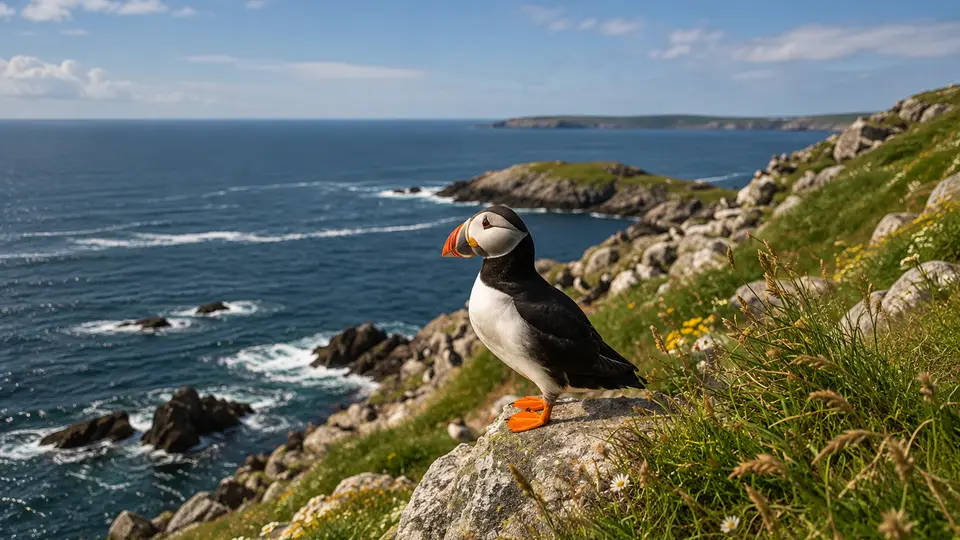
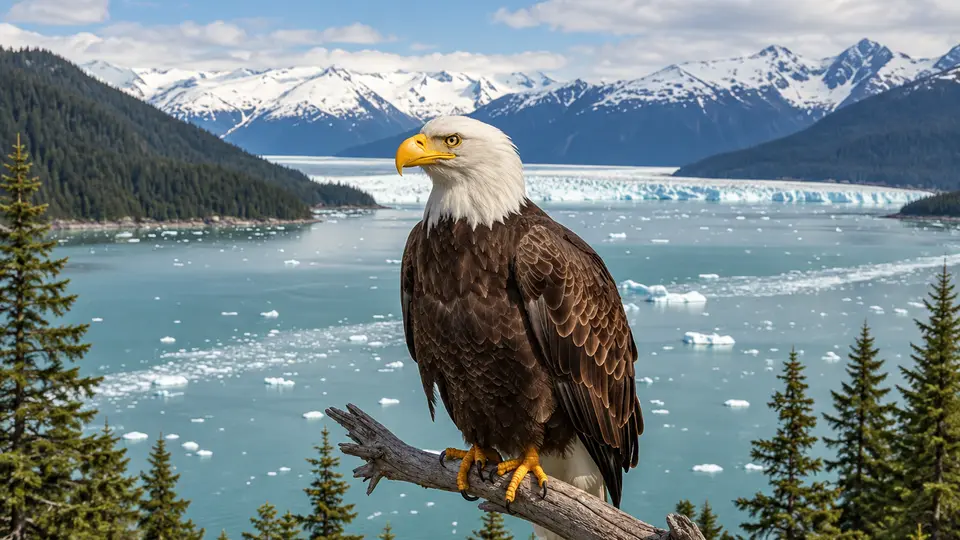
Great ShearwaterAI-modifiedGreat ShearwaterAtlantic PuffinAI-modifiedAtlantic PuffinBald EagleAI-modifiedBald Eagle
Animal groupBirdsAnimal groupBirdsAnimal groupBirds
DestinationsNew EnglandDestinationsNew England, Norway, Scotland, ArcticDestinationsAlaska, Florida, New England
Scientific nameArdenna gravisScientific nameScientific name
All wildlife destinations
AI-modified
Plan your trip

Find your next wildlife adventure

Compare destinations, shore programs and dates with the animals and habitats you would love to see.

  • Naturalist-led shore excursions
  • Responsible wildlife watching
  • Small expedition ships