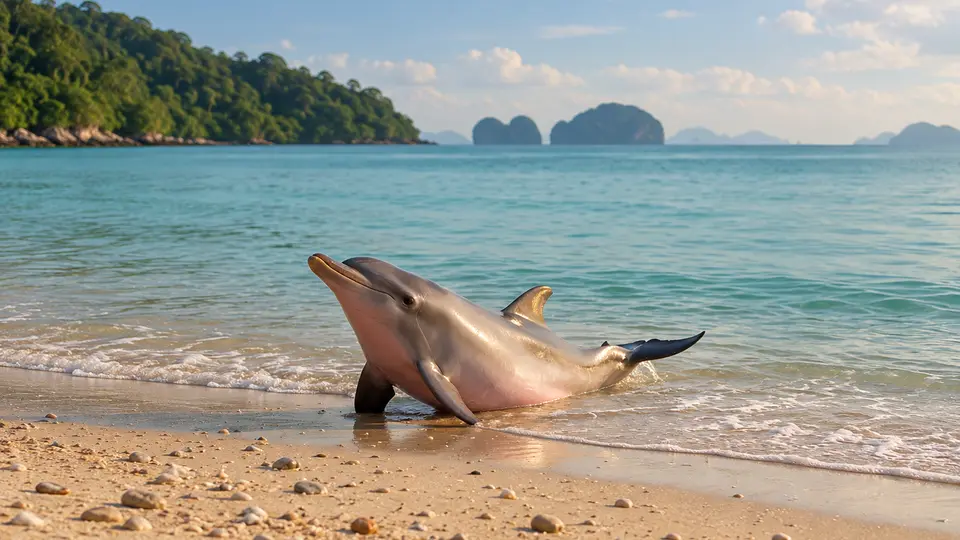
Indo-Pacific humpback dolphin in its natural habitat, AI illustration

Indo-Pacific humpback dolphin: where and when to see them

Sousa chinensis

Indo-Pacific humpback dolphin at a glance

The Indo-Pacific humpback dolphin is a shallow-water coastal species found in parts of the eastern Indian and western Pacific oceans. In Thailand it occurs locally, especially in suitable Gulf coastal habitats. Colour varies with age and population, and some adults become strikingly pale or pinkish. Its dependence on nearshore waters exposes it to fishing gear, vessel traffic, pollution and construction, so seemingly accessible habitat may also be heavily threatened.

Behaviour & reproduction

Size
2–2.8 m long
Weight
150–280 kg
Lifespan
30–40 years
Status
Vulnerable

These dolphins usually travel in small, changing groups and often surface with an unhurried rolling movement. They hunt around estuaries, shoals and other places where fish concentrate. Social interactions can include body contact and occasional leaps, but quiet movement is more typical than prolonged display. Mothers maintain close relationships with calves. Individuals may repeatedly use particular stretches of coast, bringing their daily activities into contact with fisheries and boat traffic. These dolphins often engage in 'spyhopping' to survey their surroundings above the water. Their interactions with coastal communities are frequent, necessitating careful management to reduce human induced impacts.

Top wildlife locations

Thailand wildlife habitat

Thailand

Gulf coastal headlands and sheltered bays, including the Khanom area, offer plausible distant shore views. Dolphins are localised and not guaranteed; accessible beaches should not be assumed to overlook regularly used habitat.

Adventure cruises in Thailand
Destinations describe the species' habitat, not guaranteed cruise stops. Some animals require an optional inland excursion or are found in restricted reserves.

Fun facts about the Indo-Pacific humpback dolphin

  • Calves are generally darker than pale adults in populations that lose pigmentation with age.
  • A pink appearance can reflect blood circulation close to the skin rather than pink pigment.
  • The name Chinese white dolphin is also used for this species.
  • Modern taxonomy separates it from the Indian Ocean and Australian humpback dolphins.

Best time to see the Indo-Pacific humpback dolphin

Local animals may occur throughout the year, but calm conditions make distant shore observation more practical. Weather patterns differ around Thailand's coasts. For Gulf locations, select a locally suitable travel window without treating it as a breeding season or guaranteed dolphin peak. While present year-round, the dry season (typically November to April) often offers calmer seas, improving visibility for boat-based viewing. Always check local weather forecasts as conditions can vary significantly by region and time of year.

Indo-Pacific humpback dolphin: season matrix by destination

Travel and observation windows vary by region. Highlighted months are an orientation for planning, not confirmed sightings or a guarantee of access.

Thailand

This broad Gulf travel window often avoids the wettest late-year conditions around Khanom; local forecasts and sea state remain decisive.

JanFebMarAprMayJunJulAugSepOctNovDec
Cruise ships in Thailand

Where the Indo-Pacific humpback dolphin lives

Estuaries, shallow bays, mangrove-fringed coasts and nearshore waters over soft substrates are characteristic habitats. The species is marine, although it can enter brackish estuarine water. Thai populations are localised, and records from one coastal district should not be extrapolated nationwide. They are highly philopatric, often restricting their movements to small home ranges along coastlines. Their presence is a good indicator of healthy coastal ecosystems, including mangrove forests and seagrass beds.

What the Indo-Pacific humpback dolphin eats

The diet consists chiefly of coastal fish, including species associated with estuaries and the seabed. Dolphins use echolocation while searching in frequently turbid water. Feeding around fishing activity can increase exposure to entanglement and does not justify deliberate provisioning by observers. They opportunistically feed on a variety of coastal fish and cephalopods, often associated with sandy or muddy bottoms. This adaptable foraging behavior helps them thrive in diverse estuarine and nearshore environments.

Species at a glance

Common name
Indo-Pacific humpback dolphin
Scientific name
Sousa chinensis
Animal group
Marine life
Size
2–2.8 m long
Weight
150–280 kg
Lifespan
30–40 years
Status
Vulnerable
Identification
Compared with bottlenose dolphins, it has a longer slender beak and a smaller dorsal fin on a raised base, while pale adults are unlike the typically darker Indian Ocean humpback dolphin. Adults in Thai waters frequently exhibit a striking pinkish coloration, which intensifies with age due to blood vessel distribution under their pale skin. Calves are typically a darker gray, gradually lightening as they mature.

Indo-Pacific humpback dolphin: frequently asked questions

Where can I see the Indo-Pacific humpback dolphin?
Thailand. Watch from established coastal viewpoints or a vessel deck at a respectful distance. Never feed dolphins or encourage boats to surround them; shallow feeding areas and mothers with calves are particularly vulnerable to disturbance. Maintain a consistent, slow speed when observing from a vessel to minimize disturbance. Look for their distinctive tall, triangular dorsal fin and the characteristic 'hump' as they surface, often near river mouths or sheltered coves.
When is the best time to see the Indo-Pacific humpback dolphin?
Local animals may occur throughout the year, but calm conditions make distant shore observation more practical. Weather patterns differ around Thailand's coasts. For Gulf locations, select a locally suitable travel window without treating it as a breeding season or guaranteed dolphin peak. While present year-round, the dry season (typically November to April) often offers calmer seas, improving visibility for boat-based viewing. Always check local weather forecasts as conditions can vary significantly by region and time of year.
How big does the Indo-Pacific humpback dolphin get?
2–2.8 m long. Adult weight: 150–280 kg. Size varies with age, sex and population.
How should I behave around the Indo-Pacific humpback dolphin?
Watch from established coastal viewpoints or a vessel deck at a respectful distance. Never feed dolphins or encourage boats to surround them; shallow feeding areas and mothers with calves are particularly vulnerable to disturbance. Maintain a consistent, slow speed when observing from a vessel to minimize disturbance. Look for their distinctive tall, triangular dorsal fin and the characteristic 'hump' as they surface, often near river mouths or sheltered coves.
What does the Indo-Pacific humpback dolphin eat?
The diet consists chiefly of coastal fish, including species associated with estuaries and the seabed. Dolphins use echolocation while searching in frequently turbid water. Feeding around fishing activity can increase exposure to entanglement and does not justify deliberate provisioning by observers. They opportunistically feed on a variety of coastal fish and cephalopods, often associated with sandy or muddy bottoms. This adaptable foraging behavior helps them thrive in diverse estuarine and nearshore environments.
Are wildlife sightings guaranteed on an adventure cruise?
No. Animals move freely and routes, weather, access restrictions and local conditions influence every outing. Confirm the actual itinerary and shore program before booking.

Compare wildlife in the same destinations

Explore other marine life recorded in these destinations. Similar surroundings do not mean the animals share the same habits or viewing season.

Species comparison by animal group and destination
Indo-Pacific humpback dolphinIndo-Pacific humpback dolphinOmura's whaleOmura's whale
Animal groupMarine lifeAnimal groupMarine life
DestinationsThailandDestinationsThailand
All wildlife destinations
Plan your trip

Find your next wildlife adventure

Compare destinations, shore programs and dates with the animals and habitats you would love to see.

  • Naturalist-led shore excursions
  • Responsible wildlife watching
  • Small expedition ships

Newsletter

Take Blue Rides with you

Adventure cruise offers, last-minute deals and trip inspiration.

Free, unsubscribe anytime. Details: Privacy Policy

Partner with Blue Rides

Affiliate Program

Recommend adventure cruises and earn commission on every confirmed booking.

Share. Track. Earn.