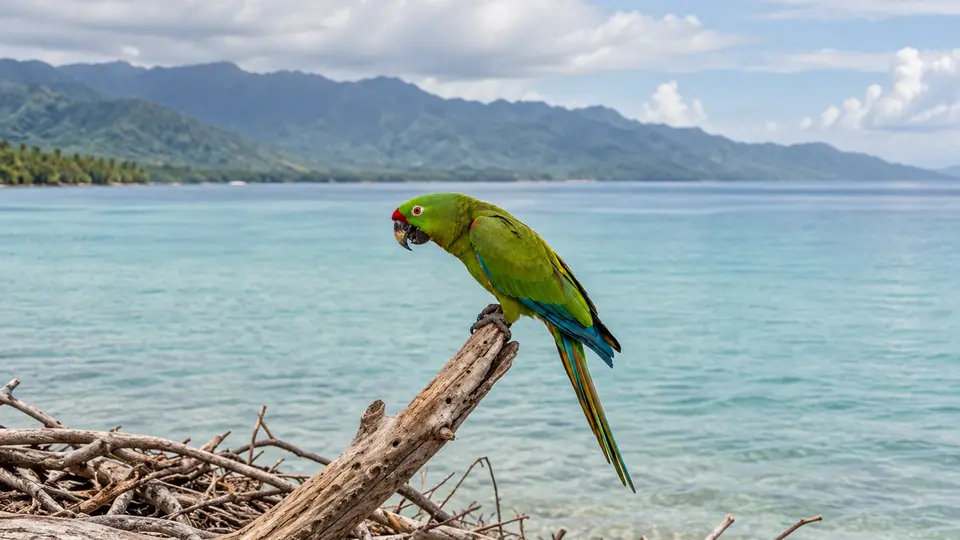
Great Green Macaw in its natural habitat, AI illustration

Great Green Macaw: where and when to see them

Ara ambiguus

Great Green Macaw at a glance

The great green macaw is a large forest parrot with predominantly green plumage, a red forehead and blue flight feathers. Its powerful bill opens hard fruits and seeds, including those of the mountain almond tree in Costa Rica. Habitat loss and capture have severely reduced its populations. Protecting mature lowland forest is essential because the same large trees can supply both valuable food and the cavities needed for nesting.

Behaviour & reproduction

Size
85-90 cm long
Weight
1.1-1.5 kg
Lifespan
Not reliably established
Status
Critically Endangered

Pairs and small groups travel above the forest canopy with strong wingbeats and loud, far-carrying calls. Birds often move seasonally as favored trees fruit, so an occupied feeding area may later fall quiet. Pairs maintain close bonds and nest in large tree cavities. Adults spend substantial time handling tough fruits with the bill and feet, while family groups may remain together as young birds develop independent feeding skills. Social grooming, or allopreening, is a common pair-bonding behavior, strengthening the relationship between mates. These long-lived birds typically mate for life, and a strong pair bond is crucial for successful breeding and raising young.

Top wildlife locations

Costa Rica wildlife habitat

Costa Rica

A targeted Caribbean-lowland forest excursion is usually required; ordinary beach watching is unsuitable. Established forest-edge viewpoints may reveal canopy flights, but birds are localized and sensitive nesting trees must not be approached.

Adventure cruises in Costa Rica
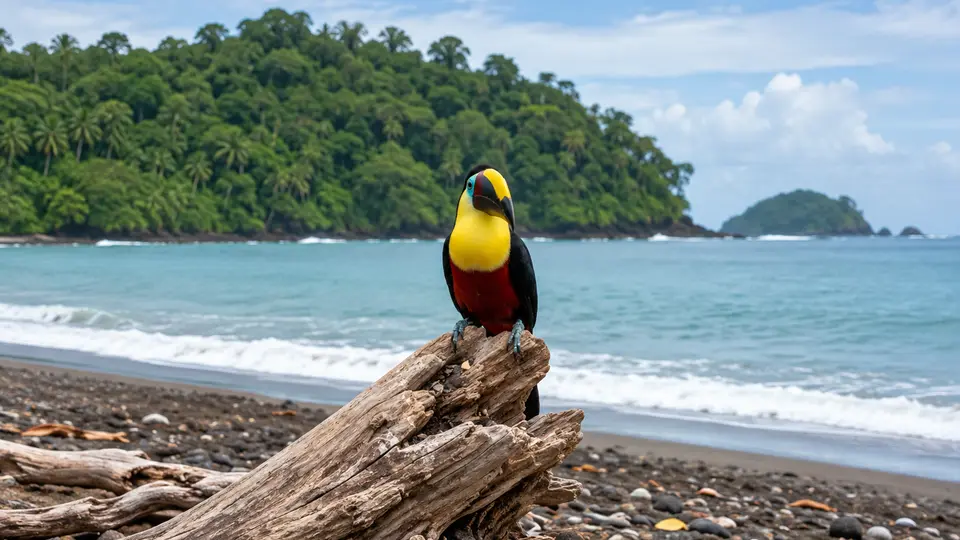
Destinations describe the species' habitat, not guaranteed cruise stops. Some animals require an optional inland excursion or are found in restricted reserves.

Fun facts about the Great Green Macaw

  • Mountain almond is Dipteryx panamensis, not the tree that produces commercial almonds.
  • The bill can break into exceptionally hard seed cases.
  • Suitable nest cavities may take many decades to develop.
  • Pairs often advertise their approach with calls before they become visible above the canopy.

Best time to see the Great Green Macaw

There is no dependable coast-wide viewing season for Costa Rica because macaws track fruiting trees and occupy a restricted range. Late winter and spring can suit targeted Caribbean-lowland visits, but local guides should confirm current feeding activity without disclosing or approaching active nests. In specific Caribbean lowland areas, guided tours during the dry season (December to April) can coincide with the peak fruiting of key food trees, offering better viewing opportunities. However, the precise timing of fruiting varies annually and regionally, so current local information is essential for successful sightings.

Great Green Macaw: season matrix by destination

Travel and observation windows vary by region. Highlighted months are an orientation for planning, not confirmed sightings or a guarantee of access.

Costa Rica

A practical targeted-visit window, not a guaranteed occurrence peak; Caribbean rainfall and shifting fruit supplies require current local advice.

JanFebMarAprMayJunJulAugSepOctNovDec
Cruise ships in Costa Rica

Where the Great Green Macaw lives

This macaw inhabits humid lowland forest and adjacent wooded landscapes, using large mature trees for food and nesting. In Costa Rica, Caribbean lowlands are particularly important. Fragmented pasture with remnant trees may be crossed or visited but cannot replace connected forest. They require extensive primary forest tracts, often near rivers, that contain large emergent trees. These majestic birds are highly sensitive to habitat degradation and loss, particularly the destruction of their specific nesting and feeding trees.

What the Great Green Macaw eats

Seeds, nuts and fruits form the core diet, with flowers and other plant material also taken. Costa Rican birds depend strongly on mountain almond resources in parts of their range. Seasonal movement reflects changing food availability across a wider forest landscape. Their robust beaks are perfectly adapted for cracking the hard shells of nuts, including the critically important mountain almond (Dipteryx panamensis). Young macaws learn foraging skills by observing parents and other group members, demonstrating cultural transmission of feeding knowledge.

Species at a glance

Common name
Great Green Macaw
Scientific name
Ara ambiguus
Animal group
Birds
Size
85-90 cm long
Weight
1.1-1.5 kg
Lifespan
Not reliably established
Status
Critically Endangered
Identification
It is larger and generally paler green than the similar military macaw, with a heavier bill and different geographic distribution. Note the distinctive patch of bare, pinkish-white skin around the eye and at the base of the bill, which distinguishes it from other macaws. The underparts of the flight feathers can appear yellowish in good light, contrasting with the green body plumage.

Great Green Macaw: frequently asked questions

Where can I see the Great Green Macaw?
Costa Rica. Watch canopy flights from established forest-edge paths with a knowledgeable local guide. Keep nest-tree locations private, avoid playback and feeding, and never gather beneath occupied cavities or move closer when birds give alarm calls. Listen for their distinctive, loud vocalizations, often described as a 'raucous arr-RAH', which can indicate their presence even before they are seen. Binoculars are indispensable for spotting these often high-flying birds or those perched camouflaged among dense foliage.
When is the best time to see the Great Green Macaw?
There is no dependable coast-wide viewing season for Costa Rica because macaws track fruiting trees and occupy a restricted range. Late winter and spring can suit targeted Caribbean-lowland visits, but local guides should confirm current feeding activity without disclosing or approaching active nests. In specific Caribbean lowland areas, guided tours during the dry season (December to April) can coincide with the peak fruiting of key food trees, offering better viewing opportunities. However, the precise timing of fruiting varies annually and regionally, so current local information is essential for successful sightings.
How big does the Great Green Macaw get?
85-90 cm long. Adult weight: 1.1-1.5 kg. Size varies with age, sex and population.
How should I behave around the Great Green Macaw?
Watch canopy flights from established forest-edge paths with a knowledgeable local guide. Keep nest-tree locations private, avoid playback and feeding, and never gather beneath occupied cavities or move closer when birds give alarm calls. Listen for their distinctive, loud vocalizations, often described as a 'raucous arr-RAH', which can indicate their presence even before they are seen. Binoculars are indispensable for spotting these often high-flying birds or those perched camouflaged among dense foliage.
What does the Great Green Macaw eat?
Seeds, nuts and fruits form the core diet, with flowers and other plant material also taken. Costa Rican birds depend strongly on mountain almond resources in parts of their range. Seasonal movement reflects changing food availability across a wider forest landscape. Their robust beaks are perfectly adapted for cracking the hard shells of nuts, including the critically important mountain almond (Dipteryx panamensis). Young macaws learn foraging skills by observing parents and other group members, demonstrating cultural transmission of feeding knowledge.
Are wildlife sightings guaranteed on an adventure cruise?
No. Animals move freely and routes, weather, access restrictions and local conditions influence every outing. Confirm the actual itinerary and shore program before booking.

Compare wildlife in the same destinations

Explore other birds recorded in these destinations. Similar surroundings do not mean the animals share the same habits or viewing season.

Species comparison by animal group and destination
Great Green MacawGreat Green MacawBlack-mandibled ToucanBlack-mandibled ToucanBlue-footed BoobyBlue-footed Booby
Animal groupBirdsAnimal groupBirdsAnimal groupBirds
DestinationsCosta RicaDestinationsCosta RicaDestinationsCosta Rica, Galapagos, Mexico
All wildlife destinations
Plan your trip

Find your next wildlife adventure

Compare destinations, shore programs and dates with the animals and habitats you would love to see.

  • Naturalist-led shore excursions
  • Responsible wildlife watching
  • Small expedition ships

Newsletter

Take Blue Rides with you

Adventure cruise offers, last-minute deals and trip inspiration.

Free, unsubscribe anytime. Details: Privacy Policy

Partner with Blue Rides

Affiliate Program

Recommend adventure cruises and earn commission on every confirmed booking.

Share. Track. Earn.