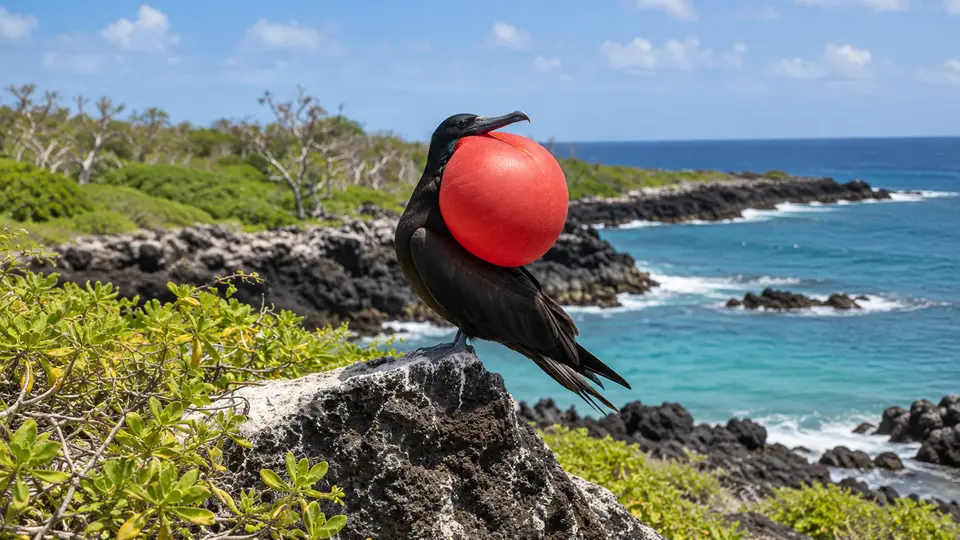
Great Frigatebird in its natural habitatAI-modified

Great FrigatebirdFregata minorWhere and when to see them

Great Frigatebird at a glance

The great frigatebird is a tropical seabird built for sustained aerial travel, with extremely long wings and a deeply forked tail. Adult males are mostly black and inflate a red throat pouch during courtship; females have a white breast. It ranges across tropical oceans but depends on scattered islands for nesting. In the Galapagos it occurs alongside the magnificent frigatebird, making careful identification more important than the familiar outline alone suggests.

Behaviour & reproduction

Size
85-105 cm (33.5-41.3 in) long
Weight
1-1.8 kg (2.2-4.0 lb)
Lifespan
Not reliably established
Status
Least Concern

Great frigatebirds soar on rising air, often circling high above islands before ranging far out to sea. They pick prey from the surface and sometimes chase other seabirds until food is released, although much feeding involves catching their own prey. Males display at nesting colonies with inflated pouches and spread wings. Parental investment is prolonged, and young may continue receiving food long after they have learned to fly. Great frigatebirds are pelagic, spending weeks or months at sea, often covering vast distances without landing. They are masterful gliders, capable of sustained flight on warm air currents, minimizing energy expenditure. Males perform a striking display at breeding colonies, inflating their vibrant red gular pouch to attract females, often making a distinctive drumming sound.

Top wildlife locations

Galapagos wildlife habitatAI-modified

Galapagos

Authorized island trails and coastal viewpoints can overlook nesting vegetation or soaring birds. Access is regulated, and great and magnificent frigatebirds overlap, so distant silhouettes alone rarely provide a secure identification.

Maldives wildlife habitatAI-modified

Maldives

Open beaches and distant decks offer sky views over ocean channels, but great frigatebirds are scarce visitors rather than dependable local birds. Do not assume a frigatebird seen overhead belongs to this species.

Polynesia wildlife habitatAI-modified

Polynesia

Coastal viewpoints near vegetated seabird islands may offer distant soaring or roosting views. Many colonies occupy remote, protected or inaccessible islets, and occurrence differs greatly among Polynesia's widely separated island groups.

Destinations describe the species' habitat, not guaranteed cruise stops. Some animals require an optional inland excursion or are found in restricted reserves.

Fun facts about the Great Frigatebird

  • Its wingspan can exceed 2 m (6.6 ft) despite its relatively low body mass.
  • Males inflate the red gular pouch with air during display.
  • Young birds can remain dependent on parental feeding for many months.
  • Tracking studies have documented ocean journeys lasting weeks without a landing.

Best time to see the Great Frigatebird

Galapagos observation is possible throughout the year, with breeding timing varying among colonies. Maldives dry-season travel can favor sky watching, but this species is scarce there. Polynesia spans many island groups, so breeding calendars and practical access must be checked island by island. In the Galapagos, breeding peaks are often observed during the hot, wet season, but birds are present year-round. While scarcer, Maldives sightings are most likely during the dry, northeast monsoon from December to April. For Polynesia, specific islands like those in the Marquesas or Tuamotus offer predictable breeding cycles that can be targeted by cruise itineraries.

Great Frigatebird: season matrix by destination

Travel and observation windows vary by region. Highlighted months are an orientation for planning, not confirmed sightings or a guarantee of access.

Galapagos

Year-round travel can provide opportunities, but colony activity varies and authorized visitor routes determine what can be viewed.

JanFebMarAprMayJunJulAugSepOctNovDec
Cruise ships in Galapagos

Maldives

These months favor generally settled travel weather, not a demonstrated peak in great frigatebird occurrence; sightings and identification remain uncertain.

JanFebMarAprMayJunJulAugSepOctNovDec
Cruise ships in Maldives

Polynesia

The destination is too geographically broad for a defensible shared shore-observation season; island-specific access, weather and colony information are needed.

JanFebMarAprMayJunJulAugSepOctNovDec
Cruise ships in Polynesia

Where the Great Frigatebird lives

The species feeds over tropical and subtropical seas and nests on oceanic islands, usually in shrubs or trees. Sheltered colony vegetation and nearby soaring conditions matter more than extensive beaches. Nonbreeding birds may roost on islands far from their natal colonies. This widespread species occupies tropical and subtropical waters of the Pacific and Indian Oceans, including the Red Sea. They utilize a variety of remote, predator-free islands and atolls for nesting, often preferring low-lying vegetation. Habitat degradation from human development and introduced predators is a significant threat to nesting success in some areas.

What the Great Frigatebird eats

Flying fish and squid are major foods, often obtained where tuna or other predators drive prey to the surface. Frigatebirds also take seabird chicks or eggs opportunistically and steal some meals from other birds. They generally avoid settling on the sea. They are highly opportunistic feeders, and their aerial hunting skills are unparalleled among seabirds. Fish, such as flying fish, are snatched from the water's surface, and they are also known to consume crustaceans and jellyfish. Kleptoparasitism, while famous, accounts for a relatively small proportion of their overall diet, with most food being self-caught.

Species at a glance

Common name
Great Frigatebird
Scientific name
Fregata minor
Animal group
Birds
Size
85-105 cm (33.5-41.3 in) long
Weight
1-1.8 kg (2.2-4.0 lb)
Lifespan
Not reliably established
Status
Least Concern
Identification
Adult females have a pale throat unlike magnificent frigatebirds, while males often show greenish back gloss, although sex, age and lighting make identification challenging. Adult males are entirely black with a prominent red gular pouch inflated during courtship. Adult females have a white breast and throat, a key distinguishing feature from other frigatebird species. Juvenile birds have white heads and underparts, with a rufous wash on the neck and breast that fades with age.

Great Frigatebird: frequently asked questions

Where can I see the Great Frigatebird?
Galapagos, Maldives, Polynesia. Watch soaring birds from shore or a distant deck, and remain on authorized colony paths. Never stand beneath low nests for prolonged photography or provoke displaying males; use magnification to resolve confusing frigatebird species. Their massive wingspan and distinctive silhouette make them easy to spot soaring effortlessly high above the ship or coastlines. Look for their deeply forked tail, which is often folded when soaring but unfurled during flight. When approaching colonies, always maintain a respectful distance and use binoculars or spotting scopes for close-up views of nesting activity.
When is the best time to see the Great Frigatebird?
Galapagos observation is possible throughout the year, with breeding timing varying among colonies. Maldives dry-season travel can favor sky watching, but this species is scarce there. Polynesia spans many island groups, so breeding calendars and practical access must be checked island by island. In the Galapagos, breeding peaks are often observed during the hot, wet season, but birds are present year-round. While scarcer, Maldives sightings are most likely during the dry, northeast monsoon from December to April. For Polynesia, specific islands like those in the Marquesas or Tuamotus offer predictable breeding cycles that can be targeted by cruise itineraries.
How big does the Great Frigatebird get?
85-105 cm (33.5-41.3 in) long. Adult weight: 1-1.8 kg (2.2-4.0 lb). Size varies with age, sex and population.
How should I behave around the Great Frigatebird?
Watch soaring birds from shore or a distant deck, and remain on authorized colony paths. Never stand beneath low nests for prolonged photography or provoke displaying males; use magnification to resolve confusing frigatebird species. Their massive wingspan and distinctive silhouette make them easy to spot soaring effortlessly high above the ship or coastlines. Look for their deeply forked tail, which is often folded when soaring but unfurled during flight. When approaching colonies, always maintain a respectful distance and use binoculars or spotting scopes for close-up views of nesting activity.
What does the Great Frigatebird eat?
Flying fish and squid are major foods, often obtained where tuna or other predators drive prey to the surface. Frigatebirds also take seabird chicks or eggs opportunistically and steal some meals from other birds. They generally avoid settling on the sea. They are highly opportunistic feeders, and their aerial hunting skills are unparalleled among seabirds. Fish, such as flying fish, are snatched from the water's surface, and they are also known to consume crustaceans and jellyfish. Kleptoparasitism, while famous, accounts for a relatively small proportion of their overall diet, with most food being self-caught.
Are wildlife sightings guaranteed on an adventure cruise?
No. Animals move freely and routes, weather, access restrictions and local conditions influence every outing. Confirm the actual itinerary and shore program before booking.

Compare wildlife in the same destinations

Explore other birds recorded in these destinations. Similar surroundings do not mean the animals share the same habits or viewing season.

Species comparison by animal group and destination
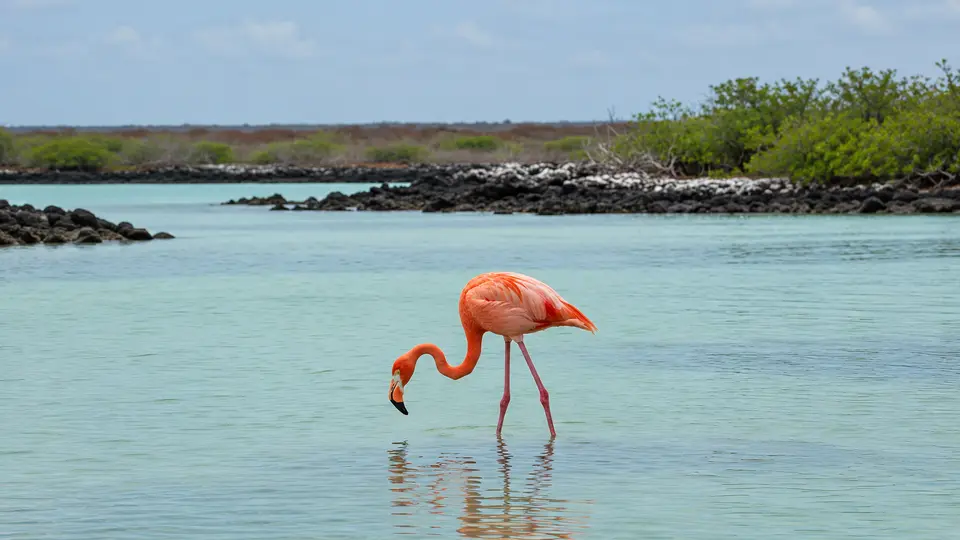
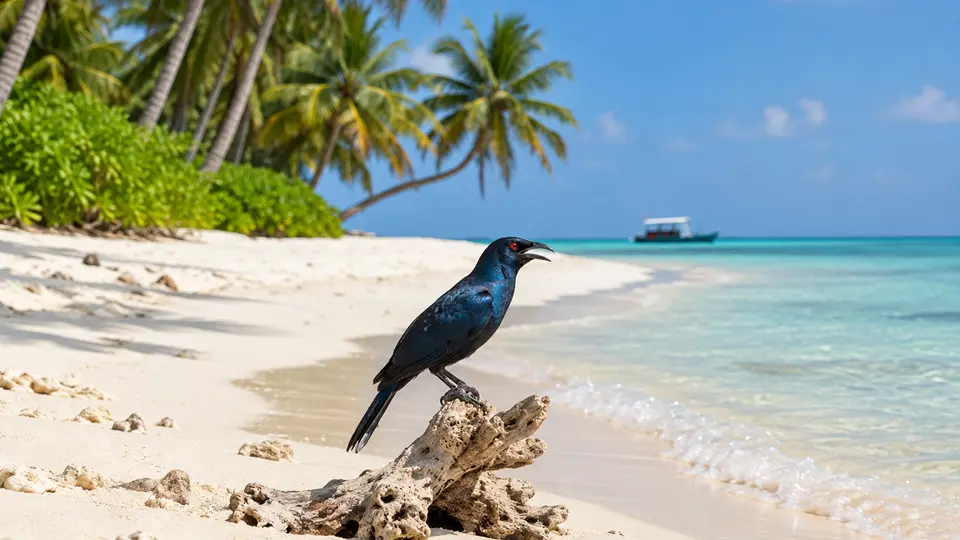
Great FrigatebirdAI-modifiedGreat FrigatebirdAmerican FlamingoAI-modifiedAmerican FlamingoAsian koelAI-modifiedAsian koel
Animal groupBirdsAnimal groupBirdsAnimal groupBirds
DestinationsGalapagos, Maldives, PolynesiaDestinationsGalapagos, MexicoDestinationsMaldives
Scientific nameFregata minorScientific nameScientific name
All wildlife destinations
AI-modified
Plan your trip

Find your next wildlife adventure

Compare destinations, shore programs and dates with the animals and habitats you would love to see.

  • Naturalist-led shore excursions
  • Responsible wildlife watching
  • Small expedition ships