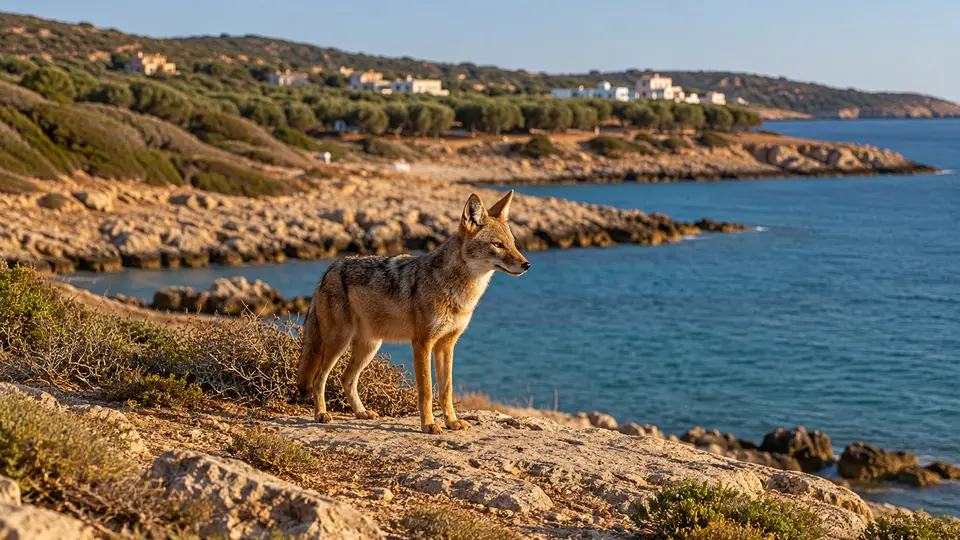
Golden Jackal in its natural habitat, AI illustration
Size70-105 cm body lengthLifespan8-12 yearsStatusLeast Concern

Golden Jackal: where and when to see them

Canis aureus

Golden Jackal at a glance

The golden jackal is a medium-sized canid native to southeastern Europe and much of Asia, with an expanding European distribution. It is adaptable rather than confined to wilderness, occupying wetlands, scrub and agricultural mosaics where food and cover coincide. Its mottled coat often appears grayish or tawny rather than strongly golden. European golden jackals are distinct from African golden wolves, which were formerly grouped with them but are now recognized as a separate species.

Behaviour & reproduction

Size
70-105 cm body length
Weight
6-14 kg
Lifespan
8-12 years
Status
Least Concern

Jackals commonly live as breeding pairs with offspring, and older young may help support later litters. They communicate through howls, yelps and scent marking, with group calling especially noticeable around dusk or at night. Where people are active, they often become strongly nocturnal and remain hidden by day. Their movements follow cover, food availability and disturbance, while dispersing individuals can travel far enough to establish populations well beyond previously occupied areas. Communication among group members is sophisticated, using a range of vocalizations including howls, yelps, growls, and barks to denote territory, warn of danger, or gather the pack. Their social structure enables cooperative hunting of larger prey and shared rearing of young, contributing to their survival success.

Top wildlife locations

Croatia wildlife habitat

Croatia

Coastal scrub and reed-fringed wetlands provide plausible viewing habitat in occupied areas. Some suitable sites require inland travel, and nocturnal habits make sightings uncommon even where jackals are established.

Adventure cruises in Croatia
Greece wildlife habitat

Greece

Coastal wetlands, scrub margins and quiet agricultural edges can support jackals locally. Public viewpoints may suffice, but inland excursions are sometimes necessary and the species is absent from many apparently suitable areas.

Adventure cruises in Greece

Destinations describe the species' habitat, not guaranteed cruise stops. Some animals require an optional inland excursion or are found in restricted reserves.

Fun facts about the Golden Jackal

  • European golden jackals are not the same species as African golden wolves.
  • Older offspring sometimes help their parents raise a new litter.
  • Pairs use coordinated calls to advertise their presence.
  • Its European range has expanded substantially in recent decades.

Best time to see the Golden Jackal

Observation is possible year-round where resident groups occur, but dawn and dusk matter more than a narrow month range. Spring and autumn offer comfortable conditions for quiet wetland-edge walks. Seasonal vegetation, local disturbance and predominantly nocturnal behavior make daytime sightings unpredictable. Prime viewing opportunities occur when vegetation is less dense, making them easier to spot along watercourses or open scrub. Winter tracking in light snow can also reveal their presence and movement patterns, though direct observation remains challenging.

Golden Jackal: season matrix by destination

Travel and observation windows vary by region. Highlighted months are an orientation for planning, not confirmed sightings or a guarantee of access.

Croatia

These are comfortable shoulder-season observation windows, not breeding dates; resident animals may be present year-round and local distribution needs checking.

JanFebMarAprMayJunJulAugSepOctNovDec
Cruise ships in Croatia

Greece

Spring and autumn favor comfortable dawn and dusk visits; no consistent seasonal sighting peak is implied.

JanFebMarAprMayJunJulAugSepOctNovDec
Cruise ships in Greece

Where the Golden Jackal lives

Coastal marshes, reedbeds, scrub, river valleys and mixed farmland provide suitable habitat when dense daytime refuge is available. The species tolerates modified landscapes but generally avoids extensive deep snow. In Greece and Croatia, distribution is uneven rather than continuous along every coast. They are highly adaptable and thrive in mosaics of natural and human-modified areas, including agricultural land, provided there is sufficient cover. Their expansion into new territories in Europe is often linked to the availability of suitable landscapes with less human persecution.

What the Golden Jackal eats

The diet includes rodents, other small vertebrates, carrion, insects and seasonal fruit. Jackals also exploit human food waste where available. This flexibility supports survival in changing landscapes, but natural feeding should never be replaced by deliberate baiting or access to visitor rubbish. Their opportunistic diet makes them important scavengers and predators, playing a role in ecosystem health by consuming carrion and rodents. While they are adaptable, a diet overly reliant on human waste can lead to health issues and habituation.

Species at a glance

Common name
Golden Jackal
Scientific name
Canis aureus
Animal group
Mammals
Size
70-105 cm body length
Weight
6-14 kg
Lifespan
8-12 years
Status
Least Concern
Identification
It is larger and longer-legged than a red fox, with a shorter, darker-tipped tail, but generally smaller and more lightly built than a gray wolf. Their coat color varies regionally, from sandy yellow to golden brown, often with a darker back and lighter underparts. The jackal's characteristic high-pitched howl is distinct from a fox's yelp or a wolf's prolonged howl, serving as a key auditory identification cue.

Golden Jackal: frequently asked questions

Where can I see the Golden Jackal?
Croatia, Greece. Watch wetland edges from public paths at dawn or dusk, keeping dogs leashed and food secured. Never bait or approach a jackal; leave space for retreat, and avoid dense cover that could conceal a den. Scanning open areas adjacent to dense cover at first light or last light increases the chance of a sighting, especially near water sources. Utilize binoculars or a spotting scope for distant observation to avoid disturbing their natural behavior.
When is the best time to see the Golden Jackal?
Observation is possible year-round where resident groups occur, but dawn and dusk matter more than a narrow month range. Spring and autumn offer comfortable conditions for quiet wetland-edge walks. Seasonal vegetation, local disturbance and predominantly nocturnal behavior make daytime sightings unpredictable. Prime viewing opportunities occur when vegetation is less dense, making them easier to spot along watercourses or open scrub. Winter tracking in light snow can also reveal their presence and movement patterns, though direct observation remains challenging.
How big does the Golden Jackal get?
70-105 cm body length. Adult weight: 6-14 kg. Size varies with age, sex and population.
How should I behave around the Golden Jackal?
Watch wetland edges from public paths at dawn or dusk, keeping dogs leashed and food secured. Never bait or approach a jackal; leave space for retreat, and avoid dense cover that could conceal a den. Scanning open areas adjacent to dense cover at first light or last light increases the chance of a sighting, especially near water sources. Utilize binoculars or a spotting scope for distant observation to avoid disturbing their natural behavior.
What does the Golden Jackal eat?
The diet includes rodents, other small vertebrates, carrion, insects and seasonal fruit. Jackals also exploit human food waste where available. This flexibility supports survival in changing landscapes, but natural feeding should never be replaced by deliberate baiting or access to visitor rubbish. Their opportunistic diet makes them important scavengers and predators, playing a role in ecosystem health by consuming carrion and rodents. While they are adaptable, a diet overly reliant on human waste can lead to health issues and habituation.
Are wildlife sightings guaranteed on an adventure cruise?
No. Animals move freely and routes, weather, access restrictions and local conditions influence every outing. Confirm the actual itinerary and shore programme before booking.

Compare wildlife in the same destinations

Explore other mammals recorded in these destinations. Similar surroundings do not mean the animals share the same habits or viewing season.

Species comparison by animal group and destination
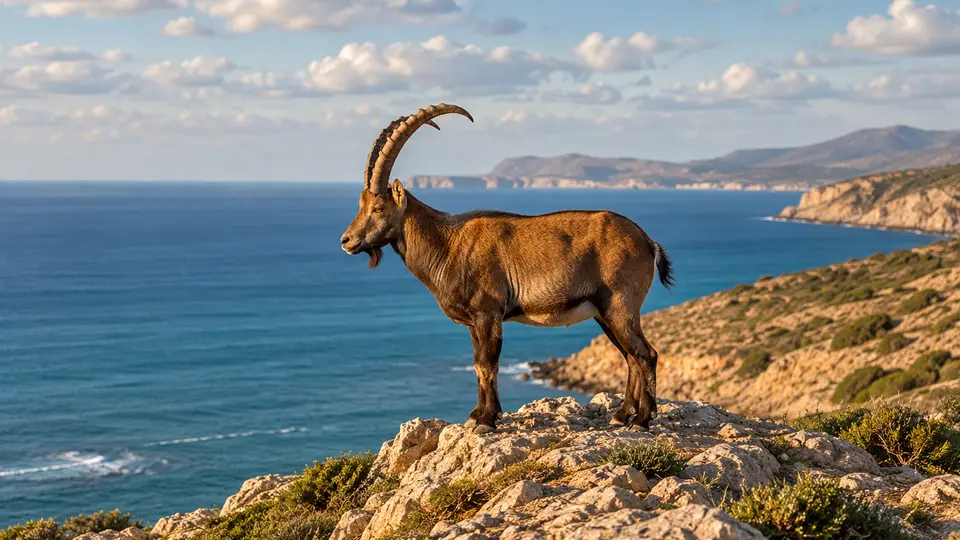
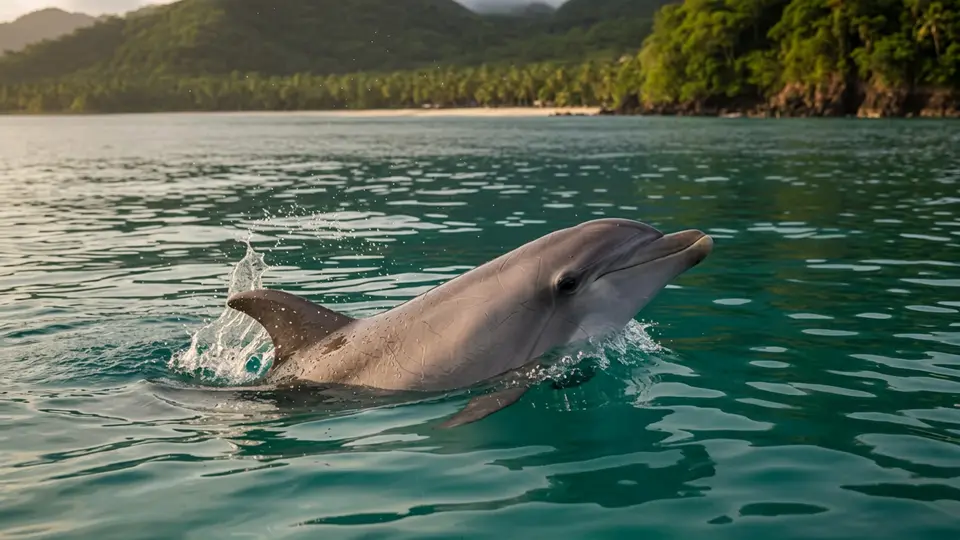
Golden JackalGolden JackalCommon Bottlenose DolphinCommon Bottlenose DolphinCretan IbexCretan Ibex
Animal groupMammalsAnimal groupMammalsAnimal groupMammals
DestinationsCroatia, GreeceDestinationsCosta Rica, Florida, Galapagos, Mexico, Cape Verde, Croatia, Greece, Portugal, Scotland, Seychelles, Turkey, Maldives, Australia, New ZealandDestinationsGreece
All wildlife destinations
Plan your trip

Find your next wildlife adventure

Compare destinations, shore programmes and dates with the animals and habitats you would love to see.

  • Naturalist-led shore excursions
  • Responsible wildlife watching
  • Small expedition ships

Newsletter

Take Blue Rides with you

Adventure cruise offers, last-minute deals and trip inspiration.

Free, unsubscribe anytime. Details: Privacy Policy

Partner with Blue Rides

Affiliate Program

Recommend adventure cruises and earn commission on every confirmed booking.

Share. Track. Earn.