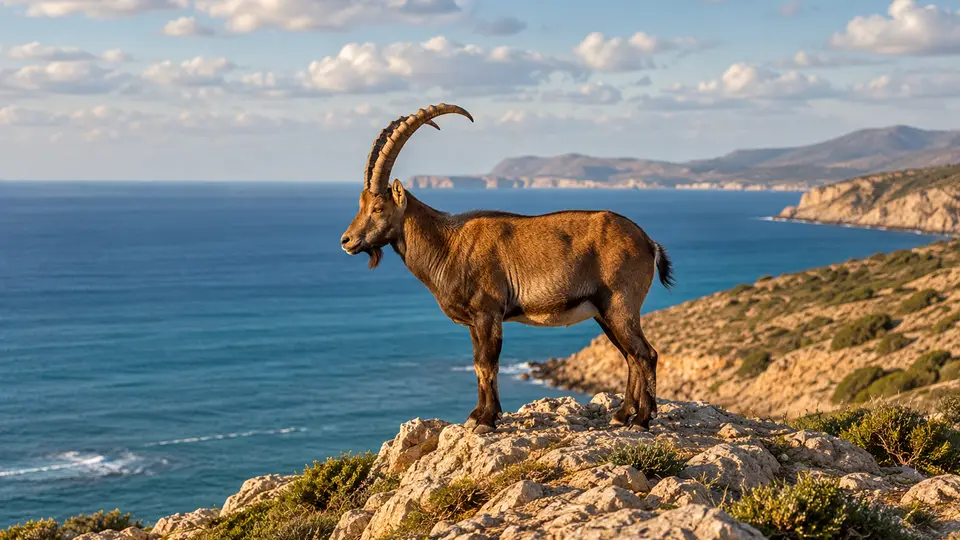
Cretan Ibex in its natural habitatAI-modified

Cretan IbexCapra hircusWhere and when to see them

Cretan Ibex at a glance

The kri-kri is Crete's distinctive free-ranging goat, often called the Cretan ibex despite not being a true ibex. Genetic evidence places it with ancient domestic goat lineages, although it has long been named Capra aegagrus cretica. Its cultural importance and isolated populations make it a conservation priority regardless of classification. Interbreeding with domestic goats threatens the recognizable characteristics of surviving herds, particularly where grazing animals share their range.

Behaviour & reproduction

Size
About 1–1.3 m (3.3–4.3 ft) body length
Weight
About 20–40 kg (44–88 lb)
Lifespan
Not reliably established
Status
Assessment varies

Kri-kri negotiate steep limestone slopes with remarkable confidence, using narrow ledges to reach forage and escape disturbance. Females and young commonly form small groups, while mature males may associate separately outside the mating period. Animals tend to feed during cooler hours and rest in sheltered places during heat. Their apparent familiarity with people at some sites should not be mistaken for domestication or an invitation to approach or feed them. Kri-kri display strong territoriality, especially among mature males during the rut. Social grooming, where animals gently nibble each other's fur, is a common behaviour within female-led groups, reinforcing bonds.

Top wildlife locations

Greece wildlife habitatAI-modified

Greece

Western Crete's rocky gorges are the principal viewing context, usually requiring an inland excursion. Coastal cliffs on conservation islets may hold goats, but access is restricted and ordinary shore visits rarely encounter them.
Destinations describe the species' habitat, not guaranteed cruise stops. Some animals require an optional inland excursion or are found in restricted reserves.

Fun facts about the Cretan Ibex

  • The name Cretan ibex is misleading because kri-kri are not members of the true ibex lineage.
  • Their ancestry records the early movement of domestic goats around the Mediterranean.
  • Both sexes can carry horns, although males usually have substantially larger ones.
  • Some offshore populations were established for conservation rather than representing an untouched natural distribution.

Best time to see the Cretan Ibex

Spring and autumn generally provide comfortable conditions for permitted walking in Crete, with greener forage in spring. Mountain routes have seasonal closures and weather restrictions. These travel windows do not imply coastal availability, and access to conservation islets may be prohibited. Visiting in late spring or early autumn avoids the peak summer heat and crowds, offering more comfortable viewing opportunities. Always check local regulations and park hours, as access can be limited during lambing season or adverse weather.

Cretan Ibex: season matrix by destination

Travel and observation windows vary by region. Highlighted months are an orientation for planning, not confirmed sightings or a guarantee of access.

Greece

These are generally practical walking months in Crete; gorge opening dates, heat and local restrictions must be checked separately.

JanFebMarAprMayJunJulAugSepOctNovDec
Cruise ships in Greece

Where the Cretan Ibex lives

Their best-known habitat is the rugged mountain and gorge country of western Crete, with rocky slopes, scrub and open woodland. Conservation populations also occupy selected offshore islets. Many herds are away from ordinary coastal visitor routes or within controlled-access areas. The Samaria Gorge National Park is a key sanctuary, providing a protected expanse of mountainous terrain. Historically, their range extended across the southern Aegean, but habitat loss and competition reduced populations to their current strongholds.

What the Cretan Ibex eats

Kri-kri browse leaves, shoots and shrubs, supplementing these with grasses and other seasonal plants. Their flexible feeding helps them exploit dry, rocky landscapes. Human food is inappropriate and can encourage crowding, aggression and dependence around paths or buildings. Their diet shifts seasonally, incorporating a wider variety of herbaceous plants during the wetter months. They are highly efficient at extracting moisture from vegetation, allowing them to thrive in arid conditions.

Species at a glance

Common name
Cretan Ibex
Scientific name
Capra hircus
Animal group
Mammals
Size
About 1–1.3 m (3.3–4.3 ft) body length
Weight
About 20–40 kg (44–88 lb)
Lifespan
Not reliably established
Status
Assessment varies
Identification
A brown coat, dark dorsal stripe and backward-curving horns characterize kri-kri, but appearance alone cannot reliably exclude domestic-goat ancestry or hybridization. Purebred kri-kri typically have a lighter underbelly and inner thighs compared to their darker body fur. Males possess more prominent, ridged horns that sweep upwards and backwards, while females have shorter, straighter horns.

Cretan Ibex: frequently asked questions

Where can I see the Cretan Ibex?
Greece. Use binoculars from authorized paths and give goats room to cross narrow trails. Do not feed, corner or stand beneath animals on loose slopes, where displaced stones can injure walkers. Maintain a respectful distance of at least 20 meters (65 feet) to avoid disturbing their natural patterns. Look for fresh droppings or tracks along trails as indicators of recent activity in an area.
When is the best time to see the Cretan Ibex?
Spring and autumn generally provide comfortable conditions for permitted walking in Crete, with greener forage in spring. Mountain routes have seasonal closures and weather restrictions. These travel windows do not imply coastal availability, and access to conservation islets may be prohibited. Visiting in late spring or early autumn avoids the peak summer heat and crowds, offering more comfortable viewing opportunities. Always check local regulations and park hours, as access can be limited during lambing season or adverse weather.
How big does the Cretan Ibex get?
About 1–1.3 m (3.3–4.3 ft) body length. Adult weight: About 20–40 kg (44–88 lb). Size varies with age, sex and population.
How should I behave around the Cretan Ibex?
Use binoculars from authorized paths and give goats room to cross narrow trails. Do not feed, corner or stand beneath animals on loose slopes, where displaced stones can injure walkers. Maintain a respectful distance of at least 20 meters (65 feet) to avoid disturbing their natural patterns. Look for fresh droppings or tracks along trails as indicators of recent activity in an area.
What does the Cretan Ibex eat?
Kri-kri browse leaves, shoots and shrubs, supplementing these with grasses and other seasonal plants. Their flexible feeding helps them exploit dry, rocky landscapes. Human food is inappropriate and can encourage crowding, aggression and dependence around paths or buildings. Their diet shifts seasonally, incorporating a wider variety of herbaceous plants during the wetter months. They are highly efficient at extracting moisture from vegetation, allowing them to thrive in arid conditions.
Are wildlife sightings guaranteed on an adventure cruise?
No. Animals move freely and routes, weather, access restrictions and local conditions influence every outing. Confirm the actual itinerary and shore program before booking.

Compare wildlife in the same destinations

Explore other mammals recorded in these destinations. Similar surroundings do not mean the animals share the same habits or viewing season.

Species comparison by animal group and destination
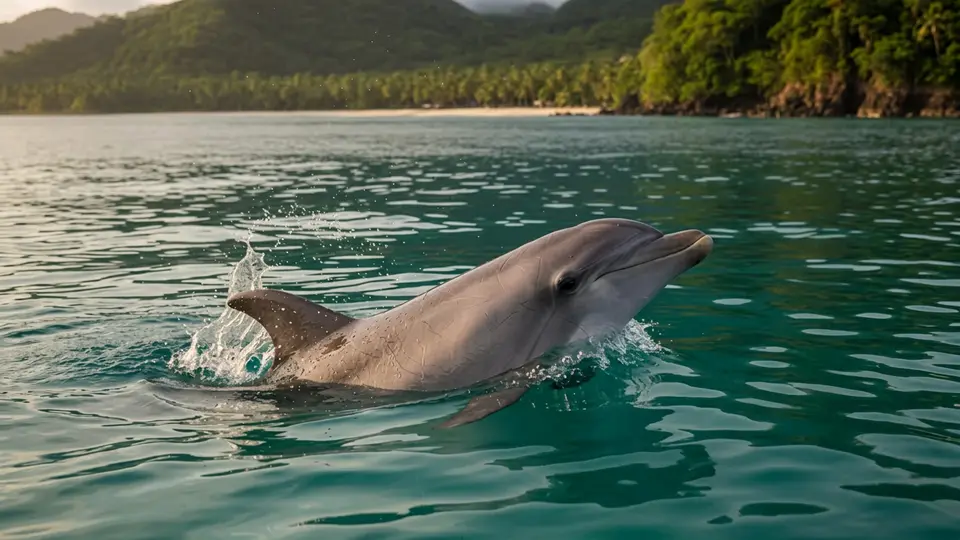
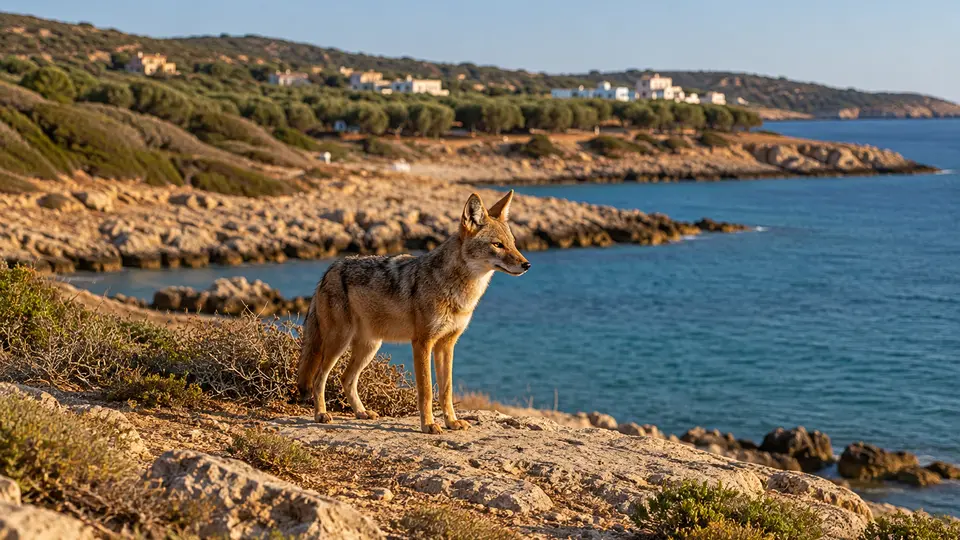
Cretan IbexAI-modifiedCretan IbexCommon Bottlenose DolphinAI-modifiedCommon Bottlenose DolphinGolden JackalAI-modifiedGolden Jackal
Animal groupMammalsAnimal groupMammalsAnimal groupMammals
DestinationsGreeceDestinationsCosta Rica, Florida, Galapagos, Mexico, Cape Verde, Croatia, Greece, Portugal, Scotland, Seychelles, Turkey, Maldives, Australia, New ZealandDestinationsCroatia, Greece
Scientific nameCapra hircusScientific nameScientific name
All wildlife destinations
AI-modified
Plan your trip

Find your next wildlife adventure

Compare destinations, shore programs and dates with the animals and habitats you would love to see.

  • Naturalist-led shore excursions
  • Responsible wildlife watching
  • Small expedition ships