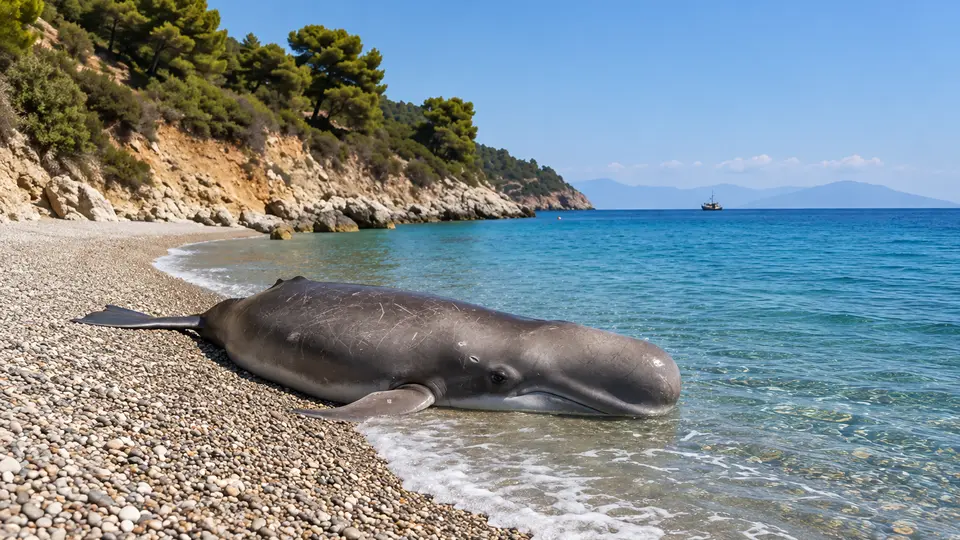
Cuvier's Beaked Whale in its natural habitatAI-modified

Cuvier's Beaked WhaleZiphius cavirostrisWhere and when to see them

Cuvier's Beaked Whale at a glance

Cuvier's beaked whale is an oceanic mammal adapted to feeding far below the sea surface. In Greek waters it is associated particularly with the deep Hellenic Trench system, where steep seabed slopes can lie relatively close to land. Its modest surface profile and short visible intervals make it exceptionally difficult to observe. Mediterranean animals face significant threats from human noise, fishing gear and plastic ingestion despite the species' broad global distribution.

Behaviour & reproduction

Size
5–7 m (16–23 ft) long
Weight
2,000–3,000 kg (4,409–6,614 lb)
Lifespan
Up to 62 years in the wild
Status
Least Concern

These whales usually occur alone or in small groups and spend much of their time submerged. At the surface they may show a low blow, a rounded back and then a small dorsal fin before disappearing again. Males accumulate linear scars, probably through encounters with other males using their exposed teeth. Their elusive habits mean that even experienced observers can struggle to establish group size or identify animals confidently from distant views. The extremely long and deep dives, characteristic of this species, are interspersed with relatively short and unpredictable surface intervals, making them very challenging to observe. They are among the deepest and longest-diving mammals known, capable of remaining submerged for extended periods and reaching extreme depths.

Top wildlife locations

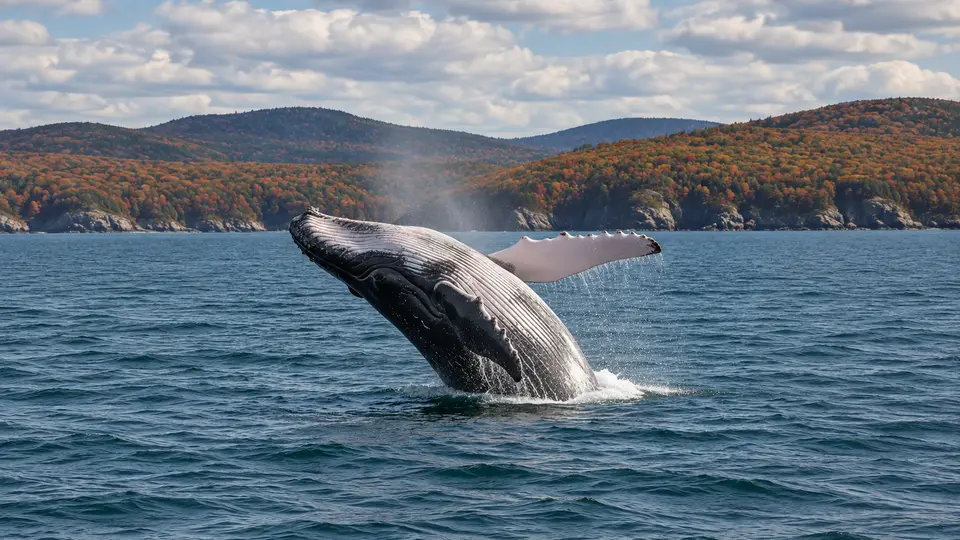
Greece wildlife habitatAI-modified

Greece

Deep water off western and southern Greece offers plausible distant deck-viewing habitat. Shore sightings from elevated coasts are exceptionally rare, and a normal coastal visit should not be planned around encountering this species.

Destinations describe the species' habitat, not guaranteed cruise stops. Some animals require an optional inland excursion or are found in restricted reserves.

Fun facts about the Cuvier's Beaked Whale

  • Tagged individuals have made some of the deepest and longest recorded submergences of any mammal.
  • Only adult males normally have erupted teeth, a pair near the lower jaw's tip.
  • Older animals often develop conspicuously pale heads.
  • The species is unusually vulnerable to disturbance associated with some powerful naval sonar systems.

Best time to see the Cuvier's Beaked Whale

Calm conditions matter more than a clearly defined viewing season. Late spring through early autumn can provide workable deck observation weather in Greece, but summer winds may still obscure small surface cues. No month offers dependable shore sightings. The presence of research vessels conducting dedicated surveys during specific times can sometimes offer opportunities for incidental sightings from cruise ships. However, given their elusive nature, even dedicated observers must be prepared for the likelihood of not encountering them.

Cuvier's Beaked Whale: season matrix by destination

Travel and observation windows vary by region. Highlighted months are an orientation for planning, not confirmed sightings or a guarantee of access.

Greece

A practical fair-weather observation window only; occurrence is not confined to these months, and wind, sea state and offshore distance severely limit detection.

JanFebMarAprMayJunJulAugSepOctNovDec
Cruise ships in Greece

Where the Cuvier's Beaked Whale lives

Deep offshore water over continental slopes, submarine canyons and oceanic basins is characteristic habitat. Around Greece, the Hellenic Trench provides suitable conditions. Although deep water sometimes approaches the coast, reliable land-based viewing opportunities are limited by distance and brief surfacings. The specific deep-water environment often features cold, oxygen-poor conditions, which these whales are well-adapted to exploit. This species shows high site fidelity to certain deep-sea areas, suggesting important local populations rather than wide-ranging movements.

What the Cuvier's Beaked Whale eats

Deep-water squid form a major part of the diet, supplemented by fish and crustaceans. Prey is located acoustically in darkness and drawn into the mouth by suction. Stomach contents provide much of the available information about its feeding ecology. Their specialized feeding involves a rapid expansion of the throat pleats to create negative pressure, sucking prey into the mouth. The absence of functional teeth in females and juveniles, along with two small tusks in adult males, indicates a reliance on suction feeding for all age classes.

Species at a glance

Common name
Cuvier's Beaked Whale
Scientific name
Ziphius cavirostris
Animal group
Marine life
Size
5–7 m (16–23 ft) long
Weight
2,000–3,000 kg (4,409–6,614 lb)
Lifespan
Up to 62 years in the wild
Status
Least Concern
Identification
A short, indistinct beak, sloping forehead and often pale head distinguish it from many dolphins, although separating distant beaked whales usually requires expert confirmation. The head shape, described as having a 'goose-neck' appearance due to the sloping forehead, is a key field mark. The male's exposed pair of triangular teeth, located at the angle of the jaw, is diagnostic but rarely visible during brief surface encounters.

Cuvier's Beaked Whale: frequently asked questions

Where can I see the Cuvier's Beaked Whale?
Greece. Scan distant deep water from safe coastal viewpoints or an existing vessel's deck. Never request pursuit or close approaches. Report stranded animals to local responders without touching them, and expect many observations to remain unidentified. Passive acoustic monitoring, using hydrophones to detect their echolocation clicks, is a primary method for detecting their presence, especially when they are submerged. Maintaining a vigilant watch for subtle surface disturbances, such as ripples or unusual slick patterns, may occasionally hint at their presence in suitable habitats.
When is the best time to see the Cuvier's Beaked Whale?
Calm conditions matter more than a clearly defined viewing season. Late spring through early autumn can provide workable deck observation weather in Greece, but summer winds may still obscure small surface cues. No month offers dependable shore sightings. The presence of research vessels conducting dedicated surveys during specific times can sometimes offer opportunities for incidental sightings from cruise ships. However, given their elusive nature, even dedicated observers must be prepared for the likelihood of not encountering them.
How big does the Cuvier's Beaked Whale get?
5–7 m (16–23 ft) long. Adult weight: 2,000–3,000 kg (4,409–6,614 lb). Size varies with age, sex and population.
How should I behave around the Cuvier's Beaked Whale?
Scan distant deep water from safe coastal viewpoints or an existing vessel's deck. Never request pursuit or close approaches. Report stranded animals to local responders without touching them, and expect many observations to remain unidentified. Passive acoustic monitoring, using hydrophones to detect their echolocation clicks, is a primary method for detecting their presence, especially when they are submerged. Maintaining a vigilant watch for subtle surface disturbances, such as ripples or unusual slick patterns, may occasionally hint at their presence in suitable habitats.
What does the Cuvier's Beaked Whale eat?
Deep-water squid form a major part of the diet, supplemented by fish and crustaceans. Prey is located acoustically in darkness and drawn into the mouth by suction. Stomach contents provide much of the available information about its feeding ecology. Their specialized feeding involves a rapid expansion of the throat pleats to create negative pressure, sucking prey into the mouth. The absence of functional teeth in females and juveniles, along with two small tusks in adult males, indicates a reliance on suction feeding for all age classes.
Are wildlife sightings guaranteed on an adventure cruise?
No. Animals move freely and routes, weather, access restrictions and local conditions influence every outing. Confirm the actual itinerary and shore program before booking.

Compare wildlife in the same destinations

Explore other marine life recorded in these destinations. Similar surroundings do not mean the animals share the same habits or viewing season.

Species comparison by animal group and destination
Cuvier's Beaked WhaleAI-modifiedCuvier's Beaked WhaleFin WhaleAI-modifiedFin WhaleRisso's DolphinAI-modifiedRisso's Dolphin
Animal groupMarine lifeAnimal groupMarine lifeAnimal groupMarine life
DestinationsGreeceDestinationsMexico, New England, Croatia, Greece, Norway, Portugal, Antarctica, ArcticDestinationsEgypt, Greece, Portugal, Scotland, Turkey, Maldives
Scientific nameZiphius cavirostrisScientific nameScientific name
All wildlife destinations
AI-modified
Plan your trip

Find your next wildlife adventure

Compare destinations, shore programs and dates with the animals and habitats you would love to see.

  • Naturalist-led shore excursions
  • Responsible wildlife watching
  • Small expedition ships