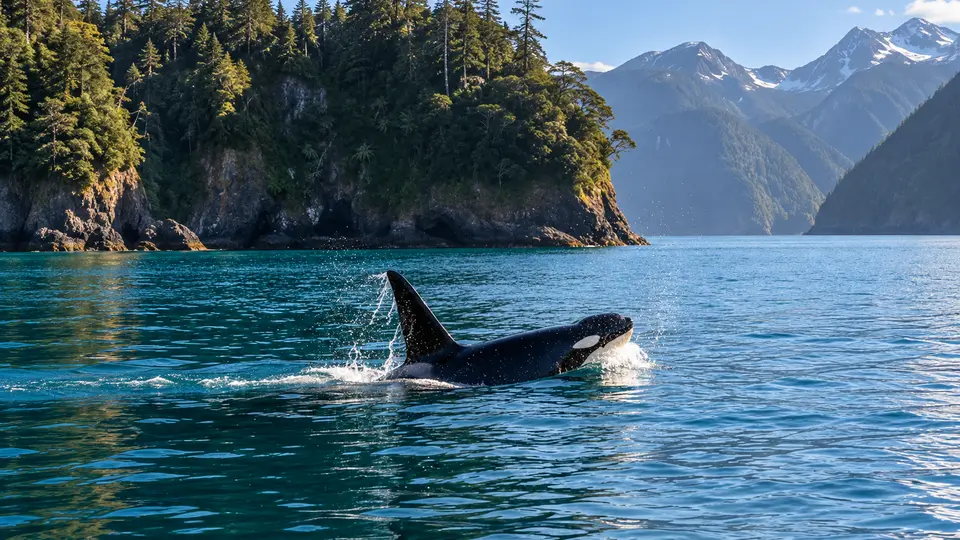
Dusky dolphin in its natural habitat, AI illustration

Dusky dolphin: where and when to see them

Lagenorhynchus obscurus

Dusky dolphin at a glance

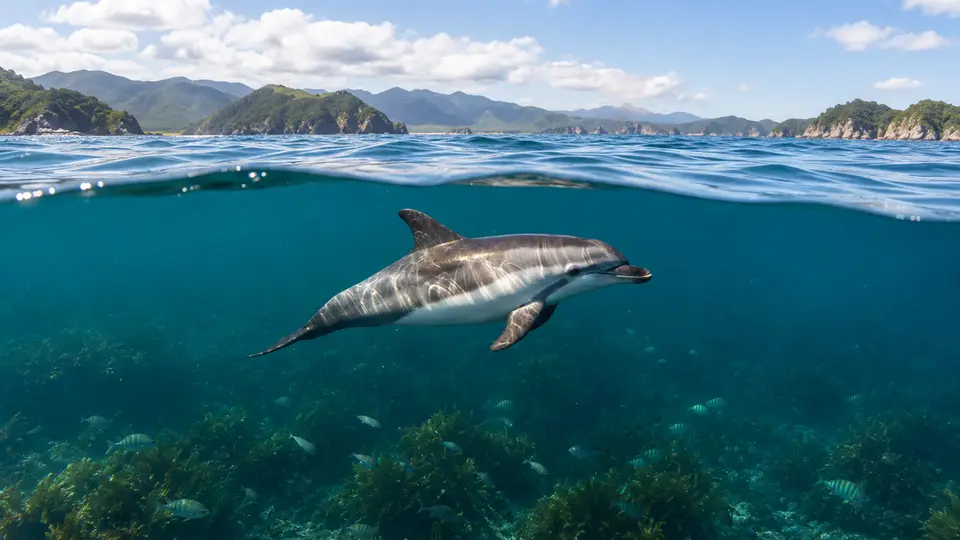
The dusky dolphin is a small, agile marine mammal of cool Southern Hemisphere waters. New Zealand supports important populations, including animals using the productive waters off Kaikōura. Its flowing grey, white and black pattern is easier to appreciate in clear, close photographs than from a distant coast. Although spectacular leaps are well known, many encounters involve ordinary travelling or resting groups, and visible activity varies greatly through the day.

Behaviour & reproduction

Size
1.6–2.1 m long
Weight
50–90 kg
Lifespan
Not reliably established
Status
Least Concern

Dusky dolphins form flexible social groups that can split and merge as feeding conditions and activity change. Coordinated feeding may concentrate schooling fish, while some populations also exploit prey that rises toward the surface at night. Leaping, side-slapping and other aerial movements occur in social and travel contexts, but are not constant. Resting groups can be quieter and more coordinated, making respectful distance important even when animals seem inactive. Pod sizes can vary dramatically from small foraging groups to large aggregations of several hundred individuals, especially during coordinated hunts. These highly acrobatic dolphins frequently engage in bow-riding, playful interactions with kelp, and complex social interactions within their fluid groups.

Top wildlife locations

New Zealand wildlife habitat

New Zealand

Kaikōura's public coastal viewpoints overlook suitable productive waters, allowing occasional distant shore observation. Dolphins may remain far offshore, and ordinary headland visits offer no assurance of identifiable animals or aerial activity.

Adventure cruises in New Zealand
Destinations describe the species' habitat, not guaranteed cruise stops. Some animals require an optional inland excursion or are found in restricted reserves.

Fun facts about the Dusky dolphin

  • Its global range is divided among widely separated Southern Hemisphere regions.
  • Groups can change membership and size over short periods.
  • Some populations feed heavily at night when prey moves closer to the surface.
  • Dusky dolphins are closely related to the Pacific white-sided dolphin.

Best time to see the Dusky dolphin

Dusky dolphins can occur around New Zealand throughout the year. Spring through autumn offers longer daylight and generally practical coastal observation conditions, but local weather remains variable. Calm seas are more useful than any promise of a seasonal concentration. While present year-round, calmer sea conditions typical of late spring and early autumn often provide the best viewing opportunities. Wind and swell significantly impact detectability, making settled weather paramount for successful observations.

Dusky dolphin: season matrix by destination

Travel and observation windows vary by region. Highlighted months are an orientation for planning, not confirmed sightings or a guarantee of access.

New Zealand

A longer-daylight coastal travel window for a species present year-round in the region; wind, sea state and changing offshore movements determine visibility.

JanFebMarAprMayJunJulAugSepOctNovDec
Cruise ships in New Zealand

Where the Dusky dolphin lives

Cool coastal and shelf waters, especially productive areas influenced by currents and steep seabed relief, are characteristic habitat. Around New Zealand, some groups travel close enough to prominent coasts for distant viewing, but their offshore position can change substantially within hours. They are often found near upwelling zones that bring nutrient-rich waters to the surface, supporting abundant prey. In New Zealand, key areas include the Marlborough Sounds, Kaikoura, and parts of the South Island's west coast, where bathymetry is complex.

What the Dusky dolphin eats

Schooling fish and squid form the diet, with prey varying among populations and seasons. Anchovies, sardines and other small fish are recorded foods. Cooperative hunting can help contain schools, while nighttime feeding may target animals moving upward through the water column. Their diet also includes lanternfish and hoki, particularly in offshore New Zealand waters. These dolphins are opportunistic feeders, adapting their diet to local prey availability and seasonal abundances.

Species at a glance

Common name
Dusky dolphin
Scientific name
Lagenorhynchus obscurus
Animal group
Marine life
Size
1.6–2.1 m long
Weight
50–90 kg
Lifespan
Not reliably established
Status
Least Concern
Identification
Its short beak and pale, divided flank streaks distinguish it from common dolphins, which show a more obvious beak and contrasting hourglass flank pattern. The dusky dolphin typically has a dark grey to black back, a white belly, and distinctive white or pale grey patches on its flanks and behind the dorsal fin. Their dorsal fin is also distinctly bicolored, being darker on the leading edge and lighter on the trailing edge, a useful field mark.

Dusky dolphin: frequently asked questions

Where can I see the Dusky dolphin?
New Zealand. Scan from safe headlands or an existing vessel's deck, keeping behind rails and away from unstable cliff edges. Never request pursuit of resting groups or mothers with calves. Distant splashes alone are insufficient identification. Look for dark, sleek bodies breaking the surface, often in groups, and listen for the characteristic splashes of aerial displays. Binoculars are essential for confirming identification and observing finer details from a distance, especially given their dynamic movements.
When is the best time to see the Dusky dolphin?
Dusky dolphins can occur around New Zealand throughout the year. Spring through autumn offers longer daylight and generally practical coastal observation conditions, but local weather remains variable. Calm seas are more useful than any promise of a seasonal concentration. While present year-round, calmer sea conditions typical of late spring and early autumn often provide the best viewing opportunities. Wind and swell significantly impact detectability, making settled weather paramount for successful observations.
How big does the Dusky dolphin get?
1.6–2.1 m long. Adult weight: 50–90 kg. Size varies with age, sex and population.
How should I behave around the Dusky dolphin?
Scan from safe headlands or an existing vessel's deck, keeping behind rails and away from unstable cliff edges. Never request pursuit of resting groups or mothers with calves. Distant splashes alone are insufficient identification. Look for dark, sleek bodies breaking the surface, often in groups, and listen for the characteristic splashes of aerial displays. Binoculars are essential for confirming identification and observing finer details from a distance, especially given their dynamic movements.
What does the Dusky dolphin eat?
Schooling fish and squid form the diet, with prey varying among populations and seasons. Anchovies, sardines and other small fish are recorded foods. Cooperative hunting can help contain schools, while nighttime feeding may target animals moving upward through the water column. Their diet also includes lanternfish and hoki, particularly in offshore New Zealand waters. These dolphins are opportunistic feeders, adapting their diet to local prey availability and seasonal abundances.
Are wildlife sightings guaranteed on an adventure cruise?
No. Animals move freely and routes, weather, access restrictions and local conditions influence every outing. Confirm the actual itinerary and shore program before booking.

Compare wildlife in the same destinations

Explore other marine life recorded in these destinations. Similar surroundings do not mean the animals share the same habits or viewing season.

Species comparison by animal group and destination
Dusky dolphinDusky dolphinHector's dolphinHector's dolphinOrcaOrca
Animal groupMarine lifeAnimal groupMarine lifeAnimal groupMarine life
DestinationsNew ZealandDestinationsNew ZealandDestinationsCosta Rica, Mexico, Portugal, Arctic, New Zealand
All wildlife destinations
Plan your trip

Find your next wildlife adventure

Compare destinations, shore programs and dates with the animals and habitats you would love to see.

  • Naturalist-led shore excursions
  • Responsible wildlife watching
  • Small expedition ships

Newsletter

Take Blue Rides with you

Adventure cruise offers, last-minute deals and trip inspiration.

Free, unsubscribe anytime. Details: Privacy Policy

Partner with Blue Rides

Affiliate Program

Recommend adventure cruises and earn commission on every confirmed booking.

Share. Track. Earn.

Your footage, our stage

Send us your videos or pictures.

Captured beautiful landscapes or wildlife? Share your videos and pictures with us, we may feature them on Blue Rides.