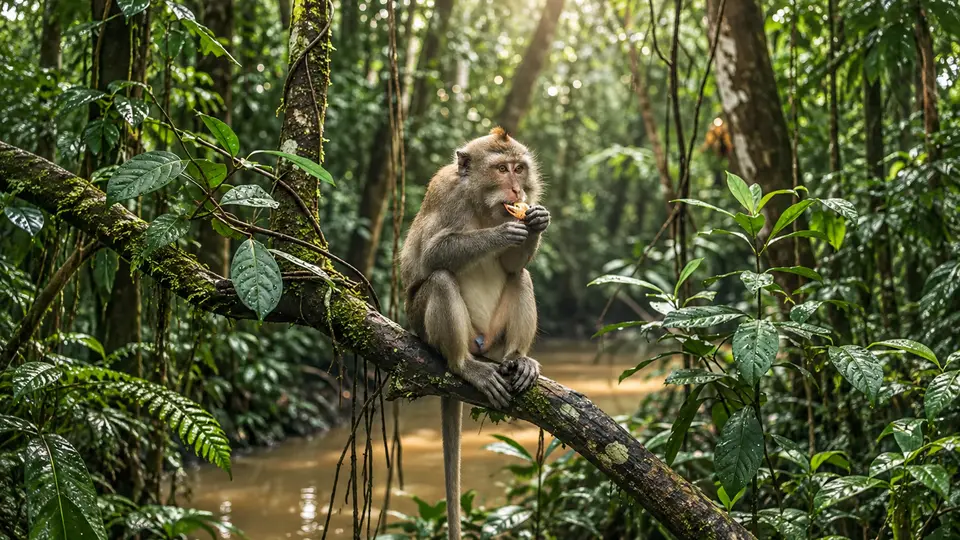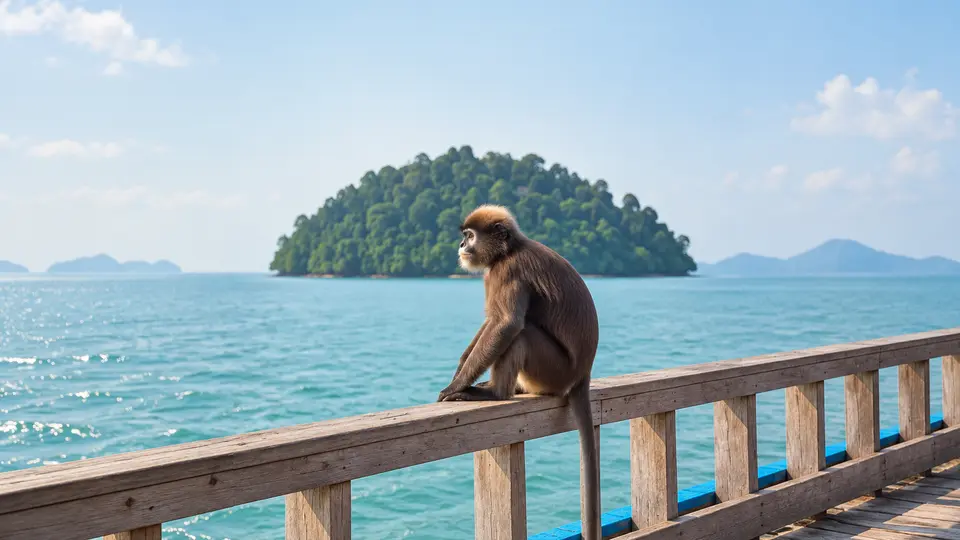
Dusky langur in its natural habitat, AI illustration

Dusky langurTrachypithecus obscurusWhere and when to see them

Dusky langur at a glance

The dusky leaf monkey, also called the dusky langur, is a forest primate of the Malay Peninsula and nearby islands. Its pale eye rings and muzzle stand out against smoky grey fur, giving it a remarkably expressive face. A long tail helps it balance through the canopy. Although some groups tolerate people around forest parks and temples, this does not mean the species is secure: habitat loss, hunting and capture threaten its populations.

Behaviour & reproduction

Size
Body 42-61 cm; tail 50-85 cm
Weight
5-9 kg
Lifespan
Not reliably established
Status
Endangered

Dusky langurs live in social groups, commonly with one adult male, several females and their young, although group composition varies. They spend much of the day resting between feeding bouts, allowing time to process fibrous foliage. Movement is mainly through trees, using deliberate climbing and occasional leaps. Females may handle and carry one another's infants. Group members communicate with calls, facial expressions and body postures, becoming more watchful when unfamiliar people or animals approach. Infanticide by males, though rare, has been observed, particularly when new males take over a troop. Grooming is a vital social behavior, reinforcing bonds between group members and contributing to hygiene. During rest periods, individuals may spread out across several trees, maintaining visual contact and occasionally vocalizing to stay connected.

Top wildlife locations

Thailand wildlife habitat

Thailand

Peninsular coastal forest and wooded limestone hills offer plausible shore-based opportunities where langurs persist. Access usually involves a forest walk from land, and some populations require an inland excursion rather than a beach visit.
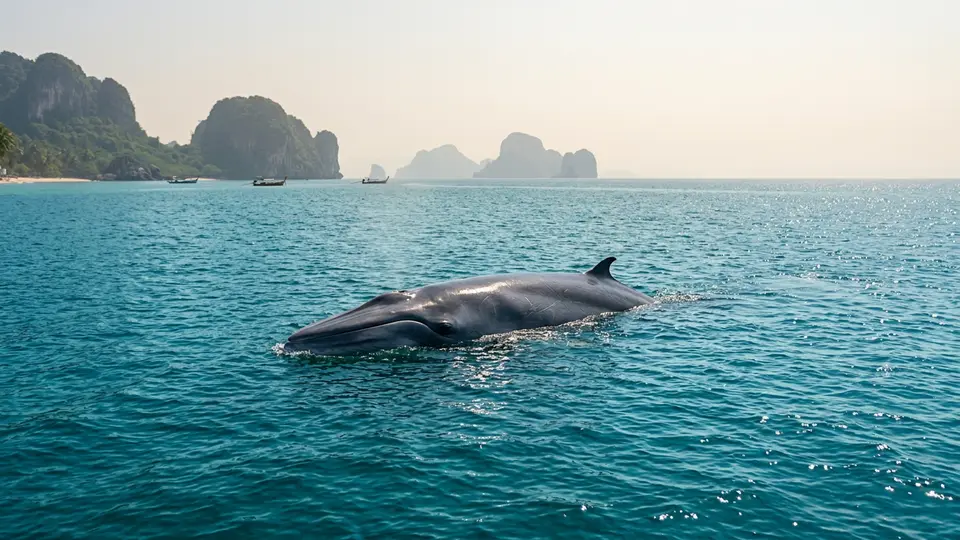
Destinations describe the species' habitat, not guaranteed cruise stops. Some animals require an optional inland excursion or are found in restricted reserves.

Fun facts about the Dusky langur

  • Infants are born with bright orange fur that gradually darkens.
  • Its tail is used for balance, not for grasping branches.
  • Microbes in its specialized stomach help break down leafy food.
  • Females other than the mother may carry and care for an infant.

Best time to see the Dusky langur

On Thailand's Andaman coast, roughly November through April often brings easier access and more comfortable forest walks. Conditions differ on the Gulf coast. Langurs are resident rather than seasonal visitors, so local habitat, group movements and quiet early visits matter more than a particular month. While specific months are less critical for resident species, visiting during the dry season generally means more predictable weather and less challenging trekking conditions. Less rainfall also makes for clearer observation opportunities, as the monkeys may be more active and visible in the canopy. Local guides often have current information on troop locations, which can be invaluable regardless of the season.

Dusky langur: season matrix by destination

Travel and observation windows vary by region. Highlighted months are an orientation for planning, not confirmed sightings or a guarantee of access.

Thailand

These months broadly suit Andaman-coast travel, not a langur breeding season; Gulf-coast weather and local access differ.

JanFebMarAprMayJunJulAugSepOctNovDec
Cruise ships in Thailand

Where the Dusky langur lives

They occupy tropical evergreen and semi-evergreen forest, limestone woodland and some mangrove margins. In Thailand, suitable habitat is concentrated in the peninsula. Forest edges near coastal hills can offer viewing opportunities, but connected tree cover remains important for feeding, shelter and movement. Dusky leaf monkeys are arboreal, preferring the upper and middle canopy layers for most activities. Habitat loss and fragmentation due to agricultural expansion and human development pose significant threats to their populations. They are also known to frequent human-modified landscapes, such as rubber and oil palm plantations, though usually in degraded forest fragments.

What the Dusky langur eats

Leaves form the core of the diet, supplemented by shoots, flowers, seeds and fruit. A compartmentalized stomach supports microbial fermentation of plant material. Food choice changes with seasonal availability, and human snacks are inappropriate substitutes for the foliage these monkeys normally select. Young leaves are often preferred over mature ones due to their higher protein and lower fiber content, though this varies seasonally. Their specialized digestive system allows them to detoxify some plant compounds that would be harmful to other primates. They spend a considerable portion of their day foraging, moving methodically through the canopy to select appropriate plant parts.

Species at a glance

Common name
Dusky langur
Scientific name
Trachypithecus obscurus
Animal group
Mammals
Size
Body 42-61 cm; tail 50-85 cm
Weight
5-9 kg
Lifespan
Not reliably established
Status
Endangered
Identification
White eye rings and a pale muzzle distinguish the dusky langur from the generally unringed faces of banded and silvered leaf monkeys. Their distinctive grey to grey-brown fur, contrasting with a paler underside, helps them blend into the forest environment. Newborns are striking with bright orange fur and pale faces, gradually developing adult coloration over several months. The 'dusky' in their name refers to their generally dark pelage, which can vary slightly in shade depending on the subspecies and light conditions.

Dusky langur: frequently asked questions

Where can I see the Dusky langur?
Thailand. Watch from established forest paths or public viewpoints, leaving an escape route through the trees. Never feed or touch langurs, especially infants; habituated groups may approach closely, but bites and disease transmission remain risks. Be patient and move quietly, as sudden movements can alarm the animals and cause them to retreat further into the foliage. Binoculars are essential for observing their intricate behaviors from a respectful distance without disturbance. Look for movement and listen for their soft vocalizations or the rustling of leaves in the canopy to locate a troop.
When is the best time to see the Dusky langur?
On Thailand's Andaman coast, roughly November through April often brings easier access and more comfortable forest walks. Conditions differ on the Gulf coast. Langurs are resident rather than seasonal visitors, so local habitat, group movements and quiet early visits matter more than a particular month. While specific months are less critical for resident species, visiting during the dry season generally means more predictable weather and less challenging trekking conditions. Less rainfall also makes for clearer observation opportunities, as the monkeys may be more active and visible in the canopy. Local guides often have current information on troop locations, which can be invaluable regardless of the season.
How big does the Dusky langur get?
Body 42-61 cm; tail 50-85 cm. Adult weight: 5-9 kg. Size varies with age, sex and population.
How should I behave around the Dusky langur?
Watch from established forest paths or public viewpoints, leaving an escape route through the trees. Never feed or touch langurs, especially infants; habituated groups may approach closely, but bites and disease transmission remain risks. Be patient and move quietly, as sudden movements can alarm the animals and cause them to retreat further into the foliage. Binoculars are essential for observing their intricate behaviors from a respectful distance without disturbance. Look for movement and listen for their soft vocalizations or the rustling of leaves in the canopy to locate a troop.
What does the Dusky langur eat?
Leaves form the core of the diet, supplemented by shoots, flowers, seeds and fruit. A compartmentalized stomach supports microbial fermentation of plant material. Food choice changes with seasonal availability, and human snacks are inappropriate substitutes for the foliage these monkeys normally select. Young leaves are often preferred over mature ones due to their higher protein and lower fiber content, though this varies seasonally. Their specialized digestive system allows them to detoxify some plant compounds that would be harmful to other primates. They spend a considerable portion of their day foraging, moving methodically through the canopy to select appropriate plant parts.
Are wildlife sightings guaranteed on an adventure cruise?
No. Animals move freely and routes, weather, access restrictions and local conditions influence every outing. Confirm the actual itinerary and shore program before booking.

Compare wildlife in the same destinations

Explore other mammals recorded in these destinations. Similar surroundings do not mean the animals share the same habits or viewing season.

Species comparison by animal group and destination
Dusky langurDusky langurBryde's WhaleBryde's WhaleCrab-eating macaqueCrab-eating macaque
Animal groupMammalsAnimal groupMammalsAnimal groupMammals
DestinationsThailandDestinationsGalapagos, Mexico, Egypt, Thailand, VietnamDestinationsIndonesia, Thailand, Vietnam
All wildlife destinations
Plan your trip

Find your next wildlife adventure

Compare destinations, shore programs and dates with the animals and habitats you would love to see.

  • Naturalist-led shore excursions
  • Responsible wildlife watching
  • Small expedition ships

Newsletter

Take Blue Rides with you

Adventure cruise offers, last-minute deals and trip inspiration.

Free, unsubscribe anytime. Details: Privacy Policy

Partner with Blue Rides

Affiliate Program

Recommend adventure cruises and earn commission on every confirmed booking.

Share. Track. Earn.

Your footage, our stage

Send us your videos or pictures.

Captured remarkable nature or wildlife on your journey? Share it with us, we may feature it on Blue Rides.