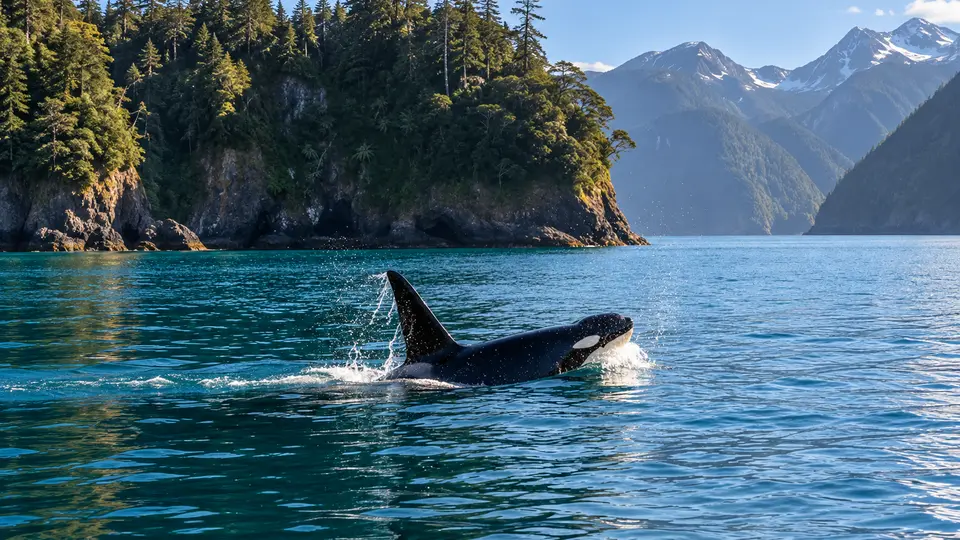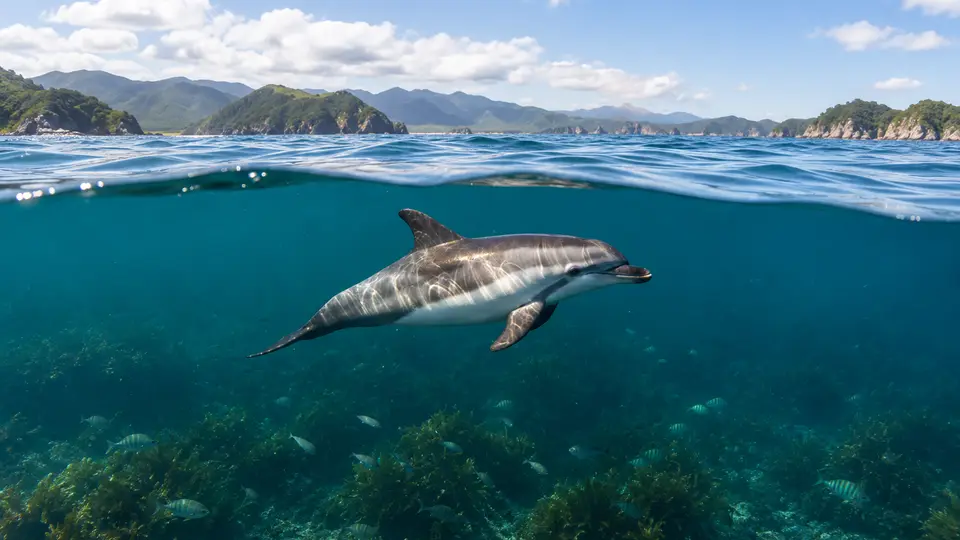
Hector's dolphin in its natural habitat, AI illustration

Hector's dolphinCephalorhynchus hectoriWhere and when to see them

Hector's dolphin at a glance

Hector's dolphin is a small coastal dolphin endemic to New Zealand, recognized by its rounded dorsal fin and sharply contrasting grey, black and white markings. Most belong to South Island populations, while the exceptionally threatened Māui dolphin is a North Island subspecies. These animals are marine residents of shallow coastal waters, not land wildlife. Their restricted distribution and slow reproduction make accidental deaths in fishing gear particularly consequential.

Behaviour & reproduction

Size
1.2–1.5 m body length
Weight
40–60 kg
Lifespan
20–25 years
Status
Endangered

Hector's dolphins usually travel in small groups whose membership can change through the day. They socialize, feed and sometimes make low leaps, although a shore observer may see only backs and rounded fins. Mothers invest heavily in single calves, with several years commonly separating births. Their coastal movements respond to prey, depth and season, so proximity to a known population does not ensure animals will approach a viewing point. Hector's dolphins are generally shy and not prone to bow-riding or approaching vessels closely, unlike some other dolphin species. They exhibit complex social structures within their small groups, often forming fission-fusion societies where individuals move between groups.

Top wildlife locations

New Zealand wildlife habitat

New Zealand

South Island bays and coastal headlands provide plausible distant shore viewpoints within the species' range. Occurrence is localized and sightings uncertain; Māui dolphins are not an appropriate standard wildlife-viewing target.
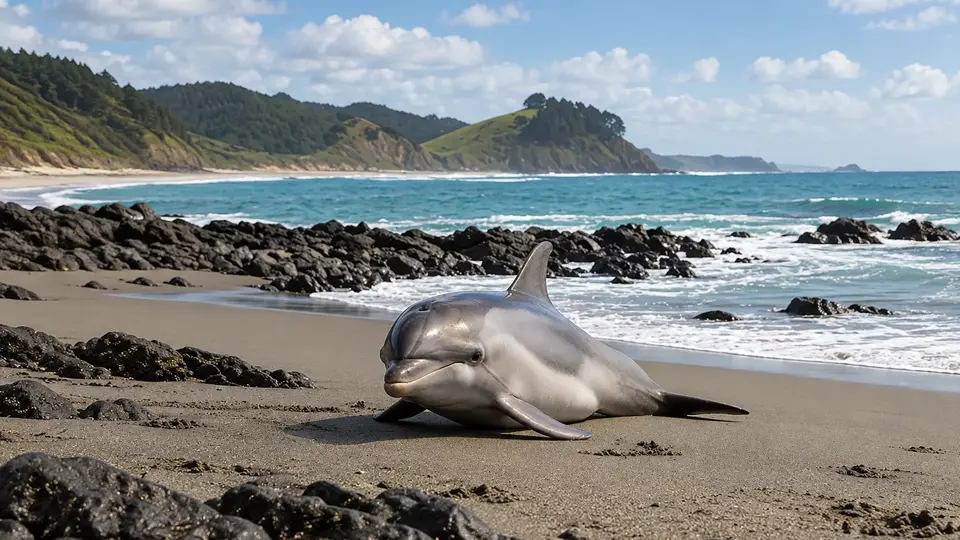
Destinations describe the species' habitat, not guaranteed cruise stops. Some animals require an optional inland excursion or are found in restricted reserves.

Fun facts about the Hector's dolphin

  • The species occurs naturally only in New Zealand waters.
  • Its rounded dorsal fin is often compared with a curved ear.
  • Māui dolphins are a subspecies, not a separate species.
  • Females generally produce one calf only every few years.

Best time to see the Hector's dolphin

Austral summer and early autumn offer useful daylight and generally comfortable coastal observation conditions. Dolphins occur year-round, and seasonal inshore movement differs among populations. Select appropriate South Island viewpoints with current local advice instead of interpreting summer travel weather as a breeding-viewing guarantee. During the austral summer, warmer waters and increased prey availability can lead to more frequent inshore movements and active feeding displays. While observation is possible year-round, these warmer months offer the most reliable conditions for spotting them from land or a vessel.

Hector's dolphin: season matrix by destination

Travel and observation windows vary by region. Highlighted months are an orientation for planning, not confirmed sightings or a guarantee of access.

New Zealand

A practical warmer-season coastal observation window; dolphins occur year-round locally, and conditions or seasonal movements can keep them beyond shore visibility.

JanFebMarAprMayJunJulAugSepOctNovDec
Cruise ships in New Zealand

Where the Hector's dolphin lives

Shallow coastal waters around much of New Zealand's South Island form the principal range. Bays, river-influenced coastlines and nearshore shelf waters are important. Māui dolphins occupy a much smaller area off the western North Island and must not be treated as a routine viewing target. While primarily found in coastal waters, Hector's dolphins typically inhabit depths less than 100 meters, often staying within a few kilometers of shore. Their dependence on these specific nearshore areas makes them vulnerable to human activities and coastal development.

What the Hector's dolphin eats

Hector's dolphins eat small fish and squid, taking prey from different parts of the water column. Red cod, flatfish and other locally abundant coastal fishes occur in dietary studies. Feeding opportunities depend on healthy nearshore ecosystems rather than a single preferred prey species. They employ echolocation to locate prey in murky or dark waters, supplementing visual hunting. Their diet varies regionally and seasonally, reflecting the availability of small schooling fish and benthic invertebrates.

Species at a glance

Common name
Hector's dolphin
Scientific name
Cephalorhynchus hectori
Animal group
Marine life
Size
1.2–1.5 m body length
Weight
40–60 kg
Lifespan
20–25 years
Status
Endangered
Identification
A rounded, paddle-shaped dorsal fin and compact grey body distinguish Hector's dolphins from the larger, pointed-finned dusky and bottlenose dolphins. Their distinctive, almost circular dorsal fin is black, contrasting with their grey body, and they have black markings on their face and flippers. The average adult body length is around 1.2 to 1.5 meters, making them one of the smallest marine dolphins.

Hector's dolphin: frequently asked questions

Where can I see the Hector's dolphin?
New Zealand. Use a stable shore viewpoint or observe from a distant deck without pursuing groups. Never feed dolphins or encourage close vessel approaches. Keep particular restraint around calves, and do not seek out the exceptionally small Māui population. Land-based viewing opportunities are excellent from various headlands and elevated points on the South Island, especially during calm weather. When viewing from a boat, maintaining a slow, steady course parallel to the coastline and keeping a significant distance is crucial to avoid disturbance.
When is the best time to see the Hector's dolphin?
Austral summer and early autumn offer useful daylight and generally comfortable coastal observation conditions. Dolphins occur year-round, and seasonal inshore movement differs among populations. Select appropriate South Island viewpoints with current local advice instead of interpreting summer travel weather as a breeding-viewing guarantee. During the austral summer, warmer waters and increased prey availability can lead to more frequent inshore movements and active feeding displays. While observation is possible year-round, these warmer months offer the most reliable conditions for spotting them from land or a vessel.
How big does the Hector's dolphin get?
1.2–1.5 m body length. Adult weight: 40–60 kg. Size varies with age, sex and population.
How should I behave around the Hector's dolphin?
Use a stable shore viewpoint or observe from a distant deck without pursuing groups. Never feed dolphins or encourage close vessel approaches. Keep particular restraint around calves, and do not seek out the exceptionally small Māui population. Land-based viewing opportunities are excellent from various headlands and elevated points on the South Island, especially during calm weather. When viewing from a boat, maintaining a slow, steady course parallel to the coastline and keeping a significant distance is crucial to avoid disturbance.
What does the Hector's dolphin eat?
Hector's dolphins eat small fish and squid, taking prey from different parts of the water column. Red cod, flatfish and other locally abundant coastal fishes occur in dietary studies. Feeding opportunities depend on healthy nearshore ecosystems rather than a single preferred prey species. They employ echolocation to locate prey in murky or dark waters, supplementing visual hunting. Their diet varies regionally and seasonally, reflecting the availability of small schooling fish and benthic invertebrates.
Are wildlife sightings guaranteed on an adventure cruise?
No. Animals move freely and routes, weather, access restrictions and local conditions influence every outing. Confirm the actual itinerary and shore program before booking.

Compare wildlife in the same destinations

Explore other marine life recorded in these destinations. Similar surroundings do not mean the animals share the same habits or viewing season.

Species comparison by animal group and destination
Hector's dolphinHector's dolphinDusky dolphinDusky dolphinOrcaOrca
Animal groupMarine lifeAnimal groupMarine lifeAnimal groupMarine life
DestinationsNew ZealandDestinationsNew ZealandDestinationsCosta Rica, Mexico, Portugal, Arctic, New Zealand
All wildlife destinations
Plan your trip

Find your next wildlife adventure

Compare destinations, shore programs and dates with the animals and habitats you would love to see.

  • Naturalist-led shore excursions
  • Responsible wildlife watching
  • Small expedition ships

Newsletter

Take Blue Rides with you

Adventure cruise offers, last-minute deals and trip inspiration.

Free, unsubscribe anytime. Details: Privacy Policy

Partner with Blue Rides

Affiliate Program

Recommend adventure cruises and earn commission on every confirmed booking.

Share. Track. Earn.

Your footage, our stage

Send us your videos or pictures.

Captured remarkable nature or wildlife on your journey? Share it with us, we may feature it on Blue Rides.