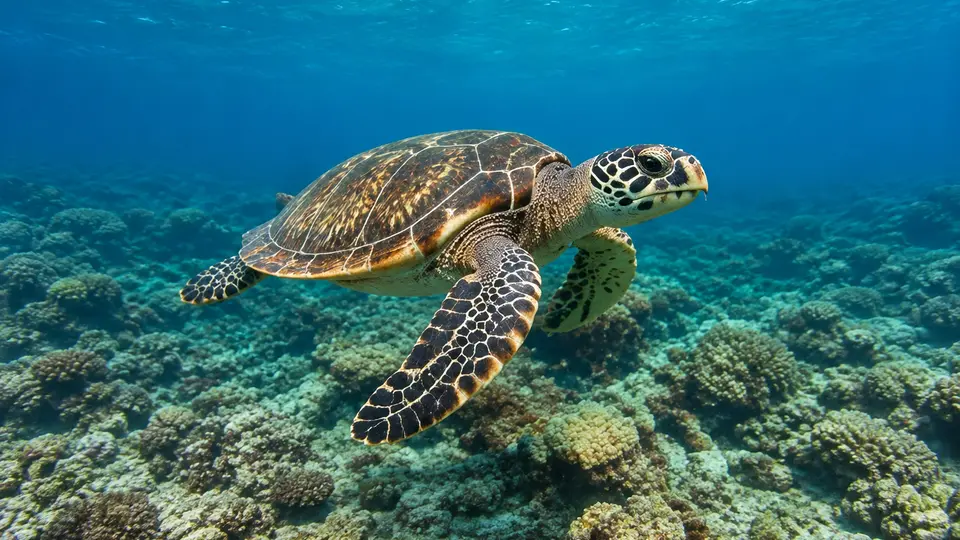
Hawksbill Sea Turtle in its natural habitat, AI illustration

Hawksbill Sea Turtle: where and when to see them

Eretmochelys imbricata

Hawksbill Sea Turtle at a glance

The hawksbill is a tropical marine turtle with a narrow hooked beak and an intricately patterned shell. Its overlapping shell plates supplied the historical tortoiseshell trade, which remains a major conservation concern. Adults spend most of their lives at sea, with females coming ashore to nest. Nesting populations are scattered and often small, so presence in a country's waters does not imply an accessible or dependable beach encounter.

Behaviour & reproduction

Size
60–90 cm carapace length
Weight
45–80 kg
Lifespan
Not reliably established
Status
Critically Endangered

Hawksbills move between feeding grounds and nesting beaches, sometimes crossing substantial stretches of ocean. Females usually lay several clutches during a nesting season and then skip one or more years before breeding again. Most nesting occurs at night, although daytime nesting is notable in the Seychelles. Hatchlings emerge from buried nests and head seaward. Artificial light, beach obstacles and disturbance can disrupt both nesting females and newly emerged young. Hawksbills are highly philopatric, meaning females return to the same general nesting beaches where they were born. Their nocturnal nesting habit is a survival strategy, offering cooler temperatures and reduced predation risks for both the mother and the eggs.

Top wildlife locations

Egypt wildlife habitat

Egypt

Red Sea island beaches and coastal reef margins provide habitat, but many nesting areas are protected or inaccessible. Mainland shore sightings are uncommon, and beach observation requires locally authorized arrangements.

Adventure cruises in Egypt
Seychelles wildlife habitat

Seychelles

Protected sandy island beaches offer genuine nesting habitat, sometimes visible during daylight with authorized supervision. Access varies among reserves and islands; turtles are not assured on an ordinary beach visit.

Adventure cruises in Seychelles
Indonesia wildlife habitat

Indonesia

Scattered island nesting beaches and coastal reef margins provide habitat across the archipelago. Many colonies are remote or protected, so sightings from public shores are uncertain and may require a specialist coastal excursion.

Adventure cruises in Indonesia
Maldives wildlife habitat

Maldives

Atoll reef margins may allow occasional distant surface observations from shore or decks. Hawksbill nesting is uncommon relative to their marine occurrence, and protected or privately managed beaches may be inaccessible.

Adventure cruises in Maldives
Thailand wildlife habitat

Thailand

Andaman island beaches and adjacent reef coasts provide potential habitat, but nesting is scarce and often protected. Some islands close seasonally, and ordinary mainland beach visits offer little prospect of observation.

Adventure cruises in Thailand
Vietnam wildlife habitat

Vietnam

Remaining suitable habitat includes offshore island beaches and reef-fringed coasts, often within protected areas. Hawksbill shore encounters are rare; turtle programs may focus on other species, and access requires local verification.

Adventure cruises in Vietnam

Destinations describe the species' habitat, not guaranteed cruise stops. Some animals require an optional inland excursion or are found in restricted reserves.

Fun facts about the Hawksbill Sea Turtle

  • Historical tortoiseshell objects were made mainly from hawksbill shell scutes.
  • Adults usually have two pairs of prefrontal scales between the eyes.
  • Seychelles hawksbills are unusual for frequently nesting in daylight.
  • By consuming sponges, hawksbills can influence competition for space on reefs.

Best time to see the Hawksbill Sea Turtle

Nesting calendars differ greatly among regions and islands, and turtles may use feeding areas year-round. Seychelles nesting is commonly concentrated from October to March. Elsewhere, choose only locally verified, authorized beach observation, keeping travel-weather windows separate from evidence of turtle nesting. In the Maldives, nesting peaks from April to July, with sporadic activity year-round. Fiji experiences its primary nesting season between November and March, particularly on remote outer islands.

Hawksbill Sea Turtle: season matrix by destination

Travel and observation windows vary by region. Highlighted months are an orientation for planning, not confirmed sightings or a guarantee of access.

Egypt

No dependable general shore-viewing window is established here; local nesting records, permits and site-specific advice are needed.

JanFebMarAprMayJunJulAugSepOctNovDec
Cruise ships in Egypt

Seychelles

This broadly overlaps the principal hawksbill nesting period, but timing and permitted observation vary among islands.

JanFebMarAprMayJunJulAugSepOctNovDec
Cruise ships in Seychelles

Indonesia

Indonesia spans multiple climatic and nesting regimes; without a specified authorized locality, a credible shore-observation calendar cannot be assigned.

JanFebMarAprMayJunJulAugSepOctNovDec
Cruise ships in Indonesia

Maldives

These generally calmer travel months can aid distant surface observation; they are not a hawksbill nesting calendar or evidence of regular sightings.

JanFebMarAprMayJunJulAugSepOctNovDec
Cruise ships in Maldives

Thailand

This is a broadly practical Andaman coastal travel window, not a confirmed hawksbill nesting or sighting season.

JanFebMarAprMayJunJulAugSepOctNovDec
Cruise ships in Thailand

Vietnam

Sparse, locality-dependent hawksbill records do not support a general visitor window; confirm species identity and authorized access with local conservation staff.

JanFebMarAprMayJunJulAugSepOctNovDec
Cruise ships in Vietnam

Fiji

These generally drier travel months support coastal access, not a nesting prediction; local reproductive timing requires separate confirmation.

JanFebMarAprMayJunJulAugSepOctNovDec
Cruise ships in Fiji

Polynesia

Polynesia is too geographically broad for a defensible single travel or nesting window; a specific island and verified local records are needed.

JanFebMarAprMayJunJulAugSepOctNovDec
Cruise ships in Polynesia

Where the Hawksbill Sea Turtle lives

Tropical coastal waters around reefs, rocky areas and some mangrove systems provide feeding habitat. Nesting occurs on sandy beaches, often with nearby vegetation and limited open space. Many suitable islands are remote, privately managed or protected against unrestricted public access. They are often found in relatively shallow waters, typically less than 20 meters deep, although they can venture deeper. Juvenile hawksbills frequently utilize coastal estuaries and mangrove habitats as nurseries, providing shelter and abundant food.

What the Hawksbill Sea Turtle eats

Sponges are especially important in many populations, and the narrow beak helps reach food within reef crevices. Hawksbills also consume other marine invertebrates and some algae. Diet varies regionally, so the species should not be described as exclusively sponge-eating. Their specialized diet of sponges helps control sponge populations on reefs, contributing to overall reef health and biodiversity. They also feed on anemones, jellyfish, and various crustaceans, showcasing their opportunistic feeding habits.

Species at a glance

Common name
Hawksbill Sea Turtle
Scientific name
Eretmochelys imbricata
Animal group
Reptiles
Size
60–90 cm carapace length
Weight
45–80 kg
Lifespan
Not reliably established
Status
Critically Endangered
Identification
Compared with green turtles, hawksbills have a sharper hooked beak, overlapping shell scutes and a more serrated rear shell edge. Their scutes are often strikingly patterned with amber, brown, and black streaks, creating a beautiful 'tortoiseshell' effect. The four prefrontal scales between their eyes, compared to the green turtle's two, are another key diagnostic feature.

Hawksbill Sea Turtle: frequently asked questions

Where can I see the Hawksbill Sea Turtle?
Egypt, Seychelles, Indonesia, Maldives, Thailand, Vietnam, Fiji, Polynesia. Observe distant surfacings from shore or deck, or join authorized beach monitoring where permitted. Never touch turtles, block their route, use flash, or illuminate nesting females and hatchlings. Keep behind nesting animals and follow wardens' instructions. When viewing from a vessel, look for their distinctive 'beak' breaking the surface or a flash of their patterned carapace just below. On shore excursions, seek out signs of their tracks in the sand leading to and from the ocean, indicating recent nesting activity.
When is the best time to see the Hawksbill Sea Turtle?
Nesting calendars differ greatly among regions and islands, and turtles may use feeding areas year-round. Seychelles nesting is commonly concentrated from October to March. Elsewhere, choose only locally verified, authorized beach observation, keeping travel-weather windows separate from evidence of turtle nesting. In the Maldives, nesting peaks from April to July, with sporadic activity year-round. Fiji experiences its primary nesting season between November and March, particularly on remote outer islands.
How big does the Hawksbill Sea Turtle get?
60–90 cm carapace length. Adult weight: 45–80 kg. Size varies with age, sex and population.
How should I behave around the Hawksbill Sea Turtle?
Observe distant surfacings from shore or deck, or join authorized beach monitoring where permitted. Never touch turtles, block their route, use flash, or illuminate nesting females and hatchlings. Keep behind nesting animals and follow wardens' instructions. When viewing from a vessel, look for their distinctive 'beak' breaking the surface or a flash of their patterned carapace just below. On shore excursions, seek out signs of their tracks in the sand leading to and from the ocean, indicating recent nesting activity.
What does the Hawksbill Sea Turtle eat?
Sponges are especially important in many populations, and the narrow beak helps reach food within reef crevices. Hawksbills also consume other marine invertebrates and some algae. Diet varies regionally, so the species should not be described as exclusively sponge-eating. Their specialized diet of sponges helps control sponge populations on reefs, contributing to overall reef health and biodiversity. They also feed on anemones, jellyfish, and various crustaceans, showcasing their opportunistic feeding habits.
Are wildlife sightings guaranteed on an adventure cruise?
No. Animals move freely and routes, weather, access restrictions and local conditions influence every outing. Confirm the actual itinerary and shore program before booking.

Compare wildlife in the same destinations

Explore other reptiles recorded in these destinations. Similar surroundings do not mean the animals share the same habits or viewing season.

Species comparison by animal group and destination
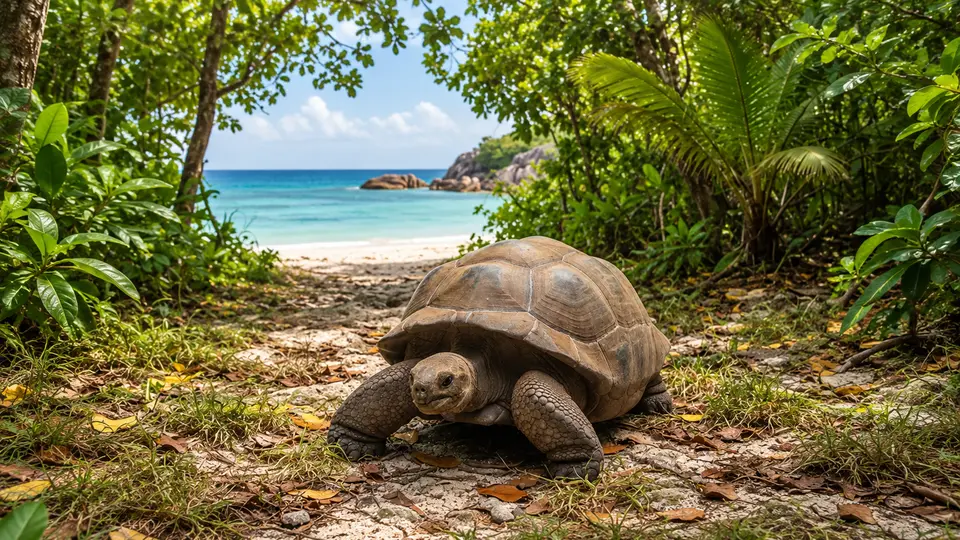
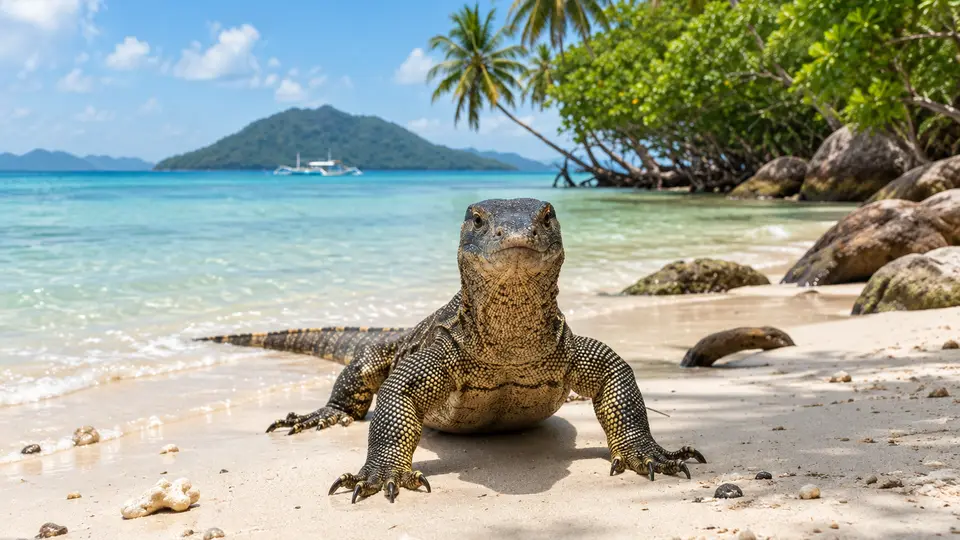
Hawksbill Sea TurtleHawksbill Sea TurtleAldabra Giant TortoiseAldabra Giant TortoiseAsian water monitorAsian water monitor
Animal groupReptilesAnimal groupReptilesAnimal groupReptiles
DestinationsEgypt, Seychelles, Indonesia, Maldives, Thailand, Vietnam, Fiji, PolynesiaDestinationsSeychellesDestinationsIndonesia
All wildlife destinations
Plan your trip

Find your next wildlife adventure

Compare destinations, shore programs and dates with the animals and habitats you would love to see.

  • Naturalist-led shore excursions
  • Responsible wildlife watching
  • Small expedition ships

Newsletter

Take Blue Rides with you

Adventure cruise offers, last-minute deals and trip inspiration.

Free, unsubscribe anytime. Details: Privacy Policy

Partner with Blue Rides

Affiliate Program

Recommend adventure cruises and earn commission on every confirmed booking.

Share. Track. Earn.

Your footage, our stage

Send us your videos or pictures.

Captured beautiful landscapes or wildlife? Share your videos and pictures with us, we may feature them on Blue Rides.