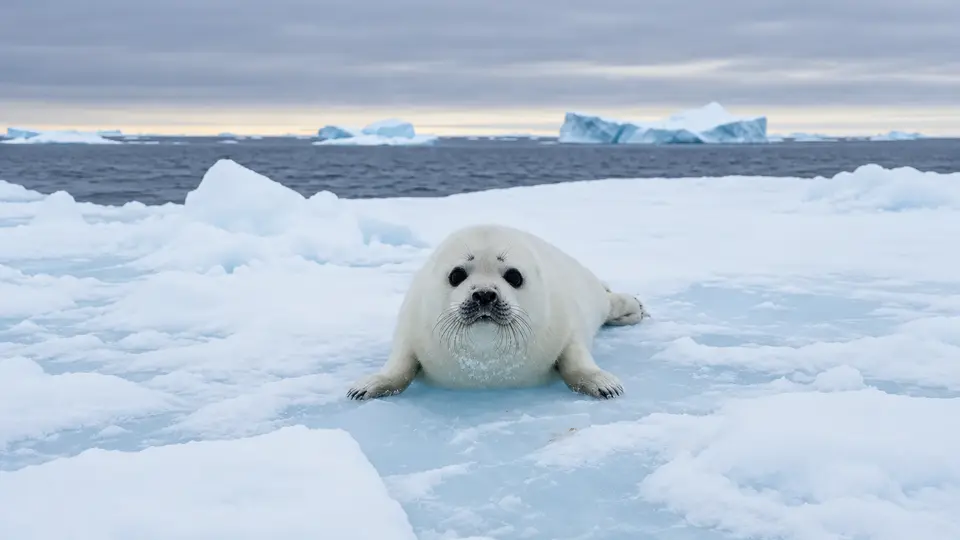
Harp Seal in its natural habitatAI-modified

Harp SealPagophilus groenlandicusWhere and when to see them

Harp Seal at a glance

The harp seal is a North Atlantic and adjacent Arctic true seal closely associated with seasonal sea ice. Mature animals usually show a dark face and a curved dark saddle across a pale body, whereas young seals pass through several very different coats. Its famous white pups are only a brief developmental stage. Large populations undertake extensive migrations, linking northern feeding waters with more southerly ice-breeding regions.

Behaviour & reproduction

Size
1.6–1.9 m (5.2–6.2 ft) body length
Weight
120–180 kg (265–397 lb)
Lifespan
25–35 years
Status
Least Concern

Harp seals gather in large groups on suitable sea ice to give birth and breed. Mothers nurse pups intensively for roughly twelve days, transferring energy-rich milk before abruptly weaning them. Adults later congregate to moult, then disperse toward feeding grounds. Seasonal movements track ice and prey, sometimes carrying animals far from expected areas. A seal resting on ice or shore may be conserving energy and should not be disturbed. Harp seals communicate through a variety of vocalizations, especially during the breeding season. They exhibit strong fidelity to specific breeding grounds, returning to the same general areas each year.

Top wildlife locations

Arctic wildlife habitatAI-modified

Arctic

North Atlantic Arctic pack-ice margins offer possible distant deck observations; ordinary shore encounters are uncommon. Much breeding habitat is remote and inaccessible, and the species should not be expected throughout the circumpolar Arctic.
Destinations describe the species' habitat, not guaranteed cruise stops. Some animals require an optional inland excursion or are found in restricted reserves.

Fun facts about the Harp Seal

  • The genus name means an ice-loving animal.
  • Pups lose their white natal coat within their first few weeks.
  • The nursing period lasts only about twelve days.
  • Major breeding populations use separate ice regions in the northwestern Atlantic, Greenland Sea and White Sea.

Best time to see the Harp Seal

Summer Arctic travel can overlap northern feeding distributions, but breeding occurs earlier on seasonal ice in specific North Atlantic regions. Accessible shore sightings are irregular. Ice conditions and itinerary geography matter more than a generic Arctic wildlife calendar or the presence of daylight. The breeding season from late February to mid-March offers the best chance to see large numbers of seals on ice in specific regions. Later in spring, during the moulting period, large groups can also be observed on ice floes.

Harp Seal: season matrix by destination

Travel and observation windows vary by region. Highlighted months are an orientation for planning, not confirmed sightings or a guarantee of access.

Arctic

These are broad Arctic travel months that may overlap northern feeding areas, not the spring pupping season or a guarantee of suitable ice.

JanFebMarAprMayJunJulAugSepOctNovDec
Cruise ships in Arctic

Where the Harp Seal lives

The species uses cold shelf seas and offshore waters bordering the North Atlantic Arctic. Stable seasonal pack ice is essential for normal pupping and important during moult. It is not evenly distributed around the entire Arctic, and ordinary land haul-outs are less characteristic. While primarily associated with pack ice, some populations utilize land fast ice. Their distribution is generally divided into three main breeding populations: the Northwest Atlantic, Greenland Sea, and White Sea.

What the Harp Seal eats

Harp seals eat schooling fish and crustaceans, with capelin, polar cod, herring and various shrimplike prey important in different regions. Diet changes with age, season and migration. Productive ice-edge and shelf ecosystems provide food, but no single prey dominates throughout the range. Harp seals are opportunistic feeders and their diet can include amphipods and euphausiids. They are efficient divers, capable of reaching depths of over 200 meters to forage for prey.

Species at a glance

Common name
Harp Seal
Scientific name
Pagophilus groenlandicus
Animal group
Mammals
Size
1.6–1.9 m (5.2–6.2 ft) body length
Weight
120–180 kg (265–397 lb)
Lifespan
25–35 years
Status
Least Concern
Identification
Adults differ from ringed and hooded seals through their dark face and harp-shaped back marking, although immature harp seals require more careful assessment. Pups are born with a yellowish-white coat, which turns white within a few days, giving them the nickname 'whitecoats'. Subadults go through several molts, developing a spotted coat before the distinctive 'harp' marking appears.

Harp Seal: frequently asked questions

Where can I see the Harp Seal?
Arctic. Observe from distant decks or safe coastal viewpoints without approaching occupied ice. Never step onto unstable sea ice to reach a seal. Give solitary shore-resting animals space, and keep dogs away, particularly from young seals. Use binoculars or a spotting scope for clear views, especially when seals are on distant ice. Maintain a quiet environment and avoid sudden movements to prevent startling animals.
When is the best time to see the Harp Seal?
Summer Arctic travel can overlap northern feeding distributions, but breeding occurs earlier on seasonal ice in specific North Atlantic regions. Accessible shore sightings are irregular. Ice conditions and itinerary geography matter more than a generic Arctic wildlife calendar or the presence of daylight. The breeding season from late February to mid-March offers the best chance to see large numbers of seals on ice in specific regions. Later in spring, during the moulting period, large groups can also be observed on ice floes.
How big does the Harp Seal get?
1.6–1.9 m (5.2–6.2 ft) body length. Adult weight: 120–180 kg (265–397 lb). Size varies with age, sex and population.
How should I behave around the Harp Seal?
Observe from distant decks or safe coastal viewpoints without approaching occupied ice. Never step onto unstable sea ice to reach a seal. Give solitary shore-resting animals space, and keep dogs away, particularly from young seals. Use binoculars or a spotting scope for clear views, especially when seals are on distant ice. Maintain a quiet environment and avoid sudden movements to prevent startling animals.
What does the Harp Seal eat?
Harp seals eat schooling fish and crustaceans, with capelin, polar cod, herring and various shrimplike prey important in different regions. Diet changes with age, season and migration. Productive ice-edge and shelf ecosystems provide food, but no single prey dominates throughout the range. Harp seals are opportunistic feeders and their diet can include amphipods and euphausiids. They are efficient divers, capable of reaching depths of over 200 meters to forage for prey.
Are wildlife sightings guaranteed on an adventure cruise?
No. Animals move freely and routes, weather, access restrictions and local conditions influence every outing. Confirm the actual itinerary and shore program before booking.

Compare wildlife in the same destinations

Explore other mammals recorded in these destinations. Similar surroundings do not mean the animals share the same habits or viewing season.

Species comparison by animal group and destination
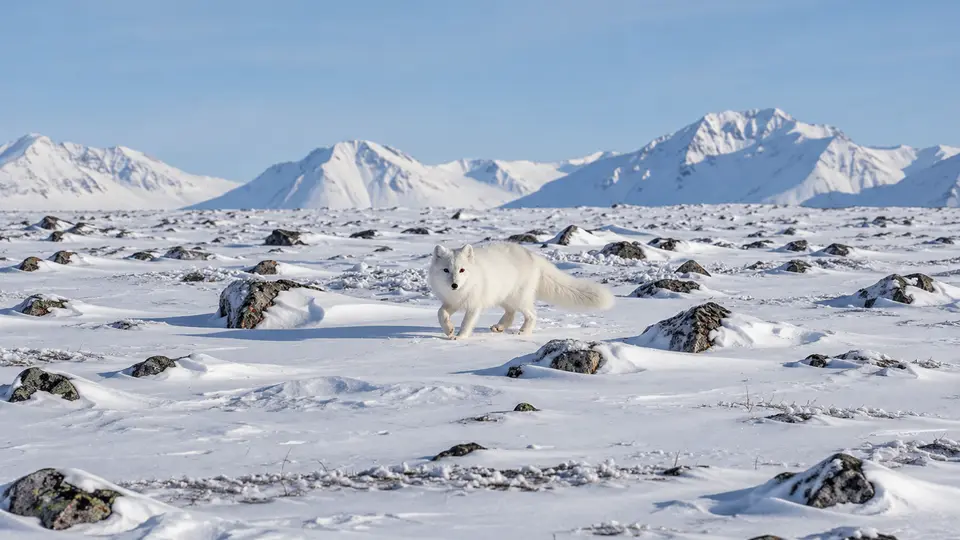
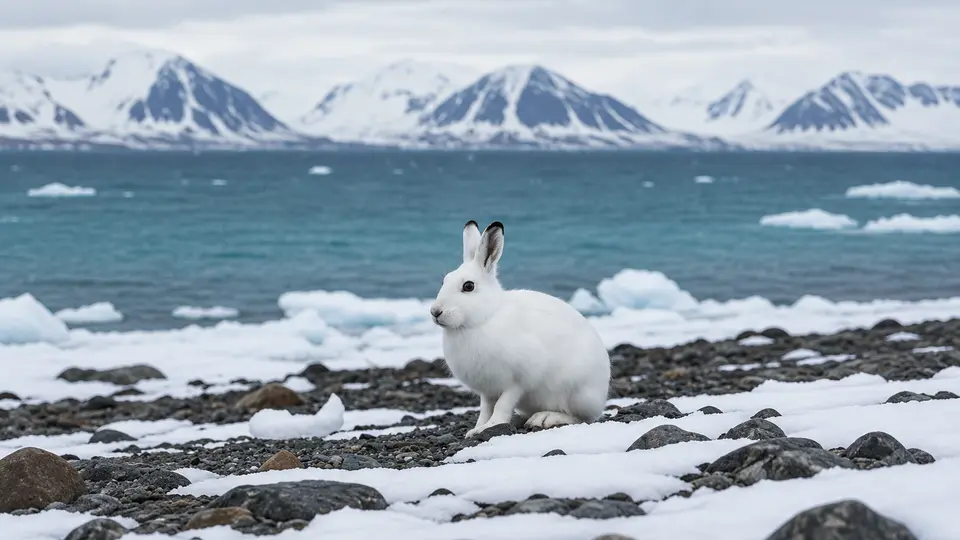
Harp SealAI-modifiedHarp SealArctic FoxAI-modifiedArctic FoxArctic HareAI-modifiedArctic Hare
Animal groupMammalsAnimal groupMammalsAnimal groupMammals
DestinationsArcticDestinationsNorway, ArcticDestinationsArctic
Scientific namePagophilus groenlandicusScientific nameScientific name
All wildlife destinations
AI-modified
Plan your trip

Find your next wildlife adventure

Compare destinations, shore programs and dates with the animals and habitats you would love to see.

  • Naturalist-led shore excursions
  • Responsible wildlife watching
  • Small expedition ships