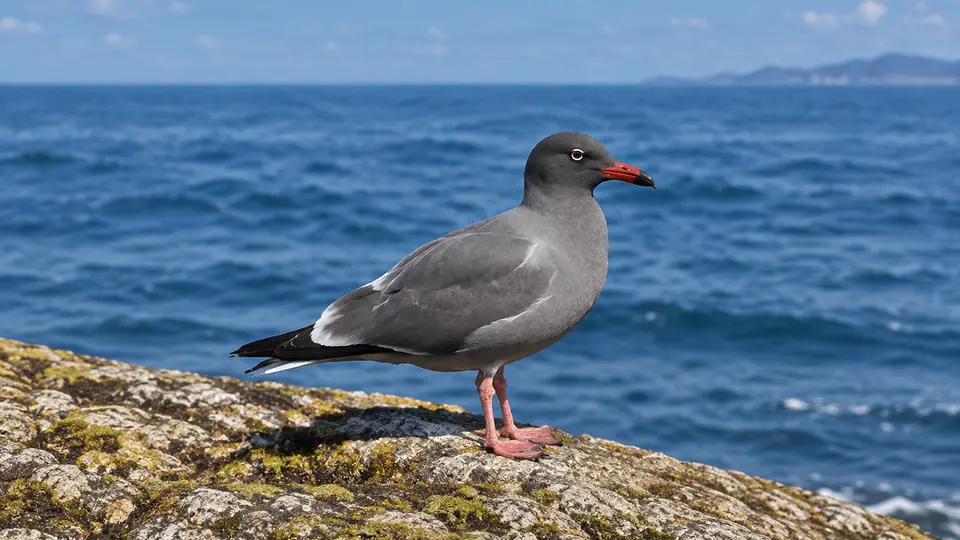
Heermann's Gull in its natural habitat, AI illustration

Heermann's Gull: where and when to see them

Larus heermanni

Heermann's Gull at a glance

Heermann's gull is a distinctive eastern Pacific gull with a charcoal-grey body, red bill and, in breeding adults, a contrasting white head. Most of the world's population breeds in northwestern Mexico, making a small number of island colonies disproportionately important. After breeding, many birds move north along the Pacific coast. Its specialized distribution and dependence on productive marine food webs make ocean changes and disturbance significant conservation concerns.

Behaviour & reproduction

Size
46–53 cm body length
Weight
0.4–0.65 kg
Lifespan
Not reliably established
Status
Near Threatened

Heermann's gulls gather in coastal flocks and nest colonially on islands. They are agile opportunists around feeding seabirds, frequently trying to steal fish from brown pelicans and other birds. Adults may approach just as a pelican surfaces with a catch. Following breeding, their northward dispersal contrasts with the southward migration pattern familiar from many Northern Hemisphere birds. On beaches they rest communally, often alongside other gull species. Their post-breeding northward movement is unique among North American gulls. During the breeding season, pairs defend small territories within dense colonies. They are highly vocal, especially during breeding and when competing for food, often making harsh, laughing calls.

Top wildlife locations

Mexico wildlife habitat

Mexico

Pacific beaches, harbour edges and Gulf of California coastlines offer accessible flock-viewing habitat. Major breeding islands are protected and not ordinary landing sites; distant coastal or deck observation avoids colony disturbance.

Adventure cruises in Mexico
Destinations describe the species' habitat, not guaranteed cruise stops. Some animals require an optional inland excursion or are found in restricted reserves.

Fun facts about the Heermann's Gull

  • A very large share of the global population breeds on Isla Rasa.
  • Many individuals disperse northward after breeding.
  • Adults lose the bright white-headed appearance outside the breeding season.
  • Brown pelicans are frequent targets of their fish-stealing attempts.

Best time to see the Heermann's Gull

Mexico offers regional opportunities throughout the year, with spring breeding concentrations in northwestern waters and subsequent dispersal changing local numbers. Winter coastal viewing is practical in many Pacific areas. Colony timing should never be interpreted as permission to enter protected breeding islands. Peak breeding activity in the Gulf of California typically occurs from April to July. Post-breeding dispersal sees many gulls move north along the Pacific coast into the US and Canada. Observing juveniles and adults on non-breeding grounds is common during late summer and autumn.

Heermann's Gull: season matrix by destination

Travel and observation windows vary by region. Highlighted months are an orientation for planning, not confirmed sightings or a guarantee of access.

Mexico

These months provide broad coastal travel opportunities in northwestern Mexico; local abundance changes with breeding and northward dispersal, and birds also occur outside this window.

JanFebMarAprMayJunJulAugSepOctNovDec
Cruise ships in Mexico

Where the Heermann's Gull lives

Marine coastlines, sandy beaches, rocky shores, estuaries and harbours provide feeding or resting habitat. Breeding is concentrated on islands in northwestern Mexico, particularly within the Gulf of California. Inland records occur, but this is fundamentally a coastal rather than freshwater gull. This species is also regularly found in California, USA, particularly post-breeding. While primarily coastal, they can occasionally be seen foraging over offshore waters during dispersal. They prefer areas with abundant food sources, such as upwellings and fishing grounds.

What the Heermann's Gull eats

Small marine fish are important, including schooling species made accessible near the surface. Heermann's gulls also eat marine invertebrates, carrion and opportunistic scraps. Food theft from other seabirds is conspicuous, but they also capture prey independently rather than relying entirely on piracy. They exhibit kleptoparasitism, often harassing Brown Pelicans and terns to steal their catches. Their diet can also include marine worms, crustaceans, and the eggs or young of other seabirds if accessible. Opportunistic feeding also extends to discarded bait from fishing vessels.

Species at a glance

Common name
Heermann's Gull
Scientific name
Larus heermanni
Animal group
Birds
Size
46–53 cm body length
Weight
0.4–0.65 kg
Lifespan
Not reliably established
Status
Near Threatened
Identification
Adults differ from most neighbouring gulls by combining a dark grey body with a red, dark-tipped bill and a white head in breeding plumage. Juvenile birds are mostly dusky brown, gradually acquiring adult plumage over several years. Non-breeding adults develop a streaked grey head instead of the pure white. The bicolored bill, red with a dark tip, is a key diagnostic feature at all adult stages.

Heermann's Gull: frequently asked questions

Where can I see the Heermann's Gull?
Mexico. Watch resting flocks from a distance on beaches, harbour margins or decks. Do not feed gulls or approach nesting colonies, where disturbance exposes eggs and chicks. Keep clear of working fishing gear and avoid blocking birds' shoreline resting space. When viewing from a ship, look for them following fishing boats or congregating near marine mammal activity. Binoculars are essential for observing their distinctive bill and head markings from a distance. Respect local regulations regarding wildlife viewing distances, especially in protected areas.
When is the best time to see the Heermann's Gull?
Mexico offers regional opportunities throughout the year, with spring breeding concentrations in northwestern waters and subsequent dispersal changing local numbers. Winter coastal viewing is practical in many Pacific areas. Colony timing should never be interpreted as permission to enter protected breeding islands. Peak breeding activity in the Gulf of California typically occurs from April to July. Post-breeding dispersal sees many gulls move north along the Pacific coast into the US and Canada. Observing juveniles and adults on non-breeding grounds is common during late summer and autumn.
How big does the Heermann's Gull get?
46–53 cm body length. Adult weight: 0.4–0.65 kg. Size varies with age, sex and population.
How should I behave around the Heermann's Gull?
Watch resting flocks from a distance on beaches, harbour margins or decks. Do not feed gulls or approach nesting colonies, where disturbance exposes eggs and chicks. Keep clear of working fishing gear and avoid blocking birds' shoreline resting space. When viewing from a ship, look for them following fishing boats or congregating near marine mammal activity. Binoculars are essential for observing their distinctive bill and head markings from a distance. Respect local regulations regarding wildlife viewing distances, especially in protected areas.
What does the Heermann's Gull eat?
Small marine fish are important, including schooling species made accessible near the surface. Heermann's gulls also eat marine invertebrates, carrion and opportunistic scraps. Food theft from other seabirds is conspicuous, but they also capture prey independently rather than relying entirely on piracy. They exhibit kleptoparasitism, often harassing Brown Pelicans and terns to steal their catches. Their diet can also include marine worms, crustaceans, and the eggs or young of other seabirds if accessible. Opportunistic feeding also extends to discarded bait from fishing vessels.
Are wildlife sightings guaranteed on an adventure cruise?
No. Animals move freely and routes, weather, access restrictions and local conditions influence every outing. Confirm the actual itinerary and shore program before booking.

Compare wildlife in the same destinations

Explore other birds recorded in these destinations. Similar surroundings do not mean the animals share the same habits or viewing season.

Species comparison by animal group and destination
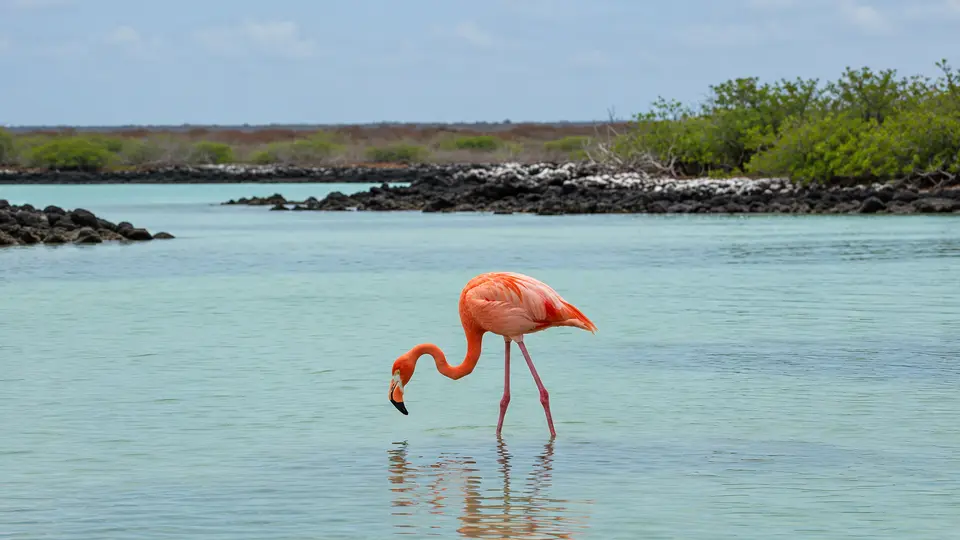
Heermann's GullHeermann's GullAmerican FlamingoAmerican FlamingoBlue-footed BoobyBlue-footed Booby
Animal groupBirdsAnimal groupBirdsAnimal groupBirds
DestinationsMexicoDestinationsGalapagos, MexicoDestinationsCosta Rica, Galapagos, Mexico
All wildlife destinations
Plan your trip

Find your next wildlife adventure

Compare destinations, shore programs and dates with the animals and habitats you would love to see.

  • Naturalist-led shore excursions
  • Responsible wildlife watching
  • Small expedition ships

Newsletter

Take Blue Rides with you

Adventure cruise offers, last-minute deals and trip inspiration.

Free, unsubscribe anytime. Details: Privacy Policy

Partner with Blue Rides

Affiliate Program

Recommend adventure cruises and earn commission on every confirmed booking.

Share. Track. Earn.

Your footage, our stage

Send us your videos or pictures.

Captured beautiful landscapes or wildlife? Share your videos and pictures with us, we may feature them on Blue Rides.