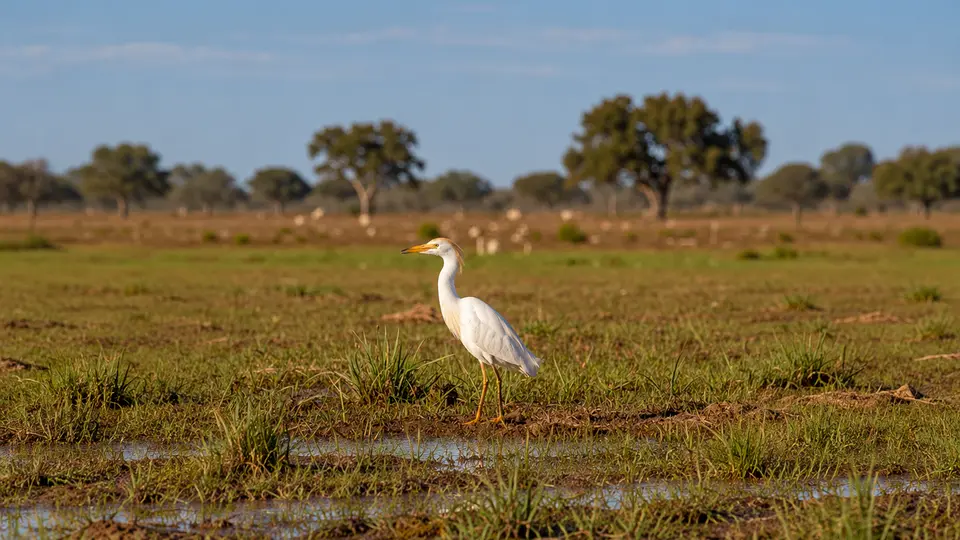
Cattle Egret in its natural habitat, AI illustration
Size46-56 cm long; 88-96 cm wingspanLifespanNot reliably establishedStatusLeast Concern

Cattle Egret: where and when to see them

Ardea ibis

Cattle Egret at a glance

The cattle egret is a compact white heron that often feeds far from open water, following grazing animals through fields. Portugal's birds belong to the western species, distinguished taxonomically from the eastern cattle egret in treatments that split them. Its relationship with livestock is opportunistic: hooves and grazing muzzles disturb insects that the bird catches. Breeding adults develop warm buff plumes, transforming an otherwise plain-looking bird into a subtly colourful colony member.

Behaviour & reproduction

Size
46-56 cm long; 88-96 cm wingspan
Weight
270-510 g
Lifespan
Not reliably established
Status
Least Concern

Cattle egrets walk briskly around livestock, agricultural machinery and other sources of disturbed prey. They may defend a profitable position beside a particular animal, then gather communally at roosts. Breeding takes place in colonies, often with other herons, in trees or shrubs near wetlands. Both parents incubate and feed the chicks. Daily movements between feeding fields and roosts can make flocks conspicuous around dawn and late afternoon. Cattle Egrets are highly social birds, often forming mixed-species foraging groups and large communal roosts. Their daily commute flights between feeding grounds and nocturnal roosts can cover several kilometers, especially in areas with dispersed resources.

Top wildlife locations

Portugal wildlife habitat

Portugal

Estuary-side pastures, rice-growing districts and damp coastal farmland provide accessible viewing from public paths. Inland excursions can broaden opportunities but are not always necessary; private fields and breeding colonies should remain undisturbed.

Adventure cruises in Portugal
Destinations describe the species' habitat, not guaranteed cruise stops. Some animals require an optional inland excursion or are found in restricted reserves.

Fun facts about the Cattle Egret

  • It expanded naturally across the Atlantic and established in the Americas.
  • Breeding adults develop buff feathers on the crown, chest and back.
  • It often catches insects disturbed by tractors as well as livestock.
  • Its terrestrial feeding habits are unusual among familiar white herons.

Best time to see the Cattle Egret

Cattle egrets can be observed in Portugal throughout the year. Spring and summer bring breeding plumage and colony activity, while autumn and winter may produce conspicuous feeding or roosting aggregations. Agricultural work and livestock locations often matter more than the month. During spring, the egrets develop striking rufous-orange plumes on their crown, neck and back, enhancing their visibility as a breeding species. Their presence around livestock makes them a familiar sight year-round, regardless of specific migratory patterns.

Cattle Egret: season matrix by destination

Travel and observation windows vary by region. Highlighted months are an orientation for planning, not confirmed sightings or a guarantee of access.

Portugal

Year-round presence supports a broad observation window, but field use, roost locations and breeding activity vary locally.

JanFebMarAprMayJunJulAugSepOctNovDec
Cruise ships in Portugal

Where the Cattle Egret lives

Pastures, damp meadows, rice fields and cultivated ground provide feeding habitat, while trees, reedbeds and wetland islands may support roosts or colonies. In Portugal, lowland agricultural mosaics near estuaries are suitable, but birds also occur well inland. In Portugal, Cattle Egrets often favor cork oak savannas and open woodlands alongside more conventional agricultural areas. They also frequent garbage dumps and aquaculture ponds where food is readily available.

What the Cattle Egret eats

Large insects, especially grasshoppers, crickets and beetles, are major foods. Earthworms, spiders, small reptiles, frogs and occasional small mammals supplement the diet. Unlike many herons, cattle egrets obtain much of their food by walking on land rather than fishing. They frequently feed on ectoparasites directly from the backs of cattle and other large mammals, demonstrating a true symbiotic relationship. When foraging on freshly ploughed land, they consume exposed larvae and soil-dwelling invertebrates.

Species at a glance

Common name
Cattle Egret
Scientific name
Ardea ibis
Animal group
Birds
Size
46-56 cm long; 88-96 cm wingspan
Weight
270-510 g
Lifespan
Not reliably established
Status
Least Concern
Identification
A short yellow bill, compact neck and stocky stance distinguish nonbreeding cattle egrets from the slimmer, black-billed little egret with yellow feet. Breeding adults are easily distinguished by their distinctive orange-buff patches and bright red or yellowish legs and bill, contrasting sharply with their white body. Juvenile birds are entirely white with dark bills and legs, gradually acquiring adult characteristics.

Cattle Egret: frequently asked questions

Where can I see the Cattle Egret?
Portugal. Observe from public paths without entering livestock fields or approaching colonies. Give cattle ample space, avoid electric fences, and never flush a communal roost to obtain flight photographs. When observing egrets near livestock, note their tendency to follow animals closely, often stepping aside only when the animal moves directly towards them. From a cruise deck, spotting aggregations flying to or from roosts at dawn and dusk near river estuaries can be a memorable sight.
When is the best time to see the Cattle Egret?
Cattle egrets can be observed in Portugal throughout the year. Spring and summer bring breeding plumage and colony activity, while autumn and winter may produce conspicuous feeding or roosting aggregations. Agricultural work and livestock locations often matter more than the month. During spring, the egrets develop striking rufous-orange plumes on their crown, neck and back, enhancing their visibility as a breeding species. Their presence around livestock makes them a familiar sight year-round, regardless of specific migratory patterns.
How big does the Cattle Egret get?
46-56 cm long; 88-96 cm wingspan. Adult weight: 270-510 g. Size varies with age, sex and population.
How should I behave around the Cattle Egret?
Observe from public paths without entering livestock fields or approaching colonies. Give cattle ample space, avoid electric fences, and never flush a communal roost to obtain flight photographs. When observing egrets near livestock, note their tendency to follow animals closely, often stepping aside only when the animal moves directly towards them. From a cruise deck, spotting aggregations flying to or from roosts at dawn and dusk near river estuaries can be a memorable sight.
What does the Cattle Egret eat?
Large insects, especially grasshoppers, crickets and beetles, are major foods. Earthworms, spiders, small reptiles, frogs and occasional small mammals supplement the diet. Unlike many herons, cattle egrets obtain much of their food by walking on land rather than fishing. They frequently feed on ectoparasites directly from the backs of cattle and other large mammals, demonstrating a true symbiotic relationship. When foraging on freshly ploughed land, they consume exposed larvae and soil-dwelling invertebrates.
Are wildlife sightings guaranteed on an adventure cruise?
No. Animals move freely and routes, weather, access restrictions and local conditions influence every outing. Confirm the actual itinerary and shore programme before booking.

Compare wildlife in the same destinations

Explore other birds recorded in these destinations. Similar surroundings do not mean the animals share the same habits or viewing season.

Species comparison by animal group and destination
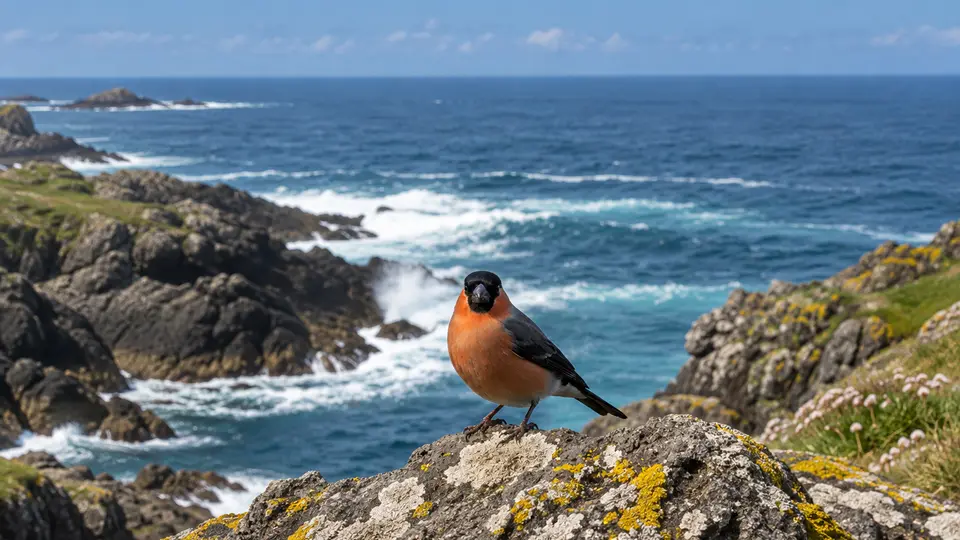
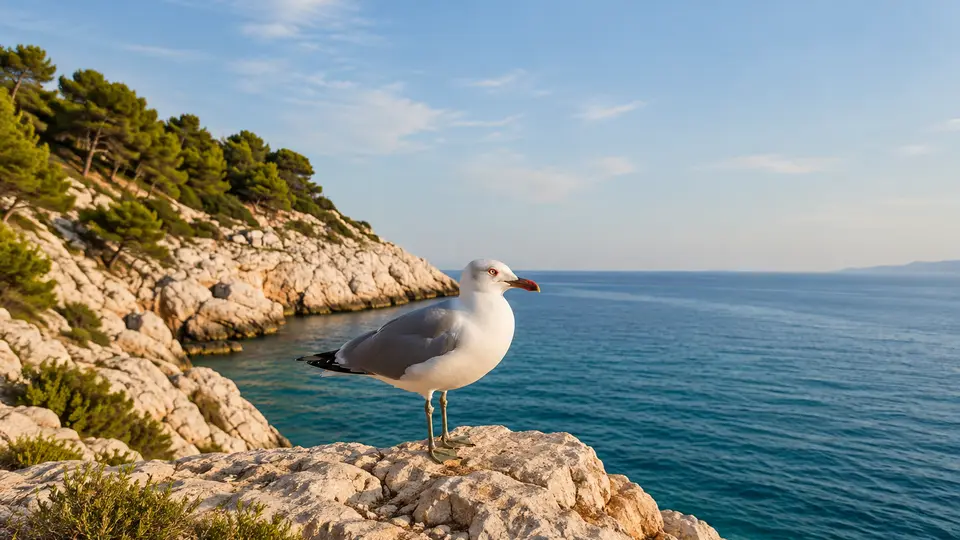
Cattle EgretCattle EgretAudouin's GullAudouin's GullAzores BullfinchAzores Bullfinch
Animal groupBirdsAnimal groupBirdsAnimal groupBirds
DestinationsPortugalDestinationsCroatia, Greece, Portugal, TurkeyDestinationsPortugal
All wildlife destinations
Plan your trip

Find your next wildlife adventure

Compare destinations, shore programmes and dates with the animals and habitats you would love to see.

  • Naturalist-led shore excursions
  • Responsible wildlife watching
  • Small expedition ships

Newsletter

Take Blue Rides with you

Adventure cruise offers, last-minute deals and trip inspiration.

Free, unsubscribe anytime. Details: Privacy Policy

Partner with Blue Rides

Affiliate Program

Recommend adventure cruises and earn commission on every confirmed booking.

Share. Track. Earn.