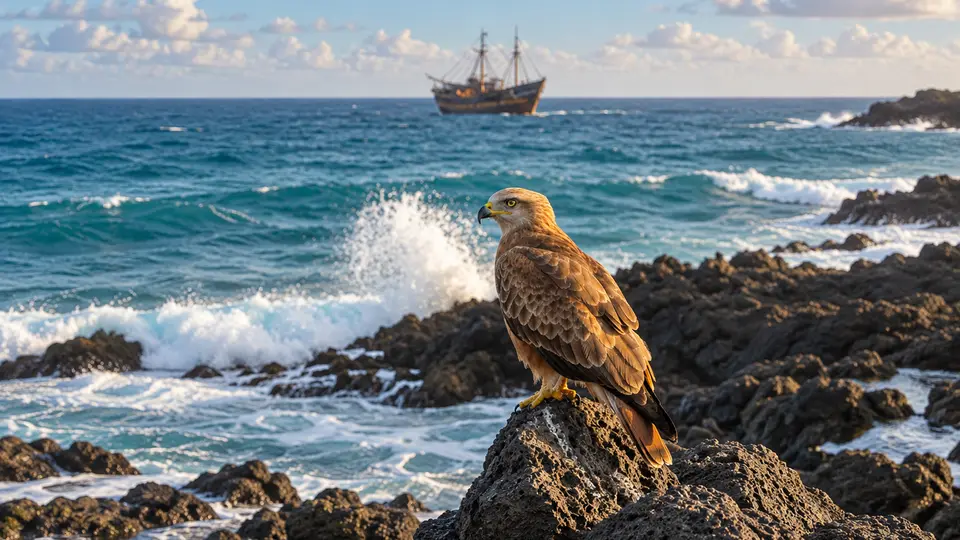
Cape Verde Kite in its natural habitat, AI illustration

Cape Verde Kite: where and when to see them

Birds

Cape Verde Kite at a glance

Cape Verde kite is a problematic historical name rather than a straightforward modern wildlife target. Birds described as Milvus fasciicauda were once regarded as an endemic species or a form of red kite, but genetic work has challenged their distinctness. Historical specimens and more recent island kites have not yielded a simple, universally accepted interpretation. Consequently, neither a confident current species identity nor a reliable viewing population should be promised under this catalog name.

Behaviour & reproduction

Size
Not reliably established
Weight
Not reliably established
Lifespan
Not reliably established
Status
Assessment varies

Historical Cape Verde kites were described as soaring scavengers and opportunistic hunters, broadly resembling other Milvus kites in their use of open landscapes. However, observations attributed to this name cannot automatically be assigned to a distinct surviving endemic species. A kite seen today should be documented through distant photographs and assessed on its own characteristics. Following a bird toward a possible nest would add disturbance without resolving the underlying taxonomic uncertainty. As a top predator and scavenger, these kites played a vital ecological role in the Cape Verdean ecosystem. Their flight patterns and foraging strategies were probably adapted to the specific island conditions and available food sources.

Top wildlife locations

Cape Verde wildlife habitat

Cape Verde

Open coastal slopes and settlement margins are plausible habitat for kites generally, but no reliable viewing locality exists for this disputed taxon. Inland searches cannot be presented as access to a confirmed surviving population.

Adventure cruises in Cape Verde
Destinations describe the species' habitat, not guaranteed cruise stops. Some animals require an optional inland excursion or are found in restricted reserves.

Fun facts about the Cape Verde Kite

  • The historical name Milvus fasciicauda dates from the nineteenth century.
  • The taxon has been treated both as a species and as a red kite subspecies.
  • Genetic research has challenged the interpretation of a distinct endemic kite.
  • Modern kite sightings cannot by themselves demonstrate survival of the historical taxon.

Best time to see the Cape Verde Kite

No defensible viewing season can be assigned to a taxon without a confirmed contemporary viewing population. General Cape Verde travel weather does not resolve that problem. Any current kite report should be checked for date, documentation and identification before it informs a wildlife itinerary. Historical reports suggest year-round presence, but without a confirmed population, seasonal patterns are impossible to determine. Focus instead on the best seasons for general birdwatching in Cape Verde, which typically avoid the hottest summer months and prioritize migration periods.

Cape Verde Kite: season matrix by destination

Travel and observation windows vary by region. Highlighted months are an orientation for planning, not confirmed sightings or a guarantee of access.

Cape Verde

Taxonomic uncertainty and the absence of a securely established contemporary viewing population prevent a credible observation window.

JanFebMarAprMayJunJulAugSepOctNovDec
Cruise ships in Cape Verde

Where the Cape Verde Kite lives

Historical accounts associate these kites with open island landscapes, settlements and rugged terrain where food could be found. There is no securely established present-day habitat network for a distinct Cape Verde kite. Coastal scavenging areas are only plausible kite habitat, not validated sites for this taxon. The species' original range was limited to the Cape Verde islands. Their presence across different islands may have varied over time, influenced by human activity and available food sources.

What the Cape Verde Kite eats

Historical birds likely consumed carrion and small vertebrates, as well as other opportunistically available food typical of Milvus kites. A precise species-specific diet cannot be established confidently because the taxon's identity is disputed and modern observations may concern other kite populations. Like other kites, they were likely generalist feeders, adapting their diet to seasonal availability. Their scavenging habits would have made them an integral part of the island's natural clean-up crew.

Species at a glance

Common name
Cape Verde Kite
Scientific name
Name covers more than one taxon
Animal group
Birds
Size
Not reliably established
Weight
Not reliably established
Lifespan
Not reliably established
Status
Assessment varies
Identification
No simple field mark securely identifies a surviving Cape Verde kite as distinct from red or black kites, so a forked tail alone is insufficient. The historical Cape Verde kite was considered a subspecies of the Red Kite (Milvus milvus fasciicauda) by some, sharing many physical traits with its mainland relatives. Detailed photographic evidence, including feather patterns and specific bill characteristics, is crucial for any potential re-evaluation of its status.

Cape Verde Kite: frequently asked questions

Where can I see the Cape Verde Kite?
Cape Verde. Treat any kite as an unconfirmed identification and photograph it only from a safe public viewpoint. Do not bait scavengers, approach nests or enter remote terrain on the assumption that this historical taxon survives. Report any unusual or distinct kite sightings to local conservation authorities or ornithological societies for scientific review. Maintain a respectful distance to avoid causing stress to any observed wildlife, regardless of its identification.
When is the best time to see the Cape Verde Kite?
No defensible viewing season can be assigned to a taxon without a confirmed contemporary viewing population. General Cape Verde travel weather does not resolve that problem. Any current kite report should be checked for date, documentation and identification before it informs a wildlife itinerary. Historical reports suggest year-round presence, but without a confirmed population, seasonal patterns are impossible to determine. Focus instead on the best seasons for general birdwatching in Cape Verde, which typically avoid the hottest summer months and prioritize migration periods.
How big does the Cape Verde Kite get?
Not reliably established. Adult weight: Not reliably established. Size varies with age, sex and population.
How should I behave around the Cape Verde Kite?
Treat any kite as an unconfirmed identification and photograph it only from a safe public viewpoint. Do not bait scavengers, approach nests or enter remote terrain on the assumption that this historical taxon survives. Report any unusual or distinct kite sightings to local conservation authorities or ornithological societies for scientific review. Maintain a respectful distance to avoid causing stress to any observed wildlife, regardless of its identification.
What does the Cape Verde Kite eat?
Historical birds likely consumed carrion and small vertebrates, as well as other opportunistically available food typical of Milvus kites. A precise species-specific diet cannot be established confidently because the taxon's identity is disputed and modern observations may concern other kite populations. Like other kites, they were likely generalist feeders, adapting their diet to seasonal availability. Their scavenging habits would have made them an integral part of the island's natural clean-up crew.
Are wildlife sightings guaranteed on an adventure cruise?
No. Animals move freely and routes, weather, access restrictions and local conditions influence every outing. Confirm the actual itinerary and shore program before booking.

Compare wildlife in the same destinations

Explore other birds recorded in these destinations. Similar surroundings do not mean the animals share the same habits or viewing season.

Species comparison by animal group and destination
Cape Verde KiteCape Verde KiteAlexander's SwiftAlexander's SwiftBar-tailed LarkBar-tailed Lark
Animal groupBirdsAnimal groupBirdsAnimal groupBirds
DestinationsCape VerdeDestinationsCape VerdeDestinationsCape Verde
All wildlife destinations
Plan your trip

Find your next wildlife adventure

Compare destinations, shore programs and dates with the animals and habitats you would love to see.

  • Naturalist-led shore excursions
  • Responsible wildlife watching
  • Small expedition ships

Newsletter

Take Blue Rides with you

Adventure cruise offers, last-minute deals and trip inspiration.

Free, unsubscribe anytime. Details: Privacy Policy

Partner with Blue Rides

Affiliate Program

Recommend adventure cruises and earn commission on every confirmed booking.

Share. Track. Earn.