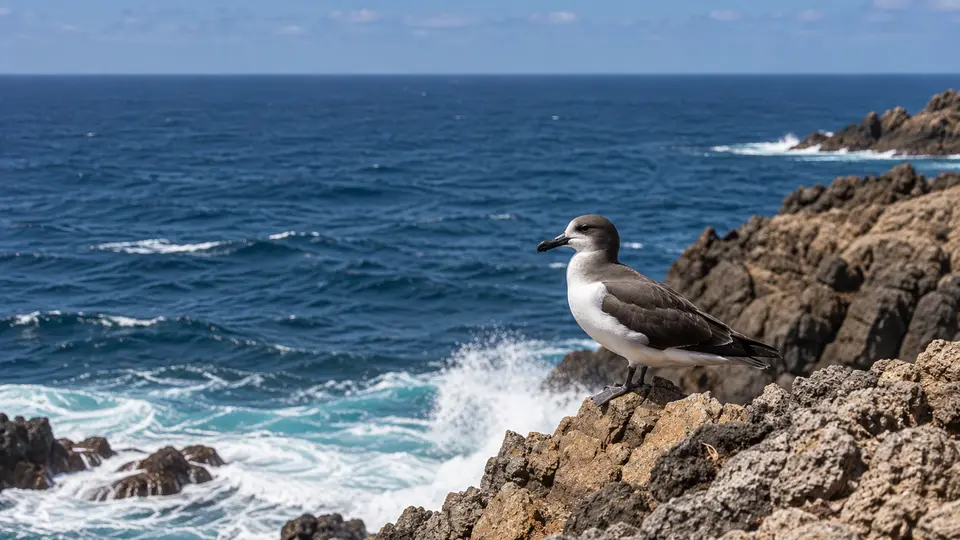
Cape Verde Shearwater in its natural habitatAI-modified

Cape Verde ShearwaterCalonectris edwardsiiWhere and when to see them

Cape Verde Shearwater at a glance

The Cape Verde shearwater is a seabird whose breeding range is confined to the Cape Verde archipelago. Smaller and more slender than its better-known Calonectris relatives, it spends much of its life over the tropical Atlantic. Birds return to remote island colonies to nest in sheltered cavities, often arriving after darkness. Historical harvesting and continuing pressures at colonies are conservation concerns, while artificial lighting can disorient young birds departing toward the sea.

Behaviour & reproduction

Size
40-45 cm (15.7-17.7 in) long; 110-125 cm (43.3-49.2 in) wingspan
Weight
400-700 g (14.1-24.7 oz)
Lifespan
Not reliably established
Status
Near Threatened

At sea, these shearwaters alternate stiff-winged glides with short sequences of wingbeats, often following wave contours. They may gather over feeding opportunities or form groups offshore before approaching colonies at night. Adults share incubation and chick provisioning, returning with food gathered far from the nest. Their noisy nocturnal colony visits contrast with their relatively silent appearance offshore, but access to nesting places is often difficult, restricted or inappropriate for casual visitors. Courtship rituals involve pairs engaging in mutual preening and elaborate aerial displays near their nesting sites. They are highly colonial breeders, forming dense aggregations in suitable nesting habitats. Vocalizations at the colony consist of eerie, wailing calls and croaks, especially active before dawn and after dusk.

Top wildlife locations

Cape Verde wildlife habitatAI-modified

Cape Verde

Exposed coastal headlands offer plausible views of passing shearwaters and offshore gatherings. Many breeding colonies occupy remote or restricted islets, so standard shore visits should focus on distant birds rather than colony access.
Destinations describe the species' habitat, not guaranteed cruise stops. Some animals require an optional inland excursion or are found in restricted reserves.

Fun facts about the Cape Verde Shearwater

  • It breeds only in Cape Verde.
  • It was formerly included within Cory's shearwater.
  • Adults usually approach nesting colonies after dark.
  • Departing fledglings can become grounded after attraction to artificial lights.

Best time to see the Cape Verde Shearwater

Roughly March to November encompasses much of the breeding-associated presence around Cape Verde, with local timing varying. This can improve the relevance of headland watches, not guarantee close views. Outside this period, many birds disperse widely across the Atlantic away from breeding islands. Peak chick-rearing activity typically occurs from June to September, making summer months particularly active around the breeding islands. Post-breeding, many birds migrate to rich Atlantic feeding grounds off the coasts of West Africa, North America, or even further afield. Tracking studies have revealed individuals traveling thousands of kilometers during this non-breeding dispersal phase.

Cape Verde Shearwater: season matrix by destination

Travel and observation windows vary by region. Highlighted months are an orientation for planning, not confirmed sightings or a guarantee of access.

Cape Verde

Broad breeding-associated presence around the archipelago; local colony schedules, wind and offshore feeding movements affect visibility.

JanFebMarAprMayJunJulAugSepOctNovDec
Cruise ships in Cape Verde

Where the Cape Verde Shearwater lives

Open Atlantic waters and productive seas around the archipelago provide feeding habitat. Nesting occurs in rocky crevices, burrows and sheltered spaces on islands and islets. Shore-based observers are most likely to see passing birds from exposed headlands rather than birds sitting visibly at nests. They are endemic to the Cape Verde archipelago, breeding on islands like Raso, Branco, Sal, and Boa Vista. During the breeding season, adults maintain strong fidelity to specific nesting sites, often returning to the same burrow or crevice year after year. These seabirds rely on the absence of terrestrial predators for successful nesting, making uninhabited islets crucial breeding grounds.

What the Cape Verde Shearwater eats

Small schooling fish, squid and other marine prey make up the diet, with food collected at or below the surface. Birds may exploit prey driven upward by larger predators. Availability varies with ocean conditions, influencing foraging distances and the timing of visits to chicks. Prey often consists of species like flying fish, sardines, anchovies, and squid, which are caught through surface-seizing or shallow plunge dives. Foraging efforts can extend hundreds of kilometers from the breeding colonies, demonstrating their capacity to exploit patchy marine resources. During the chick-rearing period, parents often target high-energy prey to ensure rapid growth.

Species at a glance

Common name
Cape Verde Shearwater
Scientific name
Calonectris edwardsii
Animal group
Birds
Size
40-45 cm (15.7-17.7 in) long; 110-125 cm (43.3-49.2 in) wingspan
Weight
400-700 g (14.1-24.7 oz)
Lifespan
Not reliably established
Status
Near Threatened
Identification
It is smaller and slimmer than Cory's and Scopoli's shearwaters, with a relatively slender, dusky bill rather than their conspicuous yellowish bills. Compared to larger shearwaters, its flight appears more agile and less ponderous, with quicker wingbeats. The underparts are white, sharply contrasting with the dark brown upperparts, including the underwing coverts. Note the absence of an obvious pale patch on the primary shafts often seen in Cory's and Scopoli's shearwaters.

Cape Verde Shearwater: frequently asked questions

Where can I see the Cape Verde Shearwater?
Cape Verde. Watch offshore flight lines from safe headlands or an existing deck. Avoid colony entry, flash photography and bright lights near nesting areas; report grounded light-disoriented birds to local wildlife responders rather than improvising release. Scanning the horizon with binoculars or a spotting scope from a vessel can reveal distant rafts of birds resting on the water. On land, dedicated night watches near known colonies are sometimes conducted by researchers but are generally not suitable or permitted for tourists due to disturbance risks. Look for their distinctive flight pattern, alternating between powerful wingbeats and long glides close to the water surface.
When is the best time to see the Cape Verde Shearwater?
Roughly March to November encompasses much of the breeding-associated presence around Cape Verde, with local timing varying. This can improve the relevance of headland watches, not guarantee close views. Outside this period, many birds disperse widely across the Atlantic away from breeding islands. Peak chick-rearing activity typically occurs from June to September, making summer months particularly active around the breeding islands. Post-breeding, many birds migrate to rich Atlantic feeding grounds off the coasts of West Africa, North America, or even further afield. Tracking studies have revealed individuals traveling thousands of kilometers during this non-breeding dispersal phase.
How big does the Cape Verde Shearwater get?
40-45 cm (15.7-17.7 in) long; 110-125 cm (43.3-49.2 in) wingspan. Adult weight: 400-700 g (14.1-24.7 oz). Size varies with age, sex and population.
How should I behave around the Cape Verde Shearwater?
Watch offshore flight lines from safe headlands or an existing deck. Avoid colony entry, flash photography and bright lights near nesting areas; report grounded light-disoriented birds to local wildlife responders rather than improvising release. Scanning the horizon with binoculars or a spotting scope from a vessel can reveal distant rafts of birds resting on the water. On land, dedicated night watches near known colonies are sometimes conducted by researchers but are generally not suitable or permitted for tourists due to disturbance risks. Look for their distinctive flight pattern, alternating between powerful wingbeats and long glides close to the water surface.
What does the Cape Verde Shearwater eat?
Small schooling fish, squid and other marine prey make up the diet, with food collected at or below the surface. Birds may exploit prey driven upward by larger predators. Availability varies with ocean conditions, influencing foraging distances and the timing of visits to chicks. Prey often consists of species like flying fish, sardines, anchovies, and squid, which are caught through surface-seizing or shallow plunge dives. Foraging efforts can extend hundreds of kilometers from the breeding colonies, demonstrating their capacity to exploit patchy marine resources. During the chick-rearing period, parents often target high-energy prey to ensure rapid growth.
Are wildlife sightings guaranteed on an adventure cruise?
No. Animals move freely and routes, weather, access restrictions and local conditions influence every outing. Confirm the actual itinerary and shore program before booking.

Compare wildlife in the same destinations

Explore other birds recorded in these destinations. Similar surroundings do not mean the animals share the same habits or viewing season.

Species comparison by animal group and destination
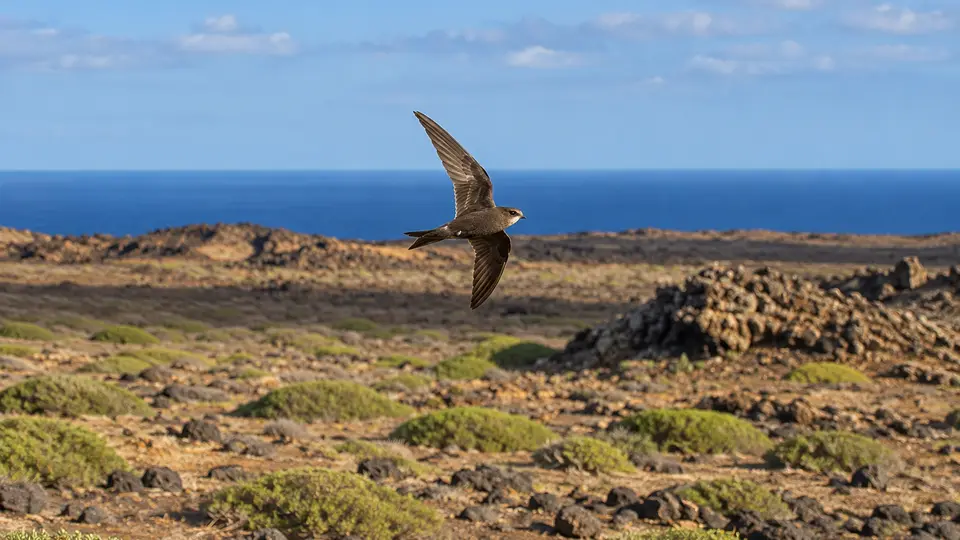
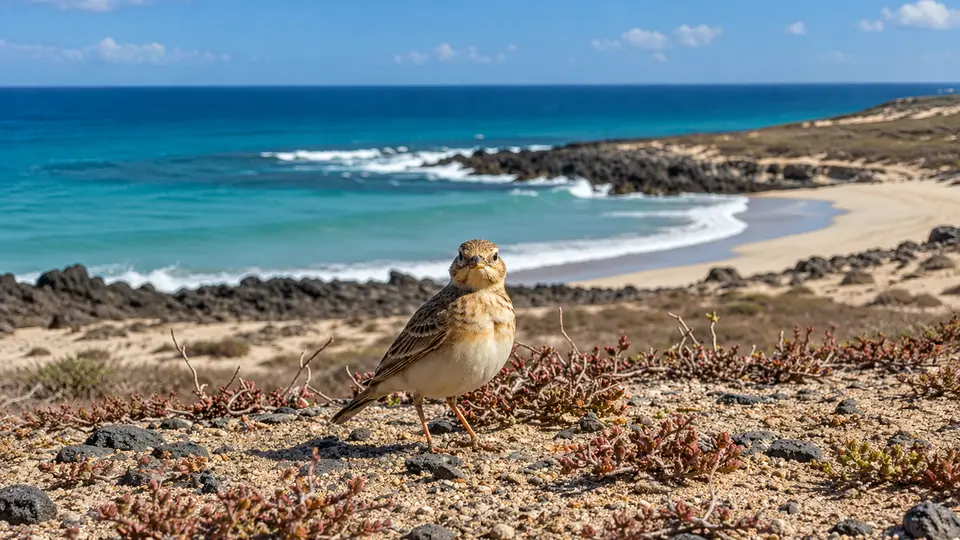
Cape Verde ShearwaterAI-modifiedCape Verde ShearwaterAlexander's SwiftAI-modifiedAlexander's SwiftBar-tailed LarkAI-modifiedBar-tailed Lark
Animal groupBirdsAnimal groupBirdsAnimal groupBirds
DestinationsCape VerdeDestinationsCape VerdeDestinationsCape Verde
Scientific nameCalonectris edwardsiiScientific nameScientific name
All wildlife destinations
AI-modified
Plan your trip

Find your next wildlife adventure

Compare destinations, shore programs and dates with the animals and habitats you would love to see.

  • Naturalist-led shore excursions
  • Responsible wildlife watching
  • Small expedition ships