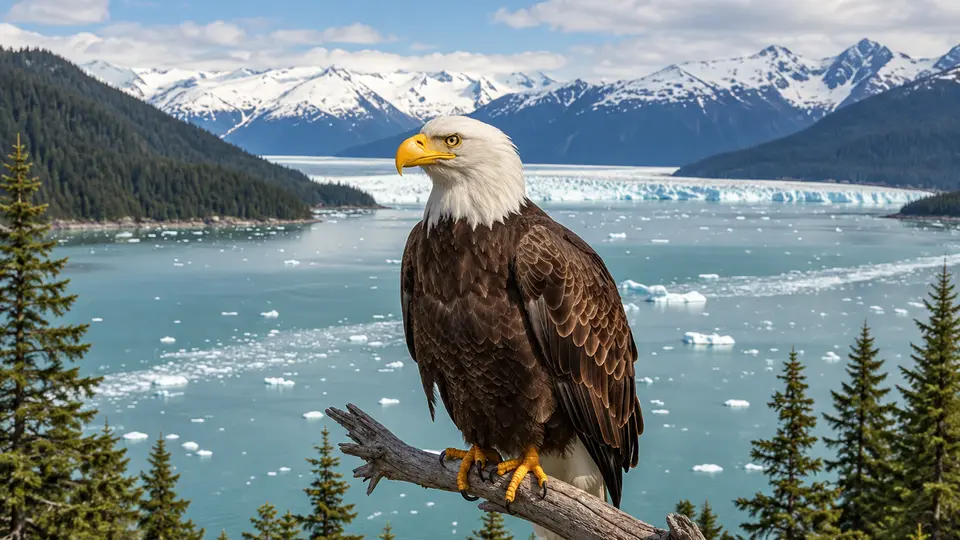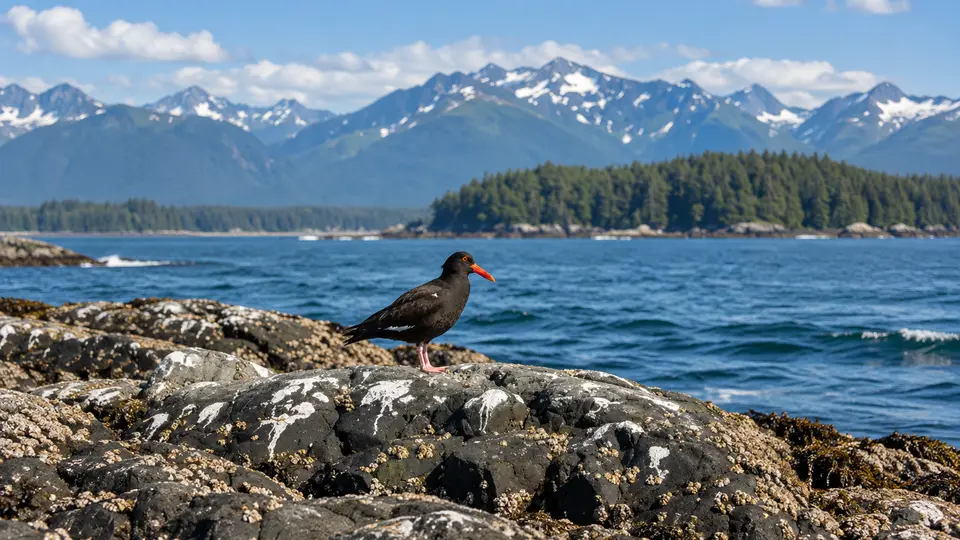
Black Oystercatcher in its natural habitat, AI illustration

Black Oystercatcher: where and when to see them

Haematopus bachmani

Black Oystercatcher at a glance

The black oystercatcher is a robust shorebird of the Pacific coast of North America. Its dark body contrasts sharply with a long orange-red bill, yellow eyes and pinkish legs. It is closely tied to rocky intertidal shores rather than broad inland wetlands. In Alaska, pairs occupy stretches of coast where exposed shellfish beds provide food and nearby gravel or rock offers nesting ground just above the reach of ordinary tides.

Behaviour & reproduction

Size
40–47 cm long
Weight
500–700 g
Lifespan
Not reliably established
Status
Least Concern

Pairs defend coastal territories with loud calls and conspicuous displays, often returning to the same area in successive years. Birds time much of their feeding to the exposure of intertidal prey. Their nests are shallow scrapes decorated with small stones or shell fragments. Chicks leave the nest soon after hatching but remain dependent on adults for food, learning the demanding techniques required to open and detach shellfish. Pairs maintain strong pair bonds and often reuse nesting territories for many years, exhibiting high site fidelity. Parents lead their precocial chicks to feeding areas shortly after hatching, teaching them crucial foraging skills during their extended period of parental care.

Top wildlife locations

Alaska wildlife habitat

Alaska

Rocky shores and gravel margins in southern and southeastern Alaska offer plausible coastal observation. Many island territories are inaccessible, while public shore paths can overlook feeding habitat without entering nesting areas.

Adventure cruises in Alaska
Destinations describe the species' habitat, not guaranteed cruise stops. Some animals require an optional inland excursion or are found in restricted reserves.

Fun facts about the Black Oystercatcher

  • Their range follows the Pacific coastline rather than spanning inland North America.
  • Young chicks receive food from their parents instead of feeding independently at once.
  • Pairs often reuse coastal territories for many years.
  • Shellfish-opening methods differ according to the prey being handled.

Best time to see the Black Oystercatcher

May through August offers long daylight and breeding activity along occupied Alaskan coasts. Some birds remain year-round where conditions allow, but winter weather reduces practical access. Low or falling tides often matter more for seeing feeding behaviour than the calendar alone. During summer cruises, morning and late afternoon are prime times to spot oystercatchers actively feeding as tides recede. Their loud calls, especially during breeding, make them easier to locate even before spotting them.

Black Oystercatcher: season matrix by destination

Travel and observation windows vary by region. Highlighted months are an orientation for planning, not confirmed sightings or a guarantee of access.

Alaska

Summer improves coastal access and daylight; local tides, weather and territory occupancy govern actual viewing opportunities.

JanFebMarAprMayJunJulAugSepOctNovDec
Cruise ships in Alaska

Where the Black Oystercatcher lives

This species favours rocky intertidal shores, offshore islands, wave-cut platforms and gravel beaches adjoining productive shellfish beds. Nesting occurs above the usual high-tide line. Sheltered bays and exposed outer coasts can both be occupied where feeding surfaces and safe resting places coexist. In Alaska, these birds are particularly common in the Kodiak Archipelago, Aleutian Islands, and Southeast Alaska's intricate coastline, utilizing thousands of miles of suitable shoreline. The presence of suitable nesting sites, often small islets or rocky outcrops, is critical within these productive intertidal zones.

What the Black Oystercatcher eats

Black oystercatchers eat mussels, limpets and other intertidal invertebrates, including chitons and marine worms. They use their strong bills to prise, sever or hammer prey. Feeding success depends on tidal exposure and the bird's ability to handle different shell types. They have specialized bill morphology adapted for consuming sessile invertebrates, with a laterally compressed and blunted tip ideal for prying. While mussels and limpets are primary, they also consume barnacles and gastropods, adapting their diet to local prey availability.

Species at a glance

Common name
Black Oystercatcher
Scientific name
Haematopus bachmani
Animal group
Birds
Size
40–47 cm long
Weight
500–700 g
Lifespan
Not reliably established
Status
Least Concern
Identification
Unlike the partly white American oystercatcher, the black oystercatcher has an entirely dark body with no white belly or conspicuous white wing stripe. The black oystercatcher is the only entirely dark oystercatcher species found along the Pacific coast of North America, distinguishing it from the pied American oystercatcher of the Atlantic. Its bright red-orange bill, pink legs, and yellow eye with an orange eye-ring are striking field marks against its sooty black plumage.

Black Oystercatcher: frequently asked questions

Where can I see the Black Oystercatcher?
Alaska. Observe from stable shore paths and stay clear of the upper beach around territorial pairs. Do not approach chicks or shell-lined scrapes, and watch for slippery rocks, rising tides and wave surges. When observing from a vessel, scan rocky shorelines and kelp beds during low tide for their distinctive dark silhouettes. Binoculars are essential for appreciating their vivid orange bills and eye rings, even at a distance.
When is the best time to see the Black Oystercatcher?
May through August offers long daylight and breeding activity along occupied Alaskan coasts. Some birds remain year-round where conditions allow, but winter weather reduces practical access. Low or falling tides often matter more for seeing feeding behaviour than the calendar alone. During summer cruises, morning and late afternoon are prime times to spot oystercatchers actively feeding as tides recede. Their loud calls, especially during breeding, make them easier to locate even before spotting them.
How big does the Black Oystercatcher get?
40–47 cm long. Adult weight: 500–700 g. Size varies with age, sex and population.
How should I behave around the Black Oystercatcher?
Observe from stable shore paths and stay clear of the upper beach around territorial pairs. Do not approach chicks or shell-lined scrapes, and watch for slippery rocks, rising tides and wave surges. When observing from a vessel, scan rocky shorelines and kelp beds during low tide for their distinctive dark silhouettes. Binoculars are essential for appreciating their vivid orange bills and eye rings, even at a distance.
What does the Black Oystercatcher eat?
Black oystercatchers eat mussels, limpets and other intertidal invertebrates, including chitons and marine worms. They use their strong bills to prise, sever or hammer prey. Feeding success depends on tidal exposure and the bird's ability to handle different shell types. They have specialized bill morphology adapted for consuming sessile invertebrates, with a laterally compressed and blunted tip ideal for prying. While mussels and limpets are primary, they also consume barnacles and gastropods, adapting their diet to local prey availability.
Are wildlife sightings guaranteed on an adventure cruise?
No. Animals move freely and routes, weather, access restrictions and local conditions influence every outing. Confirm the actual itinerary and shore program before booking.

Compare wildlife in the same destinations

Explore other birds recorded in these destinations. Similar surroundings do not mean the animals share the same habits or viewing season.

Species comparison by animal group and destination
Black OystercatcherBlack OystercatcherArctic TernArctic TernBald EagleBald Eagle
Animal groupBirdsAnimal groupBirdsAnimal groupBirds
DestinationsAlaskaDestinationsAlaska, Norway, ArcticDestinationsAlaska, Florida, New England
All wildlife destinations
Plan your trip

Find your next wildlife adventure

Compare destinations, shore programs and dates with the animals and habitats you would love to see.

  • Naturalist-led shore excursions
  • Responsible wildlife watching
  • Small expedition ships

Newsletter

Take Blue Rides with you

Adventure cruise offers, last-minute deals and trip inspiration.

Free, unsubscribe anytime. Details: Privacy Policy

Partner with Blue Rides

Affiliate Program

Recommend adventure cruises and earn commission on every confirmed booking.

Share. Track. Earn.

Your footage, our stage

Send us your videos or pictures.

Captured beautiful landscapes or wildlife? Share your videos and pictures with us, we may feature them on Blue Rides.