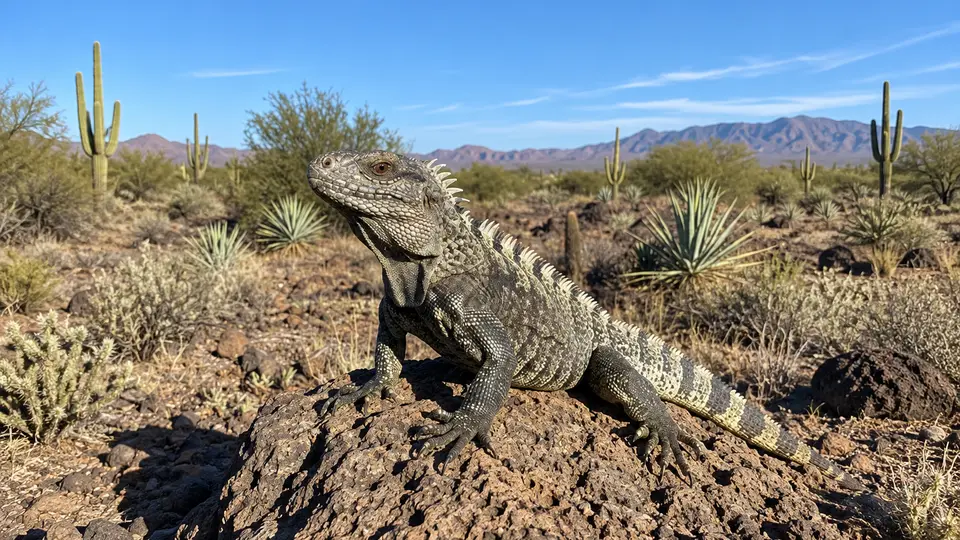
Black Spiny-tailed Iguana in its natural habitatAI-modified

Black Spiny-tailed IguanaCtenosaura similisWhere and when to see them

Black Spiny-tailed Iguana at a glance

The black spiny-tailed iguana is a large, sun-loving lizard native to parts of Mexico and Central America. Adults are usually greyish with dark bands, while juveniles can be conspicuously green. Rows of enlarged, keeled scales encircle the tail and give the species its common name. It often thrives around rocky openings and older structures, but Mexico contains several related iguanas, so a dark, spiny-tailed animal is not automatically this species.

Behaviour & reproduction

Size
60–120 cm (24–47 in) total length
Weight
0.29–1.41 kg (0.65–3.1 lb) (related species)
Lifespan
Up to 22.4 years in captivity
Status
Least Concern

These iguanas emerge to bask, raising their body temperature before feeding and moving through their territory. They retreat quickly into rock crevices, burrows or other secure shelters when alarmed. Males use head movements and body displays during social encounters, particularly around breeding. Young animals are more insect-oriented and often use vegetation extensively, while larger adults spend much time on the ground or exposed rocks near dependable refuge sites. These lizards are primarily diurnal, active during the day when they forage and bask in the sun to regulate their body temperature. They are excellent climbers and can often be seen in trees or on walls, even though adults spend significant time on the ground.

Top wildlife locations

Mexico wildlife habitatAI-modified

Mexico

Coastal scrub, rocky ground and permitted visitor paths in southeastern Mexico offer plausible habitat. Other spiny-tailed iguanas occur elsewhere, so identification needs care; suitable sites may require a local inland excursion.
Destinations describe the species' habitat, not guaranteed cruise stops. Some animals require an optional inland excursion or are found in restricted reserves.

Fun facts about the Black Spiny-tailed Iguana

  • Juveniles may be green even though adults are predominantly grey and dark-banded.
  • Enlarged tail scales form conspicuous defensive rings.
  • Their diet shifts toward more plant material as they mature.
  • Females lay eggs in excavated ground nests.

Best time to see the Black Spiny-tailed Iguana

In southeastern Mexico, the drier months often provide comfortable access and reliable basking weather. Iguanas can be active year-round when temperatures permit. Local heat, cloud cover and rainfall affect visibility, and this travel window should not be read as a universal breeding calendar. While iguanas are active year-round in tropical climates, the dry season often provides clearer paths for exploration and reduces the chances of encountering mosquitos. Early mornings are typically best for observation as iguanas emerge to warm themselves, becoming less visible during the midday heat.

Black Spiny-tailed Iguana: season matrix by destination

Travel and observation windows vary by region. Highlighted months are an orientation for planning, not confirmed sightings or a guarantee of access.

Mexico

These generally drier months suit travel in much of the southeastern range; local weather and basking conditions matter more than a fixed seasonal appearance.

JanFebMarAprMayJunJulAugSepOctNovDec
Cruise ships in Mexico

Where the Black Spiny-tailed Iguana lives

Natural habitat includes seasonally dry woodland, scrub, rocky slopes and coastal lowlands with open basking areas. The species also occupies disturbed ground and suitable masonry. Shelter availability is important, and humid closed forest without sunny openings is generally less characteristic habitat. They are often found in coastal areas, including beaches and rocky shorelines, where they can exploit abundant food resources and basking sites. This species is highly adaptable and can thrive in human modified environments such as gardens, ruins, and urban parks, demonstrating a broad ecological tolerance.

What the Black Spiny-tailed Iguana eats

Adults eat substantial amounts of leaves, flowers and fruit, supplemented opportunistically with insects and other animal material. Juveniles consume proportionally more invertebrates. Diet changes with age and seasonal food supply, so describing the species as strictly herbivorous would be misleading. Their opportunistic diet often includes fallen fruits from trees like figs and palm fruits, which become a major food source during certain seasons. In addition to plants and insects, they may occasionally consume small vertebrates or carrion, highlighting their flexible feeding strategy.

Species at a glance

Common name
Black Spiny-tailed Iguana
Scientific name
Ctenosaura similis
Animal group
Reptiles
Size
60–120 cm (24–47 in) total length
Weight
0.29–1.41 kg (0.65–3.1 lb) (related species)
Lifespan
Up to 22.4 years in captivity
Status
Least Concern
Identification
Compared with green iguanas, black spiny-tailed iguanas have strongly ringed, spiny tails and lack the green iguana's large round scale below each ear opening. Beyond the spiny tail, their overall coloration varies from gray to brownish-black, often with lighter banding on the body, especially in juveniles. Adult males can develop a distinct dorsal crest of spines along their back, making them visually striking.

Black Spiny-tailed Iguana: frequently asked questions

Where can I see the Black Spiny-tailed Iguana?
Mexico. Watch basking animals from a path without blocking their retreat holes. Never feed or handle them: strong jaws, claws and a spiny tail can cause injury, especially when an animal feels cornered. Approach slowly and quietly, using binoculars for a closer look without disturbing their natural activities. Keep a respectful distance, especially if they are near their retreat, to avoid causing stress or prompting them to flee.
When is the best time to see the Black Spiny-tailed Iguana?
In southeastern Mexico, the drier months often provide comfortable access and reliable basking weather. Iguanas can be active year-round when temperatures permit. Local heat, cloud cover and rainfall affect visibility, and this travel window should not be read as a universal breeding calendar. While iguanas are active year-round in tropical climates, the dry season often provides clearer paths for exploration and reduces the chances of encountering mosquitos. Early mornings are typically best for observation as iguanas emerge to warm themselves, becoming less visible during the midday heat.
How big does the Black Spiny-tailed Iguana get?
60–120 cm (24–47 in) total length. Adult weight: 0.29–1.41 kg (0.65–3.1 lb) (related species). Size varies with age, sex and population.
How should I behave around the Black Spiny-tailed Iguana?
Watch basking animals from a path without blocking their retreat holes. Never feed or handle them: strong jaws, claws and a spiny tail can cause injury, especially when an animal feels cornered. Approach slowly and quietly, using binoculars for a closer look without disturbing their natural activities. Keep a respectful distance, especially if they are near their retreat, to avoid causing stress or prompting them to flee.
What does the Black Spiny-tailed Iguana eat?
Adults eat substantial amounts of leaves, flowers and fruit, supplemented opportunistically with insects and other animal material. Juveniles consume proportionally more invertebrates. Diet changes with age and seasonal food supply, so describing the species as strictly herbivorous would be misleading. Their opportunistic diet often includes fallen fruits from trees like figs and palm fruits, which become a major food source during certain seasons. In addition to plants and insects, they may occasionally consume small vertebrates or carrion, highlighting their flexible feeding strategy.
Are wildlife sightings guaranteed on an adventure cruise?
No. Animals move freely and routes, weather, access restrictions and local conditions influence every outing. Confirm the actual itinerary and shore program before booking.

Compare wildlife in the same destinations

Explore other reptiles recorded in these destinations. Similar surroundings do not mean the animals share the same habits or viewing season.

Species comparison by animal group and destination
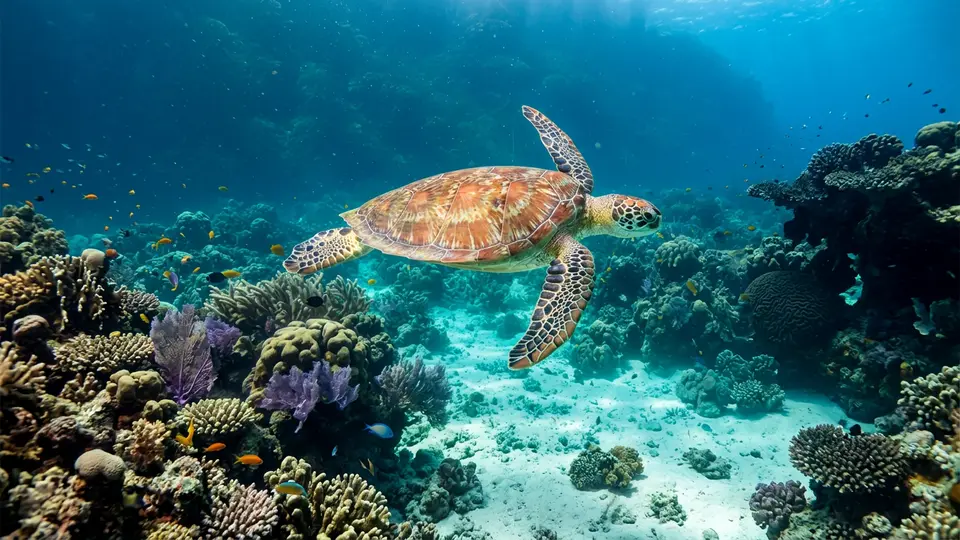
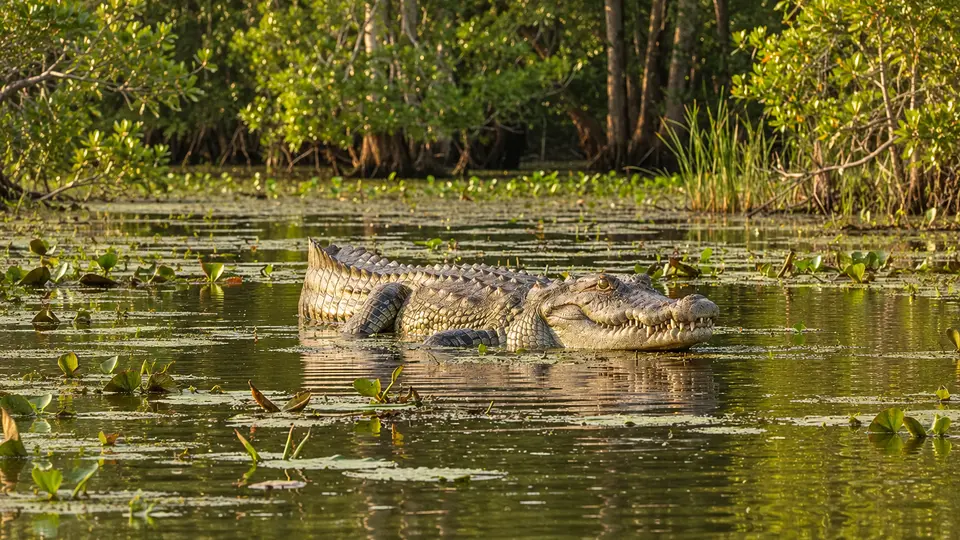
Black Spiny-tailed IguanaAI-modifiedBlack Spiny-tailed IguanaGreen Sea TurtleAI-modifiedGreen Sea TurtleMorelet's CrocodileAI-modifiedMorelet's Crocodile
Animal groupReptilesAnimal groupReptilesAnimal groupReptiles
DestinationsMexicoDestinationsCosta Rica, Florida, Galapagos, Mexico, Cape Verde, Egypt, Greece, Seychelles, Turkey, Indonesia, Maldives, Thailand, Vietnam, Australia, Fiji, PolynesiaDestinationsMexico
Scientific nameCtenosaura similisScientific nameScientific name
All wildlife destinations
AI-modified
Plan your trip

Find your next wildlife adventure

Compare destinations, shore programs and dates with the animals and habitats you would love to see.

  • Naturalist-led shore excursions
  • Responsible wildlife watching
  • Small expedition ships