Dive the legendary Spice Islands for pristine reefs, huge pelagics, and schooling hammerheads.
Welcome to the Banda Sea, the heart of Indonesia's historic Spice Islands and a true frontier of diving. This isn't your average dive trip; it's an expedition into a vast, remote wilderness defined by volcanic islands, deep oceanic trenches, and unparalleled marine biodiversity. Liveaboards are the only way to access this region's signature sites, from the legendary schooling hammerheads at the 'Ring of Fire' to the unique sea snake aggregations at Manuk and the world-class muck diving in Ambon Bay. The sheer scale and health of the ecosystem are staggering, with walls of fish and reefs that have remained untouched for decades.
Getting here is an adventure in itself, and the diving rewards those who make the journey. With very specific seasons dictated by the monsoons, planning is key. We've curated this list by focusing on vessels with the range, safety, and expert crews required to navigate these waters. Each liveaboard has been hand-picked based on their proven itineraries, dive operation quality, and overall value, ensuring you have the trip of a lifetime.
 #1
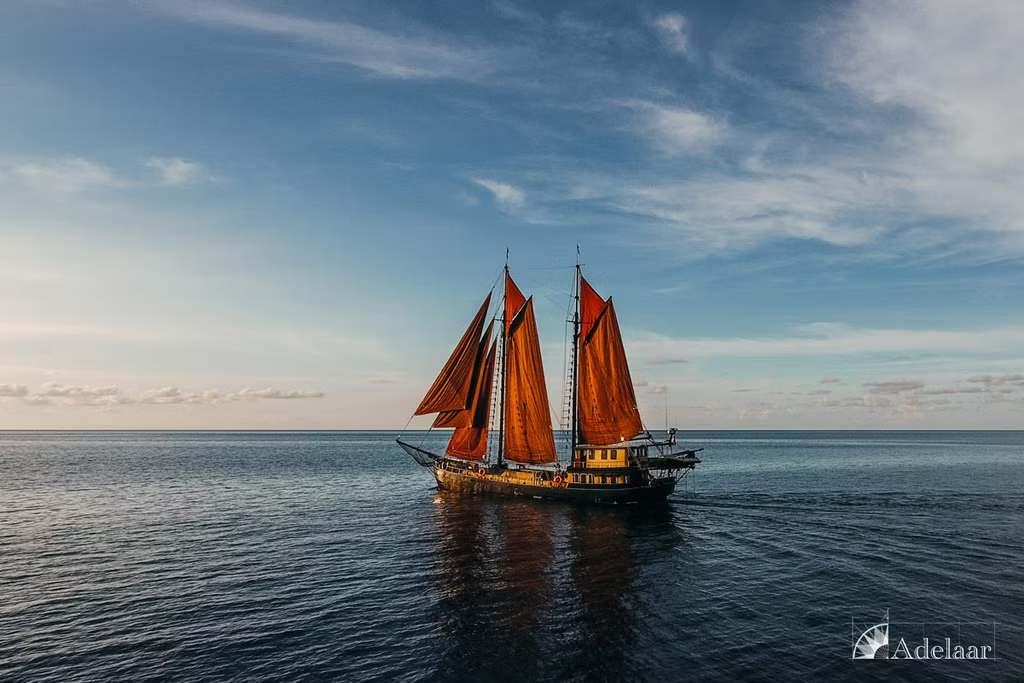
#1With an exceptional staff-to-passenger ratio and quiet elegance, Adelaar offers an intimate, luxurious dive experience through Raja Ampat's vibrant marine ecosystems.
 #2
#2The Amaya Explorer offers an unparalleled luxurious Phinisi experience specifically designed to navigate the rich, diverse waters of the Banda Sea, making it a top pick for discerning divers.
 #3
#3The Calico Jack offers an authentic Indonesian Phinisi experience in the Banda Sea. It's perfectly designed to explore some of the planet's most concentrated and diverse marine life.
 #4
#4Coralia, an elegant 48-meter vessel, offers expert-led diving and navigates the Banda Sea's thriving reefs, providing an exceptional experience for discovering Indonesia's underwater biodiversity.
 #5
#5The Damai I offers unparalleled luxury and service, making it the top choice for exploring the remote beauty and pristine diving of the Banda Sea with exceptional comfort.
 #6
#6Indulge in unparalleled opulence aboard this 154-foot masterpiece. With bespoke voyages and world-class amenities, the Damai II offers an exclusive and serene exploration of Komodo's vibrant waters for the discerning diver.
 #7
#7The Dewi Nusantara stands out for its luxurious suites and unwavering commitment to safety, ensuring an opulent and secure exploration of the Banda Sea's vibrant waters.
 #8
#8DUNE Aurora excels in navigating the Banda Sea's diverse underwater landscapes, offering unparalleled access to its rich pelagic and macro marine life. Its integrated transport ensures a seamless and immersive diving experience.
 #9
#9The Emperor Harmoni offers a top-tier experience exploring Raja Ampat's unparalleled biodiversity. Its all-inclusive rates ensure a seamless, high-end diving adventure through this intricate region's diverse ecosystems.
 #10
#10The 'Emperor Raja Laut' is perfectly suited for navigating Raja Ampat's unparalleled marine biodiversity, offering an intimate journey into its vibrant, nutrient-rich waters and a truly immersive experience.
The Banda Sea has two distinct, short diving seasons. The best and most popular window is from September to early December. This period offers the chance to see schooling hammerheads as cooler waters bring them to shallower depths, along with great visibility. A secondary season runs from March to April, which usually has calmer sea conditions but hammerhead sightings are less predictable. The months between are dominated by monsoons, making the area largely undiveable.
A reliable vessel is non-negotiable for a Banda Sea trip. You're covering vast distances in open ocean, so look for larger, steel-hulled boats that offer stability and range. Because many top sites are exposed pinnacles, powerful and sturdy dive tenders (RIBs) are essential for safe drop-offs and pick-ups. Nitrox is highly recommended to maximize your bottom time on incredible deep reefs. Finally, a spacious, well-organized dive deck makes a huge difference in comfort and prep time on a trip with 3-4 dives a day.
Banda Sea itineraries are typically longer, ranging from 10 to 12 nights, to justify the travel time and cover the distances between key areas like Ambon, the Banda Islands, and the ‘Ring of Fire’. Prices generally fall into the mid-to-upper range, from about $4,000 to $7,500+ USD, reflecting the vessel quality, trip length, and remote logistics. Some 'crossing' trips combine the Banda Sea with Raja Ampat or Alor, offering even more variety on a longer, one-way journey.
Don't underestimate the long, open-ocean crossings; if you're prone to motion sickness, come prepared. Flights into the main departure port of Ambon (AMQ) can be limited, so book well in advance. A common mistake is choosing too short an itinerary, which may skip essential areas. Finally, read the itinerary details carefully—some trips focus heavily on the pelagic action of the outer rings, while others spend more time on the muck and reef diving closer to the main islands. Know your priorities and pick a route that matches.
The prime season for schooling scalloped hammerheads is from September through November. During these months, cooler upwellings in the remote 'Ring of Fire' attract large aggregations to the seamounts. Visibility is often excellent, though conditions can be challenging. Booking a liveaboard itinerary that specifically targets these volcanic islands is your best bet for this incredible encounter.
The Banda Sea is generally recommended for experienced divers. Many of the premier dive sites feature strong, unpredictable currents, deep profiles, and open-ocean conditions. An Advanced Open Water certification with at least 50 logged dives is a common prerequisite. The remote nature of the destination also means that divers should be self-sufficient and comfortable in challenging water.
The biodiversity is astounding. Expect to see massive schools of jacks and fusiliers, giant trevally, Napoleon wrasse, dogtooth tuna, and numerous reef sharks. The volcanic island of Gunung Api is famous for its congregating sea snakes. The region also boasts incredible macro life, particularly in Ambon Bay, where you can find Ambon scorpionfish, rhinopias, frogfish, and a host of other rare critters.
Most liveaboards depart from or return to Ambon (airport code: AMQ) in the Maluku Islands. To get there, you'll typically fly internationally to Jakarta (CGK) or Bali (DPS), then take a domestic flight to Ambon. Some special 'crossing' voyages may start or end in other ports like Sorong (SOQ) for Raja Ampat or Maumere (MOF) for Komodo, so always confirm your specific itinerary's ports before booking flights.
Yes, most itineraries include a fascinating land tour of the Banda Islands themselves. These were the original 'Spice Islands' at the center of the global nutmeg trade. You can walk through historic nutmeg plantations, explore centuries-old Dutch colonial forts, and immerse yourself in the rich, complex history of the region. It’s a fantastic cultural highlight that beautifully complements the diving.