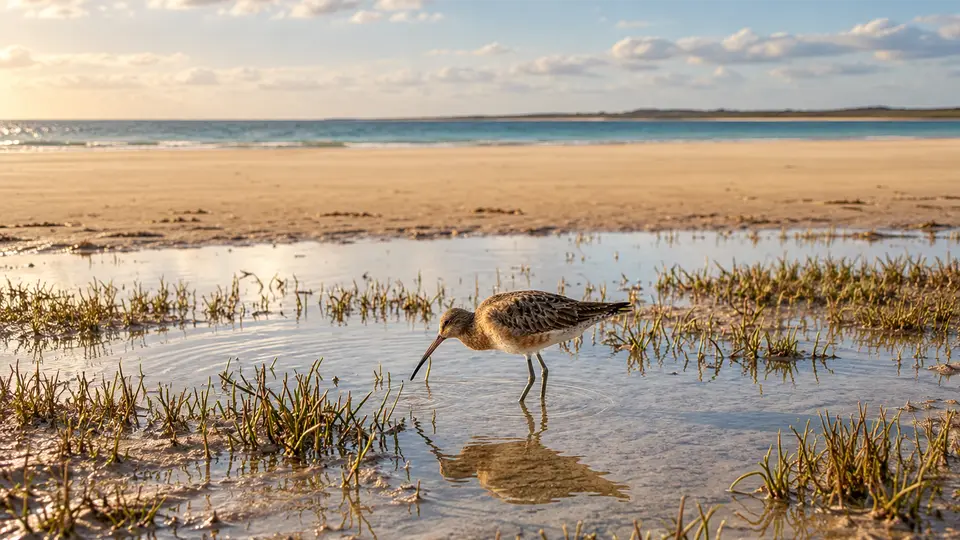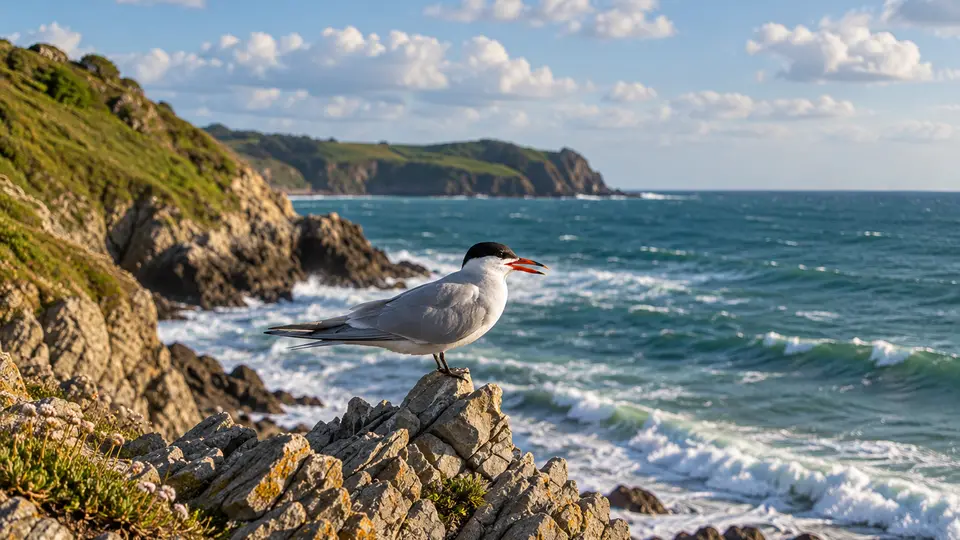
White-fronted tern in its natural habitat, AI illustration
Size35-43 cm long; wingspan 79-82 cmLifespanNot reliably establishedStatusLeast Concern

White-fronted tern: where and when to see them

Sterna striata

White-fronted tern at a glance

The white-fronted tern is a slender coastal seabird closely associated with New Zealand, where it is the most widespread breeding tern. Adults have pale gray upperparts, white underparts, a black cap and a narrow white forehead above the bill. Long tail streamers contribute to its elegant flight. Colonies can occupy exposed beaches, shingle spits and rocky ground, making eggs and chicks vulnerable to disturbance, predators and unusually high tides.

Behaviour & reproduction

Size
35-43 cm long; wingspan 79-82 cm
Weight
120-160 g
Lifespan
Not reliably established
Status
Least Concern

White-fronted terns search for fish in buoyant flight, often hovering briefly before plunging toward the surface. They may gather into feeding flocks when prey is concentrated by currents or other predators. Courtship includes fish presentation, and nesting birds defend colonies with noisy aerial passes. After breeding, many disperse along coasts, with some reaching southeastern Australia, while others remain within New Zealand waters throughout the year as residents. They are highly social birds, forming large, noisy colonies for breeding and often feeding in cooperative flocks. During courtship, males perform aerial displays and present fish to potential mates as a key part of pair-bonding.

Top wildlife locations

New Zealand wildlife habitat

New Zealand

Harbor margins, sandy spits and rocky coastal viewpoints provide plausible viewing across much of New Zealand. Nesting beaches may have seasonal exclusions, and offshore colonies are not necessarily accessible to ordinary shore visitors.

Adventure cruises in New Zealand

Destinations describe the species' habitat, not guaranteed cruise stops. Some animals require an optional inland excursion or are found in restricted reserves.

Fun facts about the White-fronted tern

  • Its Māori name is tara.
  • Some birds disperse from New Zealand to southeastern Australia after breeding.
  • Courtship feeding involves a male presenting a fish to a female.
  • Pairs usually place their eggs in a simple scrape rather than a built nest.

Best time to see the White-fronted tern

Spring and summer, broadly October through February, offer opportunities to observe breeding activity in New Zealand from permitted viewpoints. Birds also occur outside this period, although dispersal changes local numbers. Colony positions and nesting success vary, so follow current access notices rather than old site descriptions. Prime viewing for active colonies is during the spring and summer breeding season, when thousands can congregate at favored sites. During the non-breeding season, smaller groups or individual birds can still be sighted along the coast.

White-fronted tern: season matrix by destination

Travel and observation windows vary by region. Highlighted months are an orientation for planning, not confirmed sightings or a guarantee of access.

New Zealand

This window combines spring-summer shore travel with much breeding activity; birds occur year-round, and local colony timing varies.

JanFebMarAprMayJunJulAugSepOctNovDec
Cruise ships in New Zealand

Where the White-fronted tern lives

Coastal waters, harbors, estuaries and exposed shorelines provide feeding and resting habitat. Colonies occur on sand, shingle, shell banks and rocky islands, usually near productive marine waters. Roosts and nesting areas can shift when storms or predators make previous sites unsuitable. They prefer undisturbed sites for breeding, often choosing offshore islands or remote stretches of coast. Nests are shallow scrapes in sand or shingle, sometimes lined with small debris, offering little protection from the elements.

What the White-fronted tern eats

Small schooling fish are the main food, especially species available close to the surface. Some marine invertebrates are also taken. Adults carry fish individually to mates or chicks, making repeated food deliveries an informative behavior to watch from outside colony boundaries. Their diet primarily consists of anchovies, pilchards, and other small pelagic fish, which they catch by plunge-diving from heights up to 10 meters. Opportunistic feeding also includes krill and marine worms when available.

Species at a glance

Common name
White-fronted tern
Scientific name
Sterna striata
Animal group
Birds
Size
35-43 cm long; wingspan 79-82 cm
Weight
120-160 g
Lifespan
Not reliably established
Status
Least Concern
Identification
Its black bill, narrow white forehead and long tail distinguish it from the much larger red-billed Caspian tern and the smaller black-fronted tern. Juveniles are distinguished by mottled brown plumage on their back and crown, gradually acquiring adult coloration over their first year. In flight, their long, pointed wings and forked tail are distinctive characteristics.

White-fronted tern: frequently asked questions

Where can I see the White-fronted tern?
New Zealand. Use marked paths and stay outside colony fencing. Camouflaged eggs can be difficult to see on shingle; if birds repeatedly alarm or dive toward you, retreat immediately and keep dogs away from nesting shores. When viewing from a vessel, use binoculars to observe their characteristic plunge-diving behavior from a respectful distance. Colony sites may be sensitive to disturbance, so always follow local guide instructions and designated viewing zones.
When is the best time to see the White-fronted tern?
Spring and summer, broadly October through February, offer opportunities to observe breeding activity in New Zealand from permitted viewpoints. Birds also occur outside this period, although dispersal changes local numbers. Colony positions and nesting success vary, so follow current access notices rather than old site descriptions. Prime viewing for active colonies is during the spring and summer breeding season, when thousands can congregate at favored sites. During the non-breeding season, smaller groups or individual birds can still be sighted along the coast.
How big does the White-fronted tern get?
35-43 cm long; wingspan 79-82 cm. Adult weight: 120-160 g. Size varies with age, sex and population.
How should I behave around the White-fronted tern?
Use marked paths and stay outside colony fencing. Camouflaged eggs can be difficult to see on shingle; if birds repeatedly alarm or dive toward you, retreat immediately and keep dogs away from nesting shores. When viewing from a vessel, use binoculars to observe their characteristic plunge-diving behavior from a respectful distance. Colony sites may be sensitive to disturbance, so always follow local guide instructions and designated viewing zones.
What does the White-fronted tern eat?
Small schooling fish are the main food, especially species available close to the surface. Some marine invertebrates are also taken. Adults carry fish individually to mates or chicks, making repeated food deliveries an informative behavior to watch from outside colony boundaries. Their diet primarily consists of anchovies, pilchards, and other small pelagic fish, which they catch by plunge-diving from heights up to 10 meters. Opportunistic feeding also includes krill and marine worms when available.
Are wildlife sightings guaranteed on an adventure cruise?
No. Animals move freely and routes, weather, access restrictions and local conditions influence every outing. Confirm the actual itinerary and shore programme before booking.

Compare wildlife in the same destinations

Explore other birds recorded in these destinations. Similar surroundings do not mean the animals share the same habits or viewing season.

Species comparison by animal group and destination
White-fronted ternWhite-fronted ternAustralasian gannetAustralasian gannetBar-tailed godwitBar-tailed godwit
Animal groupBirdsAnimal groupBirdsAnimal groupBirds
DestinationsNew ZealandDestinationsNew ZealandDestinationsAustralia, New Zealand
All wildlife destinations
Plan your trip

Find your next wildlife adventure

Compare destinations, shore programmes and dates with the animals and habitats you would love to see.

  • Naturalist-led shore excursions
  • Responsible wildlife watching
  • Small expedition ships

Newsletter

Take Blue Rides with you

Adventure cruise offers, last-minute deals and trip inspiration.

Free, unsubscribe anytime. Details: Privacy Policy

Partner with Blue Rides

Affiliate Program

Recommend adventure cruises and earn commission on every confirmed booking.

Share. Track. Earn.