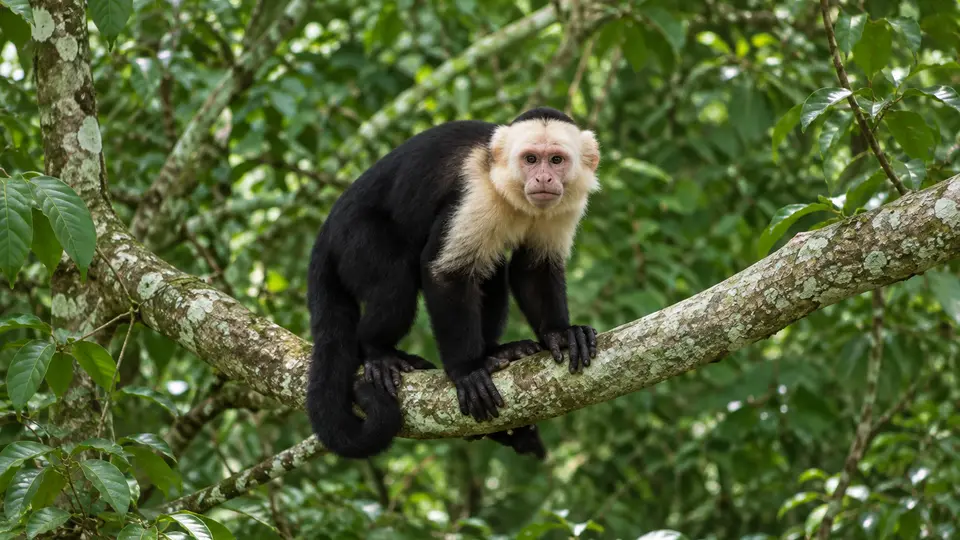
White-headed Capuchin in its natural habitat, AI illustration

White-headed Capuchin: where and when to see them

Cebus imitator

White-headed Capuchin at a glance

Costa Rica's white-headed capuchin is the Panamanian white-faced capuchin, Cebus imitator, distinguished taxonomically from the closely related Colombian species. Its pale face, throat and shoulders contrast with a dark body and crown. This intelligent, adaptable monkey occupies several forest types, including forests near the coast. Adaptability does not eliminate conservation concerns: habitat loss, capture and inappropriate feeding can disrupt populations and create dangerous interactions between monkeys and people at busy visitor sites.

Behaviour & reproduction

Size
33-45 cm head-body; tail 35-55 cm
Weight
2-4 kg
Lifespan
Not reliably established
Status
Vulnerable

Capuchins live in social groups and spend much of the day searching trees and ground-level vegetation for varied foods. Their nimble hands open fruit, probe crevices and manipulate objects. Social relationships involve grooming, alliances and competition, with females commonly remaining in their birth group. Individuals learn foraging habits from experience and companions. Near people, bold food-seeking behavior is usually a sign of learned opportunity, not an invitation to interact. Capuchins live in social groups and spend much of the day searching trees and ground-level vegetation for varied foods. Their nimble hands open fruit, probe crevices and manipulate objects. Social relationships involve grooming, alliances and competition, with females commonly remaining in their birth group. Individuals learn foraging habits from experience and companions. Near people, bold food-seeking behavior is usually a sign of learned opportunity, not an invitation to interact. Group sizes typically range from 10 to 20 individuals, led by a dominant male. They exhibit complex problem-solving skills, including using tools like rocks to crack nuts.

Top wildlife locations

Costa Rica wildlife habitat

Costa Rica

Protected coastal forests and mangrove-adjacent trails offer plausible viewing, but a guided terrestrial excursion may be needed from shore access. Groups move widely, and visitors should avoid any site encouraging feeding or handling.

Adventure cruises in Costa Rica
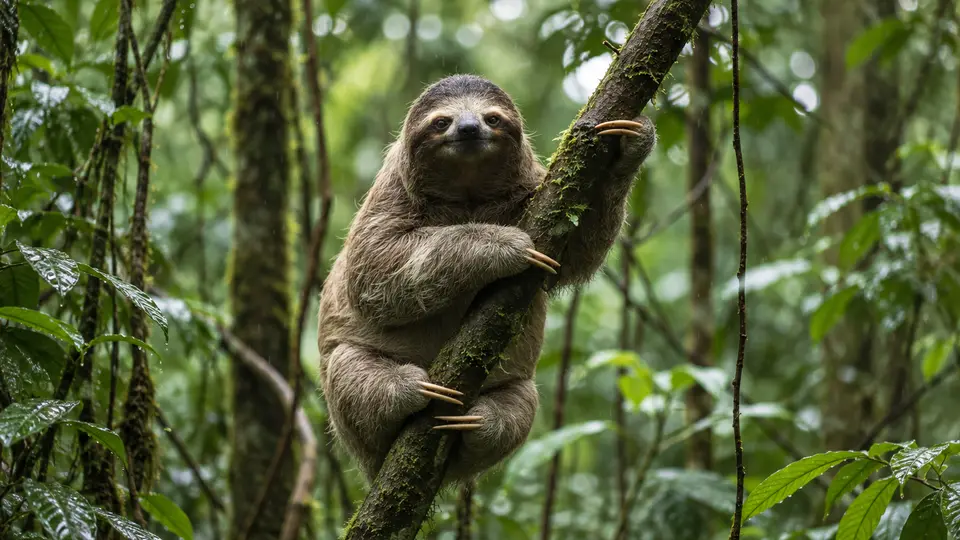
Destinations describe the species' habitat, not guaranteed cruise stops. Some animals require an optional inland excursion or are found in restricted reserves.

Fun facts about the White-headed Capuchin

  • Its prehensile tail helps support and stabilize movement through trees.
  • Females commonly remain in their natal social group.
  • Individuals sometimes rub aromatic plant material through their fur.
  • Costa Rica's species was historically grouped with Cebus capucinus.

Best time to see the White-headed Capuchin

In Costa Rica, December through April often provides easier walking in Pacific coastal forests. Caribbean rainfall patterns differ, and capuchins remain active throughout the year. Food availability and group movements matter more than a fixed viewing season, so sightings cannot be promised on any trail. In Costa Rica, December through April often provides easier walking in Pacific coastal forests. Caribbean rainfall patterns differ, and capuchins remain active throughout the year. Food availability and group movements matter more than a fixed viewing season, so sightings cannot be promised on any trail. While there is no specific 'best' season for capuchin activity, the dry season (December to April) in many areas can concentrate wildlife around water sources, potentially increasing viewing opportunities. Their diurnal nature means they are active during daylight hours regardless of the month.

White-headed Capuchin: season matrix by destination

Travel and observation windows vary by region. Highlighted months are an orientation for planning, not confirmed sightings or a guarantee of access.

Costa Rica

This favors Pacific-side trail conditions rather than a capuchin breeding or occurrence peak; Caribbean conditions differ and monkeys are resident.

JanFebMarAprMayJunJulAugSepOctNovDec
Cruise ships in Costa Rica

Where the White-headed Capuchin lives

They occupy tropical dry, moist and wet forests, secondary growth and some mangrove-associated landscapes. Connected canopy and a variety of fruiting trees support their movements. Coastal forests can offer accessible viewing, although many populations require a terrestrial excursion away from beaches. They occupy tropical dry, moist and wet forests, secondary growth and some mangrove-associated landscapes. Connected canopy and a variety of fruiting trees support their movements. Coastal forests can offer accessible viewing, although many populations require a terrestrial excursion away from beaches. They frequently use all strata of the forest from the canopy to the ground, adapting their foraging to seasonal food availability. These monkeys play a role in seed dispersal, helping to regenerate the forests they inhabit.

What the White-headed Capuchin eats

Fruit and invertebrates are major foods, supplemented by seeds, flowers, eggs and small vertebrates. Capuchins search actively beneath bark and among leaves, exploiting concealed prey. Human snacks are unsuitable substitutes and can alter nutrition, ranging behavior and the risk of aggressive encounters. Fruit and invertebrates are major foods, supplemented by seeds, flowers, eggs and small vertebrates. Capuchins search actively beneath bark and among leaves, exploiting concealed prey. Human snacks are unsuitable substitutes and can alter nutrition, ranging behavior and the risk of aggressive encounters. Their manipulative dexterity allows them to access food items like hard-shelled nuts or insect larvae from tight crevices. They are considered opportunistic omnivores, with a diet that shifts considerably based on local availability.

Species at a glance

Common name
White-headed Capuchin
Scientific name
Cebus imitator
Animal group
Mammals
Size
33-45 cm head-body; tail 35-55 cm
Weight
2-4 kg
Lifespan
Not reliably established
Status
Vulnerable
Identification
Its cream-colored face and shoulders separate it from Costa Rica's darker howler and spider monkeys, while distinction from Cebus capucinus relies heavily on geographic range. Its cream-colored face and shoulders separate it from Costa Rica's darker howler and spider monkeys, while distinction from Cebus capucinus relies heavily on geographic range. The common name 'White-faced capuchin' refers to this distinctive facial coloration, which contrasts sharply with its darker body. They also have a prominent crest of dark hair on their head, contributing to their unique appearance.

White-headed Capuchin: frequently asked questions

Where can I see the White-headed Capuchin?
Costa Rica. Keep food and loose belongings secured, never feed monkeys and allow groups an unobstructed route. Capuchins can bite when crowded or rewarded with food; observe quietly from established trails without attempting eye-level contact or touching. Keep food and loose belongings secured, never feed monkeys and allow groups an unobstructed route. Capuchins can bite when crowded or rewarded with food; observe quietly from established trails without attempting eye-level contact or touching. Maintain a respectful distance of at least 50 feet (15 meters) to avoid disturbing their natural behavior. Look for movement in the mid-canopy and listen for their distinctive barks and chattering calls.
When is the best time to see the White-headed Capuchin?
In Costa Rica, December through April often provides easier walking in Pacific coastal forests. Caribbean rainfall patterns differ, and capuchins remain active throughout the year. Food availability and group movements matter more than a fixed viewing season, so sightings cannot be promised on any trail. In Costa Rica, December through April often provides easier walking in Pacific coastal forests. Caribbean rainfall patterns differ, and capuchins remain active throughout the year. Food availability and group movements matter more than a fixed viewing season, so sightings cannot be promised on any trail. While there is no specific 'best' season for capuchin activity, the dry season (December to April) in many areas can concentrate wildlife around water sources, potentially increasing viewing opportunities. Their diurnal nature means they are active during daylight hours regardless of the month.
How big does the White-headed Capuchin get?
33-45 cm head-body; tail 35-55 cm. Adult weight: 2-4 kg. Size varies with age, sex and population.
How should I behave around the White-headed Capuchin?
Keep food and loose belongings secured, never feed monkeys and allow groups an unobstructed route. Capuchins can bite when crowded or rewarded with food; observe quietly from established trails without attempting eye-level contact or touching. Keep food and loose belongings secured, never feed monkeys and allow groups an unobstructed route. Capuchins can bite when crowded or rewarded with food; observe quietly from established trails without attempting eye-level contact or touching. Maintain a respectful distance of at least 50 feet (15 meters) to avoid disturbing their natural behavior. Look for movement in the mid-canopy and listen for their distinctive barks and chattering calls.
What does the White-headed Capuchin eat?
Fruit and invertebrates are major foods, supplemented by seeds, flowers, eggs and small vertebrates. Capuchins search actively beneath bark and among leaves, exploiting concealed prey. Human snacks are unsuitable substitutes and can alter nutrition, ranging behavior and the risk of aggressive encounters. Fruit and invertebrates are major foods, supplemented by seeds, flowers, eggs and small vertebrates. Capuchins search actively beneath bark and among leaves, exploiting concealed prey. Human snacks are unsuitable substitutes and can alter nutrition, ranging behavior and the risk of aggressive encounters. Their manipulative dexterity allows them to access food items like hard-shelled nuts or insect larvae from tight crevices. They are considered opportunistic omnivores, with a diet that shifts considerably based on local availability.
Are wildlife sightings guaranteed on an adventure cruise?
No. Animals move freely and routes, weather, access restrictions and local conditions influence every outing. Confirm the actual itinerary and shore program before booking.

Compare wildlife in the same destinations

Explore other mammals recorded in these destinations. Similar surroundings do not mean the animals share the same habits or viewing season.

Species comparison by animal group and destination
White-headed CapuchinWhite-headed CapuchinBrown-throated SlothBrown-throated SlothCentral American Squirrel MonkeyCentral American Squirrel Monkey
Animal groupMammalsAnimal groupMammalsAnimal groupMammals
DestinationsCosta RicaDestinationsCosta RicaDestinationsCosta Rica
All wildlife destinations
Plan your trip

Find your next wildlife adventure

Compare destinations, shore programs and dates with the animals and habitats you would love to see.

  • Naturalist-led shore excursions
  • Responsible wildlife watching
  • Small expedition ships

Newsletter

Take Blue Rides with you

Adventure cruise offers, last-minute deals and trip inspiration.

Free, unsubscribe anytime. Details: Privacy Policy

Partner with Blue Rides

Affiliate Program

Recommend adventure cruises and earn commission on every confirmed booking.

Share. Track. Earn.

Your footage, our stage

Send us your videos or pictures.

Captured beautiful landscapes or wildlife? Share your videos and pictures with us, we may feature them on Blue Rides.
