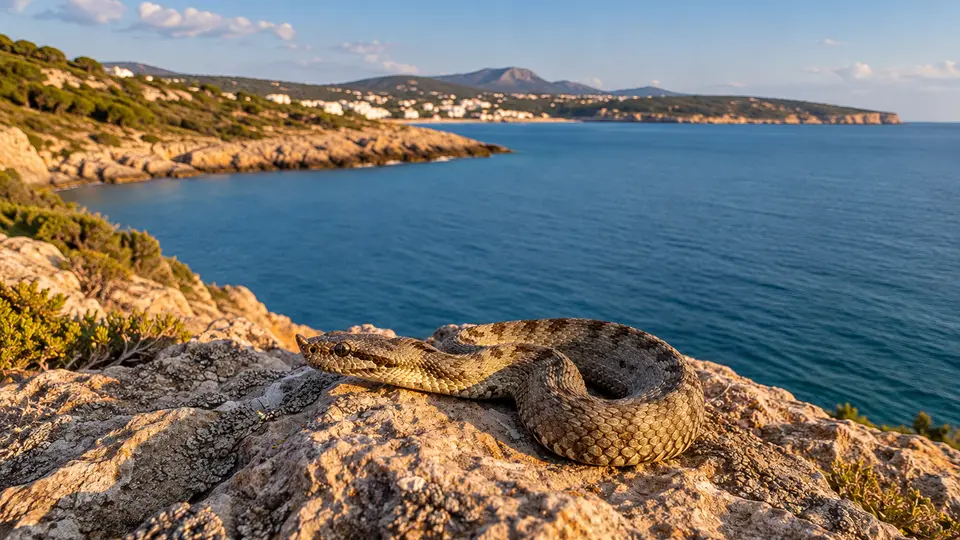
Nose-horned Viper in its natural habitat, AI illustration

Nose-horned Viper: where and when to see them

Vipera ammodytes

Nose-horned Viper at a glance

The nose-horned viper is a venomous snake of southeastern Europe, recognizable by the soft, scale-covered projection at the tip of its snout. It commonly inhabits rocky slopes and scrubby landscapes, including parts of Croatia and Greece. Ground colors vary from grey to brown, usually with a dark dorsal zigzag. Although medically significant, it is not an animal that seeks confrontation with people. Most risk comes from handling, accidental close contact or attempts to kill it.

Behaviour & reproduction

Size
50–80 cm total length
Weight
Not reliably established
Lifespan
Not reliably established
Status
Least Concern

This viper alternates between concealed resting places and basking sites that allow it to regulate body temperature. Activity shifts with weather: cooler periods favor daytime basking, while summer heat can encourage evening or nighttime movement. It usually hunts by ambush, sometimes climbing into low shrubs. When threatened it may remain still, retreat, hiss or strike if pressed. Females give birth to live young, generally in late summer or early autumn. This viper is generally not aggressive and will usually attempt to escape or warn before striking. It is known to possess the longest fangs of any European viper, which are hinged and fold back when the mouth is closed. While primarily terrestrial, it can occasionally be seen climbing low bushes to ambush prey. After a large meal, a viper may remain inactive for several days, digesting its food in a concealed location.

Top wildlife locations

Croatia wildlife habitat

Croatia

Dalmatian coastal scrub, rocky footpaths and old stone terraces provide plausible habitat views from land. A walk beyond developed waterfronts is usually necessary; encounters are unpredictable, and protected-area access rules must be respected.

Adventure cruises in Croatia
Greece wildlife habitat

Greece

Rocky mainland slopes and scrub behind some coastal settlements offer suitable habitat, usually requiring a short inland excursion. Distribution is uneven across Greek islands, so an island itinerary alone does not establish occurrence.

Adventure cruises in Greece

Destinations describe the species' habitat, not guaranteed cruise stops. Some animals require an optional inland excursion or are found in restricted reserves.

Fun facts about the Nose-horned Viper

  • The snout horn is covered in scales rather than made of exposed bone.
  • Females give birth to live young.
  • Individuals sometimes climb low shrubs while hunting or basking.
  • Its scientific epithet refers to sand, although rocky habitats are much more characteristic.

Best time to see the Nose-horned Viper

Spring and early autumn often provide moderate temperatures suitable for daytime activity and walking in Balkan habitats. Summer encounters remain possible, but heat changes activity patterns. Winter dormancy varies with elevation and climate, so coastal and mountain populations do not share an identical calendar. Prime viewing opportunities often occur in late morning or early afternoon when temperatures are optimal for basking after cooler nights. Activity patterns can also be influenced by recent rainfall, with vipers sometimes more active post-precipitation. Autumn months can be ideal for observing juveniles as they become more independent.

Nose-horned Viper: season matrix by destination

Travel and observation windows vary by region. Highlighted months are an orientation for planning, not confirmed sightings or a guarantee of access.

Croatia

These generally moderate months suit coastal walking and possible surface activity, not a confirmed sighting peak. Elevation and daily temperature can substantially alter activity.

JanFebMarAprMayJunJulAugSepOctNovDec
Cruise ships in Croatia

Greece

A moderate-weather coastal walking window where the species is locally documented. Mountain conditions, island distribution and daily heat require separate assessment.

JanFebMarAprMayJunJulAugSepOctNovDec
Cruise ships in Greece

Where the Nose-horned Viper lives

Rocky hillsides, open woodland, scrub, stone walls and abandoned agricultural terraces provide suitable cover and basking sites. It occurs from low elevations into mountains. Coastal landscapes can support it, but sandy beaches and heavily developed waterfronts are not its characteristic habitat. Its range extends across much of the Balkan Peninsula and parts of Eastern Europe. This species exhibits good adaptability to human-modified landscapes, frequently occurring near old ruins and agricultural zones. It is commonly found in karstic regions, where rocky outcrops and crevices provide abundant shelter.

What the Nose-horned Viper eats

Small mammals are major prey for adults, with lizards and occasionally birds also taken. Young vipers rely more heavily on small lizards and other appropriately sized animals. Venom subdues prey, and the snake may follow chemical trails after releasing a bitten animal. Prey includes a variety of rodents, particularly voles and mice, as well as shrews. Larger adult vipers have also been documented consuming small birds and even other reptiles. The venom is primarily hemotoxic, causing tissue damage and internal bleeding, which aids in incapacitating prey.

Species at a glance

Common name
Nose-horned Viper
Scientific name
Vipera ammodytes
Animal group
Reptiles
Size
50–80 cm total length
Weight
Not reliably established
Lifespan
Not reliably established
Status
Least Concern
Identification
The distinct fleshy, scale-covered snout horn separates it from other native European vipers, including adders and most meadow-viper forms. The species typically displays a zigzag pattern along its back, which can vary in color from light gray to reddish-brown or olive. Males often have more pronounced dark markings and a darker head, while females tend to be lighter. The distinctive horn is covered in several small scales, unlike the single, large scale found in some other horned vipers.

Nose-horned Viper: frequently asked questions

Where can I see the Nose-horned Viper?
Croatia, Greece. Wear sturdy footwear on rocky paths and never place hands into unseen wall gaps. If a viper appears, stop and give it space to retreat. Do not handle it; suspected bites require urgent medical assessment. Always maintain a respectful distance from any wild snake and avoid attempting to capture or disturb it. Binoculars can be useful for safely observing basking individuals from a distance. Alerting your guide to any snake sightings helps ensure both guest and animal safety.
When is the best time to see the Nose-horned Viper?
Spring and early autumn often provide moderate temperatures suitable for daytime activity and walking in Balkan habitats. Summer encounters remain possible, but heat changes activity patterns. Winter dormancy varies with elevation and climate, so coastal and mountain populations do not share an identical calendar. Prime viewing opportunities often occur in late morning or early afternoon when temperatures are optimal for basking after cooler nights. Activity patterns can also be influenced by recent rainfall, with vipers sometimes more active post-precipitation. Autumn months can be ideal for observing juveniles as they become more independent.
How big does the Nose-horned Viper get?
50–80 cm total length. Adult weight: Not reliably established. Size varies with age, sex and population.
How should I behave around the Nose-horned Viper?
Wear sturdy footwear on rocky paths and never place hands into unseen wall gaps. If a viper appears, stop and give it space to retreat. Do not handle it; suspected bites require urgent medical assessment. Always maintain a respectful distance from any wild snake and avoid attempting to capture or disturb it. Binoculars can be useful for safely observing basking individuals from a distance. Alerting your guide to any snake sightings helps ensure both guest and animal safety.
What does the Nose-horned Viper eat?
Small mammals are major prey for adults, with lizards and occasionally birds also taken. Young vipers rely more heavily on small lizards and other appropriately sized animals. Venom subdues prey, and the snake may follow chemical trails after releasing a bitten animal. Prey includes a variety of rodents, particularly voles and mice, as well as shrews. Larger adult vipers have also been documented consuming small birds and even other reptiles. The venom is primarily hemotoxic, causing tissue damage and internal bleeding, which aids in incapacitating prey.
Are wildlife sightings guaranteed on an adventure cruise?
No. Animals move freely and routes, weather, access restrictions and local conditions influence every outing. Confirm the actual itinerary and shore programme before booking.

Compare wildlife in the same destinations

Explore other reptiles recorded in these destinations. Similar surroundings do not mean the animals share the same habits or viewing season.

Species comparison by animal group and destination
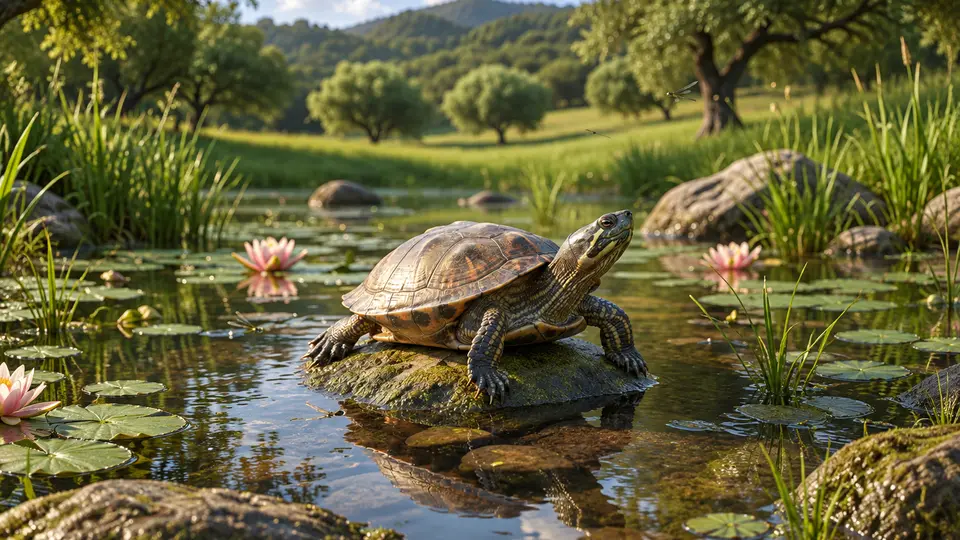
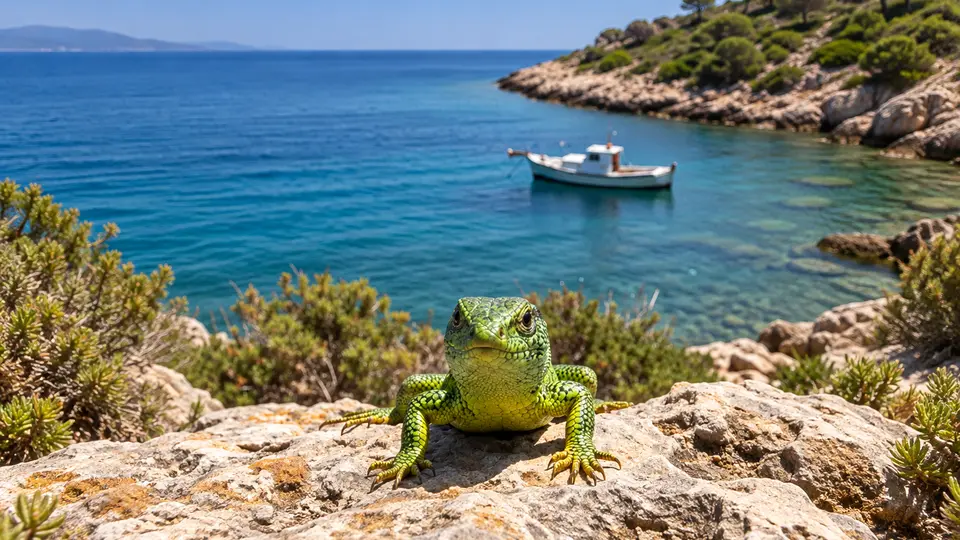
Nose-horned ViperNose-horned ViperBalkan Green LizardBalkan Green LizardBalkan Pond TurtleBalkan Pond Turtle
Animal groupReptilesAnimal groupReptilesAnimal groupReptiles
DestinationsCroatia, GreeceDestinationsGreeceDestinationsGreece
All wildlife destinations
Plan your trip

Find your next wildlife adventure

Compare destinations, shore programmes and dates with the animals and habitats you would love to see.

  • Naturalist-led shore excursions
  • Responsible wildlife watching
  • Small expedition ships

Newsletter

Take Blue Rides with you

Adventure cruise offers, last-minute deals and trip inspiration.

Free, unsubscribe anytime. Details: Privacy Policy

Partner with Blue Rides

Affiliate Program

Recommend adventure cruises and earn commission on every confirmed booking.

Share. Track. Earn.