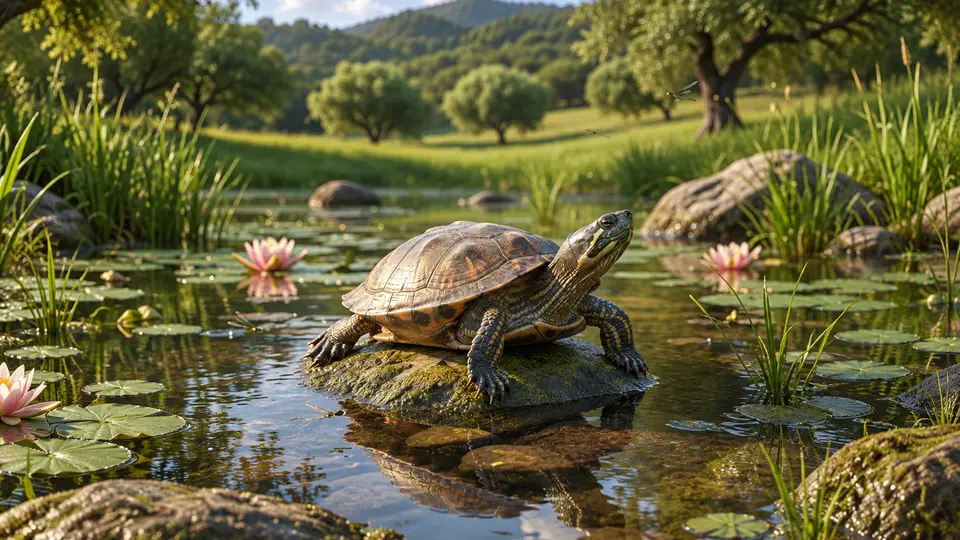
Balkan Pond Turtle in its natural habitat

Balkan Pond TurtleMauremys rivulataWhere and when to see them

Balkan Pond Turtle at a glance

The Balkan pond turtle is a freshwater reptile of the eastern Mediterranean and neighboring regions. It often occupies modest water bodies, including slow streams and vegetated pools that are easily overlooked beside larger coastal attractions. Pale neck stripes and an olive-brown shell help characterize it. Although it can persist in some altered habitats, drainage, water pollution, road mortality and the loss of secure nesting ground remain significant local pressures.

Behaviour & reproduction

Size
15–25 cm (5.9–9.8 in) carapace length
Weight
27–823 g (0.95–29.0 oz)
Lifespan
Not reliably established
Status
Least Concern

Basking turtles gather on banks, stones or fallen wood, dropping into the water when disturbed. They alternate warming periods with feeding and resting among aquatic vegetation. Females leave the water to lay eggs on land, making the surrounding terrestrial habitat important as well. Seasonal activity follows temperature and water availability, and turtles may become inconspicuous during cold weather or when temporary wetlands contract in summer. They are diurnal, with peak activity occurring during the warmest parts of the day when basking. During dry periods or extreme heat, they may estivate by burying themselves in mud, waiting for more favorable conditions to return.

Top wildlife locations

Greece wildlife habitat

Greece

Vegetated coastal marshes, quiet streams and ponds can provide bank-side views from established paths. An inland wetland excursion may be necessary, and not every Greek island supports suitable populations.
Destinations describe the species' habitat, not guaranteed cruise stops. Some animals require an optional inland excursion or are found in restricted reserves.

Fun facts about the Balkan Pond Turtle

  • It was formerly treated as part of the Caspian turtle species complex.
  • Females must leave the water to lay their eggs.
  • Some populations tolerate mildly brackish wetlands.
  • Several individuals may share a single favored basking log.

Best time to see the Balkan Pond Turtle

Spring and early autumn offer useful opportunities to watch basking turtles in Greece without the strongest summer heat. Warm summer mornings can also work where water persists. Winter activity is more limited and varies with latitude, elevation and weather. In Greece, spring activity from March to May offers excellent viewing as turtles emerge from brumation and bask actively. Early autumn, particularly September and October, is also productive for observation before cooler temperatures significantly reduce activity.

Balkan Pond Turtle: season matrix by destination

Travel and observation windows vary by region. Highlighted months are an orientation for planning, not confirmed sightings or a guarantee of access.

Greece

A plausible basking and wetland-walking window, subject to local temperatures and seasonal water levels rather than a guaranteed encounter season.

JanFebMarAprMayJunJulAugSepOctNovDec
Cruise ships in Greece

Where the Balkan Pond Turtle lives

Ponds, marshes, slow rivers, drainage channels and some mildly brackish coastal wetlands support this species. Accessible basking places and vegetated margins are useful features. Even coastal populations depend on suitable wetland water, not on open sea or exposed beaches. This turtle is highly adapted to freshwater but can tolerate slightly brackish conditions, often found in slow-moving or stagnant waters. Its habitat frequently includes areas with soft bottoms and abundant aquatic vegetation providing both food and shelter.

What the Balkan Pond Turtle eats

An opportunistic omnivore, it eats aquatic invertebrates, small fish, amphibian material, carrion and plants. Diet varies with age and local availability. Feeding occurs mainly in water, where turtles search along the bottom and among vegetation for manageable food items. Juveniles tend to be more carnivorous, consuming a higher proportion of insects and larvae, while adults show a broader omnivorous diet. Opportunistic feeding also includes fruits or fallen berries when available near water edges.

Species at a glance

Common name
Balkan Pond Turtle
Scientific name
Mauremys rivulata
Animal group
Reptiles
Size
15–25 cm (5.9–9.8 in) carapace length
Weight
27–823 g (0.95–29.0 oz)
Lifespan
Not reliably established
Status
Least Concern
Identification
Pale longitudinal neck stripes and a relatively plain olive-brown shell distinguish it from the yellow-spotted European pond turtle. The Balkan pond turtle typically has a flattened, oval carapace that is smooth and ranges from olive green to dark brown or black, often lacking prominent patterns. Its head and limbs are often darker with distinct yellow or cream longitudinal stripes that are key identifiers.

Balkan Pond Turtle: frequently asked questions

Where can I see the Balkan Pond Turtle?
Greece. Use binoculars from wetland paths and avoid crowding basking banks. Do not handle turtles, release pets or disturb nesting females; keep dogs away and take care near roads connecting water bodies with nesting ground. During shore excursions, look for turtles basking on floating logs or exposed rocks in sunny, calm conditions. Binoculars are essential for identifying individuals from a respectful distance without causing disturbance.
When is the best time to see the Balkan Pond Turtle?
Spring and early autumn offer useful opportunities to watch basking turtles in Greece without the strongest summer heat. Warm summer mornings can also work where water persists. Winter activity is more limited and varies with latitude, elevation and weather. In Greece, spring activity from March to May offers excellent viewing as turtles emerge from brumation and bask actively. Early autumn, particularly September and October, is also productive for observation before cooler temperatures significantly reduce activity.
How big does the Balkan Pond Turtle get?
15–25 cm (5.9–9.8 in) carapace length. Adult weight: 27–823 g (0.95–29.0 oz). Size varies with age, sex and population.
How should I behave around the Balkan Pond Turtle?
Use binoculars from wetland paths and avoid crowding basking banks. Do not handle turtles, release pets or disturb nesting females; keep dogs away and take care near roads connecting water bodies with nesting ground. During shore excursions, look for turtles basking on floating logs or exposed rocks in sunny, calm conditions. Binoculars are essential for identifying individuals from a respectful distance without causing disturbance.
What does the Balkan Pond Turtle eat?
An opportunistic omnivore, it eats aquatic invertebrates, small fish, amphibian material, carrion and plants. Diet varies with age and local availability. Feeding occurs mainly in water, where turtles search along the bottom and among vegetation for manageable food items. Juveniles tend to be more carnivorous, consuming a higher proportion of insects and larvae, while adults show a broader omnivorous diet. Opportunistic feeding also includes fruits or fallen berries when available near water edges.
Are wildlife sightings guaranteed on an adventure cruise?
No. Animals move freely and routes, weather, access restrictions and local conditions influence every outing. Confirm the actual itinerary and shore program before booking.

Compare wildlife in the same destinations

Explore other reptiles recorded in these destinations. Similar surroundings do not mean the animals share the same habits or viewing season.

Species comparison by animal group and destination
Balkan Pond TurtleBalkan Pond TurtleBalkan Green LizardBalkan Green LizardGreen Sea TurtleGreen Sea Turtle
Animal groupReptilesAnimal groupReptilesAnimal groupReptiles
DestinationsGreeceDestinationsGreeceDestinationsCosta Rica, Florida, Galapagos, Mexico, Cape Verde, Egypt, Greece, Seychelles, Turkey, Indonesia, Maldives, Thailand, Vietnam, Australia, Fiji, Polynesia
Scientific nameMauremys rivulataScientific nameScientific name
All wildlife destinations
Plan your trip

Find your next wildlife adventure

Compare destinations, shore programs and dates with the animals and habitats you would love to see.

  • Naturalist-led shore excursions
  • Responsible wildlife watching
  • Small expedition ships