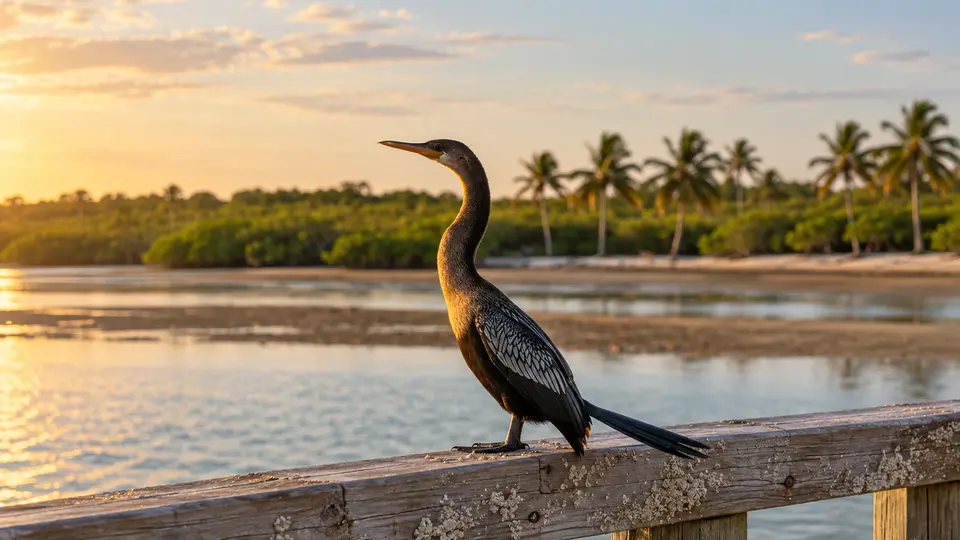
Tricolored Heron in its natural habitat, AI illustration

Tricolored Heron: where and when to see them

Egretta tricolor

Tricolored Heron at a glance

The tricolored heron is a slender American wading bird with blue-gray upperparts, a contrasting white belly and a long, pointed bill. Florida's coastal wetlands provide important year-round habitat, although local numbers shift with water levels and movements. More animated than many larger herons, it often runs or pivots through shallows while hunting. Healthy estuaries, mangrove margins and freshwater wetlands supply the shallow feeding areas and sheltered nesting habitat it needs.

Behaviour & reproduction

Size
60–70 cm long
Weight
300–400 g
Lifespan
Not reliably established
Status
Least Concern

Tricolored herons combine patient stalking with bursts of pursuit, sometimes spreading their wings while following small fish. They may feed alone or join mixed groups where prey is concentrated. During breeding, pairs nest in colonies, often alongside other herons and egrets. Displays include raised plumes and changes in posture, and breeding adults develop brighter bare-part colors. Both parents help incubate eggs and feed chicks, which remain vulnerable to colony disturbance. Courtship displays involve the male flying in circles and presenting nesting material to the female. Pairs typically construct their nests out of sticks and twigs, sometimes lining them with finer vegetation. After hatching, both parents diligently guard the nest and forage extensively to feed their rapidly growing chicks.

Top wildlife locations

Florida wildlife habitat

Florida

Public boardwalks beside mangroves, tidal creeks and shallow lagoons offer excellent habitat for shore-based searching. Inland wetland excursions are optional, not essential; visibility changes with tides, water management and disturbance.

Adventure cruises in Florida
Destinations describe the species' habitat, not guaranteed cruise stops. Some animals require an optional inland excursion or are found in restricted reserves.

Fun facts about the Tricolored Heron

  • It was formerly widely known as the Louisiana heron.
  • Breeding adults develop a bright blue bill base.
  • Its white belly remains a useful field mark even outside breeding season.
  • Wing-spreading and rapid changes of direction are characteristic hunting behaviors.

Best time to see the Tricolored Heron

Florida offers year-round opportunities, with cooler months often comfortable for wetland walks. Tidal stage and water depth can matter more than month for feeding observations. Spring and summer bring breeding activity, but colonies require extra space and should be watched only from established viewpoints. While present year-round in Florida, their striking breeding plumage is most visible from late winter through early summer. Morning and late afternoon often provide the best light for photography and observing active feeding behaviors. Cruise passengers can enjoy excellent views from the calm waters of protected estuaries and bayous.

Tricolored Heron: season matrix by destination

Travel and observation windows vary by region. Highlighted months are an orientation for planning, not confirmed sightings or a guarantee of access.

Florida

The species occurs year-round; cooler months ease walking, while local tides and water levels determine feeding access in every season.

JanFebMarAprMayJunJulAugSepOctNovDec
Cruise ships in Florida

Where the Tricolored Heron lives

The species favors shallow coastal lagoons, tidal creeks, salt marshes and mangrove edges, but also uses freshwater marshes and managed wetlands. Feeding depends on accessible water depths. Nesting generally occurs in shrubs or trees, often on islands or over water. The Tricolored Heron is largely restricted to the southeastern United States and coastal Mexico, with some populations extending into Central and South America. They thrive in brackish waters where fresh and salt water mix, providing a rich food source. These herons are highly adaptable and will utilize impoundments and ditches if food is plentiful and undisturbed.

What the Tricolored Heron eats

Small fishes dominate the diet, captured with quick bill strikes in shallow water. Crustaceans, aquatic insects and other small animals are also eaten. Tides and falling water levels can concentrate prey, temporarily making particular creek margins or pools especially attractive feeding sites. Occasionally, they will eat small amphibians and aquatic invertebrates found in the marsh. Their hunting style often involves a distinctive "shuffle-and-peck" technique, disturbing prey before striking. They are opportunistic feeders, adjusting their diet based on local prey availability and water conditions.

Species at a glance

Common name
Tricolored Heron
Scientific name
Egretta tricolor
Animal group
Birds
Size
60–70 cm long
Weight
300–400 g
Lifespan
Not reliably established
Status
Least Concern
Identification
Its white belly contrasts with a blue-gray neck and back, distinguishing adults from the uniformly dark little blue heron and most reddish egrets. Juveniles are distinguished by a reddish-brown head and neck, gradually transitioning to the adult plumage. Their relatively long neck and bill, combined with yellow legs, are also key features. In flight, the contrasting white belly and underwing linings are particularly noticeable.

Tricolored Heron: frequently asked questions

Where can I see the Tricolored Heron?
Florida. Watch from boardwalks or firm public banks without entering feeding shallows. Keep well back from nesting colonies, avoid flushing hunting birds, and remain alert for alligators near Florida wetland edges. When viewing from a boat, maintain a slow speed and keep a respectful distance to avoid causing stress or flushing birds. Look for them patiently stalking prey along the water's edge or perched on low branches. Binoculars are highly recommended for detailed observation of their subtle movements and coloration.
When is the best time to see the Tricolored Heron?
Florida offers year-round opportunities, with cooler months often comfortable for wetland walks. Tidal stage and water depth can matter more than month for feeding observations. Spring and summer bring breeding activity, but colonies require extra space and should be watched only from established viewpoints. While present year-round in Florida, their striking breeding plumage is most visible from late winter through early summer. Morning and late afternoon often provide the best light for photography and observing active feeding behaviors. Cruise passengers can enjoy excellent views from the calm waters of protected estuaries and bayous.
How big does the Tricolored Heron get?
60–70 cm long. Adult weight: 300–400 g. Size varies with age, sex and population.
How should I behave around the Tricolored Heron?
Watch from boardwalks or firm public banks without entering feeding shallows. Keep well back from nesting colonies, avoid flushing hunting birds, and remain alert for alligators near Florida wetland edges. When viewing from a boat, maintain a slow speed and keep a respectful distance to avoid causing stress or flushing birds. Look for them patiently stalking prey along the water's edge or perched on low branches. Binoculars are highly recommended for detailed observation of their subtle movements and coloration.
What does the Tricolored Heron eat?
Small fishes dominate the diet, captured with quick bill strikes in shallow water. Crustaceans, aquatic insects and other small animals are also eaten. Tides and falling water levels can concentrate prey, temporarily making particular creek margins or pools especially attractive feeding sites. Occasionally, they will eat small amphibians and aquatic invertebrates found in the marsh. Their hunting style often involves a distinctive "shuffle-and-peck" technique, disturbing prey before striking. They are opportunistic feeders, adjusting their diet based on local prey availability and water conditions.
Are wildlife sightings guaranteed on an adventure cruise?
No. Animals move freely and routes, weather, access restrictions and local conditions influence every outing. Confirm the actual itinerary and shore program before booking.

Compare wildlife in the same destinations

Explore other birds recorded in these destinations. Similar surroundings do not mean the animals share the same habits or viewing season.

Species comparison by animal group and destination
Tricolored HeronTricolored HeronAnhingaAnhingaBald EagleBald Eagle
Animal groupBirdsAnimal groupBirdsAnimal groupBirds
DestinationsFloridaDestinationsFloridaDestinationsAlaska, Florida, New England
All wildlife destinations
Plan your trip

Find your next wildlife adventure

Compare destinations, shore programs and dates with the animals and habitats you would love to see.

  • Naturalist-led shore excursions
  • Responsible wildlife watching
  • Small expedition ships

Newsletter

Take Blue Rides with you

Adventure cruise offers, last-minute deals and trip inspiration.

Free, unsubscribe anytime. Details: Privacy Policy

Partner with Blue Rides

Affiliate Program

Recommend adventure cruises and earn commission on every confirmed booking.

Share. Track. Earn.

Your footage, our stage

Send us your videos or pictures.

Captured beautiful landscapes or wildlife? Share your videos and pictures with us, we may feature them on Blue Rides.