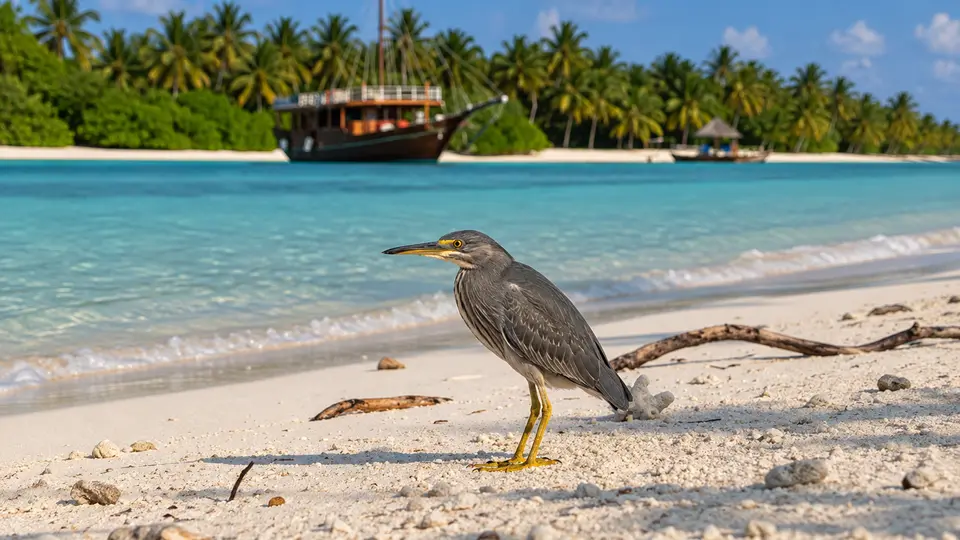
Striated Heron in its natural habitat, AI illustration
SizeLength 35–48 cmLifespanNot reliably establishedStatusCheck current assessment

Striated Heron: where and when to see them

Butorides striata

Striated Heron at a glance

The striated heron is a small, secretive heron found along tropical and subtropical waters across a broad geographical range. Adults typically have grey underparts, a dark cap and greenish-grey upperparts with pale feather edging. In Egypt and the Maldives, coastal populations can use mangroves, reef-edge shallows and sheltered shores. Its hunched posture and patient hunting style make it less conspicuous than larger white egrets sharing the same coastline.

Behaviour & reproduction

Size
Length 35–48 cm
Weight
125–250 g
Lifespan
Not reliably established
Status
Check current assessment

Usually solitary while feeding, a striated heron waits on a rock, root or low branch before striking rapidly at prey. It may crouch very low, stretch its neck or shift between nearby perches as water levels change. Some individuals use bait, placing objects on the surface to attract fish. Nesting occurs in woody vegetation or other sheltered structures, with breeding schedules varying considerably among regions and local conditions. Courtship displays involve bowing, neck stretching, and presenting nesting material. They typically lay 2-5 eggs in a clutch, which are incubated by both parents.

Top wildlife locations

Egypt wildlife habitat

Egypt

Sheltered Red Sea mangroves, tidal pools and rocky coastal margins offer plausible viewing from permitted shore paths. Suitable sites can be scattered or restricted, so an ordinary sandy beach stop may offer little habitat.

Adventure cruises in Egypt
Maldives wildlife habitat

Maldives

Vegetated island shorelines, sheltered tidal pools and mangrove margins provide plausible shore-viewing habitat. Birds can be inconspicuous and unevenly distributed; access to some wetland islands or protected vegetation may be restricted.

Adventure cruises in Maldives

Destinations describe the species' habitat, not guaranteed cruise stops. Some animals require an optional inland excursion or are found in restricted reserves.

Fun facts about the Striated Heron

  • Some individuals use floating objects as fishing bait.
  • The neck can appear very short when folded into the resting posture.
  • Juveniles have conspicuous streaking unlike the more uniform adult underparts.
  • Its broad distribution includes both freshwater and marine coastal populations.

Best time to see the Striated Heron

Resident coastal birds may be encountered throughout the year where suitable habitat persists. For Egypt and the Maldives, comfortable weather and calm conditions can improve shore observation, but local tides strongly influence feeding visibility. These travel considerations do not define a shared breeding season. In the Maldives, breeding often aligns with the wet season (May to November) when food resources are more abundant. In Egypt, while resident year-round, coastal populations might show increased activity during spring and autumn migrations.

Striated Heron: season matrix by destination

Travel and observation windows vary by region. Highlighted months are an orientation for planning, not confirmed sightings or a guarantee of access.

Egypt

A comfortable coastal travel window avoiding peak heat; resident occurrence and tidal feeding opportunities are not confined to these months.

JanFebMarAprMayJunJulAugSepOctNovDec
Cruise ships in Egypt

Maldives

Often favourable weather for coastal walking and scanning; this is not a breeding window, and suitable islands may hold birds year-round.

JanFebMarAprMayJunJulAugSepOctNovDec
Cruise ships in Maldives

Where the Striated Heron lives

Mangroves, estuaries, sheltered rocky shores, tidal creeks and freshwater margins can all provide habitat. It favours cover and firm hunting perches beside shallow water. On tropical islands, small coastal vegetation patches may suffice, but exposed surf beaches generally offer less suitable feeding conditions. This widespread species exhibits high adaptability, colonizing diverse wetland types across its extensive range from Africa to Australasia. Coastal populations frequently utilize artificial structures like jetties, harbors, and even urban canals for foraging and roosting.

What the Striated Heron eats

Small fish and crustaceans are important prey, supplemented by insects, amphibians and other small animals where available. Coastal birds frequently hunt in tidal pools and shallow channels. A quick bill strike captures prey, which is usually repositioned and swallowed whole. Occasionally, these opportunistic hunters have been observed consuming small reptiles or even large aquatic insects like dragonflies. Despite their small size, they are adept at catching surprisingly large fish relative to their body size.

Species at a glance

Common name
Striated Heron
Scientific name
Butorides striata
Animal group
Birds
Size
Length 35–48 cm
Weight
125–250 g
Lifespan
Not reliably established
Status
Check current assessment
Identification
Its compact hunched shape, dark cap and grey-green plumage distinguish it from larger reef herons, while juveniles are browner and more heavily streaked. Distinguish it from the similar but typically larger and paler Western Reef Heron (Egretta gularis), which often has a more uniform grey or white plumage. Its relatively short legs and neck further contribute to its distinctive compact profile.

Striated Heron: frequently asked questions

Where can I see the Striated Heron?
Egypt, Maldives. Scan shaded mangrove edges and tidal rocks from established paths or decks. Avoid slippery reef-edge surfaces, keep away from nests, and never bait a bird to provoke its natural fishing behaviour. Pay close attention to any small objects floating on the water near herons, as some individuals are known to use 'bait fishing' to lure prey. Binoculars are essential for observing subtle details and confirming identification from a distance, especially for shy individuals.
When is the best time to see the Striated Heron?
Resident coastal birds may be encountered throughout the year where suitable habitat persists. For Egypt and the Maldives, comfortable weather and calm conditions can improve shore observation, but local tides strongly influence feeding visibility. These travel considerations do not define a shared breeding season. In the Maldives, breeding often aligns with the wet season (May to November) when food resources are more abundant. In Egypt, while resident year-round, coastal populations might show increased activity during spring and autumn migrations.
How big does the Striated Heron get?
Length 35–48 cm. Adult weight: 125–250 g. Size varies with age, sex and population.
How should I behave around the Striated Heron?
Scan shaded mangrove edges and tidal rocks from established paths or decks. Avoid slippery reef-edge surfaces, keep away from nests, and never bait a bird to provoke its natural fishing behaviour. Pay close attention to any small objects floating on the water near herons, as some individuals are known to use 'bait fishing' to lure prey. Binoculars are essential for observing subtle details and confirming identification from a distance, especially for shy individuals.
What does the Striated Heron eat?
Small fish and crustaceans are important prey, supplemented by insects, amphibians and other small animals where available. Coastal birds frequently hunt in tidal pools and shallow channels. A quick bill strike captures prey, which is usually repositioned and swallowed whole. Occasionally, these opportunistic hunters have been observed consuming small reptiles or even large aquatic insects like dragonflies. Despite their small size, they are adept at catching surprisingly large fish relative to their body size.
Are wildlife sightings guaranteed on an adventure cruise?
No. Animals move freely and routes, weather, access restrictions and local conditions influence every outing. Confirm the actual itinerary and shore programme before booking.

Compare wildlife in the same destinations

Explore other birds recorded in these destinations. Similar surroundings do not mean the animals share the same habits or viewing season.

Species comparison by animal group and destination
Striated HeronStriated HeronAsian koelAsian koelAudubon's shearwaterAudubon's shearwater
Animal groupBirdsAnimal groupBirdsAnimal groupBirds
DestinationsEgypt, MaldivesDestinationsMaldivesDestinationsMaldives
All wildlife destinations
Plan your trip

Find your next wildlife adventure

Compare destinations, shore programmes and dates with the animals and habitats you would love to see.

  • Naturalist-led shore excursions
  • Responsible wildlife watching
  • Small expedition ships

Newsletter

Take Blue Rides with you

Adventure cruise offers, last-minute deals and trip inspiration.

Free, unsubscribe anytime. Details: Privacy Policy

Partner with Blue Rides

Affiliate Program

Recommend adventure cruises and earn commission on every confirmed booking.

Share. Track. Earn.