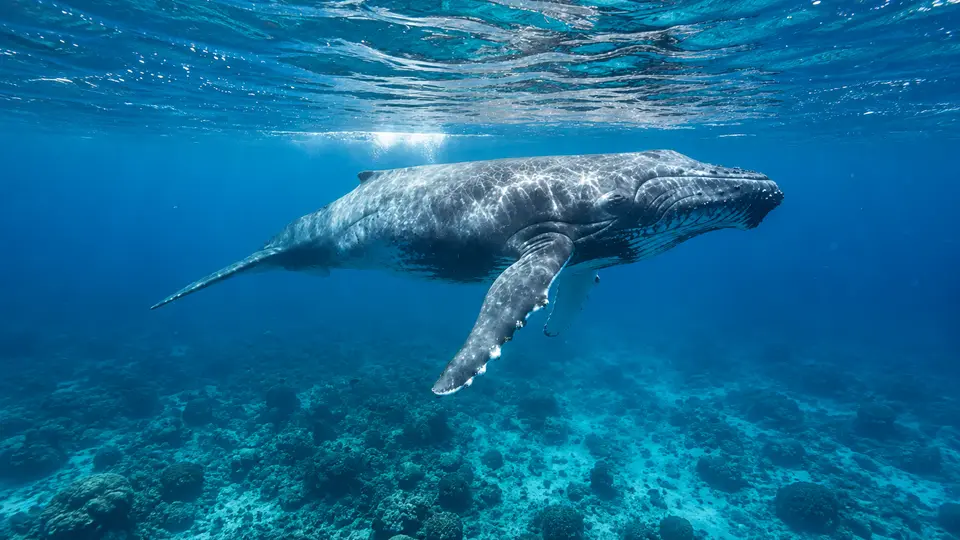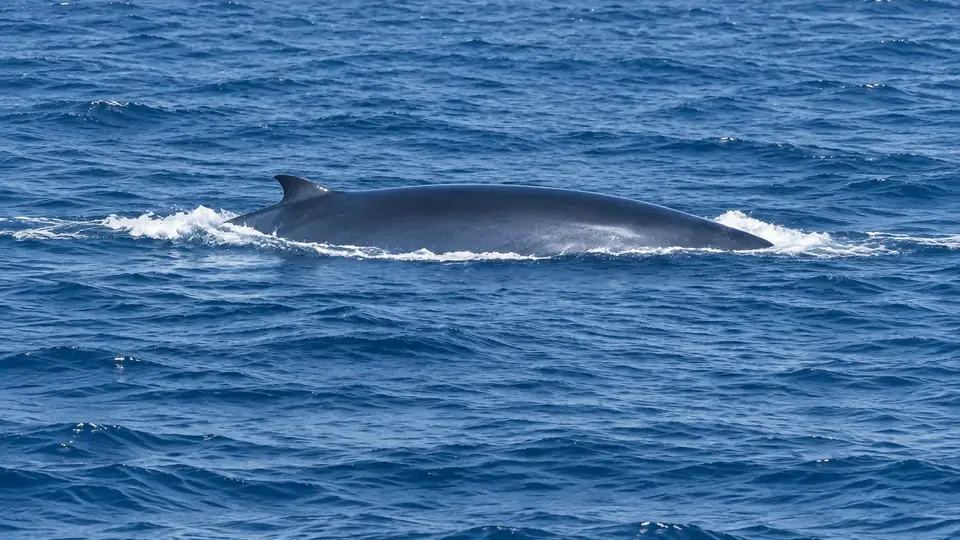
Sei Whale in its natural habitat, AI illustration

Sei Whale: where and when to see them

Balaenoptera borealis

Sei Whale at a glance

The sei whale is a streamlined baleen whale of temperate and subpolar seas, heavily depleted by twentieth-century commercial whaling. It remains a marine animal of predominantly offshore waters, not a regular coastal attraction. Long-distance movements are influenced by feeding conditions, and its distribution can change markedly between years. Identification is often difficult because brief views may resemble fin or Bryde's whales, particularly when distance conceals the head and body proportions.

Behaviour & reproduction

Size
12–18 m total length
Weight
15–30 tonnes
Lifespan
50–70 years
Status
Endangered

Sei whales often travel alone or in small, loose groups, with larger aggregations forming around concentrated prey. They are fast swimmers and commonly surface with a relatively smooth rolling motion. Feeding can involve skimming or engulfing prey near the surface. Tail flukes are seldom raised clearly before a deeper descent. Seasonal movements are widespread, but routes and timing remain less completely understood than those of several better-studied baleen whales. A characteristic surfacing pattern involves a series of shallow dives followed by a deeper dive with little or no fluking. They are known for their rapid swimming capabilities, sometimes reaching speeds of up to 50 km/h over short distances.

Top wildlife locations

Portugal wildlife habitat

Portugal

Azorean coastal lookouts provide plausible distant views over deep Atlantic water, although sei whales are offshore and uncommon from land. Mainland Portuguese shore sightings are much less dependable than regional occurrence suggests.

Adventure cruises in Portugal
Antarctica wildlife habitat

Antarctica

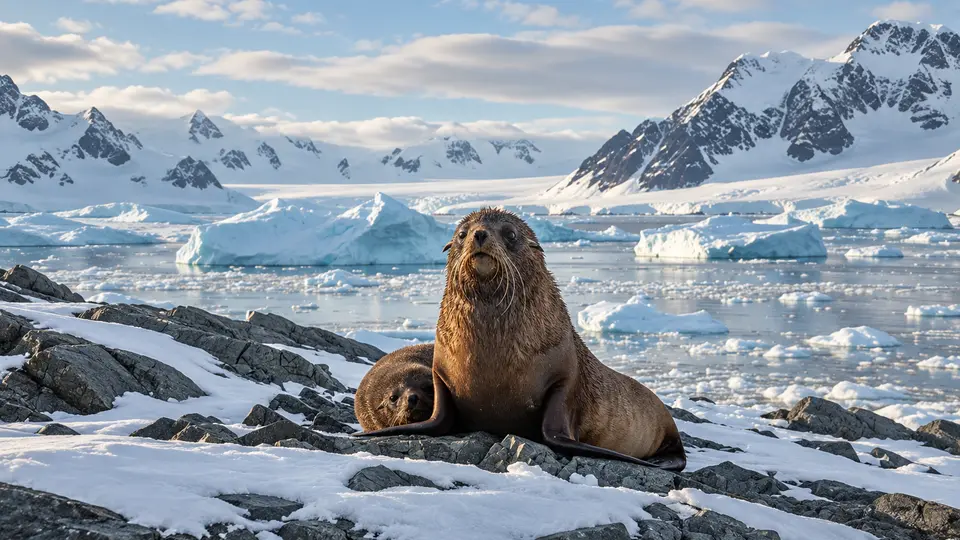
Distant deck observation in northern Southern Ocean waters is more plausible than viewing from Antarctic shores. Sei whales are rare on standard Peninsula itineraries and are not characteristic animals of ice-fringed landing beaches.

Adventure cruises in Antarctica

Destinations describe the species' habitat, not guaranteed cruise stops. Some animals require an optional inland excursion or are found in restricted reserves.

Fun facts about the Sei Whale

  • Its common name derives from a Norwegian word associated with pollock.
  • The baleen has unusually fine fringes suited to filtering small crustaceans.
  • Sei whales generally show their tail flukes less often than humpback whales.
  • Commercial hunting intensified after larger whale species had already been severely depleted.

Best time to see the Sei Whale

Around the Azores, spring and early summer can offer a plausible regional passage window, though shore detection is difficult. Southern Ocean travel mainly occurs during austral summer, but this does not establish a dependable sei whale season along Antarctic visitor routes. In the North Atlantic, particularly around oceanic islands, late spring and early summer offer the highest chance of encounters as whales migrate through productive areas. However, predictability remains low compared to other large whale species.

Sei Whale: season matrix by destination

Travel and observation windows vary by region. Highlighted months are an orientation for planning, not confirmed sightings or a guarantee of access.

Portugal

This is a plausible Azorean spring passage window, not a guarantee of coastal visibility or an equivalent season for mainland Portugal.

JanFebMarAprMayJunJulAugSepOctNovDec
Cruise ships in Portugal

Antarctica

Austral summer permits most visitor travel, but evidence does not support a dependable sei whale shore-viewing window for Antarctica.

JanFebMarAprMayJunJulAugSepOctNovDec
Cruise ships in Antarctica

Where the Sei Whale lives

They primarily use deep oceanic waters and productive shelf-edge regions, usually in temperate or subpolar conditions. Around Antarctica they are more associated with northern waters and the Subantarctic than dense pack ice, so standard Antarctic Peninsula routes offer limited prospects. Though generally avoiding ice, sei whales may occasionally venture into waters with scattered ice floes at the edges of their foraging grounds. Their distribution is closely linked to oceanographic features that concentrate their small prey, such as currents and upwellings.

What the Sei Whale eats

Copepods and other small crustaceans are major foods, with krill and schooling fish important in some regions. Fine baleen fringes help retain small prey. Diet varies geographically, reflecting the dense, seasonally shifting concentrations needed to sustain such a large animal. When feeding on schooling fish, sei whales are capable of lunging through schools at high speeds, gulping large volumes of water and prey. They are one of the most rorqual-like whales in their feeding adaptability, shifting prey as availability changes seasonally or geographically.

Species at a glance

Common name
Sei Whale
Scientific name
Balaenoptera borealis
Animal group
Mammals
Size
12–18 m total length
Weight
15–30 tonnes
Lifespan
50–70 years
Status
Endangered
Identification
A single head ridge, relatively upright dorsal fin and absence of the fin whale's conspicuous white right lower jaw help distinguish sei whales, although distant views are often inconclusive. The sei whale's typically darker, sleek body and proportionally smaller pectoral fins can be helpful clues when compared to other rorquals. The dorsal fin is also set further forward on the back compared to minke whales, but further back than blue whales.

Sei Whale: frequently asked questions

Where can I see the Sei Whale?
Portugal, Antarctica. Use binoculars from a stable coastal lookout or vessel deck and accept uncertain identification at long range. Never encourage a closer approach; avoid leaning over rails or moving across unsafe decks to follow a surfacing whale. Be prepared for brief surface appearances as sei whales often spend extended periods submerged between respirations. Their relatively low, bushy blow can be challenging to spot in choppy seas, especially at a distance.
When is the best time to see the Sei Whale?
Around the Azores, spring and early summer can offer a plausible regional passage window, though shore detection is difficult. Southern Ocean travel mainly occurs during austral summer, but this does not establish a dependable sei whale season along Antarctic visitor routes. In the North Atlantic, particularly around oceanic islands, late spring and early summer offer the highest chance of encounters as whales migrate through productive areas. However, predictability remains low compared to other large whale species.
How big does the Sei Whale get?
12–18 m total length. Adult weight: 15–30 tonnes. Size varies with age, sex and population.
How should I behave around the Sei Whale?
Use binoculars from a stable coastal lookout or vessel deck and accept uncertain identification at long range. Never encourage a closer approach; avoid leaning over rails or moving across unsafe decks to follow a surfacing whale. Be prepared for brief surface appearances as sei whales often spend extended periods submerged between respirations. Their relatively low, bushy blow can be challenging to spot in choppy seas, especially at a distance.
What does the Sei Whale eat?
Copepods and other small crustaceans are major foods, with krill and schooling fish important in some regions. Fine baleen fringes help retain small prey. Diet varies geographically, reflecting the dense, seasonally shifting concentrations needed to sustain such a large animal. When feeding on schooling fish, sei whales are capable of lunging through schools at high speeds, gulping large volumes of water and prey. They are one of the most rorqual-like whales in their feeding adaptability, shifting prey as availability changes seasonally or geographically.
Are wildlife sightings guaranteed on an adventure cruise?
No. Animals move freely and routes, weather, access restrictions and local conditions influence every outing. Confirm the actual itinerary and shore programme before booking.

Compare wildlife in the same destinations

Explore other mammals recorded in these destinations. Similar surroundings do not mean the animals share the same habits or viewing season.

Species comparison by animal group and destination
Sei WhaleSei WhaleAntarctic Fur SealAntarctic Fur SealBlue WhaleBlue Whale
Animal groupMammalsAnimal groupMammalsAnimal groupMammals
DestinationsPortugal, AntarcticaDestinationsAntarcticaDestinationsMexico, Norway, Portugal, Antarctica, Arctic, Maldives, New Zealand
All wildlife destinations
Plan your trip

Find your next wildlife adventure

Compare destinations, shore programmes and dates with the animals and habitats you would love to see.

  • Naturalist-led shore excursions
  • Responsible wildlife watching
  • Small expedition ships

Newsletter

Take Blue Rides with you

Adventure cruise offers, last-minute deals and trip inspiration.

Free, unsubscribe anytime. Details: Privacy Policy

Partner with Blue Rides

Affiliate Program

Recommend adventure cruises and earn commission on every confirmed booking.

Share. Track. Earn.