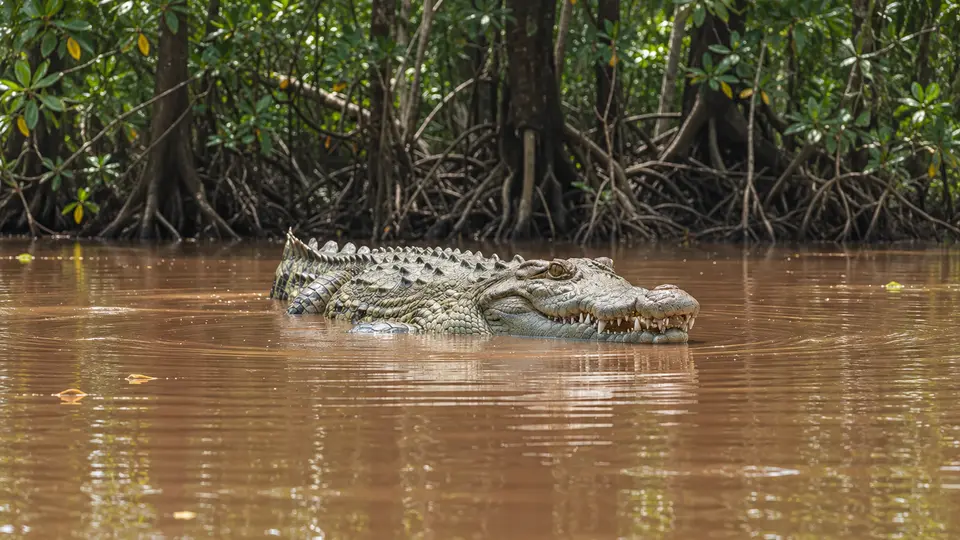
Saltwater crocodile in its natural habitat, AI illustration
SizeFemales 2.3–3 m; males 3.5–5 m longLifespanNot reliably establishedStatusLeast Concern

Saltwater crocodile: where and when to see them

Crocodylus porosus

Saltwater crocodile at a glance

The saltwater crocodile is the largest living reptile, with adult males substantially larger than females. Despite its name, it occupies freshwater rivers and floodplains as well as estuaries and coastal wetlands. Its surviving distribution is uneven across South and Southeast Asia and northern Australia, reflecting historical persecution and habitat change. A healthy global assessment does not mean that populations remain secure, or even present, in every country within its former range.

Behaviour & reproduction

Size
Females 2.3–3 m; males 3.5–5 m long
Weight
Females 80–150 kg; males 200–500 kg
Lifespan
Not reliably established
Status
Least Concern

Saltwater crocodiles alternate between basking, resting in cover and waiting quietly near prey routes. Large males can be strongly territorial, while females build vegetation mounds and guard nesting areas. Individuals may undertake long coastal movements, using currents to assist travel. Their apparent stillness should never be interpreted as tameness or inactivity: a crocodile can respond rapidly, and its position may be impossible to detect from shore. They are ectothermic, regulating body temperature through basking in the sun or seeking shade in water. Males are known to produce deep roaring calls, especially during breeding season, to assert dominance and attract mates.

Top wildlife locations

Indonesia wildlife habitat

Indonesia

Mangrove estuaries and lowland rivers within occupied parts of the archipelago provide habitat. Safe viewing requires a locally verified, managed setting; many areas are remote, inaccessible or unsuitable for casual shoreline observation.

Adventure cruises in Indonesia
Thailand wildlife habitat

Thailand

Historical habitat includes southern mangrove estuaries, but wild saltwater crocodiles are exceptionally rare or locally absent. Ordinary coastal visits should not expect sightings, and captive displays are not evidence of a wild population.

Adventure cruises in Thailand
Vietnam wildlife habitat

Vietnam

Southern estuaries and mangrove wetlands are historical habitat, but the species is generally considered extirpated in the wild nationally. Standard shore visits offer no credible expectation of seeing a free-ranging animal.

Adventure cruises in Vietnam
Australia wildlife habitat

Australia

Northern tidal rivers, mangrove estuaries and floodplain wetlands offer managed viewing opportunities from secure platforms or vessel decks. Some sites require inland excursions, and unrestricted shoreline approaches are unsafe throughout crocodile country.

Adventure cruises in Australia

Destinations describe the species' habitat, not guaranteed cruise stops. Some animals require an optional inland excursion or are found in restricted reserves.

Fun facts about the Saltwater crocodile

  • Salt-excreting glands on the tongue help it tolerate saline environments.
  • Incubation temperature influences the sex of hatchlings.
  • Females guard mound nests and may help newly hatched young reach water.
  • Tracking has documented long-distance coastal travel assisted by favorable currents.

Best time to see the Saltwater crocodile

Northern Australia's dry season often makes managed viewing areas easier to reach and basking animals more visible. Elsewhere, timing is site-specific and subordinate to verified local occurrence. No travel season makes crocodile habitat safe for unprotected shoreline approaches. In Southeast Asia, the end of the wet season and early dry season may concentrate animals in shrinking water bodies, making them more visible. Always confirm local conditions and recent sightings with park rangers or tour operators for optimal viewing opportunities.

Saltwater crocodile: season matrix by destination

Travel and observation windows vary by region. Highlighted months are an orientation for planning, not confirmed sightings or a guarantee of access.

Indonesia

Indonesia spans varied rainfall regimes, and occurrence is highly local; no defensible nationwide shore-observation window can be assigned.

JanFebMarAprMayJunJulAugSepOctNovDec
Cruise ships in Indonesia

Thailand

Current wild occurrence is too uncertain to support a seasonal viewing window; general beach travel seasons are not relevant evidence.

JanFebMarAprMayJunJulAugSepOctNovDec
Cruise ships in Thailand

Vietnam

No wild observation season is supported; any new occurrence claim requires verification rather than extrapolation from historical distribution.

JanFebMarAprMayJunJulAugSepOctNovDec
Cruise ships in Vietnam

Australia

The northern dry season often improves access and basking visibility; crocodiles remain present and dangerous year-round, and local closures override this window.

JanFebMarAprMayJunJulAugSepOctNovDec
Cruise ships in Australia

Where the Saltwater crocodile lives

Habitats include tidal rivers, mangrove channels, estuaries, freshwater billabongs and coastal floodplains. Animals may also move through open coastal waters between river systems. Nesting generally requires suitable vegetated wetland margins, while adults use deeper channels and sheltered banks for concealment. Saltwater crocodiles are highly adaptable, capable of tolerating both fresh and saltwater environments, often moving between them. Their extensive range indicates a preference for warm, tropical climates with abundant water sources and suitable nesting grounds.

What the Saltwater crocodile eats

Young crocodiles eat insects, crustaceans and small fish, taking larger prey as they grow. Adults consume fish, turtles, birds and mammals, with prey size influenced by crocodile size and opportunity. They also scavenge, and large individuals can attack people near the water. Despite their formidable size, young crocodilians consume a high proportion of invertebrates, which decreases with age. Adults are apex predators, utilizing a 'death roll' to dismember larger prey and digest it over several days.

Species at a glance

Common name
Saltwater crocodile
Scientific name
Crocodylus porosus
Animal group
Reptiles
Size
Females 2.3–3 m; males 3.5–5 m long
Weight
Females 80–150 kg; males 200–500 kg
Lifespan
Not reliably established
Status
Least Concern
Identification
Compared with Australian freshwater crocodile, saltwater crocodile has a much broader, heavier snout and lacks the freshwater species' distinctly narrow, elongated jaw profile. Beyond snout shape, the saltwater crocodile has fewer, larger scutes on its neck compared to the freshwater crocodile. Its skin color can vary from dark olive to brown, often with a paler, yellowish belly.

Saltwater crocodile: frequently asked questions

Where can I see the Saltwater crocodile?
Indonesia, Thailand, Vietnam, Australia. Observe only from authorized elevated platforms or secure vessel decks, following local crocodile warnings. Stay well away from banks and water edges, never feed animals, and never assume a beach or river is safe. Always maintain a significant distance from the water's edge, even in areas without explicit warnings, as crocodiles are masters of camouflage. Never dangle limbs over the side of a boat or vessel, even when apparently safe.
When is the best time to see the Saltwater crocodile?
Northern Australia's dry season often makes managed viewing areas easier to reach and basking animals more visible. Elsewhere, timing is site-specific and subordinate to verified local occurrence. No travel season makes crocodile habitat safe for unprotected shoreline approaches. In Southeast Asia, the end of the wet season and early dry season may concentrate animals in shrinking water bodies, making them more visible. Always confirm local conditions and recent sightings with park rangers or tour operators for optimal viewing opportunities.
How big does the Saltwater crocodile get?
Females 2.3–3 m; males 3.5–5 m long. Adult weight: Females 80–150 kg; males 200–500 kg. Size varies with age, sex and population.
How should I behave around the Saltwater crocodile?
Observe only from authorized elevated platforms or secure vessel decks, following local crocodile warnings. Stay well away from banks and water edges, never feed animals, and never assume a beach or river is safe. Always maintain a significant distance from the water's edge, even in areas without explicit warnings, as crocodiles are masters of camouflage. Never dangle limbs over the side of a boat or vessel, even when apparently safe.
What does the Saltwater crocodile eat?
Young crocodiles eat insects, crustaceans and small fish, taking larger prey as they grow. Adults consume fish, turtles, birds and mammals, with prey size influenced by crocodile size and opportunity. They also scavenge, and large individuals can attack people near the water. Despite their formidable size, young crocodilians consume a high proportion of invertebrates, which decreases with age. Adults are apex predators, utilizing a 'death roll' to dismember larger prey and digest it over several days.
Are wildlife sightings guaranteed on an adventure cruise?
No. Animals move freely and routes, weather, access restrictions and local conditions influence every outing. Confirm the actual itinerary and shore programme before booking.

Compare wildlife in the same destinations

Explore other reptiles recorded in these destinations. Similar surroundings do not mean the animals share the same habits or viewing season.

Species comparison by animal group and destination
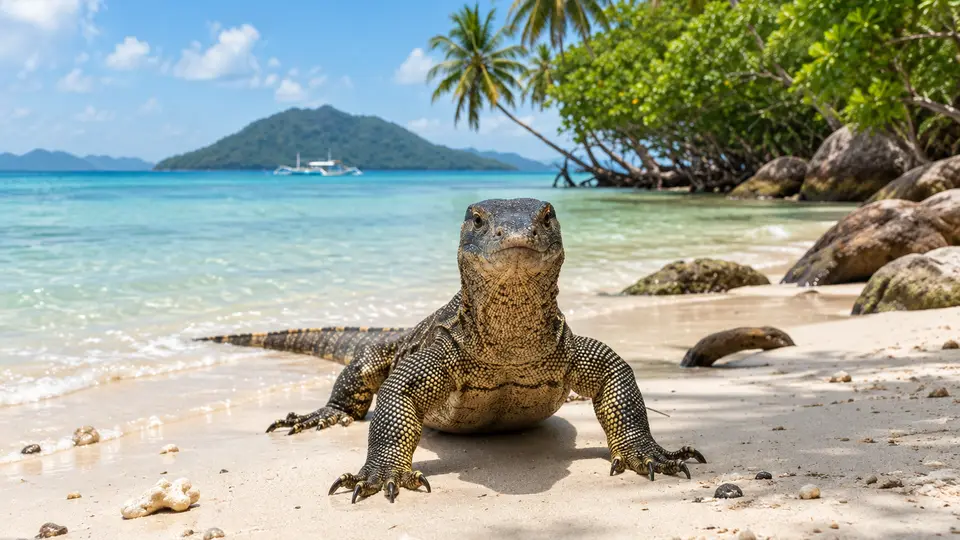
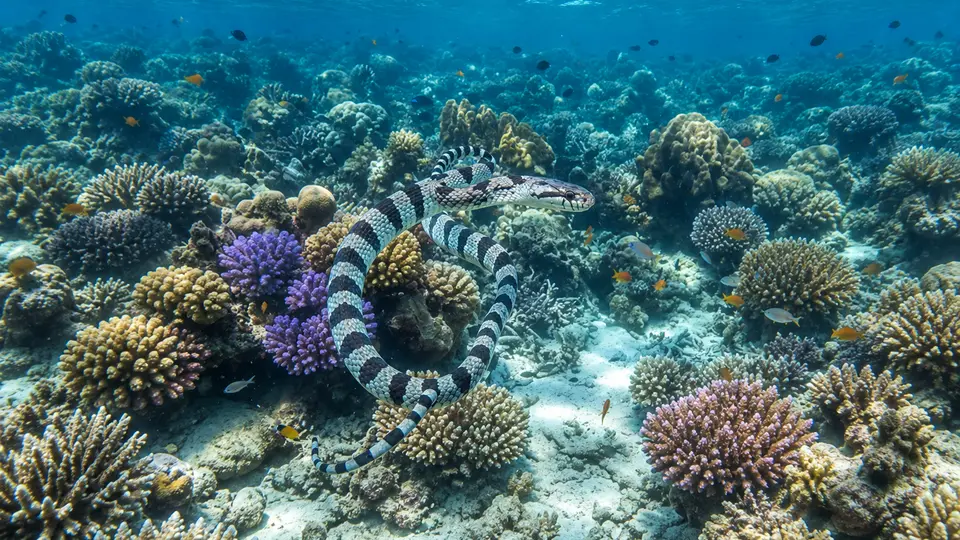
Saltwater crocodileSaltwater crocodileAsian water monitorAsian water monitorBanded sea kraitBanded sea krait
Animal groupReptilesAnimal groupReptilesAnimal groupReptiles
DestinationsIndonesia, Thailand, Vietnam, AustraliaDestinationsIndonesiaDestinationsIndonesia, Vietnam
All wildlife destinations
Plan your trip

Find your next wildlife adventure

Compare destinations, shore programmes and dates with the animals and habitats you would love to see.

  • Naturalist-led shore excursions
  • Responsible wildlife watching
  • Small expedition ships

Newsletter

Take Blue Rides with you

Adventure cruise offers, last-minute deals and trip inspiration.

Free, unsubscribe anytime. Details: Privacy Policy

Partner with Blue Rides

Affiliate Program

Recommend adventure cruises and earn commission on every confirmed booking.

Share. Track. Earn.